
Reviewed · GOLDEN TRIANGLE TOURS
Private 6-Night Golden Triangle and Nepal Tour from Delhi
A plan that moves fast, yet feels smooth. I like how this private route strings together the Golden Triangle plus Kathmandu’s UNESCO sites with solid day-to-day organization, and I also love the comfort factor: 4- or 5-star hotels with daily breakfasts. The one drawback to know up front is the pace and the distance, plus the fact that the Delhi–Kathmandu flights are extra on top.
In other words, you’re not stuck in a massive bus line. You’ll have private guides and a dedicated driver team handling the on-the-ground logistics, while you focus on seeing the big sights and soaking up the different cultures.
And yes, it is a whirlwind. You’ll cover a lot of ground across India and then Nepal, so if you hate early mornings, crowd-thick sites, or long drives, this may feel like too much. If you’re okay with that trade, the payoff is big.
In This Review
- Key highlights you’ll actually feel
- Private Golden Triangle and Kathmandu: The best kind of fast
- Price and logistics: what $1,220 buys you (and what doesn’t)
- Day 1: Humayun’s Tomb, Qutub Minar, Lotus Temple, then Agra
- Day 2: Taj Mahal at sunrise, Agra Fort, and the ride into Jaipur
- Day 3: Amber Palace, Jal Mahal photos, City Palace, Jantar Mantar
- Day 4: Fly to Kathmandu, then settle into Thamel
- Day 5: Boudhanath, Pashupatinath, Swayambhunath, and Kathmandu Durbar Square
- Day 6: Patan and Bhaktapur Durbar Squares plus the Nagarkot mountain finale
- Day 7: Nagarkot View Tower sunrise and the ranges you hope to see
- Best fit: who this trip suits best
- Practical tips that make the route easier
- Should you book this Delhi to Kathmandu combo?
- FAQ
- Is the Delhi to Kathmandu flight included?
- How many hotel nights are included?
- Are entrance fees covered?
- What’s included for meals?
- Does the tour include the Taj Mahal sunrise visit?
- Will I need a visa for India and Nepal?
- What is the starting time in Delhi?
- Is there a dress code for temples and museums?
- Is the tour fully private?
Key highlights you’ll actually feel
- Private guiding and A/C transport across India and Nepal, so you’re not waiting on a mega-group schedule
- Taj Mahal sunrise visit (weather-dependent) plus a battery bus/golf cart return ride from the parking area
- Premium hotel comfort with daily breakfasts and a dedicated dinner included in Nagarkot
- UNESCO-heavy Kathmandu Valley touring, including Boudhanath, Swayambhunath, and all three Durbar Squares
- Big-mountain finale in Nagarkot, with sunrise timing built in and visibility of eight ranges when conditions allow
Private Golden Triangle and Kathmandu: The best kind of fast
This is a trip for people who want two regions in one shot: north India’s most iconic monuments and Nepal’s Kathmandu Valley culture. What makes it work is that it isn’t just a sightseeing list—it’s built around efficient routing with private guides, so you spend less time figuring things out and more time looking at what you came for.
I also like that the hotel plan is set as real comfort, not basic and hopeful. You’re in twin-share accommodation for six nights, with breakfast every day. That matters on a route where you’ll be up early and walking through long, busy sites.
One more point: the guide quality is a standout here. The experience has strong feedback on guides and drivers—names like Mahesh, Ashok, Bishnu, Bittu, Manoj, and KK Sharma show up in reviews as professional and steady. When the driving is long and the days are packed, that kind of competence makes the whole trip feel less stressful.
Delhi, Agra and Jaipur: more full circuits

Price and logistics: what $1,220 buys you (and what doesn’t)
At $1,220 per person, you’re paying for private guiding, on-the-ground transport, and entrance fees for the listed sights—plus the hotel comfort and breakfast routine. In practical terms, this price saves you from a pile of separate bookings and messy transitions.
Here’s what’s included that you’ll notice:
- 6 nights of hotel accommodation on a twin-share basis with breakfast included
- Professional local private tour guides each day
- Private air-conditioned vehicle for transfers and sightseeing days
- Entrance fees for the sights mentioned in the itinerary
- Unlimited bottled water during the tour
- Battery bus/golf cart return ride from Taj Mahal parking
- Dinner at the hotel in Nagarkot
And here’s what’s not included, so you can budget without surprises:
- The commercial flight from Delhi to Kathmandu
- Most meals and drinks beyond what’s specified (breakfast is included; dinner is included only on the Nagarkot night)
- A jeep ride at Amber Palace in Jaipur applies for 5+ travelers ($3 per person), and it’s not included
If you’re comparing options, think of this as paying for fewer headaches. The trade-off is that you still have to handle the Delhi–Kathmandu air connection and the early starts that come with sunrise visits.
Day 1: Humayun’s Tomb, Qutub Minar, Lotus Temple, then Agra
You start with a Delhi half-day tour picked up at 9:00 am from your place in Delhi, Gurugram, or Noida. The route covers a strong mix of Mughal-era and Delhi landmarks, then finishes with a drive down to Agra.
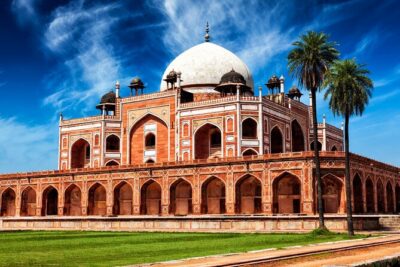
Humayun’s Tomb is a great opener because it sets the Mughal tone fast. It’s also a UNESCO site, and it’s the kind of monument that makes you slow down—symmetry, gardens, and that sense of crafted grandeur.
Next up is Qutub Minar, another UNESCO stop and a true vertical wow. Even if you think you know what a tower looks like, this one reads differently in person. It’s also a good place for the guide to explain the early Delhi power shift behind the architecture.
Then you swing to Lotus Temple, shaped like a lotus with white marble petals. The temple is free to enter and is designed for quiet reflection. One note: it’s closed on Monday, so your actual day flow depends on your travel dates.
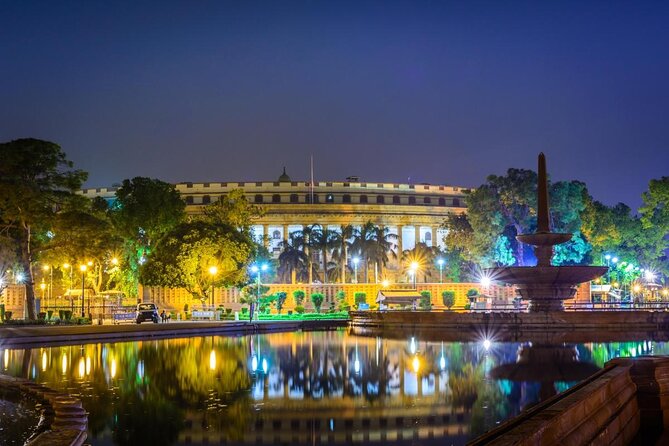
You’ll also see India Gate, the imposing WWI-era memorial arch, and you pass by major governmental buildings, including the circular colonnaded structure linked with the 1947 power handover and the ongoing parliament use, plus Rashtrapati Bhavan (President House). Not all of this is heavy-detail time, but it helps you orient yourself inside modern Delhi.
Finally, the day ends with a drive of about 3 hours to Agra, plus hotel check-in.
Best part of Day 1: the pacing. You get enough Delhi to feel like you arrived somewhere historic, and then you’re already set up for Agra’s next-day highlights.
Day 2: Taj Mahal at sunrise, Agra Fort, and the ride into Jaipur
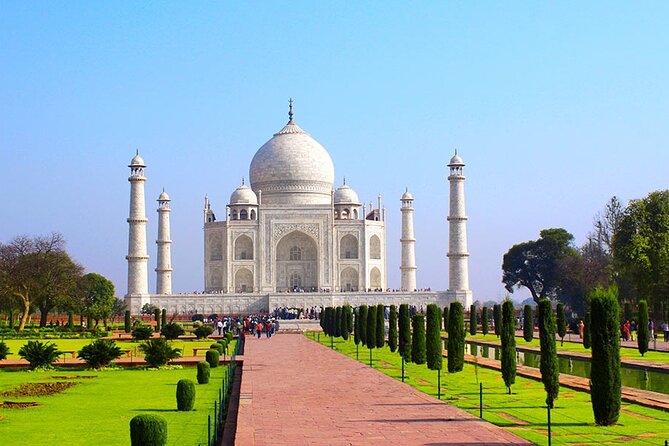
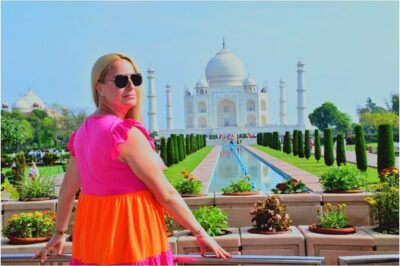
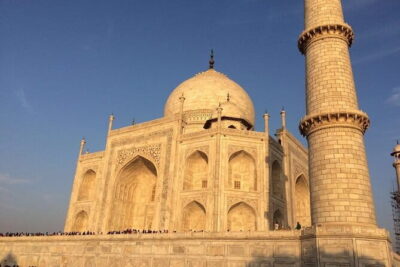
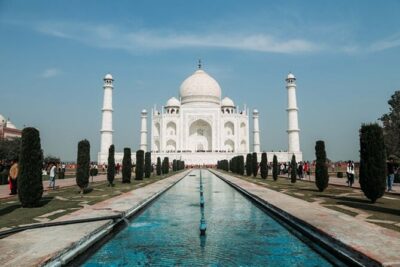
This is the day most people remember. You’ll do a sunrise visit to Taj Mahal, and it includes admission. Sunrise here is a real strategy: lighter crowds can help, but the main point is the lighting. When the sky cooperates, the colors soften and the white marble looks less stark.
Important practical detail: the sunrise visit is subject to clear weather conditions. If clouds roll in, the experience changes—but sunrise is still worth it because the Taj reads best when the light isn’t harsh.
You’ll also visit Agra Fort, another UNESCO site. This is more fort-and-palace than postcard, with courtyards and red-sandstone structures along the Yamuna River. It’s a nice contrast after the Taj’s emotional pull.
After breakfast and those sights, you travel to Jaipur, the Pink City. The day has travel time built in—about five hours—so you’re not squeezing Jaipur sightseeing immediately. You check into your hotel and reset.
If you want a simple rule for this trip, it’s this: Day 2 gives you the emotional peak (Taj) and then earns you a calmer transition (Agra Fort into Jaipur).
Day 3: Amber Palace, Jal Mahal photos, City Palace, Jantar Mantar
Jaipur days can be a blur, but this route lays out the key hits in a logical order.
Start with Amber Palace, a honey-hued hilltop fort showing Rajput architecture at full strength. This is the kind of place where photographs never fully explain the scale, and it’s worth taking the time to look at details the guide points out.
Then comes a quick photo stop at Jal Mahal, the Water Palace. You won’t be doing a long wander here—expect it as a brief pause to enjoy the setting reflected in water.
You’ll also stop for Hawa Mahal (Palace of Wind) as a photo stop. The exterior is the draw: a pink-painted façade that looks like a beehive, stacked into multiple stories. The itinerary notes that entrance isn’t included here, which keeps the day moving.
Next is City Palace of Jaipur. This is where the royal family’s residence history shows up in a more complex way—courtyards, gardens, and buildings across eras. It’s included and gives you context beyond the iconic photos.
After that, Jantar Mantar is a UNESCO stop and usually the most fun for people who like science tucked into sightseeing. It’s a set of geometric observatories designed to track movement of stars and planets. Even if you’re not a math person, it tends to click once you see how the instruments are arranged.
The day also includes free time to shop in Jaipur, which is where you can pace yourself—pick up textiles, small crafts, and snacks without feeling rushed.
One consideration: this day has several stops back-to-back. If you get site fatigue fast, plan for extra water and slower moments in the courtyards of City Palace and at Jantar Mantar.
More private days with a guide of your own
Day 4: Fly to Kathmandu, then settle into Thamel
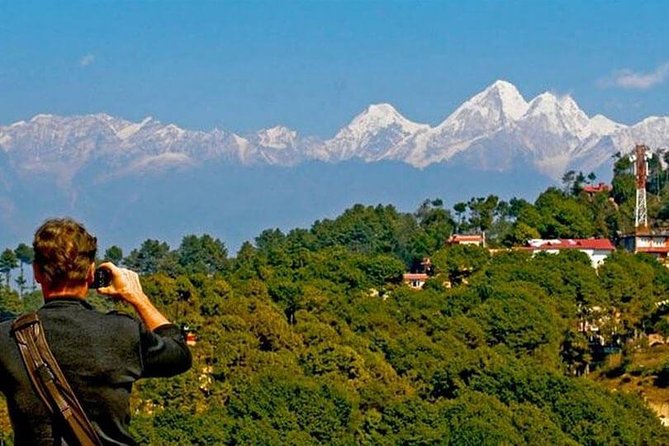
After breakfast, you transfer to Indira Gandhi International Airport for your flight to Kathmandu. The flight itself isn’t included, so you’ll want to book it separately and align arrival timing with the hotel transfer plan.
Once you land, a representative meets you and transfers you to the hotel. The rest of the afternoon is intentionally light: you can rest or explore Thamel, Kathmandu’s tourist hub with restaurants, souvenir shops, and hiking gear stores.
This is a smart reset day. Kathmandu hits different—dust, traffic, footpaths, and a cooler pace in many neighborhoods. Having Thamel time without a tight schedule helps you adjust before the UNESCO days start.
Day 5: Boudhanath, Pashupatinath, Swayambhunath, and Kathmandu Durbar Square
Kathmandu Day 5 is a mix of Hindu and Buddhist sacred spaces, and it’s one of the reasons people love the city. The itinerary threads them together so you see how religious life overlaps with daily street life.
First is Boudhanath Stupa, the largest stupa in Nepal and a UNESCO site. It’s also described as the holiest Tibetan Buddhist temple outside Tibet. In person, it tends to create that quiet, circular rhythm—people walking around, praying, and simply being present.
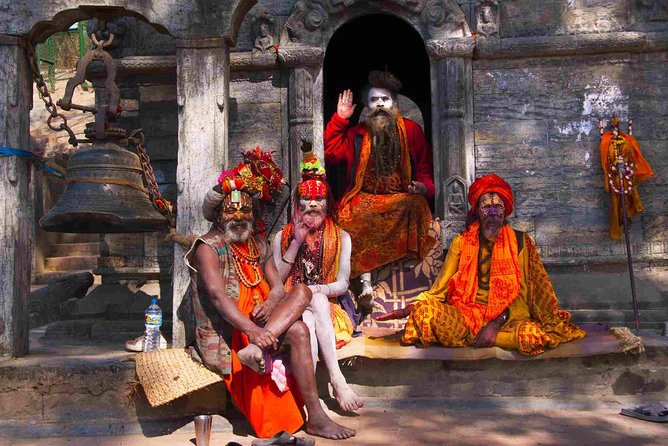
Next is Pashupatinath Temple, UNESCO-listed and dedicated to Lord Shiva. The itinerary gives key details like the golden roof and silver door elements, and the temple is a powerful reminder of Nepal’s living Hindu tradition.
Then you head to Swayambhunath Temple, an old Buddhist shrine on a hill. The payoff is the view over the Kathmandu Valley—this is your panoramic geography lesson in stone form.
Finally, you visit Kathmandu Durbar Square, UNESCO-listed and packed with palaces and temple spaces such as Hanuman Dhoka Palace and Kumari Ghar (the Abode of the Living Goddess), plus Taleju Temple and more.
Dress code matters on these days. The itinerary clearly states you need to cover knees and shoulders and avoid shorts or sleeveless tops for places of worship and selected museums. Build that into what you pack, or you might lose time at the doorway.
Day 6: Patan and Bhaktapur Durbar Squares plus the Nagarkot mountain finale
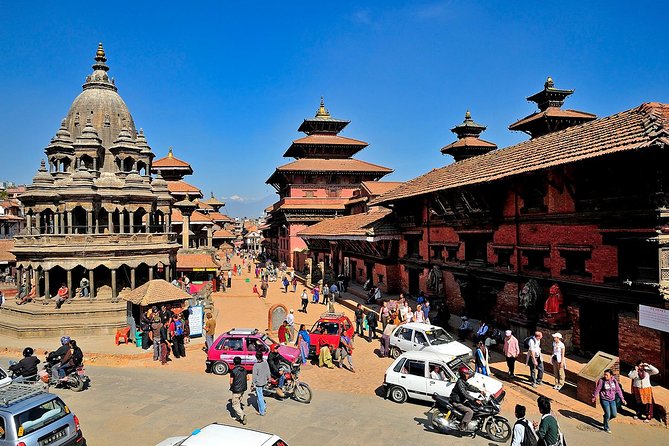
Day 6 starts with more Kathmandu Valley culture, but with a different feel than the main city center.
You visit Patan Durbar Square, UNESCO-listed and known for Buddhist monuments and Hindu temples plus fine bronze gateways and carving work. Patan often rewards people who slow down—look for the metalwork and guardian deity details the guide highlights.
Then it’s Bhaktapur Durbar Square, also UNESCO-listed. The itinerary notes it’s at about 1,401 meters above sea level, and it’s the royal palace plaza of the old Bhaktapur Kingdom. If you’re the kind of traveler who likes old-town atmosphere, Bhaktapur tends to feel more grounded and less flashy.
After the durbar squares, you drive about one hour to Nagarkot, which is famous for Himalayan views. This day is about positioning yourself for the next morning’s sunrise. It’s also the day where you’ll appreciate not rushing—Nagarkot is built for waiting in the cool air and letting the light change.
One nice included perk: there’s a dinner at your hotel in Nagarkot.
Day 7: Nagarkot View Tower sunrise and the ranges you hope to see
Your last morning is the big-view moment. You’ll do a sunrise at Nagarkot View Tower, with the chance to see eight ranges, including Annapurna, Manaslu, Ganesh Himal, Langtang, Jugal, Rolwaling, Everest, and Numbur.
Timing is everything. The itinerary specifically warns that the mountains depend on conditions—so treat sunrise as a chance, not a guarantee. Even if the horizon doesn’t fully cooperate, this is still a memorable farewell to the Himalaya region.
After this, the tour ends back in Kathmandu, with the finish point listed as Kathmandu airport or your hotel area depending on what you arranged.
Best fit: who this trip suits best
This tour is a good match if you:
- Want a high-hit itinerary in limited time across both India and Nepal
- Prefer a private setup where a driver and guide are focused on your schedule
- Like staying in comfort hotels and starting days with breakfast already handled
- Dream about sunrise experiences, first at the Taj Mahal and then in Nagarkot
It’s less ideal if you:
- Hate early mornings and long driving days
- Want lots of free, unscheduled time in each city
- Don’t want to manage the Delhi–Kathmandu flight planning yourself
The strongest signal from reviews is service quality—guides and drivers named above are repeatedly described as professional and knowledgeable, and the overall organization is praised. That’s the difference between a tour you endure and a tour you enjoy.
Practical tips that make the route easier
A few real-world notes can help you avoid friction:
- Pack for dress code: knees and shoulders covered, and no shorts or sleeveless tops for worship sites and some museums.
- Bring a reliable layer: mornings in Agra and especially in Nepal can feel cool even when days warm up.
- Plan for weather sensitivity: Taj Mahal sunrise depends on clear conditions, and Nagarkot visibility depends on cloud cover and timing.
- Expect travel days to feel long: Jaipur comes after Agra, then you fly to Kathmandu, then you drive between Durbar Square stops and Nagarkot.
Also, make sure your travel documents are ready. The itinerary notes you need a current valid passport on the travel day, and you must confirm India visa requirements before crossing any border. Nepal visa is available on arrival at Kathmandu airport by providing two passport-size photos and a visa fee.
Should you book this Delhi to Kathmandu combo?
I’d recommend booking if your goal is a tight, well-run route that hits major UNESCO sights plus a real Himalayan finale, with comfort hotels and included breakfasts. The value is strongest when you look at what you avoid: booking separate transfers, arranging entrance fees, and trying to coordinate multiple cities on your own.
But I’d pause if you hate sunrise plans with weather risk, or if you’re not ready to manage the Delhi–Kathmandu flight. This trip works best when you treat it like a curated sprint: enjoy the structure, and don’t fight the pace.
If you want a smooth balance of the famous and the meaningful—especially with consistently praised guides like Mahesh, Ashok, Bishnu and drivers such as KK Sharma—I think you’ll feel glad you booked.
FAQ
Is the Delhi to Kathmandu flight included?
No. The commercial flight from Delhi to Kathmandu is not included, so you’ll need to arrange it separately.
How many hotel nights are included?
The tour includes hotel accommodation for 6 nights on a twin-sharing basis, including breakfast.
Are entrance fees covered?
Yes. Entrance fees of the sights mentioned are included.
What’s included for meals?
Breakfast is included each day (6 breakfasts). There is also one dinner at the hotel in Nagarkot. Other meals and drinks are not included unless specified.
Does the tour include the Taj Mahal sunrise visit?
Yes, it includes a sunrise visit to the Taj Mahal, but it is subject to clear weather conditions.
Will I need a visa for India and Nepal?
A current valid passport is required. You must confirm and obtain any India visa requirements prior to border crossing. Nepal visa is available on arrival at Kathmandu airport with two passport-size photos and a visa fee.
What is the starting time in Delhi?
The pickup is scheduled for 9:00 am.
Is there a dress code for temples and museums?
Yes. You need to cover knees and shoulders for places of worship and selected museums. No shorts or sleeveless tops are allowed.
Is the tour fully private?
Yes. It is listed as a private tour/activity, and only your group will participate.
If you’d like, tell me your travel month and whether you want the most relaxed pace possible or the fullest sight coverage, and I’ll help you judge if the sunrise-heavy format fits your style.
More Tours in New Delhi
- Old & New Delhi City Tour – Half or Full Day Options Available
★ 5.0 · 4,811 reviews - Half Day Private Delhi City Tour
★ 5.0 · 4,474 reviews - Same Day Taj Mahal, Agra Fort & Baby Taj Tour from Delhi by Car
★ 5.0 · 4,304 reviews - Taj Mahal Day Tour from Delhi by Superfast Train – TOP RATED TOUR
★ 5.0 · 4,166 reviews - Delhi: Old and New Delhi Private Full or Half-Day Tour
★ 4.9 · 3,776 reviews
More Tour Reviews in New Delhi
- Old & New Delhi City Tour – Half or Full Day Options Available
★ 5.0 · 4,811 reviews - Half Day Private Delhi City Tour
★ 5.0 · 4,474 reviews - Same Day Taj Mahal, Agra Fort & Baby Taj Tour from Delhi by Car
★ 5.0 · 4,304 reviews - Taj Mahal Day Tour from Delhi by Superfast Train – TOP RATED TOUR
★ 5.0 · 4,166 reviews - Delhi: Old and New Delhi Private Full or Half-Day Tour
★ 4.9 · 3,776 reviews
The Full Golden Triangle, More Options
- 3-Days Private Golden Triangle Tour: Delhi, Agra & Jaipur by Car
★ 5.0 · 1,107 reviews - 3-Days Private Golden Triangle Tour: Delhi, Agra & Jaipur by Car
★ 5.0 · 1,098 reviews - 3-Day Delhi, Agra and Jaipur Private Tour – India Golden Triangle
★ 5.0 · 812 reviews - Four-Day Private Luxury Golden Triangle Tour to Agra and Jaipur From New Delhi
★ 5.0 · 807 reviews - 5 Nights 6 Days Private Golden Triangle Tour – Delhi Agra Jaipur
★ 5.0 · 574 reviews
Just added: more New Delhi reviews to browse
- 4 days Golden Triangle Tour★ 5.0 · 3 reviews
- Discover Old & New Delhi: Private Tour with Street Food★ 5.0 · 3 reviews
- Taj Mahal Tour From Delhi By Private Car★ 4.5 · 3 reviews
- Golden Triangle Tour 5 Days★ 5.0 · 3 reviews
- Taj Mahal: Express Entry Ticket For Sunset Tour with guide★ 5.0 · 3 reviews
- Agra Taj Mahal Sunrise & Sunset Tour from Delhi★ 5.0 · 3 reviews
Golden Triangle Tours, compared.
 ★ 5.03-Days Private Golden Triangle Tour: Delhi, Agra & Jaipur by CarFrom $1271,107 reviews
★ 5.03-Days Private Golden Triangle Tour: Delhi, Agra & Jaipur by CarFrom $1271,098 reviews
★ 5.03-Days Private Golden Triangle Tour: Delhi, Agra & Jaipur by CarFrom $1271,107 reviews
★ 5.03-Days Private Golden Triangle Tour: Delhi, Agra & Jaipur by CarFrom $1271,098 reviews
 ★ 5.03-Day Delhi, Agra and Jaipur Private Tour – India Golden TriangleFrom $110812 reviews
 ★ 5.0Four-Day Private Luxury Golden Triangle Tour to Agra and Jaipur From New DelhiFrom $160807 reviews
 ★ 5.05 Nights 6 Days Private Golden Triangle Tour – Delhi Agra JaipurFrom $240574 reviews
 ★ 5.04 Days Golden Triangle TourFrom $146499 reviews
 ★ 5.0Private Car and Drive for Golden Triangle (4N/5D)From $167451 reviews
 ★ 5.0Private Golden Triangle Tour Delhi Agra Jaipur ( Top Rated )From $148436 reviews
Browse the lists this tour appears in