
Reviewed · HARIDWAR & RISHIKESH DAY TRIPS FROM DELHI
Private Day Trip to Haridwar and Rishikesh from Delhi by Car
Two holy cities in one day means a packed schedule, but it also means you get real variety without the stress of public transport. I like that this trip is private with hotel pickup from New Delhi City Center and an air-conditioned car, so you spend more time watching the Ganga and less time figuring out buses. I also like the mix of places: Har Ki Pauri in Haridwar, then Rishikesh’s bridges and ashrams, including stops tied to the area’s famous spiritual scene.
Here’s the one thing to consider: the drive is long (about 14 hours). If you’re expecting a relaxed pace with lots of free time, this isn’t that kind of day.
In This Review
- The short version of what you’re really buying
- Key highlights you’ll feel immediately
- The Delhi to Himalaya drive: plan for the full day
- Har Ki Pauri in Haridwar: holy river steps with two visits
- First stop: Har Ki Pauri’s sacred “touch” with the plains
- Second stop: the aarti tradition by the Ganga
- Lakshman Jhula: the landmark bridge with dramatic height
- Ram Jhula: pedestrian bridge with bikers too
- Sivananda Ashram: short time, big spiritual atmosphere
- Parmarth Niketan: gardens, scale, and a sense of ongoing practice
- Gita Bhawan and Swarg Ashram: the thought and the setting
- Gita Bhawan (about 30 minutes)
- Swarg Ashram (about 30 minutes)
- Shree Shree Ma Anandamayee Ashram: a quieter, more personal stop
- How the guide and driver shape the day
- Price and logistics: what $80 really buys (and what doesn’t)
- Who this tour is best for (and who should skip it)
- Small on-the-ground tips that help a lot
- Should you book this Haridwar and Rishikesh day trip?
- FAQ
- Is this tour private?
- How long is the day trip?
- Where do you get picked up in Delhi?
- What language support is included?
- Are entrance fees included?
- What’s included in the price?
- What’s not included?
- Does the tour run in any weather?
- What is the cancellation window?
The short version of what you’re really buying
You’re paying for a long-distance day trip that solves three common problems: distance, language, and access. You get an English-speaking driver for the road, plus an English-speaking guide once you’re in Rishikesh, which helps when the sites get busy and the details matter.
Price matters here too. The tour is $80 per person, but there’s an extra $30 per person for entrance fees for monuments, so budget closer to $110+ per person before gratuities.
Key highlights you’ll feel immediately
- Two Haridwar moments at Har Ki Pauri: a long first visit and then a second block that lines up with the aarti tradition.
- Rishikesh bridges over the Ganga: Lakshman Jhula (about 450 ft long and 70 ft high) and Ram Jhula, where people walk and bikes sometimes cross too.
- Asram time that’s actually structured: quick orientation stops plus longer stops at major ashrams like Parmarth Niketan.
- A driver who can keep the day moving: in past tours, guides like Ajay and Jyoti were praised for smooth, safe driving and clear English.
- Private group feel: it’s your group only, even though there are notes about group discounts.
To the Ganges and back: more Haridwar and Rishikesh runs


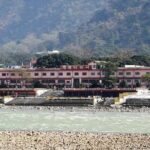
The Delhi to Himalaya drive: plan for the full day
This is an all-day outing. Expect a total duration around 14 hours, with the return trip included. That long stretch is the price you pay for doing Haridwar and Rishikesh in one shot without juggling trains, local buses, and connections.
I like how the setup reduces decision fatigue. You get hotel pickup and drop-off in the New Delhi City Center area, then you’re in an air-conditioned private car. When the road gets hectic near pilgrimage zones, having a driver who’s comfortable with crowds and traffic makes a real difference.
If you’re sensitive to long travel, do yourself a favor: keep your daypack simple (water, something small to snack on, basic meds) and dress for changes in temperature. The foothills can feel cooler than Delhi.
Har Ki Pauri in Haridwar: holy river steps with two visits
First stop: Har Ki Pauri’s sacred “touch” with the plains
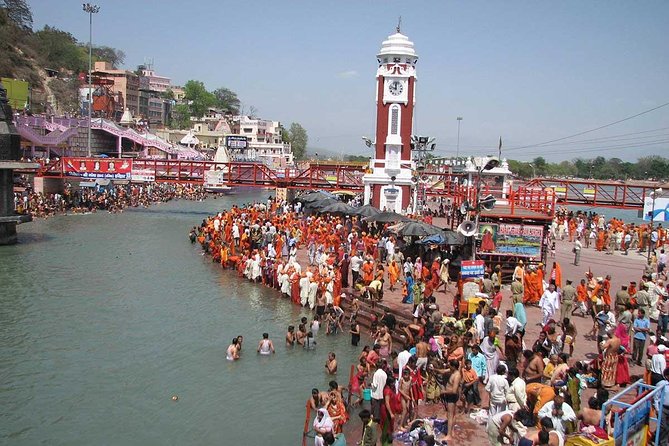
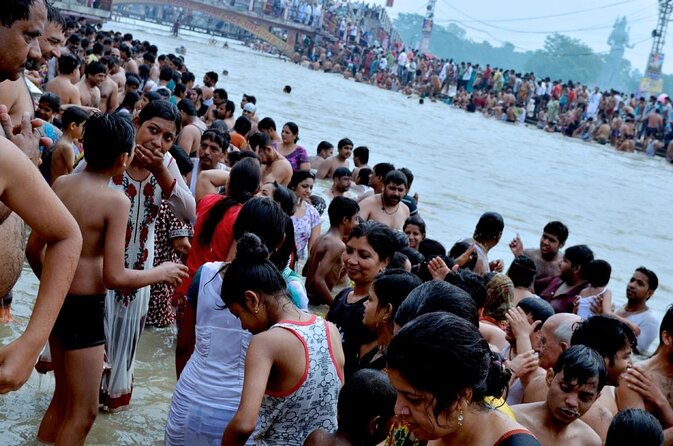
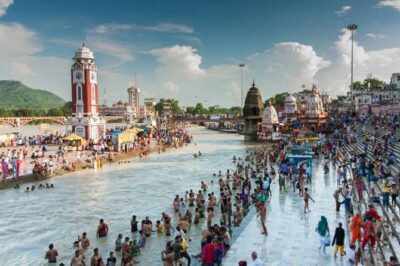
Your day anchors at Har Ki Pauri, widely considered one of India’s holiest ghats. The story you’ll hear is that this is the first place where the Ganga reaches the plains from the Himalayas, leaving the mountain ranges behind.
You’ll spend about 2 hours here. Admission is free for this stop, so it’s a good place to settle in without extra ticket hassle. The atmosphere can be intense: lots of pilgrims, movement along the river edge, and a constant sense that you’re walking through living tradition rather than a museum.
Second stop: the aarti tradition by the Ganga
Later, you return to Har Ki Pauri again for another 2-hour block. This second visit is where the spiritual show becomes easier to understand. The aarti at Har Ki Pauri is described as a long-running tradition started by Pandit Madan Mohan Malviya, and it draws thousands who come to witness it.
What I like about doing Har Ki Pauri twice is that you see the difference between daytime river life and the evening ritual mood. It also gives you a better chance of catching the ceremony because you’re not relying on a single timing window.
Practical tip: wear footwear you’re comfortable with near water. You’ll likely want to move along the ghat edges, and the ground can feel busy and uneven.
More private days with a guide of your own

Lakshman Jhula: the landmark bridge with dramatic height
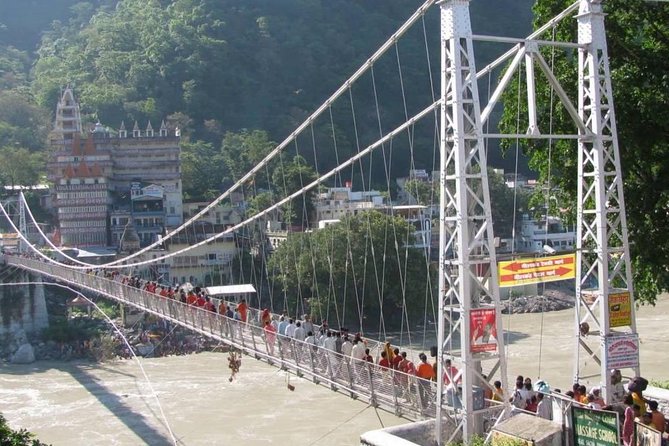
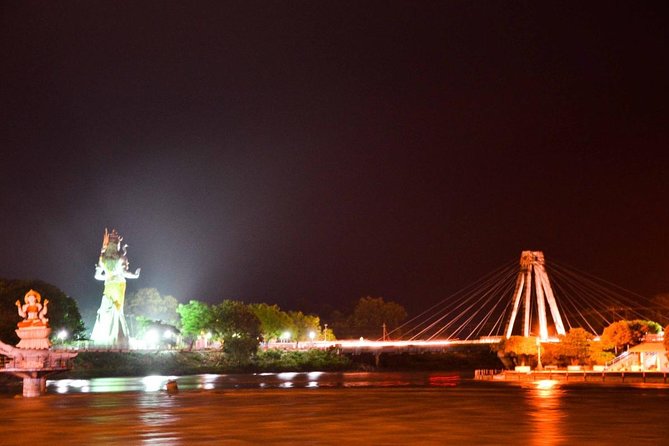
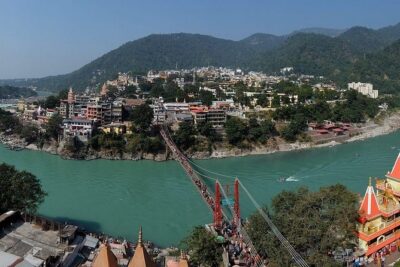
From Haridwar you head into Rishikesh, and the scenery starts to change quickly once you’re on the river route. Lakshman Jhula is one of the most recognizable spots in town: a hanging bridge across the Ganga.
You’ll have about 2 hours here, and the stop is described as not including any separate admission fee. The details matter because Lakshman Jhula isn’t just a photo stop. It’s a long, high crossing that frames the river, the movement below, and the flow of people crossing for religious and everyday reasons.
The numbers help you visualize it: it’s about 450 ft long and built roughly 70 ft above the river. On a busy day, it can feel like a moving walkway with temples and river views constantly interrupting your attention.
If you’re prone to crowds, go at a relaxed pace. Spend part of your time crossing, then step off when you want quieter river sightlines.
Ram Jhula: pedestrian bridge with bikers too
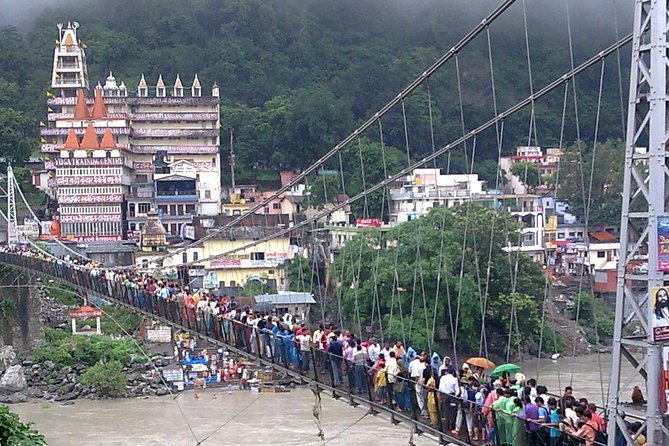
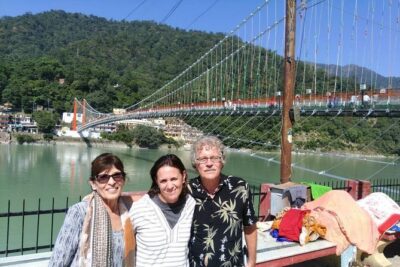
Next comes Ram Jhula, another suspension bridge over the Ganga in Rishikesh. This one connects Muni Ki Reti with Swargashram, so it’s not just about crossing—it’s about linking two important areas.
You get about 1 hour here. No admission ticket is listed for this stop. The note to keep in your head: it’s pedestrian, but people also drive bikes on it. That means you’ll want to walk with awareness, not just for safety but because the bridge can get noisy and fast-moving.
I like Ram Jhula because it feels more local than touristy in the sense that you see daily transport and pilgrimage flow in the same frame. It’s also a nice bridge-to-ashram transition: after the open views, you start moving into quieter spaces.
Sivananda Ashram: short time, big spiritual atmosphere
Your first ashram stop in Rishikesh is Sivananda Ashram, with about 30 minutes allocated. Admission is listed as not included for this stop.
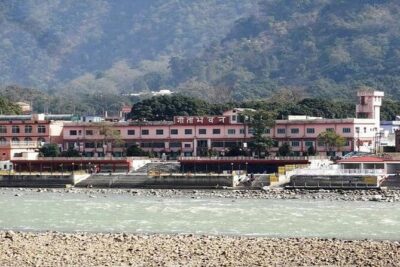
The description you’ll hear focuses on founder His Holiness Sri Swami Sivananda and how, starting from 1936, the ashram grew brick by brick on foundations of purity. Even in a short visit, you’ll likely notice that ashrams here aren’t just buildings. They operate like spiritual communities with their own rhythm.
Because your time is limited, go with a “slow scan” strategy. Don’t try to see everything. Look for the main courtyard layout, note the areas where people gather, and soak in the calm without turning it into sightseeing sprint.
Parmarth Niketan: gardens, scale, and a sense of ongoing practice
Then you move to Parmarth Niketan Ashram, described as the largest ashram in Rishikesh, with over 1000 rooms. Your stop is about 1 hour, and again admission is listed as not included.
I like this stop because it’s built to accommodate many pilgrims. If you’ve ever wondered what “spiritual travel” looks like when it’s not a one-off visit, a place that big helps you understand the scale.
You’ll also hear about its atmosphere—clean, sacred, with beautiful gardens for the thousands of pilgrims who come. Even if you’re not looking to join a retreat, it’s the kind of place where you can sit quietly, watch daily life, and learn what people actually do there.
Gita Bhawan and Swarg Ashram: the thought and the setting
After Parmarth Niketan, the tour keeps moving through important parts of the Swargashram area.
Gita Bhawan (about 30 minutes)
Gita Bhawan is described as a large riverside complex with multiple discourse halls and over 1000 rooms for comfortable stays. Your visit is about 30 minutes, without entrance fees included.
This is where the tour shifts from “where people pray” to “where people learn and listen.” If you want context around Hindu philosophy and teachings, even a brief orientation helps you connect the dots between the river rituals and the ideas behind them.
Swarg Ashram (about 30 minutes)
Next is Swarg Ashram, with about 30 minutes. This stop is described as including bistros, stores, shopping areas, libraries, parks, contemplation spaces, Ayurvedic dispensaries, eateries, and inns. That list tells you something important: it’s not only spiritual. It’s also functional and visitor-friendly.
I find it useful when a tour includes one place like this. You get to see how pilgrims and visitors live day-to-day in the same zones where prayers and contemplation happen.
Shree Shree Ma Anandamayee Ashram: a quieter, more personal stop
You’ll also visit Shree Shree Ma Anandamayee Ashmar (spelling shown as provided). This is another 30-minute stop with no admission fee listed.
The description leans into personality and compassion rather than architecture, which usually means these stops feel more reflective than “checklist sightseeing.” If you like when a tour slows down at least a little, this is a good one to take in calmly.
How the guide and driver shape the day
The structure here matters. You get an English-speaking driver for the full route, and then an English-speaking guide in Rishikesh. That means you’re not left alone with a map while people bustle around you.
From past experiences shared for this trip, guides like Ajay stood out for deep knowledge plus safe, smooth driving, and Ankit got praised for helping a visitor understand Hinduism more directly. Pawan and Jyoti were also recognized for reliable timing and navigating crowded pilgrimage conditions.
Even if your guide’s style is different, the best strategy is the same: ask one clear question at each stop. For example, ask what part of the ritual tradition is most important to notice at the ghat, or what to look for in the ashram spaces.
Price and logistics: what $80 really buys (and what doesn’t)
The headline price is $80 per person, with key inclusions:
- Pickup and drop-off at New Delhi City Center area
- Air-conditioned private car
- English-speaking driver
- English-speaking guide in Rishikesh
- Taxes and service charges
Then comes the part you should plan for: entrance fees for monuments are not included and are listed as $30 per person.
So your real budgeting equation is closer to:
- $80 tour + $30 entrances + optional gratuities
For that cost, you’re getting two major sacred city areas plus multiple bridge and ashram stops in a single managed day. If you tried to piece it together yourself, the time cost would be high and the language friction could be bigger than you expect. This tour is basically paying to remove that chaos.
Who this tour is best for (and who should skip it)
This works especially well if you:
- Want a private way to see Haridwar and Rishikesh without transit headaches
- Prefer an itinerary with clear stop times
- Appreciate a mix of river rituals and ashram life
- Would benefit from English interpretation once you hit Rishikesh
You might want to skip it if you:
- Hate long days and long drives
- Need lots of free time for wandering without structure
- Are easily overwhelmed by crowds at sacred sites
Small on-the-ground tips that help a lot
- Dress respectfully for temples and ashrams. Cover up enough to feel comfortable as you move from street to sacred space.
- Bring something for sun and heat, plus water. Ghat areas can feel exposed even when the mood is calm.
- Keep your expectations flexible. The schedule is designed for key highlights, but river-side and bridge areas can be slow-moving on busy days.
- If you want the aarti moment to land well, plan to be present and patient during that second Har Ki Pauri block. Rituals run on their own rhythm.
Should you book this Haridwar and Rishikesh day trip?
I’d book it if you want an efficient, guided, private way to connect Har Ki Pauri’s river spirituality with Rishikesh’s bridge-and-ashram world—without turning your day into a transportation puzzle. The combination of a long car ride plus structured stops makes sense for first-timers who want the big moments.
Skip it if your ideal day is short and slow. This one is long, and the value comes from packing in both cities with the help of an English-speaking driver and guide. If that sounds like your kind of day, you’ll likely feel like you got more than you paid for.
FAQ
Is this tour private?
Yes. It’s described as a private tour/activity, and only your group participates.
How long is the day trip?
The duration is listed as approximately 14 hours.
Where do you get picked up in Delhi?
Pickup is offered at the New Delhi City Center area, and drop-off is included there as well.
What language support is included?
You get an English-speaking driver, and there is also an English-speaking guide in Rishikesh.
Are entrance fees included?
No. Entrance fee for monuments is listed as $30.00 per person.
What’s included in the price?
Included items are hotel pickup and drop-off, transport by air-conditioned private car, English-speaking driver, English-speaking guide in Rishikesh, and all taxes and service charges.
What’s not included?
Entrance fees ($30.00 per person) and gratuities (optional) are not included.
Does the tour run in any weather?
The experience requires good weather. If canceled due to poor weather, you’ll be offered a different date or a full refund.
What is the cancellation window?
Free cancellation is available up to 24 hours in advance for a full refund. Cancellation within 24 hours is not refunded.
Your Group Alone, Private Cars
- Half Day Private Delhi City Tour
★ 5.0 · 4,474 reviews - Delhi: Old and New Delhi Private Full or Half-Day Tour
★ 4.9 · 3,776 reviews - From Delhi: Taj Mahal & Agra Private Day Trip with Transfers
★ 4.9 · 3,181 reviews - All Inclusive Private Taj Mahal Luxury Tour from Delhi by Car
★ 5.0 · 2,564 reviews - Delhi: Private Old & New Delhi Guided Half- or Full-Day Tour
★ 4.9 · 2,309 reviews
More Tour Reviews in New Delhi
- Old & New Delhi City Tour – Half or Full Day Options Available
★ 5.0 · 4,811 reviews - Half Day Private Delhi City Tour
★ 5.0 · 4,474 reviews - Same Day Taj Mahal, Agra Fort & Baby Taj Tour from Delhi by Car
★ 5.0 · 4,304 reviews - Taj Mahal Day Tour from Delhi by Superfast Train – TOP RATED TOUR
★ 5.0 · 4,166 reviews - Delhi: Old and New Delhi Private Full or Half-Day Tour
★ 4.9 · 3,776 reviews
To the Ganges: Haridwar and Rishikesh
- Private Haridwar and Rishikesh Day Tour from Delhi- All Inclusive
★ 5.0 · 357 reviews - Private Rishikesh and Haridwar Tour from Delhi
★ 4.5 · 42 reviews - Full-Day Private Tour in Rishikesh & Haridwar
★ 5.0 · 32 reviews - Moderate Himalayan Treks Near Rishikesh From Delhi
★ 5.0 · 21 reviews - 10 Days Private Golden Triangle Tour with Amritsar and Rishikesh
★ 5.0 · 16 reviews
Just added: more New Delhi reviews to browse
- 4 days Golden Triangle Tour★ 5.0 · 3 reviews
- Discover Old & New Delhi: Private Tour with Street Food★ 5.0 · 3 reviews
- Taj Mahal Tour From Delhi By Private Car★ 4.5 · 3 reviews
- Golden Triangle Tour 5 Days★ 5.0 · 3 reviews
- Taj Mahal: Express Entry Ticket For Sunset Tour with guide★ 5.0 · 3 reviews
- Agra Taj Mahal Sunrise & Sunset Tour from Delhi★ 5.0 · 3 reviews
Haridwar & Rishikesh Day Trips from Delhi, compared.
 ★ 5.0Private Haridwar and Rishikesh Day Tour from Delhi- All InclusiveFrom $18357 reviews
 ★ 4.5Private Rishikesh and Haridwar Tour from DelhiFrom $11542 reviews
 ★ 5.0Full-Day Private Tour in Rishikesh & HaridwarFrom $8532 reviews
 ★ 5.0Moderate Himalayan Treks Near Rishikesh From DelhiFrom $35021 reviews
 ★ 5.010 Days Private Golden Triangle Tour with Amritsar and RishikeshFrom $58816 reviews
 ★ 5.06-Day Rishikesh & Haridwar Spiritual Tour from DelhiFrom $39712 reviews
 ★ 3.5Affordable transfer from Delhi to RishikeshFrom $3511 reviews
 ★ 5.0Private Day Trip to Haridwar and Rishikesh from DelhiFrom $14911 reviews
Browse the lists this tour appears in