
Reviewed · TAJ MAHAL TOURS FROM DELHI
Colourful Rajasthan Tour with Taj Mahal
Rajasthan hits you fast, then slows for beauty. I like how this route pairs royal forts and havelis with the unforgettable payoff of Taj Mahal and Agra Fort. You’re driven in a private air-conditioned car with a guide, so the days feel structured without constant logistics stress.
My only caution is the road time. Several stretches run long—think 10–12+ hour driving days—so you’ll want a good attitude for travel pacing, breaks, and snacks.
Private air-conditioned car and chauffeur throughout the circuit
Havelis in Mandawa plus Junagarh Fort and Jaisalmer Fort in one smooth flow
Deshnok Rat Temple and the Sam sand dunes camel ride
Udaipur with Ranakpur (carved Jain temple) and a Lake Pichola boat ride
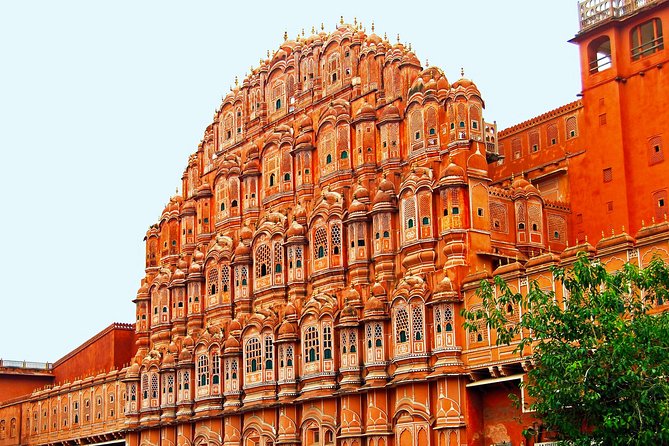
Jaipur day built around Amber Fort, Jantar Mantar, Hawa Mahal, and City Palace
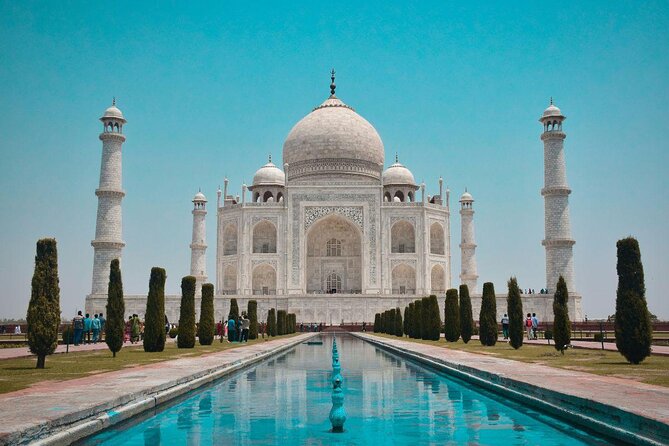
Taj Mahal day with a horse cart to the entrance gate from your hotel
In This Review
- New Delhi Arrival: set up for a fast start
- Delhi city tour: history plus a reality check on traffic
- Mandawa havelis at Hotel Radhika Haveli: paint, mirrors, and pure walking time
- Bikaner: Junagarh Fort and palaces you can actually read
- Deshnok Rat Temple and Jaisalmer’s golden city energy
- Jodhpur at Bijolai Palace: fort views and palace stops
- Udaipur with Ranakpur: delicate carvings and lake nights
- Jaipur full day: Amber Fort, Jantar Mantar, Hawa Mahal, and City Palace
- Agra: Fatehpur Sikri on the way, Taj Mahal with a horse cart, then Agra Fort
- Price and logistics: what $3,000 per person is really buying
- Should you book this Rajasthan plus Taj Mahal tour?
- FAQ
- What cities are included in this tour?
- Is this a private tour?
- Do I get picked up at the airport?
- Is transportation air-conditioned?
- Are admission tickets included?
- What meals are included?
- Is a horse cart included for Taj Mahal?
- How much should I budget for tips?
- Can I cancel for a full refund?
New Delhi Arrival: set up for a fast start
Your tour begins the way good India trips often do: you’re met right after a late arrival at the New Delhi international airport. That first handoff matters. It takes the edge off jet lag and helps you avoid that classic scramble of finding the right car and the right person at night.
Day 1 keeps the afternoon light. You get a hotel night and then a city tour the next morning. If you feel restless, you can use the free time to wander a local market on your own or with your driver. If you don’t, you’ll be fine staying in—this itinerary has enough big days that you’ll be grateful for recovery time.
One thing I appreciate here is the balance between guided highlights and personal breathing room. You’re not locked into every minute, which makes the early Delhi sights—Red Fort, Jama Masjid, Chandni Chowk, Qutab Minar, India Gate—feel like part of the trip instead of a chore.
Delhi city tour: history plus a reality check on traffic
The next day is a classic Delhi sampler with a private chauffeur and guide. You’ll cover a lot of iconic stops: Red Fort, Birla Mandir, Jama Masjid, Chandni Chowk, Qutab Minar, and India Gate.
Here’s the practical part: Delhi can be slow, and the day’s value comes from how the route is handled. With a guide, you get context fast—what you’re seeing and why it matters—so you don’t just “collect photos.” With a chauffeur, you don’t burn energy negotiating shortcuts while also trying to keep track of timing.
Also, admissions are listed as free for some parts of Day 1 and Day 2. That’s not just a cost win. It helps you avoid the micro-decisions (and small delays) that can snowball in big cities.
More ways to reach the Taj, weighed side by side



Mandawa havelis at Hotel Radhika Haveli: paint, mirrors, and pure walking time
After Delhi, you head to Mandawa, and the trip shifts from big-city monuments to a quieter, more personal world of havelis (mansion homes) covered in frescoes, carvings, and mirror work.
You stay at Hotel Radhika Haveli, Mandawa, and you get a proper city tour right away once you’re settled. Mandawa’s charm is that it feels like art you can walk up to. These are not just buildings from far away. You can move through streets and details, noticing how color and pattern are used to tell stories.
What I particularly like is that later you go beyond the main cluster with an excursion to Nawalgarh (about 28 km away). You visit Poddar Haveli, now functioning as a museum, where the murals have been restored carefully. The focus on originals and restoration quality is important—some places get “revived,” but the detailing gets lost. Here, the program emphasizes care and accuracy, and that’s what makes a haveli tour worth doing.
You also see other havelis called out for their remaining royal-era features, including Aath Haveli and Morarka Haveli. And the itinerary gives you that full “holiday feeling” before returning to Mandawa for another night.
If you have kids, Mandawa can be a good stop. It’s visually playful, and you’re not racing through a single giant-ticket attraction. The day is long enough to matter, but small enough to feel like you’re traveling through a storybook.
Bikaner: Junagarh Fort and palaces you can actually read
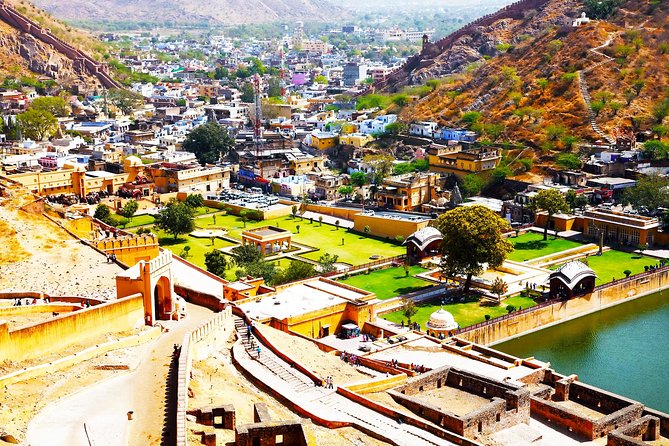
Bikaner is where the tour leans into fort architecture and royal interiors. You move from Mandawa toward Bikaner, and on arrival you head into Junagarh Fort with your guide.
Junagarh is one of those forts where the big idea is easier when you can break it into parts. The itinerary points you to key palaces within the fort complex, including Anup Mahal and Badal Mahal. I like these stops because they help you understand how the rulers lived—courtyards, marble seating areas, and spaces that connect outdoors-to-indoors.
The program also includes Har Mandir, described as a place where royal weddings used to happen, which adds a human angle instead of keeping it purely architectural. And there’s time for Lallgarh Palace, framed as a Rajput-style palace epitome.
If you’re someone who likes museums, Junagarh’s museum component is helpful. It adds another layer for when you want the story behind what you’re seeing rather than just sightseeing.
Deshnok Rat Temple and Jaisalmer’s golden city energy
From Bikaner you drive toward Jaisalmer, stopping en route at Deshnok Rat Temple (also called Karni Mata). Yes, it’s exactly what it sounds like: a temple where rats are part of the living religious scene. If that makes you curious, this is a memorable detour. If it makes you uneasy, keep a calm expectation—this is a cultural stop with a specific local meaning, not a novelty photo op.
Then you arrive at Hotel Golden Haveli in Jaisalmer. That location gives you a base for a full day in the “Golden City.”
Your Jaisalmer day centers on Jaisalmer Fort, with stops such as Dussehra Chowk, RajMahal, and seven Jain temples inside the fort. I like that the itinerary doesn’t just mention the fort—it tells you what to look for so you can pace yourself.
You’ll also visit Gadisar (the tank used historically for the city’s water), plus havelis like Patwon Ki Haveli and Salim Singh Ki Haveli, with Nathmal Ki Haveli also mentioned as worth visiting. This is where you really see the “old wealth” side of Rajasthan in stone-and-sculpture form.
In the evening, the itinerary includes a 45 km camel ride in the Sam sand dunes. This can be a highlight because it changes the feel of the trip: you’re moving from urban forts and carved facades to open sand and slow horizons. Practical note: even if you’re excited, dress for temperature swings. Rajasthan evenings can cool off quickly.
Jodhpur at Bijolai Palace: fort views and palace stops
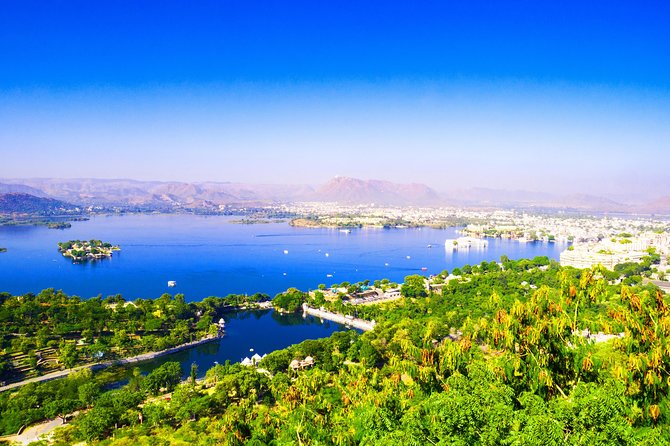
Next is Jodhpur, staying at Bijolai Palace. After a restful arrival day, your sightseeing day covers the big-name attractions people come for, including Mehrangarh Fort, Umaid Bhawan Palace, Jaswant Mahal, and Mandore Garden.
The guide focus matters on this day. Forts are easy to “see,” but harder to truly understand without a person explaining the why behind the structure and the symbolism. Your program is built around that kind of guided reading of place.
Mehrangarh Fort in particular gives you a strong vantage point and a sense of how power and geography were connected here. Jaswant Mahal and Mandore Garden add more variety, so you don’t just spend the day climbing one fort after another.
If you like evenings, I’d treat Jodhpur as your chance to slow down. The itinerary keeps the night comfortable and gives you time to recover for the next jump.
Deeper into Rajasthan, straight from Delhi
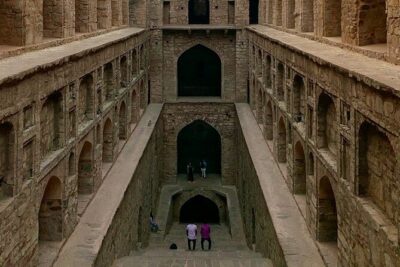
Udaipur with Ranakpur: delicate carvings and lake nights
You drive from Jodhpur to Udaipur with a key stop at Ranakpur Jain Temple. The itinerary gives a great bit of precision here: the temple covers about 3,600 sq. metres, has 29 halls, and 1,444 pillars. That kind of detail signals what kind of visit this is—less about single-photo moments, more about stepping through a dense, finely worked space.
When you arrive in Udaipur, you stay at Aaram Bagh. The program gives you leisure time for markets or just winding down, which I think is smart. Udaipur can be intense on the eyes. Taking a breather helps you enjoy it instead of burning out.
The next day’s highlights are centered on the city’s palace-and-temple zone. City Palace is described as dating back to the 16th century and created by contributions of many Maharajas, making it the largest palace complex in Rajasthan. Outside the palace you also visit Jagdish Temple, plus a city palace museum and a Crystal Gallery.
Optional add-ons are listed in the plan too: Bagore ki Haveli, Monsoon Palace, Seven Sister’s references, and a Vintage Cars collection. That mix is useful if you want a break from purely religious or purely architectural stops.
Then there’s one of the best value “time uses” in the whole trip: a boat ride at Lake Pichola in the evening. This is where Udaipur’s feel comes together—palaces and temples viewed from water, light changing fast, and a calmer pace than inside monuments.
Jaipur full day: Amber Fort, Jantar Mantar, Hawa Mahal, and City Palace
Jaipur is treated as a true full-day highlight, with a guide and a packed-but-organized route.
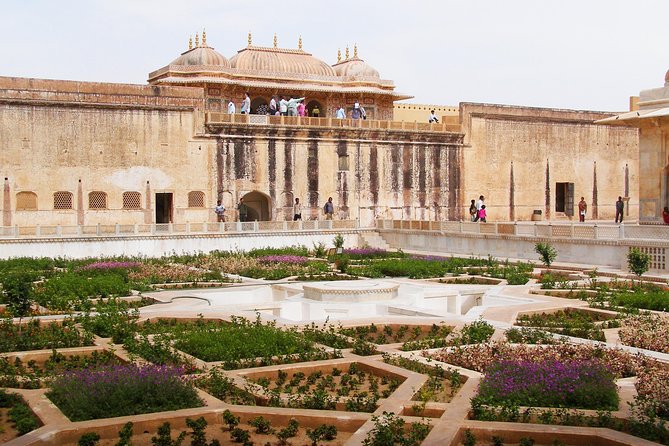
You start with Amber Fort, and the itinerary specifically notes that you can climb by your own car or by jeep. I like this flexibility because it affects how tired you feel during the day. If you’re traveling with kids or you simply want to save energy, this helps.
Other listed stops include Shiladevi Temple, Jantar Mantar observatory, Hawa Mahal, Albert Hall Museum, and City Palace.
Here’s how I’d think about the “why” of this day. Jaipur can look like a lot—pink facades, busy streets, photo stops everywhere. But this plan builds a logic line:
- Amber Fort gives you the armored power side of Jaipur.
- Jantar Mantar adds the science and precision side.
- Hawa Mahal adds the decorative and functional side (window design for air and observation).
- City Palace ties it back into what rulers controlled.
You also stay at Nahargarh Haveli for the night, which is a nice way to keep the trip anchored in heritage even when you’re moving on the road.
Agra: Fatehpur Sikri on the way, Taj Mahal with a horse cart, then Agra Fort
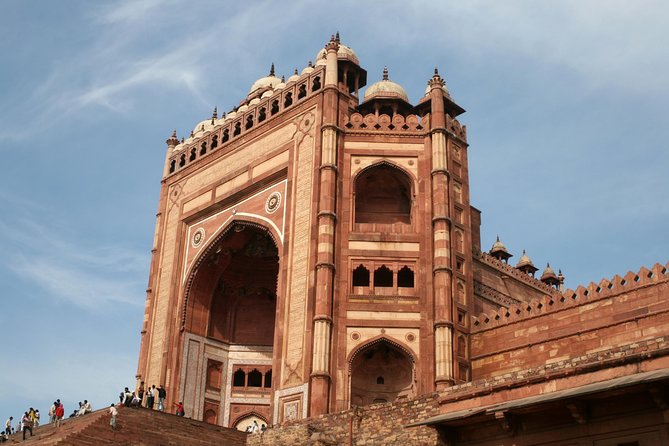
After Jaipur you head toward Agra, and the itinerary gives you a smart one-hour stop at Fatehpur Sikri. It’s described as a heritage site of red sandstone and as Akbar’s chosen capital, used for about 14 years before it was deserted because of lack of water. That context helps when you’re walking around ruins—suddenly you understand why the city didn’t “stick around.”
Then you reach Agra and check into Sarovar Crystal for the night.
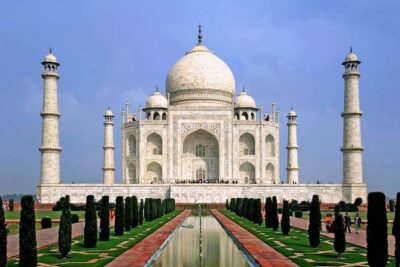
The next morning is the money day: Taj Mahal and Agra Fort. The itinerary notes a horse cart from your hotel to the entrance gate of Taj Mahal. I’d treat this as part of the local experience, but it’s also worth saying plainly: if horses and carts make you uncomfortable, you should plan to discuss options with your driver/representative in advance.
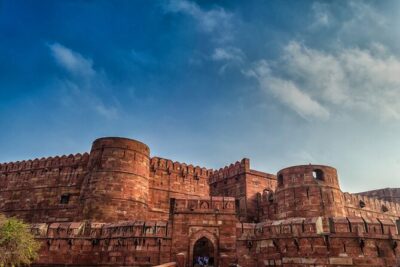
After Taj Mahal, you visit Agra Fort, built with red sandstone. Both buildings are described as World Heritage structures, which matters because it explains the care and security you’ll see on site, plus why the crowds can feel intense even when you’re moving smoothly.
At the end of the day, depending on your flight schedule, you’re driven back to New Delhi international airport to catch your return.
Price and logistics: what $3,000 per person is really buying
At $3,000 per person for about 15 days, this isn’t a budget tour. But you are buying several big-ticket basics that add up fast in India:
- A private setup: only your group participates.
- A chauffeur and private tour guide for personalized services.
- A private air-conditioned car, which is a serious quality-of-life factor in hot months.
- Ticket handling is built in, with sightseeing admissions listed as free or included on multiple days.
Where it’s good value: you’re not paying separately for every ride and guide day, and you’re spending time on major sights that would be slower and more stressful to coordinate on your own.
What’s not included is also clear: tips to the guide and driver are not included. Also, the package lists breakfast (14) and dinner, but it does not mention lunch. That means you should assume you’ll cover lunch on your own on many day-to-day transitions, especially on road-heavy days.
The schedule is another logistics reality. There are several long driving days listed—so if you hate car time, this plan might feel like too much movement. If you can handle long road days, the payoff is a “great hits” route that stays organized.
Should you book this Rajasthan plus Taj Mahal tour?
Book it if you want a structured, private route that covers Delhi, Mandawa, Bikaner, Jaisalmer, Jodhpur, Udaipur, Jaipur, and Agra without you juggling transport day by day. The air-conditioned car, guide support, and built-in admission handling are the core reasons this works well.
Think twice if you’re extremely sensitive to long travel days or if horse cart transport feels like a hard no for you. Also, the itinerary is packed with stops—amazing for sightseeing, but you’ll want to keep your expectations realistic about fatigue.
If you like Rajasthan for its details—havelis, fort interiors, carved temple spaces—and you want Taj Mahal handled as part of a bigger cultural circuit, this is a strong fit.
FAQ
What cities are included in this tour?
It covers New Delhi, Mandawa, Bikaner, Jaisalmer, Jodhpur, Udaipur, Jaipur, and Agra, with Taj Mahal and Agra Fort included.
Is this a private tour?
Yes. It’s listed as a private tour/activity, meaning only your group participates.
Do I get picked up at the airport?
You’re met and greeted on arrival at New Delhi international airport, and representatives assist you with getting settled in the hotel.
Is transportation air-conditioned?
Yes. The tour includes a private air-conditioned car with a chauffeur.
Are admission tickets included?
Sightseeing admissions are listed as Free on some days and Included on other days, including multiple monument days.
What meals are included?
Dinner is included, and breakfast is included for 14 days.
Is a horse cart included for Taj Mahal?
Yes. The Taj Mahal visit includes a horse cart from the hotel to the entrance gate.
How much should I budget for tips?
Tips to the guide and driver are not included.
Can I cancel for a full refund?
Free cancellation is available up to 24 hours in advance of the experience’s start time for a full refund.
More Tour Reviews in New Delhi
- Old & New Delhi City Tour – Half or Full Day Options Available
★ 5.0 · 4,811 reviews - Half Day Private Delhi City Tour
★ 5.0 · 4,474 reviews - Same Day Taj Mahal, Agra Fort & Baby Taj Tour from Delhi by Car
★ 5.0 · 4,304 reviews - Taj Mahal Day Tour from Delhi by Superfast Train – TOP RATED TOUR
★ 5.0 · 4,166 reviews - Delhi: Old and New Delhi Private Full or Half-Day Tour
★ 4.9 · 3,776 reviews
Further into Rajasthan
- Alluring North India and Rajasthan Tour
★ 5.0 · 552 reviews - 13 Nights 14 Days Private Tour of Heritage Rajasthan from New Delhi
★ 5.0 · 149 reviews - 8-Day Golden Triangle & Rajasthan Private Tour from Delhi
★ 5.0 · 134 reviews - 12-Days – Splendors of Golden Triangle & Rajasthan
★ 5.0 · 72 reviews - 14 Days Golden Triangle with Wildlife Safari & Heritage Rajasthan
★ 5.0 · 37 reviews
The Taj, Reached a Few More Ways
- Same Day Taj Mahal, Agra Fort & Baby Taj Tour from Delhi by Car
★ 5.0 · 4,304 reviews - Taj Mahal Day Tour from Delhi by Superfast Train – TOP RATED TOUR
★ 5.0 · 4,166 reviews - Full Day Taj Mahal, Agra Fort & Baby Taj Tour from Delhi by Car
★ 5.0 · 3,647 reviews - From Delhi: Taj Mahal & Agra Private Day Trip with Transfers
★ 4.9 · 3,181 reviews - Taj Mahal Tour from Delhi by Express Train (Viator Award Winner)
★ 5.0 · 2,849 reviews
Just added: more New Delhi reviews to browse
- 4 days Golden Triangle Tour★ 5.0 · 3 reviews
- Discover Old & New Delhi: Private Tour with Street Food★ 5.0 · 3 reviews
- Taj Mahal Tour From Delhi By Private Car★ 4.5 · 3 reviews
- Golden Triangle Tour 5 Days★ 5.0 · 3 reviews
- Taj Mahal: Express Entry Ticket For Sunset Tour with guide★ 5.0 · 3 reviews
- Agra Taj Mahal Sunrise & Sunset Tour from Delhi★ 5.0 · 3 reviews
Taj Mahal Tours from Delhi, compared.
 ★ 5.0Same Day Taj Mahal, Agra Fort & Baby Taj Tour from Delhi by CarFrom $624,304 reviews
 ★ 5.0Taj Mahal Day Tour from Delhi by Superfast Train – TOP RATED TOURFrom $1004,166 reviews
 ★ 5.0Full Day Taj Mahal, Agra Fort & Baby Taj Tour from Delhi by CarFrom $623,647 reviews
 ★ 4.9From Delhi: Taj Mahal & Agra Private Day Trip with TransfersFrom $43,181 reviews
 ★ 5.0Taj Mahal Tour from Delhi by Express Train (Viator Award Winner)From $752,849 reviews
 ★ 5.0All Inclusive Private Taj Mahal Luxury Tour from Delhi by CarFrom $622,564 reviews
 ★ 4.9Same Day Taj Mahal, Fort & Baby Taj Tour from Delhi by CarFrom $502,534 reviews
 ★ 4.9From Delhi: Taj Mahal and Agra Fort Private Sunrise TourFrom $592,270 reviews
Browse the lists this tour appears in