
Reviewed · GOLDEN TRIANGLE TOURS
14 Days Golden Triangle with Wildlife Safari & Heritage Rajasthan
Delhi to Jaipur, with wildlife in between, this route is built for real variety. You’ll get door-to-door, air-conditioned transfers, private local guides, and a wildlife safari break inside one tightly planned Golden Triangle circuit.
What I like most is the way the trip mixes iconic monuments with less-famous stops like Agrasen ki Baoli and Chand Baori, so you’re not just doing the same highlights everyone posts online. I also like the practical touches: bottled mineral water during journeys, private guides, and the included transport set-up for key sights like the Taj Mahal area.
The main consideration is the pace. With multiple long drives and early starts (especially around the Taj Mahal), it’s not the kind of trip where you take your time and linger in one city for days.
In This Review
- Key reasons you’ll like this Golden Triangle + safari mix
- What this tour does well: private comfort, real range, safari included
- Day 1–2 in Delhi: temples, Mughal-era landmarks, and Old Delhi contrast
- Agra highlights: Taj Mahal at sunrise, plus Fort, Baby Taj, and Mehtab Bagh
- Fatehpur Sikri and Chand Baori: Mughal grandeur plus a stepwell you remember
- Ranthambore National Park safari days: wildlife focus with two chances
- Jaipur start with Galtaji and Birla Mandir, then a full city day
- Jaipur heritage circuit: stepwell, city palace, Jantar Mantar, and Hawa Mahal
- Udaipur: Lake Pichola views plus palaces and a museum you can skip
- Jodhpur: fort museum time, then a Bishnoi village excursion
- Pushkar and Mandawa: Brahma Temple prayers and painted havelis
- Price and logistics: is $835.72 good value for 14 days?
- Practical tips so this trip feels smooth, not rushed
- Should you book this Golden Triangle with wildlife and Rajasthan heritage?
- FAQ
- Where does the tour start?
- Are airport pickup and drop-off included?
- Is accommodation included in the price?
- Is daily breakfast included?
- What vehicle will I travel in?
- Are monument entrance tickets included?
- Which safari experiences are included?
- Is the Taj Mahal transportation included?
- What if poor weather disrupts the experience?
Key reasons you’ll like this Golden Triangle + safari mix
- Private door-to-door transfers in an air-conditioned vehicle, matched to group size
- Two Ranthambore safari sessions plus Jhalana Safari Park entrance included
- Taj Mahal area logistics handled with battery bus service up to the monument approach
- Daily breakfast option (when you book the hotel-inclusive version)
- Worth-it mix of big-ticket sights and quieter heritage stops like stepwells
- Human support signal from the booking team (including a call from Mr. Gopal for some guests)
What this tour does well: private comfort, real range, safari included
This is a private tour, so you’re not stuck waiting on other groups for every transfer and every photo stop. The comfort piece matters too: you’re in a car/van sized to your group (4-seater sedan for 1–2 people, 6-seater wagon for 3–4, and a 10-seater minivan for 5–10). That means less shuffling and fewer awkward seating moments on long drive days.
The biggest differentiator is the wildlife layer inside the Golden Triangle. You’re not only bouncing between Delhi, Agra, and Jaipur—you’re also getting into Ranthambore National Park and later Jhalana Safari Park for a chance at animal sightings. It’s a smart trade: you break up monument days with a totally different kind of experience and atmosphere.
Finally, you get small “friction reducers” that make a difference in India travel. Your itinerary includes mineral water bottles during journeys, and the Taj Mahal visit includes battery bus transport to the monument approach area. Those details can save time and keep the day moving.
Delhi, Agra and Jaipur: more full circuits



Day 1–2 in Delhi: temples, Mughal-era landmarks, and Old Delhi contrast
Your trip starts with airport pick-up at Indira Gandhi International Airport (Terminal 3). After you check in, you’ll ease into Delhi with a temple and heritage start that doesn’t feel like a photo treadmill.
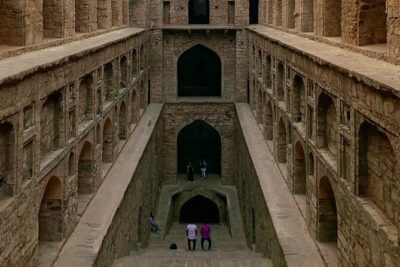
In central Delhi, Gurdwara Bangla Sahib is a strong first stop. You’ll see how the Sikh tradition centers on a water tank and community space, and the visit is free. Then you’ll spend time at Agrasen ki Baoli, one of Delhi’s stepwell monuments. It’s not the kind of place you’d normally rush through—stepwells have a calm, “slow down” feel, and they’re a nice change from big building exteriors.
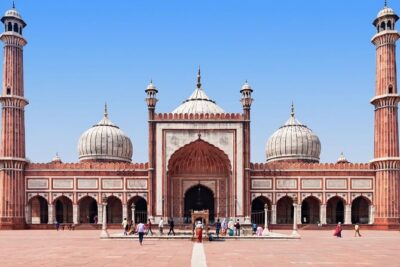
On the second day you go broader: Qutub Minar (a UNESCO site), Lotus Temple (built in 1986 and open to everyone), India Gate, and Jama Masjid. You’ll also visit Humayun’s Tomb and walk through Chandni Chowk in Old Delhi. That mix is key. Delhi can feel like two different cities—imperial monuments and street-level markets—and this gives you both without skipping the classics.
One realistic note: some Delhi sights have admission fees and some are listed as free. Also, the day includes multiple neighborhoods, so wear shoes you can walk in, and plan for traffic-driven timing.
Agra highlights: Taj Mahal at sunrise, plus Fort, Baby Taj, and Mehtab Bagh
Agra is where the trip leans hard into the “Golden Triangle” identity. You’ll drive from Delhi to Agra (about 222 km, roughly 4 hours), check in, and immediately start monument time.
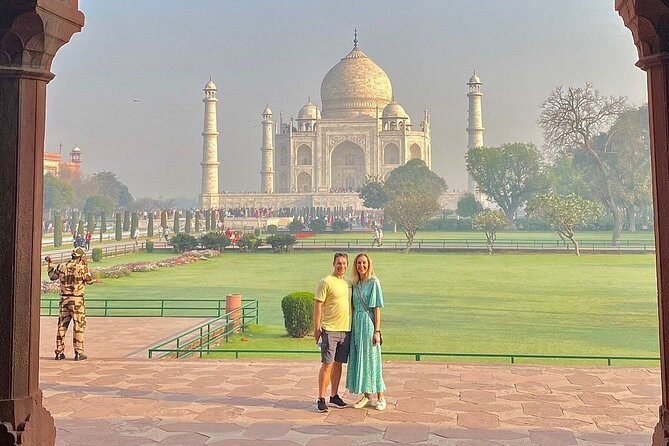
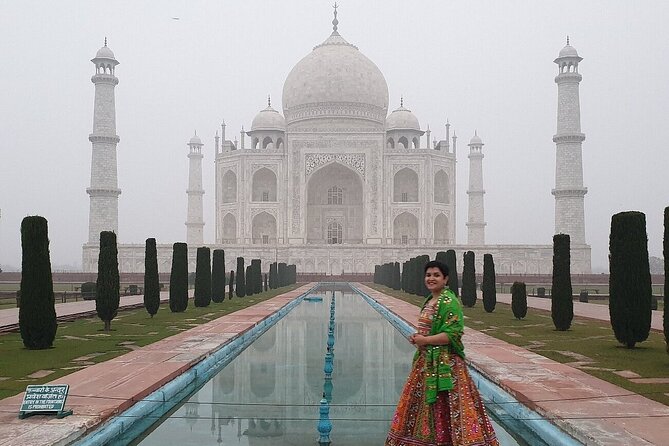
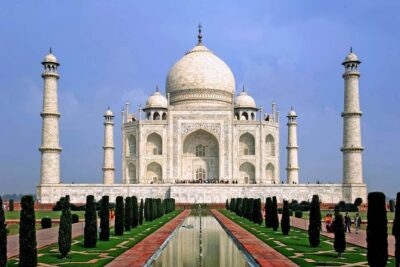
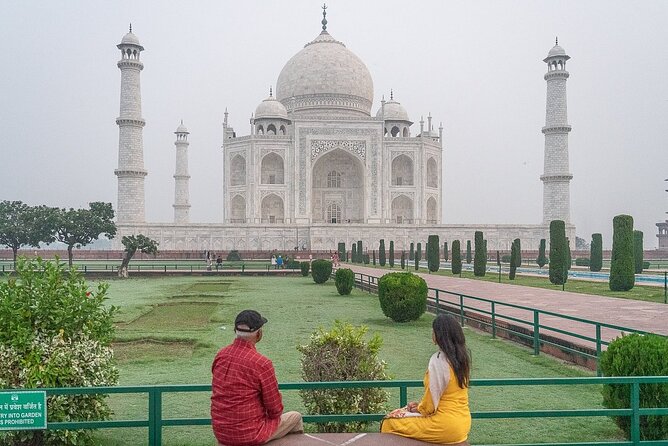
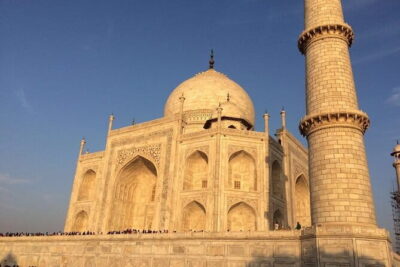
The Taj Mahal moment gets two different treatments. First, you’ll see it during the day with a guided visit planned for later. Then the next day you get the one most people dream about: watching the sun rise over the Taj Mahal and going inside with a guide (about two hours inside). This isn’t just a schedule flex. Sunrise light changes how the marble reads, and your headspace feels different in the early hours.
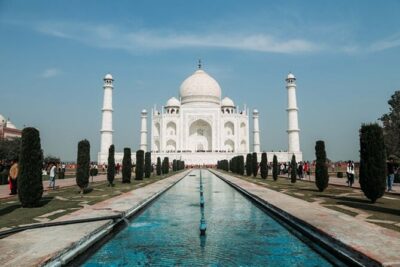
You’ll also cover the surrounding “Taj neighborhood” without turning it into a blur. Expect Agra Fort for Mughal-era power and architecture, and Itmad-ud-Daula, often called the Baby Taj, which is usually the quieter, more delicate-feeling stop of the area. Add Mehtab Bagh (Moonlight Garden) for photo angles toward the Taj across the Yamuna, and you get a sequence that feels like a full story instead of a single ticket photo.
A practical advantage here: the included battery bus ride helps with the Taj Mahal area travel from the parking approach to the monument area. In a busy, hot location, that’s a real time and comfort win.
Fatehpur Sikri and Chand Baori: Mughal grandeur plus a stepwell you remember
One of the nicest surprises in this trip is that Agra isn’t the only big-name heritage stop around the Taj route. On the day after the sunrise Taj visit, you go to Fatehpur Sikri, built in the late 16th century under Akbar. It served as the Mughal capital for about a decade, and the scale shows why it had that “city-within-a-city” ambition.
Then you hit Chand Baori in Abhaneri. This stepwell stretches deep—about 30 meters into the ground—and is described as one of the largest and deepest in India. If you’ve never seen a stepwell like this in person, it can feel oddly modern in its geometry. You’re not just sightseeing; you’re learning how people designed water and built community around it.
This portion is also a good pacing tool. After two intense Taj moments, these sites are different enough that your eyes and attention reset.
Ranthambore National Park safari days: wildlife focus with two chances
Ranthambore is the center of the wildlife portion. After arrival and hotel check-in, you get two safari sessions: one after breakfast and another in the evening. That structure matters because it gives you more than one shot at sightings, and it breaks your day into two natural halves: daytime animal movement and lower-light animal behavior.
The safari entrance is included, and the park drive uses canter or jeep options. You’ll be out in the park environment long enough to feel like you left the cities behind.
One key point to keep your expectations realistic: wildlife outings depend on conditions. The tour’s own policy notes that poor weather can affect scheduling, and the trip requires good conditions. So go in excited, but not with the idea that every safari guarantees the same outcome.
Deeper into Rajasthan, straight from Delhi
Jaipur start with Galtaji and Birla Mandir, then a full city day
Jaipur arrives after Ranthambore and sits inside a bigger Rajasthan theme: temples, royal architecture, and old-world city design.
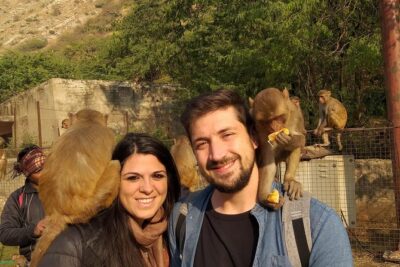
On the first Jaipur day, you’ll visit Galtaji Temple (also called the Monkey Temple), known for its complex structure and three sacred pools of water. It’s a sensory stop: you’re surrounded by locals, movement, and a more lived-in devotional energy than you often get with purely monument-based sites.
Then comes Birla Mandir, a Hindu temple in Jaipur on elevated ground at the base of Moti Dungri. The inclusion works well because it gives you a spiritual palate cleanser before you dive into Jaipur’s famous royal sights later.
Later, you also include Jhalana Safari Park entrance. This is a second wildlife addition, so you’re not repeating the same experience—you’re changing the setting within Rajasthan.
Jaipur heritage circuit: stepwell, city palace, Jantar Mantar, and Hawa Mahal
The next day in Jaipur is packed with the best-known visuals, but it still moves with a logical flow.
You start with Panna Meena ka Kund, another stepwell and a quick but memorable site. Then you’ll tour a palace-and-monument zone associated with Jaipur’s royal center (including a guide-led look at palace, squares, and monuments built by Raja Man Singh I).
You’ll also stop for photos at Jal Mahal, a palace located in the middle of Man Sagar Lake. Even when you’re not spending long there, it’s a useful contrast: you’re watching Jaipur’s sandstone and architecture reflected against water.
Next comes City Palace, where you spend about an hour and get the royal administrative and ceremonial seat of the Maharajas. Then you go to Jantar Mantar, a UNESCO World Heritage site built in 1734, with astronomical instruments made under Sawai Jai Singh II. Finally, Hawa Mahal (Palace of Breeze) rounds things out, with its five-storey pyramidal shape.
Two practical tips here: keep your water bottle handy, and plan for heat during mid-day monument time. Also note that several of these sights list admission as not included, so budget for entry fees.
Udaipur: Lake Pichola views plus palaces and a museum you can skip

After Jaipur, you’ll drive to Udaipur (about 8 hours). The schedule gives you a check-in and a looser evening: you can explore local markets and choose dinner on your own. That’s a nice pressure release in the middle of an otherwise tight tour.
In Udaipur, you focus on scenic water and layered royal spaces. Lake Pichola is first, and there’s a chance for a boating experience around the lake with views toward Jagmandir Palace island (listed as admission not included). Then you’ll visit City Palace, also on the lake’s edge, with highlights like weapons, guns, sedan chairs, tiger cages, and royal displays.
Jagdish Temple follows within the City Palace complex area. It’s a shorter visit, about 45 minutes, which helps keep your day from feeling dragged out.
You’ll also have an option with Bagore Ki Haveli Museum. It includes a guide and private transport, and the tour notes you can skip it if you don’t want the stop. I like this kind of flexibility, because it lets you match the day to your energy level.
Jodhpur: fort museum time, then a Bishnoi village excursion
From Udaipur, you head to Jodhpur in the morning (about 6 hours). Once you check in, you’ll head to the Clock Tower Market, which gives you an immediate “walkable local texture” moment.
Then the next day is about royal monuments and museum spaces. You’ll visit Mehrangarh Fort, a former palace turned museum on a rocky outcrop. Expect weapons, paintings, and royal palanquins (sitting-style sedan chairs). Then you’ll go to Umaid Bhawan Museum, described as one of the world’s largest private residences and a museum setting built with golden-yellow sandstone.
Next is Jaswant Thada, known as the Taj Mahal of Jodhpur, a marble cenotaph and mausoleum for Marwar’s kings.
By the afternoon, you move toward the human side of Rajasthan with an excursion to Bishnoi village, noted as highly recommended. The description mentions time with local women and a day in local flavor before returning to the hotel. That contrast—fort museums in the morning, village life later—is exactly what makes the overall trip feel more than just monuments.
Pushkar and Mandawa: Brahma Temple prayers and painted havelis
After Jodhpur, you drive to Pushkar (about 5 hours) and check in for an overnight stay.
Pushkar includes a visit to the Brahma Temple, described as the only one of Lord Brahma in the world. Then you’ll go to Pushkar Lake, including time at Brahma Ghat, where family people offer prayers and rituals. This is one of those experiences where the setting matters as much as the building. If you like photography, Brahma Ghat is specifically highlighted for photography and blessings rituals.
After Pushkar, you head to Mandawa. You’ll visit Francisco painted havelies and then explore the village area in the evening. Painted haveli streets can be surprisingly relaxing after weeks of high-contrast monument days—bright walls, shaded lanes, and small-scale details.
Price and logistics: is $835.72 good value for 14 days?
At about $835.72 per person, this tour can feel like good value if you’re booking for real “all-in” movement. The included piece is strong: transport by private air-conditioned vehicle with driver, hotel or airport pick-up/drop-off, private local guides, and mineral water during journeys. You’re also getting safari entry included (Ranthambore plus Jhalana Safari Park), and if you choose the option with hotels, you get 13 nights of accommodation plus daily breakfast.
Where the math can shift is in the excluded items. Monument entrance fees aren’t included, and the trip lists “any meal” as not included except for breakfast in the hotel-inclusive option. Several sights in Delhi, Agra, and Jaipur show as admission not included, so you’ll want to plan a daily budget for tickets and occasional paid attractions.
Also, it’s private, so you’re paying for a tailored service rather than sharing costs across strangers. For solo travelers, that can still be reasonable if you value guides and door-to-door transfers more than free-wheeling on your own.
Overall, the value depends on whether you want “managed movement” across multiple cities. If that’s your style, the included transportation and guiding add real comfort for the price.
Practical tips so this trip feels smooth, not rushed
- Plan around early starts. The Taj Mahal sunrise visit is one of the trip’s core moments, so expect an early day structure around Agra.
- Bring a power plan for ticket days. The tour includes mobile ticketing, but some monuments still require paid entry, so keep some cash or card access for on-site fees.
- Keep your safari mindset flexible. Wildlife depends on conditions, and the trip specifically notes weather can affect the experience.
- Pack for long drives. You’ll have drive stretches like Delhi to Agra (about 4 hours) and Jaipur to Udaipur (about 8 hours), so snacks, water habits, and a hat can make the ride feel less tiring.
- Use the skip options when you want. The Bagore Ki Haveli Museum stop includes an option to skip, and that flexibility can help you keep your energy for the next day.
Should you book this Golden Triangle with wildlife and Rajasthan heritage?
I’d book it if you want a private, guided trip that covers Delhi, Agra, and Jaipur in a way that still leaves room for surprise stops like stepwells and a real break into Ranthambore and Jhalana wildlife time. You’ll also like it if you value comfortable logistics: air-conditioned vehicles, pick-ups at the airport, and helpful transport details like the Taj Mahal battery bus segment.
I’d think twice if you hate fast transitions between cities or you’re the kind of traveler who wants slow mornings and lots of free time in one place. This route is built to move, and the days can feel full.
If you want a Golden Triangle trip that’s more than just three cities and a camera checklist—this one has enough structure and variety to earn its keep.
FAQ
Where does the tour start?
The tour start point is Indira Gandhi International Airport in New Delhi, with pick-up mentioned at Terminal 3.
Are airport pickup and drop-off included?
Yes. The tour includes hotel or airport pick-up and drop-off.
Is accommodation included in the price?
Accommodation is included only if you book the option including hotels, listed as 13 nights. Without the hotel-inclusive option, the tour still provides transport and guided sightseeing, but accommodation and breakfast are not included.
Is daily breakfast included?
Daily breakfast is included in the version that includes hotel accommodation.
What vehicle will I travel in?
The vehicle depends on your group size: a 4-seater sedan for 1–2 people, a 6-seater wagon for 3–4 people, and a 10-seater minivan for 5–10 people.
Are monument entrance tickets included?
No. Monument entrance fees are listed as not included, even though some stops in the day plans are marked free.
Which safari experiences are included?
Ranthambore Safari Park entrance is included (with canter or jeep), and Jhalana Safari Park entrance is included. Ranthambore includes two safari sessions.
Is the Taj Mahal transportation included?
Yes. The tour includes a battery bus ride to and from the Taj Mahal parking area up to the monument approach.
What if poor weather disrupts the experience?
The tour notes it requires good weather. If canceled due to poor weather, you’ll be offered a different date or a full refund.
More Tour Reviews in New Delhi
- Old & New Delhi City Tour – Half or Full Day Options Available
★ 5.0 · 4,811 reviews - Half Day Private Delhi City Tour
★ 5.0 · 4,474 reviews - Same Day Taj Mahal, Agra Fort & Baby Taj Tour from Delhi by Car
★ 5.0 · 4,304 reviews - Taj Mahal Day Tour from Delhi by Superfast Train – TOP RATED TOUR
★ 5.0 · 4,166 reviews - Delhi: Old and New Delhi Private Full or Half-Day Tour
★ 4.9 · 3,776 reviews
Further into Rajasthan
- Alluring North India and Rajasthan Tour
★ 5.0 · 552 reviews - 13 Nights 14 Days Private Tour of Heritage Rajasthan from New Delhi
★ 5.0 · 149 reviews - 8-Day Golden Triangle & Rajasthan Private Tour from Delhi
★ 5.0 · 134 reviews - 12-Days – Splendors of Golden Triangle & Rajasthan
★ 5.0 · 72 reviews - Royal Rajasthan: Whispers From The Past Curated Journey
★ 5.0 · 34 reviews
The Full Golden Triangle, More Options
- 3-Days Private Golden Triangle Tour: Delhi, Agra & Jaipur by Car
★ 5.0 · 1,107 reviews - 3-Days Private Golden Triangle Tour: Delhi, Agra & Jaipur by Car
★ 5.0 · 1,098 reviews - 3-Day Delhi, Agra and Jaipur Private Tour – India Golden Triangle
★ 5.0 · 812 reviews - Four-Day Private Luxury Golden Triangle Tour to Agra and Jaipur From New Delhi
★ 5.0 · 807 reviews - 5 Nights 6 Days Private Golden Triangle Tour – Delhi Agra Jaipur
★ 5.0 · 574 reviews
Just added: more New Delhi reviews to browse
- 4 days Golden Triangle Tour★ 5.0 · 3 reviews
- Discover Old & New Delhi: Private Tour with Street Food★ 5.0 · 3 reviews
- Taj Mahal Tour From Delhi By Private Car★ 4.5 · 3 reviews
- Golden Triangle Tour 5 Days★ 5.0 · 3 reviews
- Taj Mahal: Express Entry Ticket For Sunset Tour with guide★ 5.0 · 3 reviews
- Agra Taj Mahal Sunrise & Sunset Tour from Delhi★ 5.0 · 3 reviews
Golden Triangle Tours, compared.
 ★ 5.03-Days Private Golden Triangle Tour: Delhi, Agra & Jaipur by CarFrom $1271,107 reviews
★ 5.03-Days Private Golden Triangle Tour: Delhi, Agra & Jaipur by CarFrom $1271,098 reviews
★ 5.03-Days Private Golden Triangle Tour: Delhi, Agra & Jaipur by CarFrom $1271,107 reviews
★ 5.03-Days Private Golden Triangle Tour: Delhi, Agra & Jaipur by CarFrom $1271,098 reviews
 ★ 5.03-Day Delhi, Agra and Jaipur Private Tour – India Golden TriangleFrom $110812 reviews
 ★ 5.0Four-Day Private Luxury Golden Triangle Tour to Agra and Jaipur From New DelhiFrom $160807 reviews
 ★ 5.05 Nights 6 Days Private Golden Triangle Tour – Delhi Agra JaipurFrom $240574 reviews
 ★ 5.04 Days Golden Triangle TourFrom $146499 reviews
 ★ 5.0Private Car and Drive for Golden Triangle (4N/5D)From $167451 reviews
 ★ 5.0Private Golden Triangle Tour Delhi Agra Jaipur ( Top Rated )From $148436 reviews
Browse the lists this tour appears in