
Reviewed · GOLDEN TRIANGLE TOURS
Golden Triangle 6 Days Tour from New Delhi
Golden Triangle routes can feel like a blur. This one is built for big-name sights with a private-vehicle pace that’s easier to manage. I like how the day plan clusters Delhi religious landmarks, then moves on to Agra’s highlights and finishes with Jaipur’s forts and observatory without making you guess logistics.
A second thing I appreciate is the mix of sightseeing styles: monuments like Qutub Minar alongside free faith stops such as the Lotus Temple and Gurudwara Bangla Sahib. One drawback to plan for: entrance fees and meals aren’t included, and breakfast and accommodation are also on you.
In This Review
- Key things that make this Golden Triangle tour work
- Golden Triangle in six days: what you’re actually signing up for
- Day 1 in Delhi: Qutub Minar, Lotus Temple, and Jama Masjid with an easy start
- Where Delhi’s spiritual stops add real value
- Day 2: Akshardham in the daytime, then Mehtab Bagh at sunset
- Day 3 in Agra: Taj Mahal in the morning, Agra Fort after
- Day 4: Fatehpur Sikri ghost city stop en route to Jaipur
- Jaipur day: Amber Palace, Jantar Mantar, City Palace, and Hawa Mahal
- Your guide experience: why people talk about Hasseb, Mudassir, Ali, and Sabi
- Price and logistics: value math for $350 per group
- Who this tour fits best (and who should look elsewhere)
- Should you book this Golden Triangle 6-day tour?
- FAQ
- Is pickup offered for this Golden Triangle tour?
- How many people can book under the group price?
- Is accommodation included in the tour price?
- Are breakfast and meals included?
- Are entrance fees included for all stops?
- Does the tour include private transportation?
- Is there a mobile ticket?
- How long are the drive legs between cities?
- Where does the tour end?
- Is free cancellation available?
Key things that make this Golden Triangle tour work
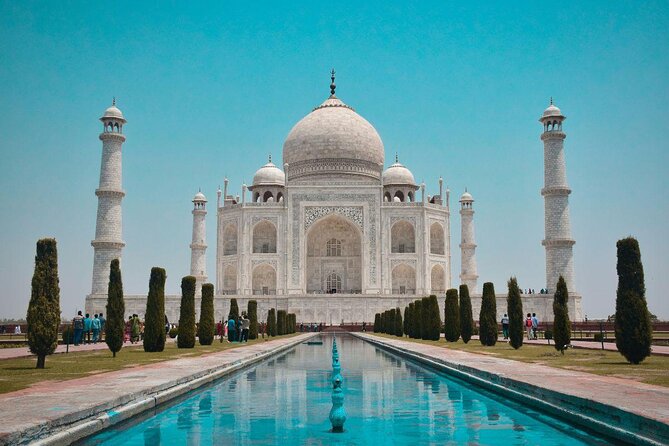
- Private transport across ~720 km of the Golden Triangle, with typical drive legs of 4 to 6 hours
- Sunset timing at Mehtab Bagh to catch a view of the Taj Mahal in softer light
- Delhi in one day with several major landmarks, including Lotus Temple and Jama Masjid
- Agra gets two strong anchors: Taj Mahal in the morning and Agra Fort with admission included
- Jaipur day is packed but structured with Amber Palace, Jantar Mantar, City Palace, and Hawa Mahal
- Guides get praised for real help, with names like Hasseb and Mudassir showing up in feedback for answering questions and giving context
Golden Triangle in six days: what you’re actually signing up for
The Golden Triangle name is simple: Delhi, Agra, and Rajasthan form a triangle on the map. Most first-timers hit these three places because they cover a lot of India’s “first look” geography—capital-city energy in Delhi, Mughal icon country in Agra, and royal Rajasthan in Jaipur—without needing a long trip.
This six-day version is built around a core trade-off. You get private transport and a tight route, but you also accept that you’ll be in transit often. The road circuit is about 720 km, and each leg is usually 4 to 6 hours. That is enough time to move you between the big cities, but not enough time to do side trips that fall outside the plan.
If you like clean structure, this works well. If you hate being on a schedule, it can feel fast. The best mindset is to treat this as a curated highlights trip with a private guide/driver setup, then plan a longer stay later if you fall in love with a place.
Delhi, Agra and Jaipur: more full circuits



Day 1 in Delhi: Qutub Minar, Lotus Temple, and Jama Masjid with an easy start
Your trip begins at Delhi International Airport. You’ll be met for a traditional Indian welcome, then taken to your pre-booked hotel via escorted transfer. That matters more than it sounds. Arriving in Delhi can be a shock—traffic, crowds, and the mental load of finding your way. Getting straight to the hotel lowers the stress fast.
After that, you’re sightseeing in a way that covers multiple sides of the city:
- Qutub Minar complex (2 hours): This is a major Delhi landmark, and you’ll have time here. Plan for heat and walking surfaces, and also plan on paying for admission separately since it’s not included.
- Lotus Temple (1 hour, free): You get a calm contrast to the historical monument vibe. This stop also introduces you to the Bahai faith in a space most people notice for its architecture.
- Gurudwara Bangla Sahib (short stop, free): It’s quick—think brief visit rather than a long hang. Still, it adds another faith perspective without adding ticket costs.
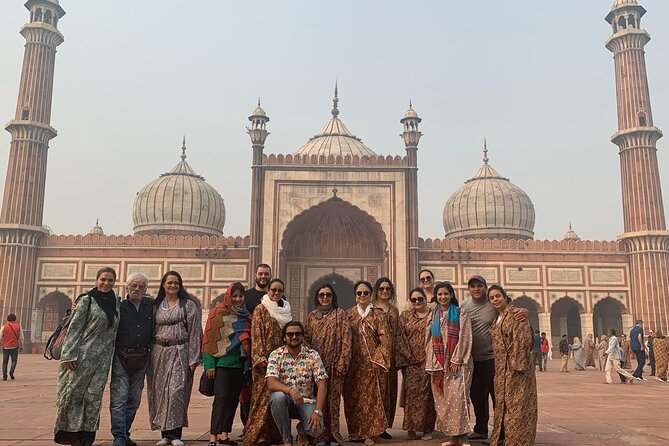
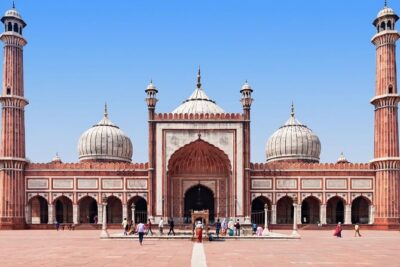
- Jama Masjid (45 minutes, admission not included): This is one of India’s oldest and biggest mosques, and it’s a powerful visual moment.
The practical win on Day 1 is that it blends major landmarks with free admission stops, so you’re not forced to pay all afternoon just to keep moving. The other win is pacing: each stop is limited, so you’re not stuck for hours in one place on Day 1.
Where Delhi’s spiritual stops add real value
Delhi is not just monuments. It’s religions in full view, coexisting in the same city. The smartest part of this schedule is that the day doesn’t only show stone and scrolls—it shows living places of worship too, including Lotus Temple and Gurudwara Bangla Sahib.
Also, you’ll likely get more from these visits if you go with two attitudes:
1) Keep your questions ready (you’ll be surrounded by people who can explain things).
2) Don’t rush photos. Look around first, then take pictures.
A small note for your planning: admission is free for Lotus Temple and Gurudwara Bangla Sahib, but not for Qutub Minar and Jama Masjid. So bring a buffer for entry fees on this first day.
Day 2: Akshardham in the daytime, then Mehtab Bagh at sunset
Day 2 starts with Swaminarayan Akshardham (1 hour, free). This is a temple stop that’s included without admission fees, and it helps you shift from older Delhi monuments into something more modern and planned.
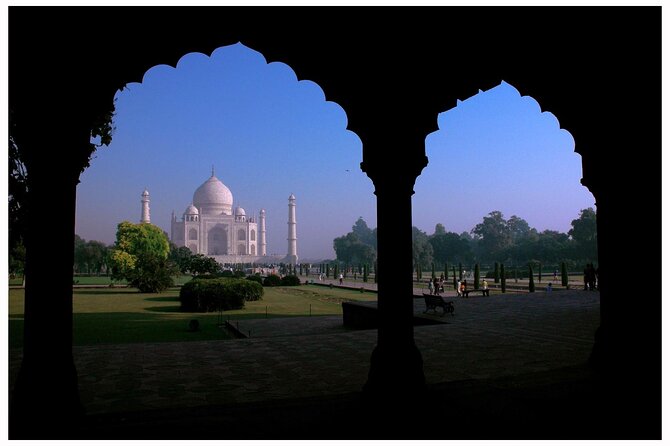
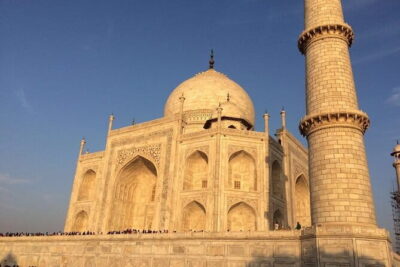
Then comes the highlight timing: Mehtab Bagh at sunset (1 hour, admission not included). This is scheduled specifically for the Taj Mahal view. Sunset changes everything about a landmark like the Taj. Even if you’ve seen pictures a thousand times, the light and atmosphere can feel different in person—less like a postcard and more like a real place glowing as day turns to evening.
One realistic consideration: because this is sunset-based, the day can feel tighter. You’ll want to be ready on time, keep your essentials packed, and avoid delaying the group with last-minute detours.
Day 3 in Agra: Taj Mahal in the morning, Agra Fort after
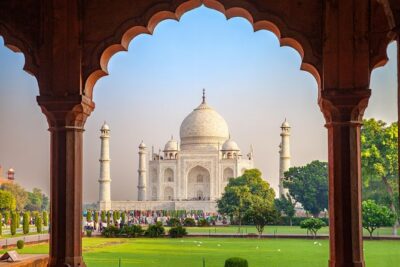
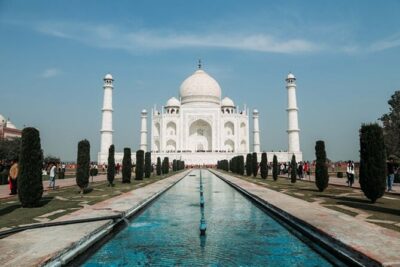
Agra is your “big ticket” day. You’ll go sightseeing for the Taj Mahal in the morning after breakfast, and the Taj stop is listed as 6 hours. That’s a meaningful block. It usually gives you enough time to not just arrive, take a few photos, and leave.
Then you’ll move to Agra Fort (1 hour, admission included). Having admission included here is a small but real value boost. You won’t need to budget separately for this one gate entry within the tour cost.
A practical tip: the Taj Mahal is usually the emotional high point. If you want the best experience, treat it like a visit with layers. Start with the exterior viewpoints, then slow down inside, and use the time you have. When you rush, you miss the details you came for.
Also remember the travel rhythm. By Day 3, you’ve already had at least one long drive and an intense start in Delhi. If you’re prone to getting tired early, plan for water breaks and simple pacing. The tour includes bottled water, which helps.
Worth putting side by side with this New Delhi pick:
Day 4: Fatehpur Sikri ghost city stop en route to Jaipur
Day 4 is a classic Golden Triangle move: drive toward Jaipur, but don’t waste the route. After breakfast, you’re driven toward Jaipur, and en route you visit Fatehpur Sikri, described as a ghost city. The stop covers major named sights within the complex, including Sikri Fort, Buland Darwaza, Kali Temple, and a White Marble Shrine. Admission is listed as free.
This is where the route becomes more than a checklist. Fatehpur Sikri gives you a different scale and mood than Delhi and Agra. It also breaks up the drive with a location that feels like a journey through time.
After that, there’s a brief market stop: Bapu Bazar. It’s listed as a very short stop, so think quick browsing rather than a full shopping session. Still, it’s a useful moment to pick up small items, snacks, or souvenirs without committing the entire afternoon.
Jaipur day: Amber Palace, Jantar Mantar, City Palace, and Hawa Mahal
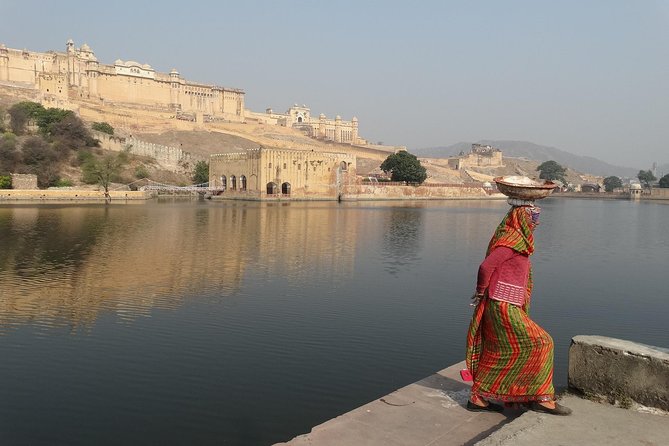
Jaipur is your full sightseeing day, and the order is logical: Amber Palace first, then Jantar Mantar, then the City Palace of Jaipur, and finally Hawa Mahal.
Here’s what each stop gives you:
- Amber Palace (2 hours, admission not included): This is the fortress/royal vibe anchor. It’s the kind of place where you understand why Jaipur became a power center.
- Jantar Mantar (45 minutes, admission not included): The tour highlights that it’s the biggest and only working observatory in India, and you’ll get an experience connected to astrological knowledge of the king of Jaipur. Even if you’re not a science person, a working observatory tells a story about how people tracked the sky with practical tools.
- City Palace of Jaipur (45 minutes, admission not included): This is where the tour frames a look at royal life through museum-style experiences.
- Hawa Mahal (10 minutes, admission not included): The Palace of Winds is short on time here, but it’s memorable. The structure is designed for the ladies of the royal families to see market life without being fully seen.
The biggest value of this Jaipur plan is that it’s not only one “type” of attraction. You get royal architecture, a scientific viewpoint, a museum/palace complex, and an iconic facade.
The biggest potential downside is that the admissions are not included for most Jaipur stops. So budget for entry fees on Day 5. Also, because Hawa Mahal is only 10 minutes, I’d treat it as a quick payoff, not a long visit.
Your guide experience: why people talk about Hasseb, Mudassir, Ali, and Sabi
The standout pattern from feedback tied to this route is guide support. Names that show up include Hasseb and Mudassir, plus Ali and Sabi as part of teams. Across those experiences, the praise centers on guides being attentive, respecting the group, and being willing to answer questions instead of just reciting a script.
This is a big deal on a Golden Triangle trip. You’re going to see world-famous monuments in a week. Without context, it can turn into a photo sprint. With good guidance, those stops become easier to understand—why they were built, what they represent, and how to interpret what you’re looking at.
So when you book, pay attention to the guide assignment. If your style is curiosity and conversation, this kind of guide can make the difference between a checklist trip and a trip that sticks with you.
Price and logistics: value math for $350 per group
The cost is $350 per group, up to 3 people. If you book with two friends or family members and fill the group cap, your per-person cost can be quite reasonable for a private car setup across multiple days.
What you get inside that price:
- Transport by private vehicle
- Bottled water
- Pickup and escorted transfer at arrival
- Mobile ticket
What you pay for separately:
- Entrance fees
- Food and drinks (including lunch)
- Accommodation
- Breakfast (it’s not included)
That means the tour price covers a big chunk of the hardest parts—getting you from place to place safely and on schedule. It does not cover the full “vacation package.” You still need to budget for hotels and meals, plus the entry fees at each stop that lists admission not included.
One smart move: when you plan your wallet, don’t just think about $350. Think about $350 plus two categories: (1) meals and (2) entrance fees. Your final spend will depend on how much you eat out and which entry gates you visit within each complex.
Also, booking seems popular. The average booking window is listed as 143 days, which is a polite hint to reserve early so you can pick dates that work with your other travel.
Who this tour fits best (and who should look elsewhere)
This is a good match if you:
- Want to see Delhi, Agra, and Jaipur in one go
- Prefer private transport over shared schedules
- Like guided context and asking questions
- Don’t mind a fast pace built around major highlights
It may not be ideal if you:
- Want lots of free time in each city
- Hate paying add-on entrance fees
- Are hoping for meals and hotel to be included in the same price
If you’re traveling with kids, note that children must be accompanied by an adult, and most travelers can participate. The day structure is intensive, so bring patience and a plan for rest stops.
Should you book this Golden Triangle 6-day tour?
If you’re a first-timer aiming for the classic route—Delhi to Agra to Jaipur—and you want it handled with private car logistics and a structured day-by-day plan, I’d say it’s a solid booking choice. The schedule is packed but not chaotic, and the included transport is what saves you the most time and stress.
I’d only hesitate if you want a slower trip or if you strongly prefer a fully inclusive price (meals, accommodation, and all admissions). Since entrance fees and food aren’t included, you’ll need to stay organized with your budget.
If you book, prepare two things: money for entry gates, and your questions for the guide. That’s where this tour can really pay off.
FAQ
Is pickup offered for this Golden Triangle tour?
Yes. You’ll be provided an escorted transfer from Delhi International Airport and pickup is included.
How many people can book under the group price?
The price is for a group of up to 3 people.
Is accommodation included in the tour price?
No. Accommodation is not included. You’ll be transferred to your pre-booked hotel.
Are breakfast and meals included?
No. Breakfast is not included, and food and drinks are not included (including lunch).
Are entrance fees included for all stops?
No. Entrance fees are not included in general. Some items are listed as admission included (for example, Agra Fort), but many are not.
Does the tour include private transportation?
Yes. You get transport by private vehicle.
Is there a mobile ticket?
Yes. The tour includes mobile ticket access.
How long are the drive legs between cities?
The road circuit is about 720 km, and each leg is typically 4 to 6 hours.
Where does the tour end?
On Day 6, you’ll be driven back to Delhi for a drop at the airport or hotel.
Is free cancellation available?
Yes. You can cancel up to 24 hours in advance for a full refund.
More Tours in New Delhi
- Old & New Delhi City Tour – Half or Full Day Options Available
★ 5.0 · 4,811 reviews - Half Day Private Delhi City Tour
★ 5.0 · 4,474 reviews - Same Day Taj Mahal, Agra Fort & Baby Taj Tour from Delhi by Car
★ 5.0 · 4,304 reviews - Taj Mahal Day Tour from Delhi by Superfast Train – TOP RATED TOUR
★ 5.0 · 4,166 reviews - Delhi: Old and New Delhi Private Full or Half-Day Tour
★ 4.9 · 3,776 reviews
More Tour Reviews in New Delhi
- Old & New Delhi City Tour – Half or Full Day Options Available
★ 5.0 · 4,811 reviews - Half Day Private Delhi City Tour
★ 5.0 · 4,474 reviews - Same Day Taj Mahal, Agra Fort & Baby Taj Tour from Delhi by Car
★ 5.0 · 4,304 reviews - Taj Mahal Day Tour from Delhi by Superfast Train – TOP RATED TOUR
★ 5.0 · 4,166 reviews - Delhi: Old and New Delhi Private Full or Half-Day Tour
★ 4.9 · 3,776 reviews
The Full Golden Triangle, More Options
- 3-Days Private Golden Triangle Tour: Delhi, Agra & Jaipur by Car
★ 5.0 · 1,107 reviews - 3-Days Private Golden Triangle Tour: Delhi, Agra & Jaipur by Car
★ 5.0 · 1,098 reviews - 3-Day Delhi, Agra and Jaipur Private Tour – India Golden Triangle
★ 5.0 · 812 reviews - Four-Day Private Luxury Golden Triangle Tour to Agra and Jaipur From New Delhi
★ 5.0 · 807 reviews - 5 Nights 6 Days Private Golden Triangle Tour – Delhi Agra Jaipur
★ 5.0 · 574 reviews
Just added: more New Delhi reviews to browse
- 4 days Golden Triangle Tour★ 5.0 · 3 reviews
- Discover Old & New Delhi: Private Tour with Street Food★ 5.0 · 3 reviews
- Taj Mahal Tour From Delhi By Private Car★ 4.5 · 3 reviews
- Golden Triangle Tour 5 Days★ 5.0 · 3 reviews
- Taj Mahal: Express Entry Ticket For Sunset Tour with guide★ 5.0 · 3 reviews
- Agra Taj Mahal Sunrise & Sunset Tour from Delhi★ 5.0 · 3 reviews
Golden Triangle Tours, compared.
 ★ 5.03-Days Private Golden Triangle Tour: Delhi, Agra & Jaipur by CarFrom $1271,107 reviews
★ 5.03-Days Private Golden Triangle Tour: Delhi, Agra & Jaipur by CarFrom $1271,098 reviews
★ 5.03-Days Private Golden Triangle Tour: Delhi, Agra & Jaipur by CarFrom $1271,107 reviews
★ 5.03-Days Private Golden Triangle Tour: Delhi, Agra & Jaipur by CarFrom $1271,098 reviews
 ★ 5.03-Day Delhi, Agra and Jaipur Private Tour – India Golden TriangleFrom $110812 reviews
 ★ 5.0Four-Day Private Luxury Golden Triangle Tour to Agra and Jaipur From New DelhiFrom $160807 reviews
 ★ 5.05 Nights 6 Days Private Golden Triangle Tour – Delhi Agra JaipurFrom $240574 reviews
 ★ 5.04 Days Golden Triangle TourFrom $146499 reviews
 ★ 5.0Private Car and Drive for Golden Triangle (4N/5D)From $167451 reviews
 ★ 5.0Private Golden Triangle Tour Delhi Agra Jaipur ( Top Rated )From $148436 reviews