
Three days. Three cities. Zero guesswork.
This Golden Triangle tour is interesting because it’s private, guided, and built around major landmarks in Delhi, Agra, and Jaipur without making you plan each transfer. I especially like the guaranteed skip-the-long-lines approach for big-ticket stops, and the 4-star hotel setup with breakfast included for all 3 mornings. One consideration: you’ll be on the move between cities, so it’s not a laid-back trip—comfort matters, and you’ll want to keep your expectations realistic about road time.
You start at 7:00am with pickup (airport/rail/hotel or other desired place in Delhi). Then your guide strings together monuments that look great together on a photo route and make sense historically, from Qutub Minar and Humayun’s Tomb in Delhi to the Taj Mahal and Agra Fort, then on to Jaipur’s Amer Fort and Jantar Mantar. The day you travel could affect one key stop: the Bahai Temple (Lotus Temple) is closed on Mondays, so check your travel dates before you get too excited about that specific visit.
In This Review
- Quick Highlights You’ll Feel Right Away
- Golden Triangle in 3 Days: The Real Value Here
- Day 1 in Delhi: Qutub Minar, Humayun’s Tomb, Lotus Temple, India Gate, and Old Delhi
- Chandni Chowk: Where the Trip Turns From Sightseeing to Street Life
- Red Fort on Day 1: A Big Stage Moment
- Delhi to Agra Drive: Efficient Transfers Without Killing the Day
- Day 2 in Agra: The Taj Mahal, Agra Fort, and Itimad-ud-Daulah
- Agra Fort: Scale and Power
- The “Bachcha Taj” (Itimad-ud-Daulah): A More Relaxed Finale
- Day 3 in Jaipur: Amer Fort, Jal Mahal, Hawa Mahal, and Jantar Mantar
- Jal Mahal: Palace on the Lake
- Hawa Mahal: Quick, Iconic, and Very Jaipur
- Jantar Mantar: The UNESCO Astronomical Instruments Stop
- Jaipur Back to Delhi: A Long Drive, a Clean Finish
- What You’ll Pay vs. What You’ll Enjoy: Price and Value at $330.67
- Who This Tour Fits Best (and Who Might Want to Rethink It)
- Should You Book Golden Taj Tours for the Golden Triangle?
- FAQ
- What’s included in the Golden Triangle 3 Days 2 Nights tour price?
- How long is the tour and how many cities do you visit?
- What time does the tour start?
- Do you provide hotel or airport pickup in Delhi?
- Is this tour private or shared with other groups?
- Are meals included besides breakfast?
- Are entrance tickets included for all the monuments?
- Is the Lotus Temple open every day?
Quick Highlights You’ll Feel Right Away
- Skip-the-line promise helps you spend more time looking and less time waiting.
- Private vehicle + guide means fewer gaps in the day and smoother timing between cities.
- 4-star hotel with breakfast (3) is included, so mornings start easier.
- Delhi old-city energy at Chandni Chowk gives you shopping and street-life, not just big monuments.
- Agra’s top trio—Taj Mahal, Agra Fort, and Itimad-ud-Daulah—keeps the day packed but logical.
- Jaipur’s mix of forts and instruments (Amer Fort, Jal Mahal, Hawa Mahal, Jantar Mantar) shows different sides of the city.
Golden Triangle in 3 Days: The Real Value Here
For a lot of people, the Golden Triangle is their first full taste of North India. This version is built for convenience: private transport, a professional guide, and a tight circuit between New Delhi → Agra → Jaipur → back to Delhi. That matters because the “problem” with big cities is rarely the sights—it’s the time you waste figuring out how to reach them and when to go.
At $330.67 per person for about 3 days and 2 nights, the value comes from what’s bundled. You’re not just paying for a sightseeing list; you’re paying for driver/guide services, hotel pickup and drop-off, private vehicle transport, bottled water, and 4-star accommodation with breakfast. Since food and many attraction entries are not included, you can also budget more clearly instead of getting surprised later.
If you want a trip where someone else manages the sequence, this works well. If you hate feeling rushed, you can still enjoy it—but you’ll want to pack light and keep your stamina up.
Delhi, Agra and Jaipur: more full circuits



Day 1 in Delhi: Qutub Minar, Humayun’s Tomb, Lotus Temple, India Gate, and Old Delhi
Day 1 is designed like a guided “greatest hits” loop. You’ll start with pickup and head through central Delhi landmarks while your guide narrates what you’re seeing. Expect the trip to include Qutub Minar (UNESCO site; a 73-metre tapering minaret with five storeys), Humayun’s Tomb (commissioned 1569–70 by Empress Bega Begum), India Gate, and a drive-by view of major government buildings like the Parliament House and the President’s Palace area.
What I like about this setup is the variety in architecture and purpose. Qutub Minar is all about height and geometry—built by Qutub-ud-din Aibek of the Slave Dynasty, and visible even when you’re just driving through the neighborhood. Humayun’s Tomb is a quieter kind of awe: your guide’s explanation ties the design to the person who commissioned it and the Persian architects named for the project. Even if you’re not chasing dates, the meaning lands fast.
Then the route shifts toward spiritual space and public welcome with the Bahai Temple (Lotus Temple). The Lotus Temple is open to all religions and is known for its flowerlike shape. One practical heads-up: it’s closed on Mondays. If your Day 1 happens to be Monday, plan for an alternative stop or accept that you’ll see the area from outside rather than going in.
Chandni Chowk: Where the Trip Turns From Sightseeing to Street Life
After the landmark circuit, you’ll have time for shopping in Old Delhi, including a stop in Chandni Chowk. This is the part I’d call the real texture of the day. Chandni Chowk is packed with markets for spices, dried fruit, silver jewelry, saris, essential oils, stationery, and traditional sweets—meaning you’re not just observing India, you’re stepping into the rhythm of it.
If you’re the kind of traveler who likes souvenirs that look like they came from a place (not a generic store), this is your moment. Go in with a loose plan: pick one or two categories you really want, then slow down and browse.
Red Fort on Day 1: A Big Stage Moment
The tour also includes Red Fort time, and it’s worth understanding the context. Every year on India’s Independence Day, the Prime Minister hoists the Indian tricolour at the main gate and gives a nationally broadcast speech from its ramparts. That’s the kind of fact that changes how you see a fort: you’re not only looking at stones, you’re looking at a national stage that still matters.
Admission for Red Fort is listed as not included, so budget for the entry cost if you decide to go beyond photos.
Delhi to Agra Drive: Efficient Transfers Without Killing the Day
After your Delhi touring time and shopping, you’ll be taken to Agra by expressway for about a 3-hour drive. When the itinerary is this tight, the transfer can be the make-or-break moment—so I like that you check in to your hotel and get to relax on arrival.
This is where “private tour” shows its value. You’re not forced into random taxi switching or guessing where to meet. You’re in the hands of the guide and driver, and you can treat the evening as your recovery time instead of turning it into another mini-errand list.
Worth putting side by side with this New Delhi pick:

Day 2 in Agra: The Taj Mahal, Agra Fort, and Itimad-ud-Daulah
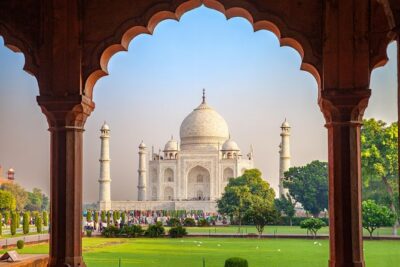
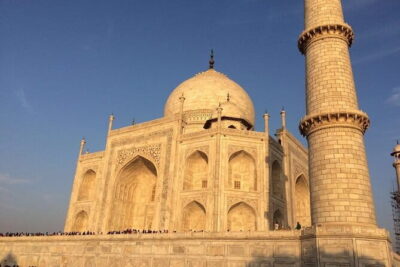
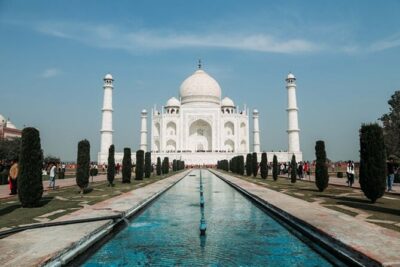
Agra is where the trip earns its nickname. The centerpiece is the Taj Mahal, an ivory-white marble mausoleum on the south bank of the Yamuna. It was commissioned in 1632 by Shah Jahan to house the tomb of his favourite wife, Mumtaz Mahal, and it also houses Shah Jahan’s own tomb.
You get about 2 hours for Taj Mahal. That’s a good chunk if you want to do more than snap a few quick photos. The trick with Taj Mahal time is to slow down for the details you might normally skip—especially when you’re standing in a place people rush through. Let your eyes adjust. Then look for how the structure frames space around it.
Agra Fort: Scale and Power
After the Taj Mahal, you’ll visit Agra Fort. It was the main residence of Mughal emperors until 1638, when the capital shifted to Delhi. The last Indian rulers before the British were the Marathas.
Agra Fort is listed for about 1 hour. This is an important balance in the day: after the delicate look of the Taj Mahal, the fort gives you heavy, fortress energy. If you like seeing how political power physically expresses itself—walls, courtyards, and controlled access—this stop pays off.
The “Bachcha Taj” (Itimad-ud-Daulah): A More Relaxed Finale
The last Agra stop is the Tomb of I’timād-ud-Daulah, often described as a “jewel box” and nicknamed the Bachcha Taj, sometimes considered a draft of the Taj Mahal. You get about 1 hour here.
I like this final piece because it’s not just another massive monument. It gives you a different mood and a more human-scale way to end your Agra day. If you’re feeling monument fatigue after Taj and Agra Fort, this stop is often where you reset.
Note: admission tickets are listed as not included for these sites, so keep an eye on entry fees and plan to pay separately where needed.
Day 3 in Jaipur: Amer Fort, Jal Mahal, Hawa Mahal, and Jantar Mantar
Jaipur is where the Golden Triangle widens your view of India beyond the Mughal landmarks. Day 3 focuses on forts, palaces, and an unusual UNESCO-listed science monument.
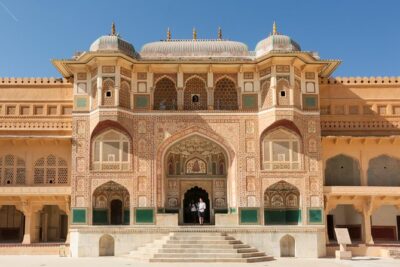
You’ll start with Amer (Amer Fort), located in Amer, about 11 kilometres from Jaipur. Amer Fort is the principal tourist attraction in Jaipur, and the tour lists it as admission ticket free with about 2 hours planned.
Amer Fort is an easy place to understand why people love Jaipur forts: it’s high on a hill, and you feel the “commanding position” of a stronghold even before you get deep into details. It’s also a great stop to wear shoes you don’t mind walking in—forts don’t do flat comfort.
Jal Mahal: Palace on the Lake
Next is Jal Mahal (Water Palace), a palace located in the middle of Man Sagar Lake. It was renovated and enlarged in the 18th century by Maharaja Jai Singh II of Amber. You’ll have about 1 hour.
This stop works because it’s visually different. Instead of walls and staircases, you get water and a palace silhouette. It’s listed as admission not included, so treat the entry fee as optional unless you specifically want to go inside.
Hawa Mahal: Quick, Iconic, and Very Jaipur
Then you’ll see Hawa Mahal – Palace of Wind. Built in 1799 by Maharaja Sawai Pratap Singh, it extends along the edge of the City Palace area and into the Zenana (women’s chambers).
You only get about 30 minutes here. That sounds short, but it matches the purpose: it’s one of those sights you want to look at closely, take your photos, and move on while the day still has energy for the next stop.
Jantar Mantar: The UNESCO Astronomical Instruments Stop
The final major Jaipur stop is Jantar Mantar. It’s a collection of nineteen architectural astronomical instruments, completed in 1734, and it’s a UNESCO World Heritage Site. It features the world’s largest stone sundial (as listed in the tour details).
You’ll have about 1 hour. This is one of those stops many people don’t plan for, but it turns into a memorable break from forts and palace facades. You’re seeing how design served measurement and observation—something you can usually only appreciate once you’re standing where it was built to work.
Jaipur Back to Delhi: A Long Drive, a Clean Finish
After sightseeing, the tour returns to Delhi with a drive time of about 6 hours. You’ll have lunch in a local restaurant on your own expense, plus free time for shopping in Jaipur before you leave.
This is the right moment to set your expectations: this is not the day to plan a bunch of extra stops in Delhi afterward unless your schedule is flexible. When you book this kind of route, you’re buying momentum and convenience, not leaving time for surprises.
What You’ll Pay vs. What You’ll Enjoy: Price and Value at $330.67
This tour is priced at $330.67 per person. For that, you’re getting a lot of logistical work handled for you: private vehicle transport, a professional guide, hotel pickup and drop-off, bottled water, 4-star accommodation, and breakfast (3). You also get a guaranteed skip the long lines promise, which can be a big quality-of-life upgrade at famous sites.
Where you’ll likely spend extra is in two categories:
- Food and drinks: not included unless specifically stated. Lunch on Day 3 is clearly own expense.
- Attraction entry: several listed stops show admission tickets as not included. A few items are listed as free in the itinerary notes, but you shouldn’t assume everything is covered.
So the value equation is simple. If you want to see the Golden Triangle highlights with minimal friction, this price makes sense. If you plan to skip many paid entries and you’re comfortable arranging your own transport, it may feel pricier than doing it independently.
Who This Tour Fits Best (and Who Might Want to Rethink It)
This tour is a strong fit if you:
- want a guided, private route between Delhi, Agra, and Jaipur
- care more about seeing the key landmarks efficiently than building an itinerary from scratch
- like having breakfast and hotel handled
- value “less waiting” with the skip-the-line promise
It might be less ideal if you:
- hate long driving days and fast-paced schedules
- are traveling specifically to one or two sites that can be closed on certain weekdays (remember Lotus Temple closure on Mondays)
- want totally free time every day with no monument stops
Should You Book Golden Taj Tours for the Golden Triangle?
I’d book it if you want your first Golden Triangle trip to feel organized and guided. The included private transport, professional guide, 4-star hotel, and breakfast remove a lot of the stress that usually comes with doing Delhi, Agra, and Jaipur in one swing.
Before you commit, do two quick checks:
- Confirm your travel date doesn’t land your Lotus Temple day on a Monday.
- Budget for entrance fees for the sites labeled as not included, and plan for lunch/extra snacks on your own.
If those boxes work for you, this is the kind of tour that lets you spend your energy on seeing—not figuring out.
FAQ
What’s included in the Golden Triangle 3 Days 2 Nights tour price?
The tour includes bottled water, a driver/guide and a professional guide, hotel pickup and drop-off, private transport by vehicle, a 4-star hotel accommodation for the 2 nights, and breakfast for 3 days. It also includes the skip-the-long-lines promise and a mobile ticket.
How long is the tour and how many cities do you visit?
It’s approximately 3 days and 2 nights. You’ll visit New Delhi, Agra, and Jaipur.
What time does the tour start?
The start time is listed as 7:00 am.
Do you provide hotel or airport pickup in Delhi?
Yes. Pickup is offered from the airport, railway station, hotel, or another desired place in Delhi, and you’re also dropped off at the end of the tour.
Is this tour private or shared with other groups?
It’s described as a private tour/activity, meaning only your group participates.
Are meals included besides breakfast?
Breakfast is included for 3 days. Food and drinks are not included unless specified.
Are entrance tickets included for all the monuments?
Not for all stops. Some items are listed as admission ticket free, while many stops show admission ticket not included, so you should expect to pay entry fees for some attractions.
Is the Lotus Temple open every day?
No. The Lotus Temple is noted as closed on Mondays.
More Tours in New Delhi
- Old & New Delhi City Tour – Half or Full Day Options Available
★ 5.0 · 4,811 reviews - Half Day Private Delhi City Tour
★ 5.0 · 4,474 reviews - Same Day Taj Mahal, Agra Fort & Baby Taj Tour from Delhi by Car
★ 5.0 · 4,304 reviews - Taj Mahal Day Tour from Delhi by Superfast Train – TOP RATED TOUR
★ 5.0 · 4,166 reviews - Delhi: Old and New Delhi Private Full or Half-Day Tour
★ 4.9 · 3,776 reviews
More Tour Reviews in New Delhi
- Old & New Delhi City Tour – Half or Full Day Options Available
★ 5.0 · 4,811 reviews - Half Day Private Delhi City Tour
★ 5.0 · 4,474 reviews - Same Day Taj Mahal, Agra Fort & Baby Taj Tour from Delhi by Car
★ 5.0 · 4,304 reviews - Taj Mahal Day Tour from Delhi by Superfast Train – TOP RATED TOUR
★ 5.0 · 4,166 reviews - Delhi: Old and New Delhi Private Full or Half-Day Tour
★ 4.9 · 3,776 reviews
The Full Golden Triangle, More Options
- 3-Days Private Golden Triangle Tour: Delhi, Agra & Jaipur by Car
★ 5.0 · 1,107 reviews - 3-Days Private Golden Triangle Tour: Delhi, Agra & Jaipur by Car
★ 5.0 · 1,098 reviews - 3-Day Delhi, Agra and Jaipur Private Tour – India Golden Triangle
★ 5.0 · 812 reviews - Four-Day Private Luxury Golden Triangle Tour to Agra and Jaipur From New Delhi
★ 5.0 · 807 reviews - 5 Nights 6 Days Private Golden Triangle Tour – Delhi Agra Jaipur
★ 5.0 · 574 reviews
Just added: more New Delhi reviews to browse
- 4 days Golden Triangle Tour★ 5.0 · 3 reviews
- Discover Old & New Delhi: Private Tour with Street Food★ 5.0 · 3 reviews
- Taj Mahal Tour From Delhi By Private Car★ 4.5 · 3 reviews
- Golden Triangle Tour 5 Days★ 5.0 · 3 reviews
- Taj Mahal: Express Entry Ticket For Sunset Tour with guide★ 5.0 · 3 reviews
- Agra Taj Mahal Sunrise & Sunset Tour from Delhi★ 5.0 · 3 reviews
Golden Triangle Tours, compared.
 ★ 5.03-Days Private Golden Triangle Tour: Delhi, Agra & Jaipur by CarFrom $1271,107 reviews
★ 5.03-Days Private Golden Triangle Tour: Delhi, Agra & Jaipur by CarFrom $1271,098 reviews
★ 5.03-Days Private Golden Triangle Tour: Delhi, Agra & Jaipur by CarFrom $1271,107 reviews
★ 5.03-Days Private Golden Triangle Tour: Delhi, Agra & Jaipur by CarFrom $1271,098 reviews
 ★ 5.03-Day Delhi, Agra and Jaipur Private Tour – India Golden TriangleFrom $110812 reviews
 ★ 5.0Four-Day Private Luxury Golden Triangle Tour to Agra and Jaipur From New DelhiFrom $160807 reviews
 ★ 5.05 Nights 6 Days Private Golden Triangle Tour – Delhi Agra JaipurFrom $240574 reviews
 ★ 5.04 Days Golden Triangle TourFrom $146499 reviews
 ★ 5.0Private Car and Drive for Golden Triangle (4N/5D)From $167451 reviews
 ★ 5.0Private Golden Triangle Tour Delhi Agra Jaipur ( Top Rated )From $148436 reviews