
Reviewed · GOLDEN TRIANGLE TOURS
Golden Triangle Tour 3 Days
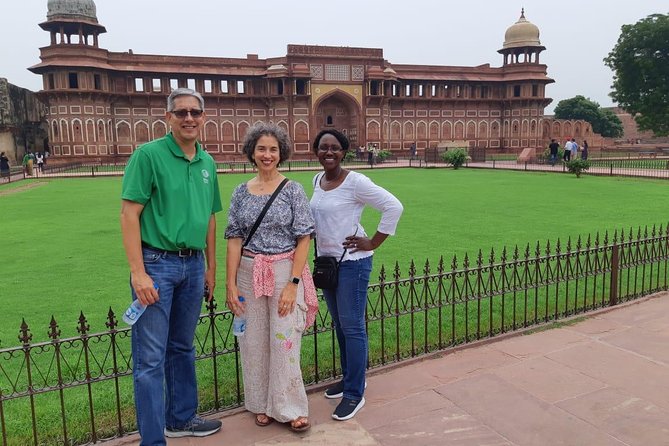
Golden Triangle in 3 days beats the airport shuffle. I like the private pickup and drop-off and I like having an English-speaking guide to connect the dots between sites. The tradeoff is you still have to budget for monument fees and meals, and the schedule is packed.
This is a 3-day, one-group-at-a-time plan based in New Delhi, with air-conditioned transport and hotel nights along the route. You start around 9:00am, then it’s straight into major Delhi landmarks before you head for Agra and Jaipur. The upside: you get a clean route through the big hitters without wasting hours figuring out logistics.
In This Review
- Key highlights you should care about
- How the 9:00am Start Shapes Your 3-Day Route
- Day 1 in Delhi: Humayun’s Tomb to Parliament House in One Long Day
- Humayun’s Tomb: Mughal grandeur with Persian design details
- Qutub Minar: tall enough to feel the scale
- Red Fort: the Mughal home base (and museums inside)
- Lotus Temple: open to everyone, calm in the middle of chaos
- Jama Masjid and Raj Ghat: power, faith, and a turning point
- Parliament House: the present sitting right beside the past
- Evening transfer to Agra
- From Delhi to Agra: Why the Yamuna Expressway Time Matters
- Taj Mahal First, Then Agra Fort: Two Ways to See the Same Era
- Taj Mahal: guided, inside visit, and history you can actually follow
- Breakfast, check-out, and Agra Fort without losing the momentum
- Optional Fatehpur Sikri if time allows
- Jaipur in One Arc: Amber, Jal Mahal Photos, City Palace, Hawa Mahal
- Amber Palace: palaces, squares, gates, and Maota Lake
- Jal Mahal: the photo stop you’ll actually remember
- City Palace: royal seat plus museum space
- Hawa Mahal: red and pink sandstone, five storeys
- Back to Delhi: drop to airport, railway station, or your hotel
- Price and Value: What $266.67 Covers (and What It Doesn’t)
- Pacing, Closures, and Other Practical Gotchas
- Closure days can change your plan
- Admission fees are separate
- You’ll be traveling between cities every day
- Who Should Book This Golden Triangle Plan
- Should You Book Golden Triangle Tour 3 Days?
- FAQ
- What time does the tour start?
- Is hotel pickup and drop-off included?
- Are monument entrance fees included?
- What is included in the tour price besides the guide?
- Where will I stay during the tour?
- How are rooms handled for solo travelers or groups of three?
- Which days are key monuments closed?
- What is the cancellation policy for a full refund?
Key highlights you should care about
- Hotel pickup/drop-off plus a private vehicle means less time wrestling taxis and maps
- Delhi hits first: Humayun’s Tomb, Qutub Minar, Red Fort, and more in a single day
- Taj Mahal is built into the timing with a guided inside visit and early-morning focus
- Agra Fort gets added after check-out, so you’re not only chasing one monument
- Jaipur includes Amber Palace, Jal Mahal photos, City Palace, and Hawa Mahal
- Closure days are fixed: Taj on Fridays, and Lotus Temple plus Red Fort on Mondays
How the 9:00am Start Shapes Your 3-Day Route
You’ll meet at 9:00am, then your day moves fast. That matters because the Golden Triangle isn’t just three cities—it’s three different ways of seeing India: Mughal Delhi, Mughal/Maratha Agra, and royal Rajasthan in Jaipur. A late start would eat the daylight you need for sight-heavy days.
The tour is set up as a private experience, meaning only your group participates. Practically, that usually keeps the pace more predictable: the vehicle is waiting for you, and the guide can adjust when you’re slowed by questions or photo stops. You also get a mobile ticket, which helps if you’re juggling phones and confirmations.
One thing to notice: monument admission isn’t included. So when you plan around the “big moments,” you’re not just planning the sightseeing time. You’re also planning time and money for entrances, plus time for meals, since food and drinks are not part of the package.
Delhi, Agra and Jaipur: more full circuits



Day 1 in Delhi: Humayun’s Tomb to Parliament House in One Long Day
Delhi day is the “starter course,” but it’s not small. You’ll go from major Mughal architecture to fort walls to religious landmarks, all in one go. That’s useful if you’re short on time, but it does mean your feet do some real work.
Humayun’s Tomb: Mughal grandeur with Persian design details
Humayun’s Tomb is a great first stop because it sets the tone for the Mughal style. This is the tomb of Emperor Humayun, commissioned by Empress Bega Begum in 1569–70. It was designed by Persian architects Mirak Mirza Ghiyas and his son Sayyid Muhammad. If you like learning the story behind the stone—who paid for it, who designed it, and why—it’s a strong opening.
A practical point: your visit is listed at about 2 hours, and that’s usually the right amount of time here if you want to actually look rather than sprint.
Qutub Minar: tall enough to feel the scale
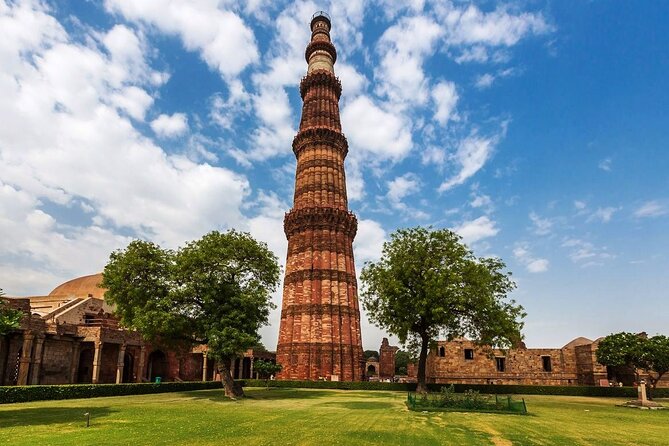
Next is Qutub Minar, part of the Qutb complex (UNESCO World Heritage). It’s a tapering minaret with five storeys, rising to 73 metres. The base diameter is 14.3 metres, narrowing to 2.7 metres at the top. Those numbers are not just trivia; they help you “read” what you’re seeing.
You’re given about 1 hour here. That should cover the main viewpoint time without you feeling rushed, assuming your group keeps moving.
Red Fort: the Mughal home base (and museums inside)
The Red Fort was the main residence of the Mughal emperors for nearly 200 years, until 1856. Today it also houses museums, so it’s more than a photo stop.
Your schedule includes about 1 hour. If you’re the type who likes museum time, you may wish you had more. If you’re more into architecture and outer views, 1 hour is workable.
Worth putting side by side with this New Delhi pick:


Lotus Temple: open to everyone, calm in the middle of chaos
Then the mood shifts at the Lotus Temple, a Bahá’í House of Worship dedicated in December 1986. Its flowerlike shape is iconic, and the tour includes a set viewing window of about 1 hour. A detail worth knowing: it’s open to everyone regardless of religion.
This stop can be a mental reset. After forts and tombs, the Lotus Temple gives you space to breathe for a bit.
Jama Masjid and Raj Ghat: power, faith, and a turning point
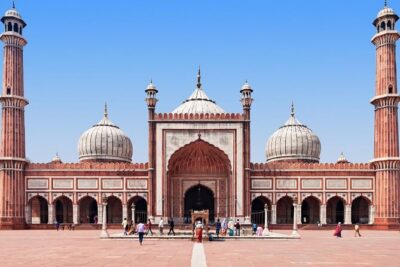
You’ll also visit Jama Masjid, one of the largest mosques in Delhi, then head to Raj Ghat, the memorial dedicated to Mahatma Gandhi. Raj Ghat is quick on paper (about 1 minute), but it’s the kind of stop where people often slow down.
The combination works well because you’re moving from imperial-era monuments to a modern symbol of nonviolence.
Parliament House: the present sitting right beside the past
Finally, you’ll include Parliament House (Sansad Bhavan), where the Lok Sabha and Rajya Sabha operate. It’s not as “explorable” in the way a tomb is, but the contrast is the point: you’re moving from architecture built to impress empires to the political heart of India today.
Evening transfer to Agra
After Delhi sightseeing, you drive to Agra via the Yamuna Expressway. The trip is listed at about 3.30 hours (with notes that it can run around 4 hours), so plan for a long transition day. Overnight is in an Agra hotel, so you wake up close to where you need to be for the next morning’s big visit.
From Delhi to Agra: Why the Yamuna Expressway Time Matters

That drive is part of the tour’s “real life math.” When a route is packed like this, your most likely frustration is not the sightseeing—it’s losing time in transit. Using Yamuna Expressway helps reduce the chance you’ll be stuck for hours.
This day is also why the tour is structured with hotel pickup and return logistics. You don’t have to negotiate anything after a long Delhi day. You’re in an air-conditioned vehicle, and your overnight is already handled.
The only drawback is that you’re not seeing anything else between Delhi and Agra besides the road trip. If you like stopping spontaneously for local snacks or random sights, this tour format might feel too fixed. Still, for a first Golden Triangle run, the trade is usually worth it.
Taj Mahal First, Then Agra Fort: Two Ways to See the Same Era
Day 2 is built around the Taj Mahal, and it does it with a sensible rhythm: early focus, guided time inside, then forts after your check-out.
Taj Mahal: guided, inside visit, and history you can actually follow
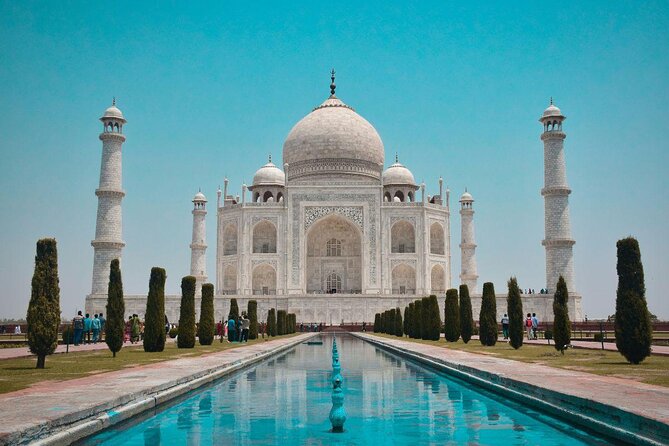
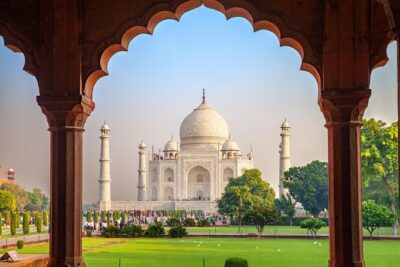
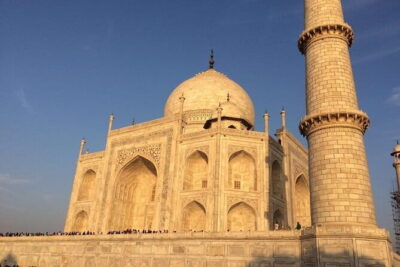
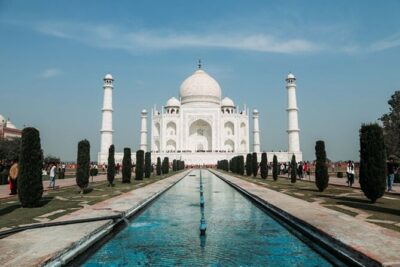
Your plan includes watching the sun rise over the Taj Mahal, then taking a guided tour inside for about 2 hours. Your guide connects it to its origin story: it’s described as a tomb built by Mughal Emperor Shahjahan in 1630 to enshrine his wife.
You’ll also get the visual context: the Yamuna River backdrop and the garden layout. Those are the details that help you understand why the Taj is more than a pretty building. It’s designed for sightlines and symbolism.
One important scheduling note: the Taj Mahal is closed every Friday. If your dates land on a Friday, you’ll want to ask how the plan adapts, because a “sunrise Taj” day can’t happen if the site is closed.
Breakfast, check-out, and Agra Fort without losing the momentum
After returning to your hotel, you’ll enjoy breakfast, then check out. Then it’s on to Agra Fort, included in the day with about 2 hours.
Agra Fort matters because it shows the Mughal presence as a living power center. It was the Mughal residence until 1638, when the capital shifted to Delhi. The tour also notes that before capture by the British, the Marathas were among the last Indian rulers to occupy it.
Optional Fatehpur Sikri if time allows
From Agra you head to Jaipur, and Fatehpur Sikri is included only if timing works. It’s listed as a 1-hour stop en route from Agra to Jaipur. Since it’s “if you have time,” the exact flow can depend on how your earlier stops run.
This flexible add-on is a plus if you want extra Mughal momentum without turning your trip into a 5-city marathon.
Jaipur in One Arc: Amber, Jal Mahal Photos, City Palace, Hawa Mahal
Day 3 is the royal Rajasthan sweep. The good news is that each stop has a different “feeling,” so you don’t end up seeing the same style over and over.
Amber Palace: palaces, squares, gates, and Maota Lake
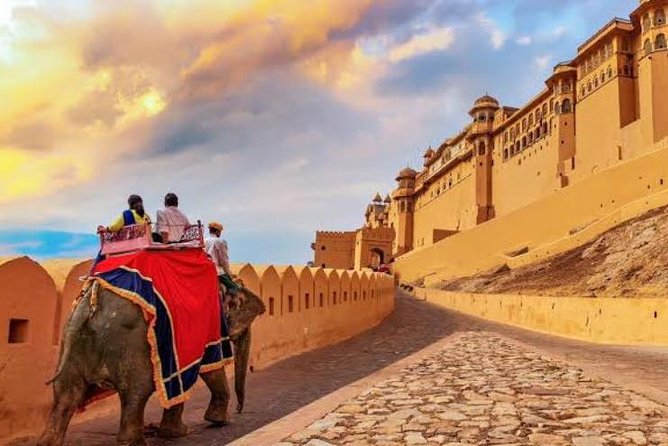
You start with Amber Palace, the capital of Rajasthan until 1728. Your guide-led visit is about 2 hours, focusing on palaces, squares, and monuments.
This is where the tour’s “storytelling” approach pays off. Amber Palace is described as built by Raja Man Singh I, known for artistic elements, with ramparts and series of gates. And you’ll get the landscape feature that makes it feel more than a set of walls: the Maota Lake in front, which beautifies the area and acts as a source of water for the fort.
Jal Mahal: the photo stop you’ll actually remember
Next is Jal Mahal, a palace on/near Man Sagar Lake. You’re told it’s a palace floating on the lake and that it was renovated and enlarged in the 18th century by Maharaja Jai Singh II of Amber. Your stop includes about 1 hour, and your goal here is mainly photos and quick viewing.
This is one of the places where the “tight itinerary” works in your favor. You don’t need hours to get the idea, and you still get that signature view.
City Palace: royal seat plus museum space
Then it’s City Palace of Jaipur, originally the administrative and ceremonial seat built in 1721. It also served as a venue for religious and cultural events. Today it houses the Maharaja Sawai Man Singh II Museum and continues as home of the Jaipur royal family.
Your schedule gives roughly 1–2 hours. If you’re interested in royal artifacts and how the palace is organized, lean into the museum area. If you’re mainly here for the palace architecture, you can move a bit quicker.
Hawa Mahal: red and pink sandstone, five storeys
Finally comes Hawa Mahal (Palace of Wind). It’s built with red and pink sandstones, and it’s described as a five-storey pyramidal monument built by Sawai Pratap Singh in 1799.
You get about 1 hour, then you return to your hotel. This works because Hawa Mahal is visually dramatic but not a “walk and read for hours” kind of place. It’s perfect for a last big-photo moment before your transfer back to Delhi.
Back to Delhi: drop to airport, railway station, or your hotel
After Jaipur, you drive back to Delhi and finish the tour with a driver drop to the airport, railway station, or your prebooked hotel. That flexibility is handy if your flight or train timing is strict.
Just know that this is another long transition day. It’s the price of covering three cities in three days.
Price and Value: What $266.67 Covers (and What It Doesn’t)
At $266.67 per person, the headline price looks pretty reasonable for a 3-day circuit that includes transportation, guide time, and hotel nights. But here’s the value math you should do before you book:
What’s included
- Air-conditioned vehicle and private transportation
- Fuel surcharge and parking fees
- An English-speaking guide in all city stops
- Hotel pickup and drop-off
- Hotel accommodation on a sharing basis
- Water bottle
What’s not included
- Monument fees
- Food and drinks
That means the true cost is: your tour price plus entrances and meals. If you’re the type who skips paid sites, the impact is smaller. If you plan to go inside major monuments like the Taj Mahal (which is included for guided time inside, but not admission fees), then budget accordingly.
Also remember hotel rooms are on sharing basis. For most couples, that’s fine. For solo travelers, you may end up sharing a twin room. If you’re traveling in a group of three, the default is triple-sharing unless you pay an additional charge for two rooms.
Pacing, Closures, and Other Practical Gotchas
This tour is built around classic highlights, which is great. It also means you’re stacking a lot of famous places into limited time.
Closure days can change your plan
Two closures are clearly stated:
- Taj Mahal is closed every Friday
- Lotus Temple and Red Fort in Delhi remain closed every Monday
If your dates include those days, your guide may substitute timing or adjust what’s feasible. Still, you should expect fewer “perfect shot” outcomes on those specific weekdays.
Admission fees are separate
Every Delhi stop lists admission ticket not included, and the itinerary flags monument fees as not included overall. That’s normal for India tours, but it affects your day-by-day spending. The guide time is included; the entries are not.
You’ll be traveling between cities every day
Delhi to Agra, then Agra to Jaipur, then Jaipur back to Delhi. You don’t get a slow morning to “recover.” If you crave downtime, you might find the pace intense. If you like seeing a lot and moving on, it’s a strong fit.
Who Should Book This Golden Triangle Plan
This tour makes the most sense if:
- You’re doing the Golden Triangle for the first time and want a guided, structured route
- You care more about seeing the big landmarks in order than crafting your own schedule
- You prefer a private vehicle over negotiating transit between Delhi, Agra, and Jaipur
- You like having an English-speaking guide to explain what you’re looking at
It may not be your best match if:
- You want lots of free time in each city
- You’re planning to fully rely on the tour price without budgeting for monument fees and meals
- You’re sensitive to early starts and long driving days
Good to know based on the kinds of experiences this tour tends to deliver: solo trips can work fine when the logistics are handled. The key is that you’re comfortable with a shared hotel setup and a structured timetable.
Should You Book Golden Triangle Tour 3 Days?
If your goal is a first, efficient Golden Triangle sweep with hotel pickup, private transport, and guided stops, this is a sensible choice. The itinerary hits the names you came for: Humayun’s Tomb, Qutub Minar, Red Fort, Lotus Temple, Jama Masjid, the Taj Mahal, Agra Fort, Amber Palace, Jal Mahal, City Palace, and Hawa Mahal.
Before you book, do two quick checks:
- Confirm your travel dates don’t land you on a closure day like Friday for the Taj or Monday for Red Fort/Lotus Temple.
- Budget for monument fees and meals, since those are not included in the package price.
If that all lines up, you’ll get a tight route that saves you from logistics headaches and turns your limited time into real sightseeing value.
FAQ
What time does the tour start?
The meeting time is 9:00am.
Is hotel pickup and drop-off included?
Yes. Hotel pickup and drop-off are included, along with a driver drop at the end of the tour to the airport, railway station, or your prebooked hotel.
Are monument entrance fees included?
No. Monument fees are not included, and the itinerary lists admission tickets as not included for the stops.
What is included in the tour price besides the guide?
Included services cover an air-conditioned vehicle, private transportation, fuel surcharge, parking fees, English-speaking guide in all city, hotel accommodation (sharing basis), and a water bottle.
Where will I stay during the tour?
You’ll have hotel accommodation on a sharing basis. The plan includes overnight stay in Agra after the Delhi day.
How are rooms handled for solo travelers or groups of three?
Rooms are generally provided on a twin-sharing basis. If 3 people book together, rooms default to triple-sharing. If 3 guests want 2 rooms, an additional charge applies.
Which days are key monuments closed?
Taj Mahal is closed every Friday. In Delhi, Lotus Temple and Red Fort are closed every Monday.
What is the cancellation policy for a full refund?
You can cancel up to 6 days in advance for a full refund. A 50% refund is available if you cancel 2–6 days before the experience start time.
More Tours in New Delhi
- Old & New Delhi City Tour – Half or Full Day Options Available
★ 5.0 · 4,811 reviews - Half Day Private Delhi City Tour
★ 5.0 · 4,474 reviews - Same Day Taj Mahal, Agra Fort & Baby Taj Tour from Delhi by Car
★ 5.0 · 4,304 reviews - Taj Mahal Day Tour from Delhi by Superfast Train – TOP RATED TOUR
★ 5.0 · 4,166 reviews - Delhi: Old and New Delhi Private Full or Half-Day Tour
★ 4.9 · 3,776 reviews
More Tour Reviews in New Delhi
- Old & New Delhi City Tour – Half or Full Day Options Available
★ 5.0 · 4,811 reviews - Half Day Private Delhi City Tour
★ 5.0 · 4,474 reviews - Same Day Taj Mahal, Agra Fort & Baby Taj Tour from Delhi by Car
★ 5.0 · 4,304 reviews - Taj Mahal Day Tour from Delhi by Superfast Train – TOP RATED TOUR
★ 5.0 · 4,166 reviews - Delhi: Old and New Delhi Private Full or Half-Day Tour
★ 4.9 · 3,776 reviews
The Full Golden Triangle, More Options
- 3-Days Private Golden Triangle Tour: Delhi, Agra & Jaipur by Car
★ 5.0 · 1,107 reviews - 3-Days Private Golden Triangle Tour: Delhi, Agra & Jaipur by Car
★ 5.0 · 1,098 reviews - 3-Day Delhi, Agra and Jaipur Private Tour – India Golden Triangle
★ 5.0 · 812 reviews - Four-Day Private Luxury Golden Triangle Tour to Agra and Jaipur From New Delhi
★ 5.0 · 807 reviews - 5 Nights 6 Days Private Golden Triangle Tour – Delhi Agra Jaipur
★ 5.0 · 574 reviews
Just added: more New Delhi reviews to browse
- 4 days Golden Triangle Tour★ 5.0 · 3 reviews
- Discover Old & New Delhi: Private Tour with Street Food★ 5.0 · 3 reviews
- Taj Mahal Tour From Delhi By Private Car★ 4.5 · 3 reviews
- Golden Triangle Tour 5 Days★ 5.0 · 3 reviews
- Taj Mahal: Express Entry Ticket For Sunset Tour with guide★ 5.0 · 3 reviews
- Agra Taj Mahal Sunrise & Sunset Tour from Delhi★ 5.0 · 3 reviews
Golden Triangle Tours, compared.
 ★ 5.03-Days Private Golden Triangle Tour: Delhi, Agra & Jaipur by CarFrom $1271,107 reviews
★ 5.03-Days Private Golden Triangle Tour: Delhi, Agra & Jaipur by CarFrom $1271,098 reviews
 ★ 5.03-Day Delhi, Agra and Jaipur Private Tour – India Golden TriangleFrom $110812 reviews
 ★ 5.0Four-Day Private Luxury Golden Triangle Tour to Agra and Jaipur From New DelhiFrom $160807 reviews
 ★ 5.05 Nights 6 Days Private Golden Triangle Tour – Delhi Agra JaipurFrom $240574 reviews
 ★ 5.04 Days Golden Triangle TourFrom $146499 reviews
 ★ 5.0Private Car and Drive for Golden Triangle (4N/5D)From $167451 reviews
 ★ 5.0Private Golden Triangle Tour Delhi Agra Jaipur ( Top Rated )From $148436 reviews