
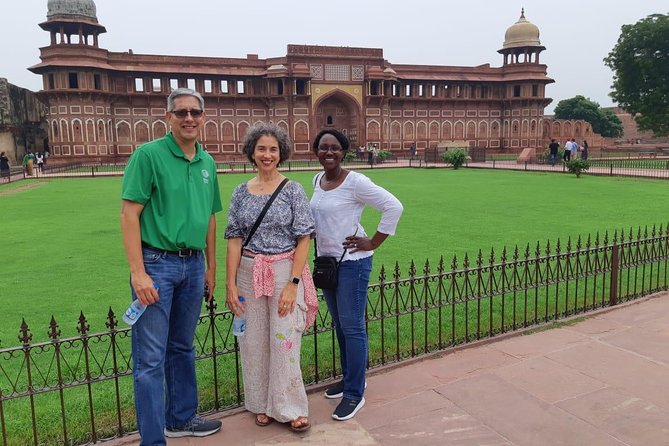
Reviewed · GOLDEN TRIANGLE TOURS
Golden Triangle Tour 3 Days
Sunrise Taj, plus Delhi and Jaipur in three days. What makes this Golden Triangle tour worth your time is that it runs as a route instead of a nonstop checklist: you spread the big sights across three days with guide commentary, pickup options, and a private-group feel. I especially like the pacing on the Delhi day, where you move through Old Delhi sights first, then glide into Mughal-era landmarks.
The second thing I like is the guide-led flow, with stops tied to specific stories, from Shah Jahan’s Jama Masjid to the Taj Mahal at sunrise. One note to keep in mind: monument admission and hotel/breakfast details depend on the package option you choose, and tips are not included.
Key points I’d plan around
- Sunrise Taj Mahal time built into Day 2, not an afterthought.
- Old Delhi to Mughal Delhi on Day 1, with Chandni Chowk and a rickshaw-style heritage segment.
- Admission and accommodation vary by option, so confirm what you’re paying for.
- Air-conditioned vehicle + unlimited water bottle, which matters on long drives.
- Private tour for your group, so your day won’t feel crowded with strangers.
In This Review
- Golden Triangle in one easy loop: Delhi to Agra to Jaipur
- Day 1 Old Delhi to Mughal Delhi: Jama Masjid, Chandni Chowk, Humayun’s Tomb
- Day 2 Sunrise Taj Mahal, Agra Fort, and the Akbar-era stop at Fatehpur Sikri
- Day 3 Jaipur palaces, Hawa Mahal, Amber Fort, and the water-palace photo stop
- What the guide, vehicle, and hotel options mean for your day-to-day comfort
- Price and logistics: what $20 really means, and what to confirm first
- Who should book this Golden Triangle route, and who might not love it
- Should you book? My practical take
- FAQ
- How long is the Golden Triangle tour?
- Is this tour private?
- Is pickup included?
- Are monument admission tickets included?
- Is hotel accommodation included?
- What meals are included?
- Do you visit the Taj Mahal at sunrise?
- What is the cancellation policy?
Golden Triangle in one easy loop: Delhi to Agra to Jaipur
This is a classic Golden Triangle routing, but the real advantage is how it’s organized. You get picked up (pickup is offered), ride in an air-conditioned vehicle, and cover Delhi, Agra, and Jaipur in about three days without needing to piece together transport and tickets yourself.
You’re not just seeing icons. You’re also getting a guide to connect the dots between what you’re looking at and why it was built. That’s especially helpful in India’s big, layered cities, where monuments aren’t isolated photo stops. They’re part of a bigger story: empires, faiths, and power shifts written in stone, marble, and street layout.
The other practical upside: this is a private tour for your group. That usually means fewer compromises. Your guide can slow down for questions, and the plan can flex around your pace, as long as you stay within the overall day schedule.
Still, long-distance days are long-distance days. You’ll do driving time between cities, and you’ll switch environments fast: from tight Old Delhi lanes to wide ceremonial avenues, then down to Agra, then up to Jaipur’s fort area. If you hate car time, you’ll want to prepare yourself for the ride.
If you want to do the “greatest hits” of India’s north in a guided, time-efficient way, this format tends to work well. If you want deep, slow travel and lots of free wandering with no structure at all, you may find the day feels packed.
Day 1 Old Delhi to Mughal Delhi: Jama Masjid, Chandni Chowk, Humayun’s Tomb

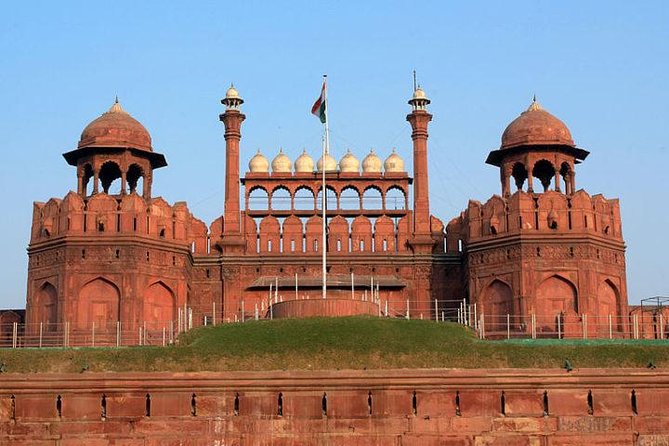
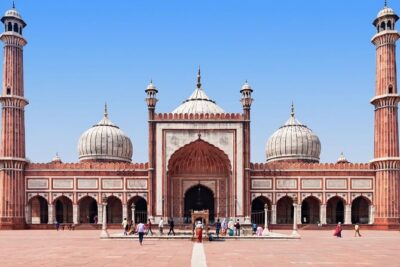
Day 1 starts with Jama Masjid, one of Delhi’s largest mosques, built by Mughal emperor Shah Jahan between 1644 and 1656. If you like architecture, this stop is more than a landmark. You can actually read the building’s logic: a monument meant for scale and gathering, with the Mughal-era approach to symmetry and order.
Next comes Chandni Chowk, the Old Delhi shopping area that’s famous for spices, dried fruit, silver jewelry, colorful saris, and narrow lanes packed with tiny shops. This is the kind of place where your senses get involved quickly. Your guide can help you understand what you’re seeing, and that matters because the street layout can feel chaotic on first contact. Do wear comfortable shoes, because the space is compact and you’ll be moving.
Then you add a rickshaw-style Old Delhi segment. The idea here is not just transportation; it’s a mix of Old City heritage and culture. If you’ve never ridden through narrow streets, this is a smart way to get a local-feeling pass without exhausting yourself on constant walking.
After that you shift to a quieter, reflective stop: Raj Ghat, dedicated to Mahatma Gandhi. The black marble platform marks where he was cremated on 31 January 1948, and there’s an eternal flame at one end. It’s a powerful contrast to Old Delhi shopping energy. If you’re the type who likes a mental “reset” between big city scenes, this helps.
From there, you do a short drive pass of India Gate, the war memorial built in memory of a soldier who died in the First World War. It’s quick, and that’s okay. The value is getting the ceremonial overview as you transition into Central/South Delhi landmarks.
You then step back into Mughal architecture with Humayun’s Tomb, often described as an early and significant example of the Mughal garden-tomb plan. The listing highlights causeways and channels, and standing there makes it easier to see the concept of a planned landscape around a royal tomb.
Gurudwara Bangla Sahib follows, one of Delhi’s prominent Sikh gurdwaras, associated with the eighth Sikh Guru, Guru Har Krishan. The tour notes the concept of langar, which is a core part of Sikh community life. Even if you don’t go into a long explanation, you’ll feel the difference in tone from the mosque stops earlier in the day.
After that, you get the long-view photos and passes: Rashtrapati Bhavan, the President of India’s official residence (formerly Viceroy’s House), and then the Lotus Temple, a Bahá’í House of Worship dedicated in December 1986, shaped like a lotus.
Finally, you drive to Agra and sleep there. The day is long, but the structure helps: it starts with religious architecture, moves through a street-market experience, and finishes with landmark variety before you change cities.
One possible drawback: Day 1 can feel like a lot of stimulation. If you’re sensitive to crowds or noise, build in a quick recovery moment in the hotel after you arrive in Agra. Pace yourself, hydrate, and don’t try to force “perfect photos” every minute.
Delhi, Agra and Jaipur: more full circuits



Day 2 Sunrise Taj Mahal, Agra Fort, and the Akbar-era stop at Fatehpur Sikri
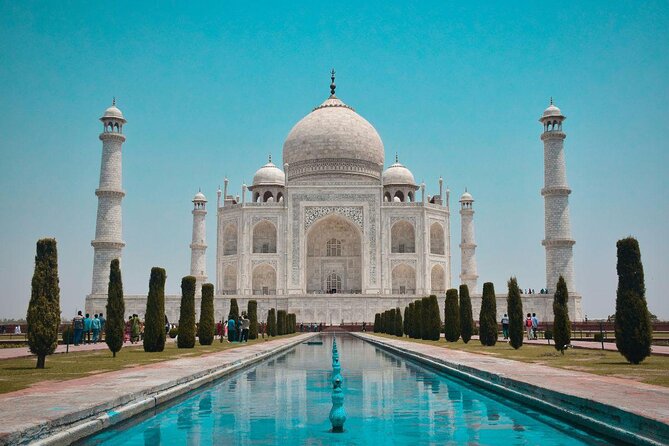
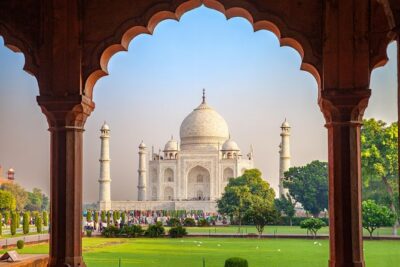
Day 2 is built around the big moment: the Taj Mahal at sunrise. That early timing is a practical gift. The Taj Mahal is the kind of place where the light changes the whole experience, and sunrise visits generally help you avoid the later-day chaos that can make everything feel rushed.
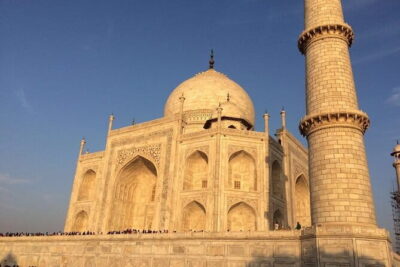
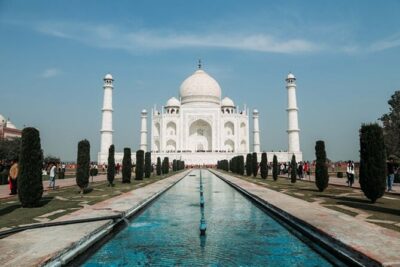
This stop is described as an ivory-white marble mausoleum on the south bank of the Yamuna River, commissioned in 1632 by Mughal emperor Shah Jahan. Even if you’ve seen photos, seeing it in person tends to make the scale feel real. Your guide’s commentary matters here too, because it turns the visit into more than the classic postcard frame.
Next is Agra Fort, the former imperial residence of the Mughal dynasty and also a UNESCO World Heritage site. This is where the story broadens. Instead of one marble mausoleum, you get a fortified complex that reflects power, protection, and palace-life. It’s also a different kind of walking experience than the Taj approach.
Then you head toward Jaipur with a crucial in-between stop: Fatehpur Sikri. The tour highlights that the city was founded in 1569 by Emperor Akbar and served as the Mughal Empire’s capital from 1571 to 1585. This is a strong stop if you want the feeling of “empire at full scale,” because Fatehpur Sikri reads like a planned stage for authority rather than an organic market city.
After Fatehpur Sikri, you drive to Jaipur and overnight there. You’ll likely arrive ready to settle down. That’s a good sign. A tour like this works best when you can actually recover between major monument bursts.
Here’s what to consider: Day 2 includes both a top-tier icon and additional heavy sights. If you struggle with early starts or long museum-like walks, it helps to keep expectations realistic. Focus on one or two highlights during each stop, not trying to absorb everything at once.
If you’re the kind of person who loves having your guide talk about details while you walk, this is where you’ll notice the value most. In the feedback for this style of tour, Kaushal Pandey stood out for being extremely knowledgeable and patient, and that kind of guide approach can make a sunrise monument visit feel calm instead of hectic.
Day 3 Jaipur palaces, Hawa Mahal, Amber Fort, and the water-palace photo stop
Day 3 is Jaipur in three big chunks: palaces, a signature “look” building, and a fort complex.
You begin with City Palace, a palace complex that includes the Chandra Mahal and Mubarak Mahal palaces and other buildings. This is one of the better starts for first-time visitors because you get a sense of how royalty lived here: it’s not just a single building, but a cluster. That makes it easier to understand why Jaipur’s monuments feel designed as a system.
Then comes Hawa Mahal, the Palace of Wind. The tour notes it’s named for a high screen wall built so the women of the royal household could observe street festivals while unseen from outside. This is the kind of description your guide should help you visualize. When you stand in the right spot, you can appreciate it as both architecture and social design.
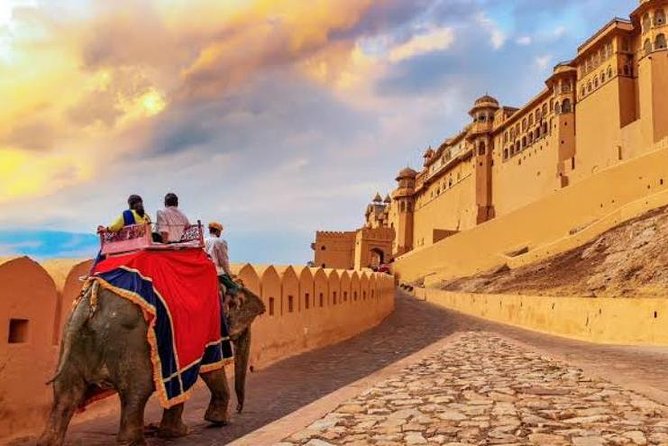
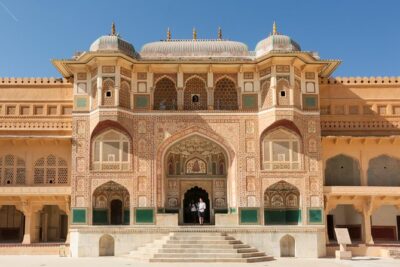
After that, you head up to Amber Palace (Amber Fort). The listing calls it a majestic fort on the Aravali Hills, known for a mix of Indo-Islamic architecture, gold-plated painting, mirror work, and European architecture influences. This stop is often the highlight for people who like ornate interiors and craftsmanship. It’s also likely the most physically demanding part of the day, since forts sit on hills and require walking time.
Next, you stop at Jantar Mantar, described as a set of architectural astronomy instruments, with the meaning tied to instruments for measuring the harmony of the heavens. The tour notes 13 instruments, and even if you don’t get lost in the science, the structures themselves are a “wow” factor because they look like city-sized tools.
Then there’s a quick photo moment at Jal Mahal, the water palace in the middle of Man Sagar lake. This is a short stop (perfect for photos rather than a long visit), and it breaks up the day nicely after the heavier fort/palace walking.
Finally, you return to New Delhi and get dropped at your preferred location. The tour ends quickly and cleanly—no extra day added just to catch another stop.
One consideration for Day 3: you’ll be switching from palace zones to fort viewpoints and back to a road day. If you’re prone to getting overly tired, keep your energy for Amber Fort and City Palace first. Hawa Mahal and Jal Mahal are shorter, and you’ll still capture the main impressions without needing to “max out” every minute.
What the guide, vehicle, and hotel options mean for your day-to-day comfort
This tour leans on three practical supports: guide services, an air-conditioned vehicle, and hotel options if you pick the package.
Let’s talk about the guide part. In the feedback tied to this kind of route, guide quality shows up again and again. Past highlights include Kaushal Pandey for Delhi and mentions of team members such as Vishal (driver), Indu (Delhi guide), Kalim (Agra guide), and Nameera (Jaipur guide). You don’t need to memorize names, but it’s useful to know this operator clearly works with multiple guides across the route, not one person rushing through everything. That can help reduce the “handoff confusion” that sometimes happens on multi-day circuits.
Next: transportation comfort. Long drives between Delhi, Agra, and Jaipur can grind down your mood faster than you expect. An air-conditioned vehicle and an unlimited water bottle help you stay functional. This isn’t about luxury for luxury’s sake; it’s about keeping your head clear enough to enjoy the monuments.
Hotel and breakfast are where you need to watch your package selection. The included list says 3/4/5 star hotel accommodation with breakfast (if option selected) and it also mentions breakfast counts (Breakfast (2)). If you’re trying to travel on the lowest total cost, clarify what you selected before you go, because the price you see isn’t always the same as the price that includes every meal and stay.
Also, the tour includes a mobile ticket and group discounts. Mobile tickets can reduce hassle once you arrive. Group discounts can matter if you’re traveling with friends and want a lower per-person rate.
Overall, the tour’s value isn’t only in the monuments. It’s in how it supports you between monuments: transport, guide, and a base to sleep at.
Price and logistics: what $20 really means, and what to confirm first
$20 per person sounds almost too good to be true for three days and major monuments. Here’s the balanced way I’d think about it: the base price is likely tied to a specific configuration, and the real “final cost” depends on what you selected for monument fees and whether your package includes accommodation and breakfast.
From the provided details:
- Included: air-conditioned vehicle, guide services, unlimited water bottle, and breakfast (2), plus hotel accommodation with breakfast if that option is selected.
- Included monument fee only if you choose the package option that lists monument admission.
- Not included: tip/gratuities.
So, before you book, you’ll want to confirm three things:
- Whether the Taj Mahal and other monument entries are included in your selected option, since monument fees are listed as conditional.
- Whether your hotel stay is included (and what star category you selected, 3/4/5).
- Budget for tips, since those are explicitly not included.
If you choose a package that excludes monument admissions, you can still enjoy the route, but you’ll pay for entry separately at different stops. If you choose a package that includes them, the day feels smoother and more predictable.
The average booking window is about 35 days in advance. If your travel dates are fixed, booking earlier can reduce stress, especially during peak seasons.
Net: I’d call this a strong value if you match the option to what you care about. If you want the “show up and go” feeling, pick the option that includes monument fees and (if needed) accommodation.
Worth putting side by side with this New Delhi pick:

Who should book this Golden Triangle route, and who might not love it
This tour fits best if you want:
- A structured highlights route through Delhi, Agra, and Jaipur
- A guide to explain what you’re seeing at each stop
- A private-group feel instead of a giant bus tour with strangers
- A plan that includes the biggest visual payoff, especially Taj Mahal at sunrise
It may not be ideal if:
- You hate early mornings or long drive days
- You prefer total independence with no set stops
- You’re expecting everything to be included automatically even if you didn’t select monument-admission options
If it’s your first time in India and you want to check the major sites without building a spreadsheet of tickets and transport, this kind of route is a sensible starting point. If you’ve been before and want “deep local life” over monument concentration, you may want a different style of trip with more unstructured time.
Should you book? My practical take
I’d book this tour if your goal is the Golden Triangle highlights with less stress. The sunrise Taj Mahal timing, the guide-led route through Old Delhi and Mughal landmarks, and the Jaipur day built around City Palace, Hawa Mahal, and Amber Fort give you a high concentration of must-sees without turning the trip into a chaotic sprint.
I’d think twice if you’re trying to keep costs ultra-low and you haven’t selected the option that covers monument admissions. In that case, you might end up paying extra at entry points and feeling like the headline price didn’t match your expectations.
Overall, it’s a good “first guided India north” choice, especially because the operation clearly values guide quality and team coordination, and the schedule spreads the cities so you’re not trying to do everything in a single frantic day.
FAQ
How long is the Golden Triangle tour?
The tour runs about 3 days.
Is this tour private?
Yes. It’s listed as a private tour/activity, meaning only your group participates.
Is pickup included?
Pickup is offered.
Are monument admission tickets included?
Monument fee inclusion depends on the package option you select. The tour notes monument admission is included if you choose that option.
Is hotel accommodation included?
Hotel accommodation is included if you select the option that includes it, with 3/4/5 star hotel lodging and breakfast as noted.
What meals are included?
Breakfast is included (Breakfast (2)). If your package includes hotel accommodation with breakfast, you’ll have breakfast as part of that option too.
Do you visit the Taj Mahal at sunrise?
Yes. The Taj Mahal is scheduled for an early morning sunrise-time visit.
What is the cancellation policy?
Free cancellation is available. You can cancel up to 24 hours in advance for a full refund, and changes within 24 hours are not accepted.
More Tours in New Delhi
- Old & New Delhi City Tour – Half or Full Day Options Available
★ 5.0 · 4,811 reviews - Half Day Private Delhi City Tour
★ 5.0 · 4,474 reviews - Same Day Taj Mahal, Agra Fort & Baby Taj Tour from Delhi by Car
★ 5.0 · 4,304 reviews - Taj Mahal Day Tour from Delhi by Superfast Train – TOP RATED TOUR
★ 5.0 · 4,166 reviews - Delhi: Old and New Delhi Private Full or Half-Day Tour
★ 4.9 · 3,776 reviews
More Tour Reviews in New Delhi
- Old & New Delhi City Tour – Half or Full Day Options Available
★ 5.0 · 4,811 reviews - Half Day Private Delhi City Tour
★ 5.0 · 4,474 reviews - Same Day Taj Mahal, Agra Fort & Baby Taj Tour from Delhi by Car
★ 5.0 · 4,304 reviews - Taj Mahal Day Tour from Delhi by Superfast Train – TOP RATED TOUR
★ 5.0 · 4,166 reviews - Delhi: Old and New Delhi Private Full or Half-Day Tour
★ 4.9 · 3,776 reviews
The Full Golden Triangle, More Options
- 3-Days Private Golden Triangle Tour: Delhi, Agra & Jaipur by Car
★ 5.0 · 1,107 reviews - 3-Days Private Golden Triangle Tour: Delhi, Agra & Jaipur by Car
★ 5.0 · 1,098 reviews - 3-Day Delhi, Agra and Jaipur Private Tour – India Golden Triangle
★ 5.0 · 812 reviews - Four-Day Private Luxury Golden Triangle Tour to Agra and Jaipur From New Delhi
★ 5.0 · 807 reviews - 5 Nights 6 Days Private Golden Triangle Tour – Delhi Agra Jaipur
★ 5.0 · 574 reviews
Just added: more New Delhi reviews to browse
- 4 days Golden Triangle Tour★ 5.0 · 3 reviews
- Discover Old & New Delhi: Private Tour with Street Food★ 5.0 · 3 reviews
- Taj Mahal Tour From Delhi By Private Car★ 4.5 · 3 reviews
- Golden Triangle Tour 5 Days★ 5.0 · 3 reviews
- Taj Mahal: Express Entry Ticket For Sunset Tour with guide★ 5.0 · 3 reviews
- Agra Taj Mahal Sunrise & Sunset Tour from Delhi★ 5.0 · 3 reviews
Golden Triangle Tours, compared.
 ★ 5.03-Days Private Golden Triangle Tour: Delhi, Agra & Jaipur by CarFrom $1271,107 reviews
★ 5.03-Days Private Golden Triangle Tour: Delhi, Agra & Jaipur by CarFrom $1271,098 reviews
★ 5.03-Days Private Golden Triangle Tour: Delhi, Agra & Jaipur by CarFrom $1271,107 reviews
★ 5.03-Days Private Golden Triangle Tour: Delhi, Agra & Jaipur by CarFrom $1271,098 reviews
 ★ 5.03-Day Delhi, Agra and Jaipur Private Tour – India Golden TriangleFrom $110812 reviews
 ★ 5.0Four-Day Private Luxury Golden Triangle Tour to Agra and Jaipur From New DelhiFrom $160807 reviews
 ★ 5.05 Nights 6 Days Private Golden Triangle Tour – Delhi Agra JaipurFrom $240574 reviews
 ★ 5.04 Days Golden Triangle TourFrom $146499 reviews
 ★ 5.0Private Car and Drive for Golden Triangle (4N/5D)From $167451 reviews
 ★ 5.0Private Golden Triangle Tour Delhi Agra Jaipur ( Top Rated )From $148436 reviews