
Reviewed · GOLDEN TRIANGLE TOURS
Golden Triangle With Rishikesh
You can see a lot, without feeling rushed. This 11-day small-group route strings together the Golden Triangle (Delhi–Jaipur–Agra) with a quieter, spiritual stretch in Rishikesh for yoga and meditation. I especially like the balanced mix of big-ticket monuments and slower moments to reset your body and mind, plus the comfort of getting around by private vehicle with a local guide.
Two more things I like: you get guided context (history and culture, not just photo stops), and you’re allowed to choose your own accommodation style since lodging costs are extra. One drawback to plan for up front: monument entrance fees and meals like lunch are not included, so you’ll want a realistic budget for tickets and food on the side.
In This Review
- Key things that make this tour work
- Golden Triangle with Rishikesh: what you’re really buying
- Delhi Day 1: Red Fort, Jama Masjid, Chandni Chowk, Raj Ghat
- Delhi Day 2: India Gate, Humayun’s Tomb, Qutub Minar, Lotus Temple
- The early transfer to Haridwar and Rishikesh yoga reset
- Rishikesh Days: Laxman Jhula, Ganges time, and evening practice
- Haridwar-to-Delhi return: what the long day really means
- Agra Day: Taj Mahal plus Agra Fort in a tight window
- Fatehpur Sikri en route to Jaipur: a roadside time-warp
- Jaipur Icon Route: Jal Mahal, City Palace, Jantar Mantar, Hawa Mahal
- Jaipur morning crafts and factories: textiles and gemstones
- Price, comfort, and the real cost of entry fees
- Who this tour fits best
- Should you book Golden Triangle with Rishikesh?
- FAQ
- How long is the tour?
- What cities are included?
- What’s the maximum group size?
- Is pickup and drop-off included?
- Do I travel in a private vehicle?
- Are monument entrance fees included?
- Is lunch included?
- Are bottled water and a guide included?
- What’s included in the Rishikesh portion?
- What time does the tour start?
Key things that make this tour work
- Max 6 travelers means the van stays comfortable and the schedule feels manageable
- Private vehicle + pickup/drop-off reduces stress across four major hubs
- Guided culture and history helps you understand what you’re seeing at Red Fort, Humayun’s Tomb, and more
- Yoga and meditation time in Rishikesh breaks up the sightseeing grind
- You choose your own accommodation (extra cost), so you’re not forced into one hotel style
Golden Triangle with Rishikesh: what you’re really buying

This isn’t just a checklist tour. It’s built around two different moods: India’s grand Mughal-and-royal landmarks, then a calmer spiritual rhythm in northern India. The value is that you get the structure of a guided route, plus enough open time to actually experience Rishikesh rather than treating it like another stop.
The group size matters. With a max of 6 people, you’re less likely to feel swallowed by crowds in the vehicle, and your guide can explain things without shouting over everyone. That’s a big deal on routes like this, where the main challenge is usually logistics—not lack of sights.
Also, the transport is private. You’re not piecing together trains or transfers on your own. That’s what keeps an 11-day “cover a lot of ground” plan from becoming an endurance test.
Delhi, Agra and Jaipur: more full circuits



Delhi Day 1: Red Fort, Jama Masjid, Chandni Chowk, Raj Ghat
Old Delhi is where you feel the scale of the country fast. The tour starts with Red Fort, the Mughal power symbol that still holds a huge place in India’s public life. You get about 30 minutes, which is enough to get your bearings and take in the stonework without racing through.
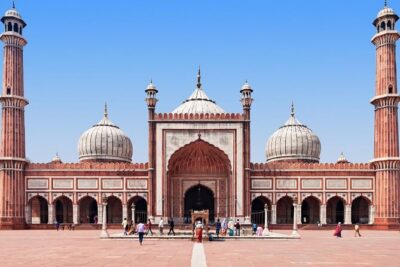
Next is Jama Masjid, one of the best-known mosques in Delhi. It’s a short stop, but the location and architecture do the heavy lifting. If you’re going to dress appropriately and be mindful in religious spaces, this is the day to do it—keep shoulders and legs covered, and expect a proper atmosphere.
Then comes Chandni Chowk, the market that feels like it runs on motion. You’ll spend about 30 minutes, which means you’ll mostly skim the edges unless you intentionally focus on one street-level goal. I like this design: it gives you a taste of spice shops, dried fruits, silver jewelry, saris, and quick bites, without turning the afternoon into a negotiation with traffic.
The day ends at Raj Ghat, Gandhi’s memorial site. It’s a quieter contrast to the shopping lanes and fort walls. That shift in pace is one of the underrated strengths of this itinerary.
Practical note: several of these stops don’t include admission tickets. The time is fixed, but your budget isn’t, so have a plan for entry fees before you arrive.
Delhi Day 2: India Gate, Humayun’s Tomb, Qutub Minar, Lotus Temple
Day 2 leans toward the city’s landmark “axis” and UNESCO-level sites. India Gate is your first checkpoint—about 30 minutes around the war memorial setting. It’s straightforward, but it sets the tone for Delhi’s monumental layout.
From there, you visit Rashtrapati Bhawan and Parliament House from the outside. Those are short stops, and while access can vary by day and security situation, you’ll at least get the context of where power sits in modern India. It’s also a good moment to ask your guide what’s changed over time.
Then the route pivots into Mughal artistry with Humayun’s Tomb. This is the stop where many people slow down. The schedule gives you around 30 minutes, which can feel short if you like details, but the guided explanation helps you read the geometry and the storytelling behind the complex.
After that is Qutb Minar in the Qutb complex. It’s listed as a UNESCO World Heritage Site, and the minaret’s height and layered history make it worth your attention. If you like architecture, you’ll likely spend more time looking up than checking your phone.
The spiritual variety continues with Lotus Temple and Birla Mandir (Lakshmi Narayan). The Lotus Temple is open to all religions, and it’s designed to feel calm and welcoming even on a busy day. Birla Mandir brings a Hindu devotional angle that balances the Baháʼí House of Worship. I like that this day isn’t just Mughal marble; it gives you a snapshot of modern faith in Delhi too.
The early transfer to Haridwar and Rishikesh yoga reset

On day 3, the tour shifts gears. You travel from New Delhi to Haridwar early in the morning, with breakfast served on board, then transfer to Rishikesh. The ride isn’t described in exact miles, but it’s clearly paced as a morning transition, not a tiny half-hour gap.
What I like here is that the day doesn’t dump you into sightseeing immediately. You arrive and go into yoga and meditation stay overnight in Rishikesh. That timing is smart because it lets your body adjust after city traffic and long days.
This is also where the tour’s identity becomes clear: it’s not only a sightseeing product. It’s a spiritual recharge component, and it happens right away.
Admission tickets aren’t listed here, so your “pay attention” items are more about comfort: bring light layers for changing temperatures, and plan to be respectful of quiet time if your retreat has a schedule.
Rishikesh Days: Laxman Jhula, Ganges time, and evening practice
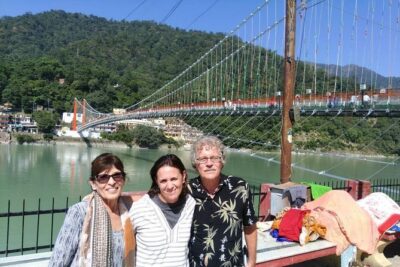
Once you’re based in Rishikesh, the itinerary gives you real free time. Day 4 is described as open for you to explore Rishikesh, visit Laxman Jhula Bridge, and spend time at the holy Ganges River. In the evening, there’s yoga and meditation practice, with another overnight in Rishikesh.
Day 5 continues the same idea: a day free at your leisure, again with yoga and meditation time. This matters more than it sounds. Golden Triangle schedules can be tiring because they’re nonstop. Here, you get at least one full day where your plan isn’t pre-packed into 30-minute boxes.
If you’re the kind of traveler who needs “space” to absorb a place, this is your payoff. You can wander toward the river, watch the morning or evening pace, and then return for practice.
If you’d rather keep momentum, you can still do more exploring in your free hours. The schedule simply doesn’t force you to.
To the Ganges and back: more Haridwar and Rishikesh runs


Haridwar-to-Delhi return: what the long day really means
On day 6, you get another free block in the morning, then in the afternoon you do the transfer back toward Haridwar by car and back to Delhi, arriving for dinner served on board. After you reach Delhi, you’ll be met by a representative and transferred to your hotel for the night.
A tour like this can feel like it’s “only driving,” so here’s how to think about it: that return day is a reset. It positions you for Agra and keeps you from adding extra complexity later. Yes, it’s longer on the clock, but it avoids the risk of you trying to handle one more connection on your own.
If you’re prone to travel fatigue, this is the day to pace yourself. Drink water, snack when you can, and use the evening hotel transfer as your decompression time.
Agra Day: Taj Mahal plus Agra Fort in a tight window

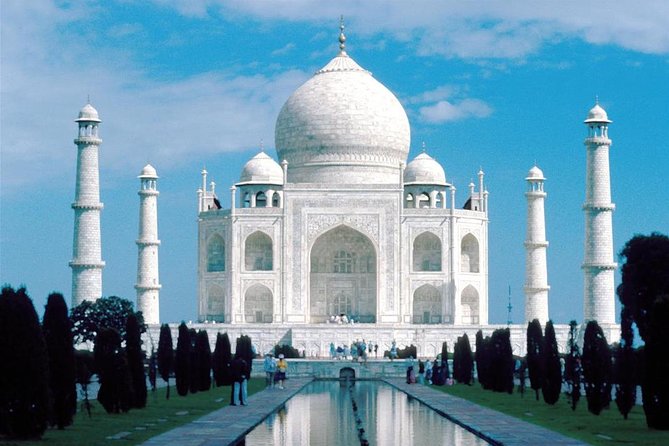
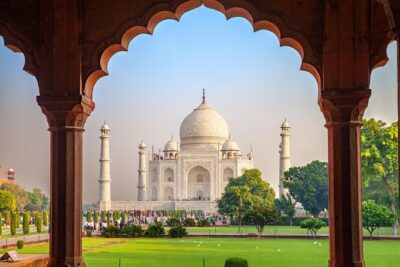
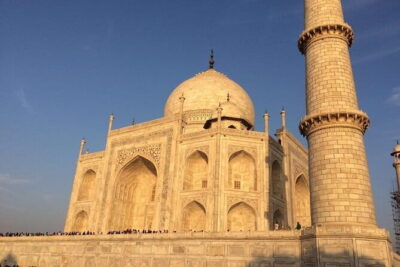
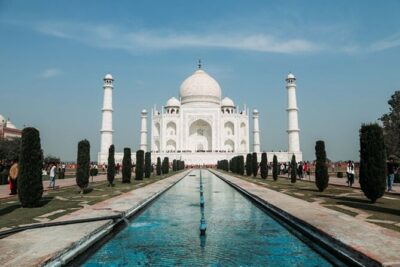
Agra is where the tour becomes star-powered. Taj Mahal is the headline, with an allotted time of about 2 hours. The tour describes it as an ivory-white marble mausoleum commissioned by Shah Jahan to house Mumtaz Mahal, and it also mentions Shah Jahan’s own tomb in the complex.
Two hours can be plenty if you go in with a calm plan: look at the outer symmetry first, then slow down for the finer visual lines. Entrance fees are not included, so again, factor that into your budget.
Next is Agra Fort, also around 2 hours. It’s explained as the Mughal residence until the capital shifted to Delhi, and it notes that the Marathas were among the last Indian rulers before the British capture. If you like how forts explain power, this stop is a great companion to the palace-memorial feeling of the Taj Mahal.
This is a classic “emotion then explanation” pairing: Taj Mahal for feeling, Agra Fort for understanding how rulers held territory.
Fatehpur Sikri en route to Jaipur: a roadside time-warp
On day 8, you drive to Jaipur and stop at Fatehpur Sikri along the way. The itinerary gives it as a morning visit before continuing to Jaipur, with check-in on arrival and an evening that’s free to walk around bazaars.
Fatehpur Sikri is one of those places where you can feel history in the stones. Even with a limited stop, you’ll likely enjoy it more than you expect because it’s different from the Delhi and Agra styles. It’s a bridge between “imperial cities” rather than a repeat of what you already saw.
Once in Jaipur, the evening is your buffer. You can roam at your pace and decide what you want to spend time on the next day.
Jaipur Icon Route: Jal Mahal, City Palace, Jantar Mantar, Hawa Mahal
Jaipur is where the tour turns into a photo-and-story circuit, and the choices are strong. You start with Jal Mahal, the palace in the middle of Man Sagar Lake. It’s listed as about 30 minutes, and it’s tied to renovations and enlargement by Maharaja Jai Singh II in the 18th century. Even if you only view it from the right angles, it adds a “water + palace” contrast to Jaipur’s pink-and-red sandstone world.
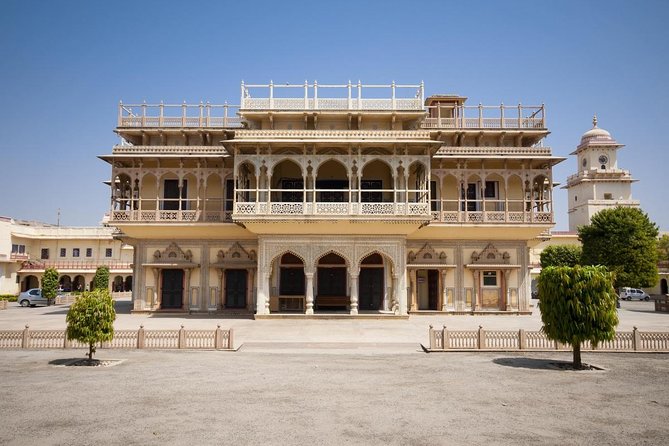
Next is City Palace, about 30 minutes. The tour notes it was established when Jaipur’s court moved in 1727 and highlights Maharaja Sawai Jai Singh II’s role. This is a good place to ask your guide what parts are royal heritage versus later additions.
After that comes Jantar Mantar, the equinoctial sundial complex, described with details about the triangular gnomon and quadrants. If you’re into science-in-the-old-days, this is a satisfying stop. It’s not just a monument; it’s a measuring system. About 30 minutes should help you get the big picture even if you don’t read every technical element.
Finally, Hawa Mahal gets its 30-minute block. The itinerary explains its red and pink sandstone facade and ties its build to Maharaja Sawai Pratap Singh in 1799, including the connection to women’s chambers (Zenana). This is the kind of structure you’ll remember long after the trip because it looks like it belongs to an idea.
Entrance fees aren’t included, but the time blocks are clear. So you can decide if you want to prioritize one stop for deeper viewing once you’re there.
Jaipur morning crafts and factories: textiles and gemstones
Day 10 adds a different kind of Jaipur experience. It’s described as a morning for shopping plus visits to textile factories and gemstone factories, and it’s tied to an Indian Crafts Bazaar area. The afternoon is then used to drive back to Delhi, with check-in at your hotel.
If you like practical shopping and want to understand what you’re buying, this part can be useful. It’s also a way to break up monument fatigue. Instead of staring at stone and marble again, you’re looking at how crafts are made and what materials go into them.
Keep expectations realistic: these are factory visits, not a hands-on workshop unless your guide says otherwise. Still, seeing how textiles and gemstones are discussed and presented helps you shop with more confidence.
Price, comfort, and the real cost of entry fees
The price is listed as $500 per person for the 11-day trip, and that’s where you should think beyond the sticker. This rate includes private transport, a local guide, bottled water, and hotel pickup/drop-off. Those items are real value in North India, where time wasted in transit is the fastest way to make a trip feel more expensive than it is.
Two big “cost add-ons” are clearly marked: monument entrance fees are not included, and lunch isn’t included. Alcohol is also not included. On top of that, accommodation costs are extra because you choose your own lodging.
So here’s the math mindset: the $500 covers the bones of the trip—movement, guidance, and logistics—while you bring your own style for lodging and you pay for site entries and many meals. If you already know you’ll want midrange hotels and you’ll pay for major attractions anyway, the value can feel strong.
If you’re trying to travel ultra-budget with minimal paid entries, you might find you spend less on paper but more by self-managing some choices. This tour is designed for travelers who want someone else to handle the route.
Who this tour fits best
This Golden Triangle with Rishikesh yoga style works well if you want:
- Big-name sights with guided explanations (not just stumbling into them)
- A small group and private vehicle comfort
- A break from nonstop city days through Rishikesh yoga and meditation time
- Flexibility because accommodation is your choice
If you hate driving days, keep in mind there are multiple long shifts: Delhi to Haridwar/Rishikesh in the early part of the trip, and then the return back to Delhi before Agra. If you can handle transit, the payoff is that your “in-between” days are structured and not chaotic.
It also suits travelers who like a mix of faith experiences. Delhi alone goes from Red Fort and Jama Masjid to Lotus Temple and Birla Mandir. Then Rishikesh adds yoga-based spiritual practice.
Should you book Golden Triangle with Rishikesh?
Book it if you want a guided, small-group route that covers the Golden Triangle plus a meaningful Rishikesh recharge, with private transport doing the heavy lifting. It’s a good fit when you prefer structure, clear stops, and a schedule that gives you at least some breathing room.
Skip it or switch to a different style if your top priority is maximizing time at fewer sites, or if entrance fees and added lodging costs would feel stressful. This route is efficient, and efficiency comes with trade-offs: you get many major stops, but not endless hours at each one.
If you’re okay planning for entrance tickets and meals, and you like the idea of balancing Mughal-and-royal history with yoga and meditation days, this is a smart way to see North India without turning your trip into a logistics puzzle.
FAQ
How long is the tour?
The tour duration is about 11 days.
What cities are included?
You’ll visit New Delhi, Agra, Jaipur, Rishikesh, and Haridwar.
What’s the maximum group size?
The maximum group size is 6 travelers.
Is pickup and drop-off included?
Yes. Hotel pickup and drop-off are included.
Do I travel in a private vehicle?
Yes. Transport is provided by private vehicle.
Are monument entrance fees included?
No. Entrance fees for monuments are not included.
Is lunch included?
No. Lunch is not included unless specified.
Are bottled water and a guide included?
Yes. Bottled water and a local guide are included.
What’s included in the Rishikesh portion?
The plan includes yoga and meditation, plus free time to explore Rishikesh, including Laxman Jhula Bridge and the Ganges River.
What time does the tour start?
The start time is listed as 12:00 am.
More Tour Reviews in New Delhi
- Old & New Delhi City Tour – Half or Full Day Options Available
★ 5.0 · 4,811 reviews - Half Day Private Delhi City Tour
★ 5.0 · 4,474 reviews - Same Day Taj Mahal, Agra Fort & Baby Taj Tour from Delhi by Car
★ 5.0 · 4,304 reviews - Taj Mahal Day Tour from Delhi by Superfast Train – TOP RATED TOUR
★ 5.0 · 4,166 reviews - Delhi: Old and New Delhi Private Full or Half-Day Tour
★ 4.9 · 3,776 reviews
To the Ganges: Haridwar and Rishikesh
- Private Haridwar and Rishikesh Day Tour from Delhi- All Inclusive
★ 5.0 · 357 reviews - Private Day Trip to Haridwar and Rishikesh from Delhi by Car
★ 5.0 · 43 reviews - Private Rishikesh and Haridwar Tour from Delhi
★ 4.5 · 42 reviews - Full-Day Private Tour in Rishikesh & Haridwar
★ 5.0 · 32 reviews - Moderate Himalayan Treks Near Rishikesh From Delhi
★ 5.0 · 21 reviews
The Full Golden Triangle, More Options
- 3-Days Private Golden Triangle Tour: Delhi, Agra & Jaipur by Car
★ 5.0 · 1,107 reviews - 3-Days Private Golden Triangle Tour: Delhi, Agra & Jaipur by Car
★ 5.0 · 1,098 reviews - 3-Day Delhi, Agra and Jaipur Private Tour – India Golden Triangle
★ 5.0 · 812 reviews - Four-Day Private Luxury Golden Triangle Tour to Agra and Jaipur From New Delhi
★ 5.0 · 807 reviews - 5 Nights 6 Days Private Golden Triangle Tour – Delhi Agra Jaipur
★ 5.0 · 574 reviews
Just added: more New Delhi reviews to browse
- 4 days Golden Triangle Tour★ 5.0 · 3 reviews
- Discover Old & New Delhi: Private Tour with Street Food★ 5.0 · 3 reviews
- Taj Mahal Tour From Delhi By Private Car★ 4.5 · 3 reviews
- Golden Triangle Tour 5 Days★ 5.0 · 3 reviews
- Taj Mahal: Express Entry Ticket For Sunset Tour with guide★ 5.0 · 3 reviews
- Agra Taj Mahal Sunrise & Sunset Tour from Delhi★ 5.0 · 3 reviews
Golden Triangle Tours, compared.
 ★ 5.03-Days Private Golden Triangle Tour: Delhi, Agra & Jaipur by CarFrom $1271,107 reviews
★ 5.03-Days Private Golden Triangle Tour: Delhi, Agra & Jaipur by CarFrom $1271,098 reviews
 ★ 5.03-Day Delhi, Agra and Jaipur Private Tour – India Golden TriangleFrom $110812 reviews
 ★ 5.0Four-Day Private Luxury Golden Triangle Tour to Agra and Jaipur From New DelhiFrom $160807 reviews
 ★ 5.05 Nights 6 Days Private Golden Triangle Tour – Delhi Agra JaipurFrom $240574 reviews
 ★ 5.04 Days Golden Triangle TourFrom $146499 reviews
 ★ 5.0Private Car and Drive for Golden Triangle (4N/5D)From $167451 reviews
 ★ 5.0Private Golden Triangle Tour Delhi Agra Jaipur ( Top Rated )From $148436 reviews
Browse the lists this tour appears in