
Old Delhi rewards curiosity. This rickshaw food tasting tour turns Chandni Chowk into a bite-sized crash course in how Delhi tastes and moves. You ride through the lanes with wireless audio headsets, so the story stays clear even when the street noise ramps up.
I especially like that you get both structure and spontaneity: you hit major landmarks like Red Fort and Jama Masjid, but the real point is the food stops, not checkboxes. The tastings are focused on classic favorites like samosa, jalebi, kulfi, and masala chai—enough to sample without spending your whole day chasing stalls.
One possible drawback: Jama Masjid has an entrance charge of Rs 300 per person, and it’s not included in the tour price. If you hate surprise costs, bring cash just for that moment.
In This Review
- Key things I’d plan around
- Old Delhi Food Starts Where Chandni Chowk “Lives”
- Rickshaws With Audio Headsets: Your Plan for Not Getting Lost
- What You’ll Taste (and How to Avoid Getting Overstuffed)
- The Itinerary: Old Delhi Landmarks in Between Food Stops
- Red Fort (UNESCO, and a stop you can understand quickly)
- Sri Digambar Jain Lal Mandir (ornate, peaceful, and quietly distinctive)
- Chandni Chowk (where the street story becomes the street)
- Gurudwara Sis Ganj Sahib (Sikh history you can feel in the architecture)
- Jama Masjid (impressive scale, plus a cost you should plan for)
- Khari Baoli (Asia’s big spice market)
- Paranthe Wali Gali (classic street food, served hot and unapologetic)
- Bazaars and Kinari (shopping streets that explain the city’s design)
- Naughara (nine houses and a quiet side of Chandni Chowk)
- Price and Value: What $102 Covers in Old Delhi
- Practical Tips: Hygiene, Safety, and How to Prep for Narrow Lanes
- Who This Tour Fits Best
- Should You Book This Old Delhi Rickshaw Food Tour?
- FAQ
- How long is the Old Delhi food tasting tour?
- What does the tour cost?
- Where does the tour start and end?
- Is hotel pickup included?
- What transportation does the tour use?
- Are wireless headsets included?
- What food items are included in the tasting?
- Is bottled water included?
- Are there any admission fees during the tour?
- Is the tour private?
Key things I’d plan around
- Rickshaws plus audio headsets make the chaos easier to handle while you still see everything
- Landmark stops with free entry like Red Fort and the Jain temple help you balance food with sight time
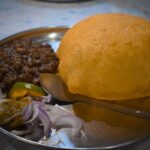
- A clear tasting list includes samosa, bedmi poori, chaat, kulfi, jalebi, gulab jamun, and masala chai
- Khari Baoli spice market gives you a sensory break from sweets and fried snacks
- Jama Masjid entry is extra (Rs 300), so budget a little for it
Old Delhi Food Starts Where Chandni Chowk “Lives”
Old Delhi is the kind of place where food isn’t a separate activity. It’s the atmosphere. Chandni Chowk feels like a working market, not a museum lane—streets stacked with chaatwallahs, halwais, and paranthewallahs, plus the aromas that seem to follow you from one turn to the next.
This tour is built for that. You don’t just stroll and hope you find the right stalls. You get guided stops that make the neighborhood feel navigable, while still keeping the street texture intact. Even the quick orientation points matter: Chandni Chowk’s name connects to moonlight and squares, and the area’s history of mixed communities explains why you’ll see temples, mosques, and worship spaces woven into daily life.
More hours to spend in Old Delhi
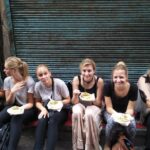

Rickshaws With Audio Headsets: Your Plan for Not Getting Lost
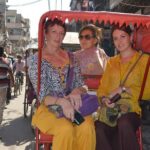
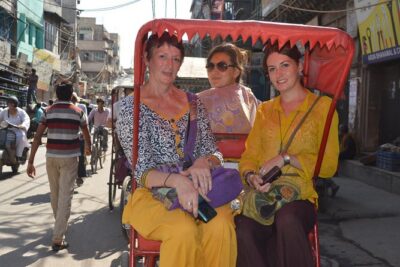
Most of the tour happens on rickshaws, with only a bit of walking. That’s a big deal in Old Delhi, where lanes are narrow and the crowd energy can be intense. You’ll still get up close to the shops and signage, but you’re not doing a long, exhausting hike through traffic.
The wireless headsets are the other smart part. When your guide talks about what you’re seeing—whether it’s a Mughal-era structure or why a place is important to a faith—you hear it clearly without needing to stop mid-lane and turn your head every second.
From feedback, the guide experience stands out when the person leading the group has the kind of clear English explanations you can actually follow while moving. Some tours are led by guides like Ritu, and others by Ahmer Khan—and the consistent theme is simple: the commentary is easy to track.
What You’ll Taste (and How to Avoid Getting Overstuffed)
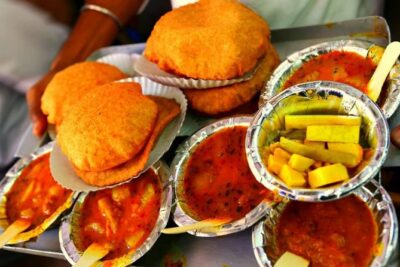
The tasting list is designed like a route through Delhi comfort foods, not a random snack buffet. Here’s what you should expect to sample:
- Samosa
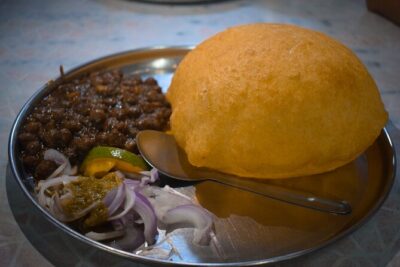
- Bedmi poori
- Jalebi
- Chaats (with typical mixes like bhalla and tikki styles)
- Kulfi
- Gulab jamun
- Masala chai
That spread matters because it covers the full range of cravings: crispy savory first, then sweet syrupy, then cooling dairy, plus hot tea to keep everything moving. It also means you don’t need to make a second plan later for dessert.
Practical pacing tip: if you tend to eat fast, slow down for jalebi and gulab jamun. They’re heavy on syrup and sugar, and in Old Delhi you’ll likely keep smelling other treats right after—so it’s easy to keep going past your comfort level.
The Itinerary: Old Delhi Landmarks in Between Food Stops
This tour stitches together big sites and working-market streets. Even when you’re only there for about 10–15 minutes, each stop adds meaning to what you’ll taste next.
Red Fort (UNESCO, and a stop you can understand quickly)
You start with Red Fort, a UNESCO World Heritage site. It was built by Mughal Emperor Shah Jahan in 1648 and described as a grand palace cum fort. It also connects to the 1857 War of Independence, when British forces demolished over 75% of the structure—yet the remaining parts still show Mughal craftsmanship.
Even if you know nothing about Mughal architecture, this stop works because it gives you the main historical anchor. It’s also a practical timing moment: quick arrival, short orientation, then back into the neighborhood flow.
Admission note: Red Fort is free on this tour (admission ticket free).
Still hungry? More Old Delhi food crawls
Sri Digambar Jain Lal Mandir (ornate, peaceful, and quietly distinctive)
Next is Sri Digambar Jain Lal Mandir, the oldest Jain temple in Delhi’s capital area. The place is known for ornate interiors with gold and silver, and the main idol is Lord Parshvanath.
This stop adds a calm counterpoint to the market noise. It’s also where you learn a couple of Jain principles that show up in everyday culture—especially the emphasis on non-violence. The temple premises even include a bird hospital founded in 1956, tied to the principle of avoiding killing.
Admission note: Free.
Chandni Chowk (where the street story becomes the street)
Now you’re in the heart of Old Delhi: Chandni Chowk. The name connects to moonlight and a square, and the street’s layout once included a canal down the center with pools at intersections that reflected moonlight.
Today, the shape of the place still helps you read the past. Even after big historical changes, you can spot older building facades and imagine how the space would have worked when the canal and public pools were part of daily life.
This is also where the tour makes its central promise: food is everywhere, but you’re not wandering aimlessly. Your route threads through the neighborhood’s food specialties.
Admission note: Free.
Gurudwara Sis Ganj Sahib (Sikh history you can feel in the architecture)
The tour then moves to Gurudwara Sis Ganj Sahib, a Sikh place of worship associated with Guru Tegh Bahadur, the ninth Guru. According to the tour’s context, he was beheaded in 1675 for refusing to convert to Islam, and the gurudwara was built in his memory.
You’ll see a spacious open hall with a bronze canopy where the Guru Granth Sahib is kept. Even in a short stop, it’s a reminder that Old Delhi isn’t just markets and forts—it’s also places of grief, devotion, and resilience.
Admission note: Free.
Jama Masjid (impressive scale, plus a cost you should plan for)
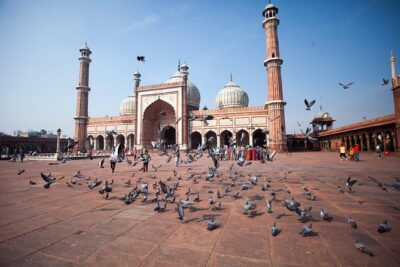
Jama Masjid is one of the most important religious buildings in India in terms of scale. It’s described as the largest mosque of India and one of the world’s biggest. Built by Shah Jahan in 1650, it can accommodate massive prayer crowds—up to 25,000 under the main prayer hall, and up to 68,000 including the surrounding areas.
It’s also a big moment for the tour because it changes your pace. You spend enough time to take in the prayer-hall structure and pillars, and you’ll likely understand why this site is a pilgrimage.
Cost note: Entry is Rs 300 per person and not included in the tour price.
Practical heads-up: this is the one stop where you should assume you’ll need extra money on the spot.
Khari Baoli (Asia’s big spice market)
Then comes Khari Baoli, described as a stepped well area from Shah Jahan’s reign that evolved into the spice market. Today it’s said to be Asia’s biggest spice market, and it’s crowded in a way that feels intense—but the tour context emphasizes it’s also managed.
This is your sensory reset. After sweets and fried snacks, spices bring you back to savory reality. It’s also a good photography stop because you can see shelves of nuts, herbs, and spices stacked in tight, organized rows—even when the street feels chaotic.
Admission note: Free.
Paranthe Wali Gali (classic street food, served hot and unapologetic)
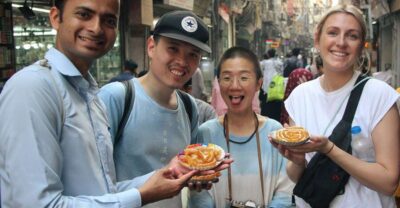
This is where the food focus turns up. Paranthe Wali Gali is famous for its food culture and multi-generation eateries. The tour’s approach here makes sense: you’re not just eating one item. You’re sampling the neighborhood’s best-known styles, often prepared with specific techniques and lots of spice.
You’re expected to sample favorites like:
- Jalebi (golden fried rings in sugar syrup)
- Samosa (potato, onion, peas, coriander, and lentils in a triangular fried pastry)
- Chaat styles such as bhalla and tikki (mixes involving vegetables, raw fruits, soaked lentils, and yogurt)
Admission note: Free.
Bazaars and Kinari (shopping streets that explain the city’s design)
Between major stops, you’ll pass through Old Delhi’s bazaar layout—narrow streets where each lane tends to specialize in specific goods. The tour also mentions that these bazaar patterns were linked to Shah Jahan’s daughter Jahanara, who loved shopping.
There’s also a stop area connected to Kinari, known for traditional grand wedding items: things like glittery borders, ornate accessories, and shops that sell wedding-related fabrics and embellishments.
This isn’t a “buy stuff or miss out” detour. It helps you understand why Old Delhi looks the way it does—street design tied to commerce, craft, and celebration.
Naughara (nine houses and a quiet side of Chandni Chowk)
Finally, you’ll visit Naughara (nine houses). This lane includes a group of nine 18th-century mansions that keep their traditional look, plus an ornate Jain temple.
It’s short but worthwhile because it slows the story down. Markets are loud. These mansion facades give you a chance to see Old Delhi’s residential grandeur without leaving the neighborhood.
Admission note: Free.
Price and Value: What $102 Covers in Old Delhi
At $102 per person for about 2 to 4 hours, this tour is good value if you want three things at once:
1) Guided rickshaw transportation through the tight Old Delhi street pattern
2) Audio headsets so the guide narration stays clear
3) A curated tasting menu of the foods that make Chandni Chowk famous
It also includes practical basics: bottled water, food tasting, and snacks, plus live commentary on board and a professional guide. So you’re not paying for only sightseeing. You’re paying for food plus interpretation plus getting around.
The one place value needs a small reality check is Jama Masjid. Because the entrance fee (Rs 300) is not included, factor that extra cash into your budget. If you’re budgeting tightly, bring the amount in advance so it’s not a last-minute hassle.
Practical Tips: Hygiene, Safety, and How to Prep for Narrow Lanes
The tour highlights care regarding hygiene and safety, and it includes bottled water. That’s helpful because street eating can feel risky when you don’t know the setup, especially in crowded markets.
Because the route includes narrow lanes and market crowds, wear shoes you can handle for quick hops on and off rickshaw and short walks. Keep your daypack simple; you don’t want bulky bags swinging in tight spaces.
Also, set your expectations around timing. The duration is listed as 2 to 4 hours, which usually means you’ll move at a market pace with stops for tasting and sights. If you have a dinner reservation, give yourself buffer time.
Who This Tour Fits Best
This is a strong fit if you:
- want a first-time plan for Old Delhi that doesn’t turn into guesswork
- like eating as your main activity, not just taking photos near food
- enjoy history and religion context but still want it tied directly to what you’re doing right now
- prefer guided movement rather than navigating alone through crowded lanes
It may be less ideal if you:
- dislike paying extra on the spot (again, Jama Masjid entry is separate)
- get uncomfortable with dense street crowds and narrow market streets
Should You Book This Old Delhi Rickshaw Food Tour?
I’d book it if you want Old Delhi to feel organized without feeling sanitized. The rickshaw format keeps you moving through the street pattern, and the wireless headsets help you understand why each stop matters.
Book it especially if you’re excited by the tasting lineup: samosa, bedmi poori, jalebi, chaat, kulfi, gulab jamun, and masala chai. That mix covers savory, sweet, cooling dairy, and hot drinks in a way that feels like a real food day, not a token sample.
The main reason not to book is simple: Jama Masjid entry costs extra, and you’ll need to plan for it. If that’s fine, this tour is a practical way to get your bearings, eat well, and leave Chandni Chowk with more than just a sugar high.
FAQ
How long is the Old Delhi food tasting tour?
It lasts about 2 to 4 hours.
What does the tour cost?
The price is $102.00 per person.
Where does the tour start and end?
It starts at Charity Birds Hospital next to Shri Digambar Jain Lal Mandir, opposite to Red Fort, Chandni Chowk, Delhi 110006, India, and it ends back at the same meeting point.
Is hotel pickup included?
No. Hotel pickup and drop-off are not included, though they can be arranged for an extra charge.
What transportation does the tour use?
The tour is mainly conducted on rickshaws, with little walking.
Are wireless headsets included?
Yes. You get headsets to hear the guide clearly, plus live commentary.
What food items are included in the tasting?
The tasting includes samosa, bedmi poori, jalebi, chaat, kulfi, gulab jamun, and masala chai.
Is bottled water included?
Yes, bottled water is included.
Are there any admission fees during the tour?
Some stops are free (like Red Fort and the Jain temple), but Jama Masjid has an entrance charge of Rs 300 per person that is not included.
Is the tour private?
Yes. It’s listed as a private activity, meaning only your group participates.
More Tour Reviews in New Delhi
- Old & New Delhi City Tour – Half or Full Day Options Available
★ 5.0 · 4,811 reviews - Half Day Private Delhi City Tour
★ 5.0 · 4,474 reviews - Same Day Taj Mahal, Agra Fort & Baby Taj Tour from Delhi by Car
★ 5.0 · 4,304 reviews - Taj Mahal Day Tour from Delhi by Superfast Train – TOP RATED TOUR
★ 5.0 · 4,166 reviews - Delhi: Old and New Delhi Private Full or Half-Day Tour
★ 4.9 · 3,776 reviews
Still Hungry in Old Delhi
- The Great Indian Food Tour: Old Delhi Food and Heritage Walk
★ 5.0 · 1,698 reviews - Old Delhi Food, Heritage&Cultural Walk with Rickshaw ride to Masterji Kee Haveli
★ 5.0 · 742 reviews - Old Delhi Street Food Tour
★ 5.0 · 497 reviews - Breakfast Walk in Old Delhi
★ 5.0 · 449 reviews - Delhi: Old Delhi Street Food Tour with Rickshaw Ride
★ 4.9 · 403 reviews
More of Old Delhi
- The Great Indian Food Tour: Old Delhi Food and Heritage Walk
★ 5.0 · 1,698 reviews - Old Delhi Food, Heritage&Cultural Walk with Rickshaw ride to Masterji Kee Haveli
★ 5.0 · 742 reviews - Old Delhi Bike Tour
★ 5.0 · 616 reviews - Old Delhi Street Food Tour
★ 5.0 · 497 reviews - Breakfast Walk in Old Delhi
★ 5.0 · 449 reviews
Just added: more New Delhi reviews to browse
- 4 days Golden Triangle Tour★ 5.0 · 3 reviews
- Discover Old & New Delhi: Private Tour with Street Food★ 5.0 · 3 reviews
- Taj Mahal Tour From Delhi By Private Car★ 4.5 · 3 reviews
- Golden Triangle Tour 5 Days★ 5.0 · 3 reviews
- Taj Mahal: Express Entry Ticket For Sunset Tour with guide★ 5.0 · 3 reviews
- Agra Taj Mahal Sunrise & Sunset Tour from Delhi★ 5.0 · 3 reviews
Old Delhi Food Tours, compared.
 ★ 5.0The Great Indian Food Tour: Old Delhi Food and Heritage WalkFrom $431,698 reviews
 ★ 5.0Old Delhi Food, Heritage&Cultural Walk with Rickshaw ride to Masterji Kee HaveliFrom $52742 reviews
 ★ 5.0Old Delhi Street Food TourFrom $40497 reviews
 ★ 5.0Breakfast Walk in Old DelhiFrom $80449 reviews
 ★ 4.9Old Delhi Street Food Tour with Rickshaw RideFrom $43403 reviews
 ★ 5.0Delhi Food Walk: Rickshaw Ride, Street Eats & Market TourFrom $40401 reviews
 ★ 5.0Old Delhi Street Food Tour – Explore Spices in Chandni ChowkFrom $34334 reviews
 ★ 5.0Old Delhi Food Tour: A Night Time FeastFrom $38326 reviews
Browse the lists this tour appears in