
Reviewed · OLD DELHI FOOD TOURS
Old Delhi Heritage and Street Food Walk with a Local
Old Delhi tastes like a living textbook. You’ll follow a heritage-and-food route through iconic corners like the Red Fort area and Jama Masjid, with stories that link rulers, religions, and everyday street life. The guide also brings in personal Chandni Chowk memories, so the city feels less like a list of monuments and more like something you can actually picture.
What I like most is the way the walk turns each stop into a clear story you can repeat later, especially the Mughal timeline and the religious mix you see in close quarters. I also like the built-in street-food breaks, including favorites like malai sandwiches, where flavors get tied to place and people.
One thing to plan for: admission isn’t included for Red Fort and Jama Masjid, so you’ll want a little extra budget if you want to go in and, at the end, consider the minarets option.
In This Review
- Key highlights you’ll feel (not just see)
- Old Delhi by foot: why this route works
- Akshay Jain and the Chandni Chowk memories behind the stories
- Stop 1: Red Fort ramparts and Shah Jahan’s power shift
- Stop 2: Sri Digambar Jain Lal Mandir next to Mughal power
- Stop 3: Begum Samru’s Palace and a different kind of power story
- Stop 4: Gurudwara Sis Ganj Sahib and the Sikh martyrdom story
- Stop 5: Central Baptist Church, Chandni Chowk and 1857’s shock
- Stop 6: Jama Masjid finish, peaceful space, and optional minaret views
- Street food breaks: how snacks fit the history
- Price and value: what $28.80 really buys
- Logistics that affect your comfort (and how to handle them)
- Who should book this walk
- Should you book this Old Delhi Heritage and Street Food Walk
- FAQ
- How long is the Old Delhi Heritage and Street Food Walk?
- What does the tour cost?
- Where does the tour start?
- Where does the tour end?
- Is a mobile ticket included?
- Which stops include admission tickets?
- Are there any limits on group size?
- Is the tour near public transportation?
- Is the tour suitable for most travelers?
- Cancellation is possible. Is there a refund if plans change?
Key highlights you’ll feel (not just see)
- Small group size (max 12) keeps the pace friendly on narrow lanes.
- Two paid monuments: Red Fort and Jama Masjid have admission not included.
- Akshay Jain’s storytelling is anchored in growing up around Chandni Chowk.
- Street-food pauses include local standouts such as malai sandwiches.
- End with views: optional minaret climb at Jama Masjid for Old Delhi panoramas.
- Mobile ticket makes check-in straightforward.
Old Delhi by foot: why this route works
Old Delhi can overwhelm you fast: noise, smells, crowds, and sudden turns that make you lose your bearings. This walk helps because it gives you a path with a clear “why,” so every street feels connected instead of random.
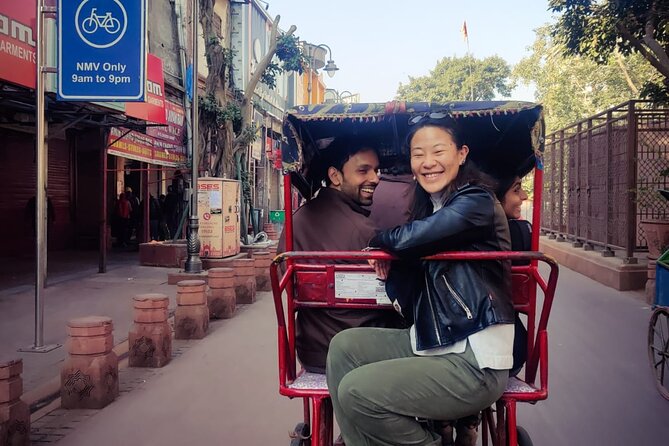
You’ll move at a human pace for about 2 hours 30 minutes, long enough to enjoy the area without feeling stuck in one spot. And because the group is capped at 12 people, you don’t spend the whole time squeezing or waiting.
The best part is the balance. You get landmark context, but you also get the sensory side of Chandni Chowk style street life—tastes, sounds, and smells—so it sticks.
More hours to spend in Old Delhi




Akshay Jain and the Chandni Chowk memories behind the stories
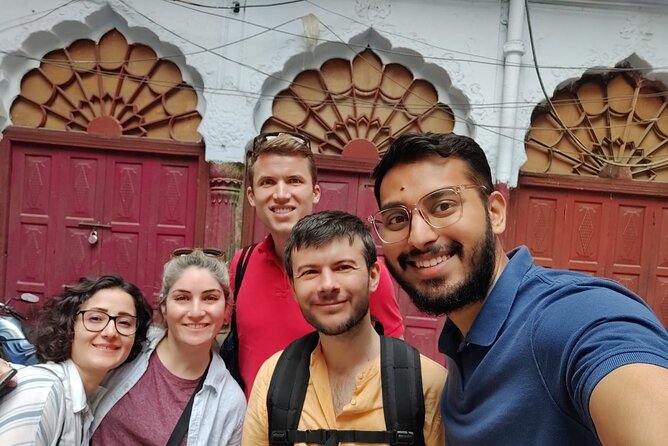
This tour is led by Akshay Jain, and his background shapes the tone. He grew up in Chandni Chowk and later left Delhi at 14 on an academic scholarship to Singapore, then traveled as a student across nearly 20 countries on three continents. That blend shows up in the way he explains India’s layers with both local intimacy and a traveler’s lens.
The result is a guide who doesn’t just recite dates. He connects scenes to how people lived next door—religions side by side, empires rising and shifting power, and everyday food culture continuing through change.
In the most praised parts of the experience, people emphasize that his storytelling feels personal, even when the subjects are centuries old. You’ll also notice he weaves poetry and childhood details into the history, which makes the route easier to remember when you’re back in your hotel.
Stop 1: Red Fort ramparts and Shah Jahan’s power shift
You start at the Shri Digambar Jain Atishay Kshetra Lal Mandir, opposite the Red Fort area on Netaji Subhash Marg. From this vantage, you hear the story of Shah Jahan, including the fact that he built the Taj Mahal and then moved his capital from Agra to Delhi in 1648 to establish the fort.
What makes this first stop work is the framing. Instead of treating the Red Fort as a standalone monument, you get the political setup for why Delhi mattered so much to the Mughal world.
If you plan to enter the fort grounds, note that admission ticket is not included. That’s the main drawback at Stop 1, but it also lets you choose your budget and energy level right at the start.
Stop 2: Sri Digambar Jain Lal Mandir next to Mughal power
From the Red Fort sightline, you step into a smaller, quieter world at Sri Digambar Jain Lal Mandir. This stop is short, about 10 minutes, but it’s loaded with meaning.
You’ll hear how a Jain temple came to be located beside a major Mughal fort with a Muslim Emperor. The guide, being a Jain himself, also shares stories from his childhood and provides interesting facts about Jainism as a religion and way of life.
This is one of the places where the “layers of Delhi” idea becomes concrete. You’re not just learning about empires; you’re seeing how communities were positioned close enough to influence each other in daily life.
Admission here is free, so you get value without needing to calculate extra costs.
Stop 3: Begum Samru’s Palace and a different kind of power story
Next up is Begum Samru’s Palace, a 15-minute stop with free admission. The story is unusual in the best way: Begum Samru is described as a nautch girl who rose into a powerful position as a mercenary warrior, became a ruler near Delhi, and even acted as a diplomat in the Mughal court.
You’ll also hear that this grand mansion was gifted by the Mughal emperor. That detail matters because it reframes power. Even when the official history books feel male-led and empire-centered, the city’s history includes women who gained authority through skill, negotiation, and force.
This is the kind of stop that gives you a mental “map update.” After Red Fort and the Jain temple, Begum Samru adds depth by showing Delhi’s power networks weren’t one-size-fits-all.
Still hungry? More Old Delhi food crawls
Stop 4: Gurudwara Sis Ganj Sahib and the Sikh martyrdom story
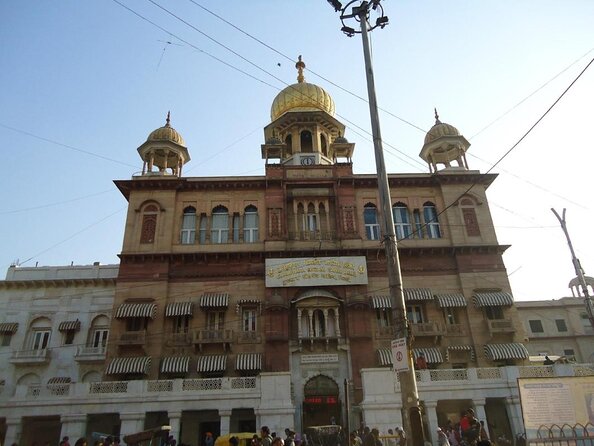
At Gurudwara Sis Ganj Sahib, you’ll spend about 10 minutes, again with free admission. The discussion centers on succession after Shah Jahan, and why a Sikh guru was executed there along with followers.
The tour frames this as part of a bigger turning point: the beginnings of the decline of Mughal power. Even if you already know the broad story of empires shrinking and reforming, this kind of local, site-specific narrative helps you understand how those shifts felt on the ground.
Religious sites often look calm from the outside. What changes here is that you’re given the stakes that shaped those spaces—who came, who was affected, and what the city’s political structure meant for ordinary people.
Stop 5: Central Baptist Church, Chandni Chowk and 1857’s shock
Then you walk to Central Baptist Church, Chandni Chowk for around 10 minutes. This stop ties Delhi’s Mughal-era story to the rise of British power through the East India Company.
You’ll hear how the year 1857 shook the foundations of the church during India’s first war of independence, and how the Company triumphed afterward. The tour also connects that shift to the period when India became a British colony under Queen Victoria.
This is where the walk becomes more than religious and royal history. It becomes modern political history you can actually locate in a real neighborhood.
Free admission here keeps the focus on story rather than ticket logistics.
Stop 6: Jama Masjid finish, peaceful space, and optional minaret views
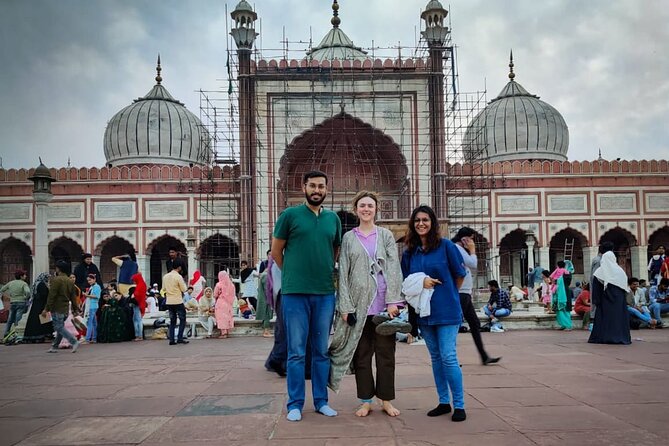
Your tour ends at the magnificent Jama Masjid for about 30 minutes. The mood is different from the earlier stops. You get a chance to slow down at a splendid, peaceful place while still staying in “Old Delhi mode.”
Admission for Jama Masjid is not included, so you’ll want to decide on the spot whether you want to pay to go inside. If you like height and angles, the adventurous option is to climb the minarets for panoramic views of the Old city.
This finale is valuable because it closes the loop. You start with Mughal authority, pass through Jain and Sikh stories, then land at a major congregational space where the city’s religious identity is visible in stone and scale.
Street food breaks: how snacks fit the history
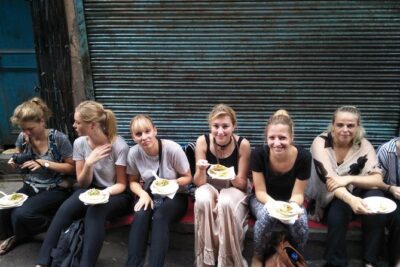
This is a heritage and street food walk, so the eating is part of the point—not just a bonus. The route is built to bring the sensory world of Chandni Chowk into the history lesson, so you’re not walking around hungry and you’re not eating with no context.
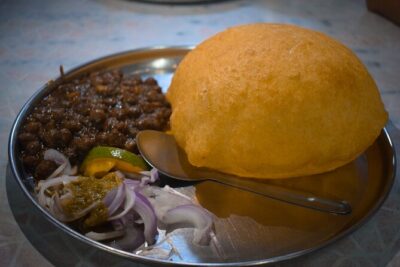
One of the specific food details you’ll hear about is malai sandwiches, which show up as a favorite. That matters because it represents the kind of comfort food that keeps a neighborhood’s character intact even when the headline history changes.
Because exact menu details aren’t listed here, the safest way to think about it is this: you’ll get street-food tasting moments and local culinary context while the guide tells stories that connect food culture to the people and streets around you.
If you have dietary restrictions, plan to ask ahead or speak up during the walk. Street food is flexible, but it only works if you can communicate what you need.
Price and value: what $28.80 really buys
At $28.80 per person for about 2 hours 30 minutes, this tour is priced like a “small group story + food stops” experience. In practical terms, you’re paying for two things: guided navigation through tight lanes and someone who can explain why these places matter.
You’re also getting multiple major stops, plus free admission at several sites. The two biggest cost exceptions are Red Fort and Jama Masjid, where admission tickets aren’t included, so you should budget for those if you want full access.
If you’re comparing options, think this way: many Old Delhi walks either focus on food only or history only. This one ties both together, and that combination is what gives the day its value.
It also helps that the group is limited to 12, which usually means more time for questions and a less frustrating pace in the crowded areas.
Logistics that affect your comfort (and how to handle them)
This walk starts near Netaji Subhash Marg, opposite Red Fort, at the Shri Digambar Jain Atishay Kshetra Lal Mandir. It ends at Jama Masjid near the Jama Masjid Metro Station, so you can finish and move on without too much backtracking.
The route runs through narrow Old Delhi lanes, so wear comfortable shoes and keep your phone secure. Plan for a lot of looking up at facades and listening closely to the guide, since the best stories happen at specific corners.
The duration is long enough that you’ll want water. And since the walk is described as suitable for most travelers, it’s a reasonable fit for people who can handle walking through busy streets for a couple of hours.
Who should book this walk
This is a great fit if you want Old Delhi with structure, not just wandering. If you love history that feels human—religions, rulers, and power shifts seen through real places—this will click.
It’s also ideal if you care about street food but want it explained and placed in context. The storytelling style, including personal memories from Chandni Chowk, is a big part of why people rate the experience highly.
If you want a “quick hit” tour with only famous monuments and no emotional or historical side stories, you might find the theme a bit heavy. But if you enjoy layered city history, this one is built for you.
Should you book this Old Delhi Heritage and Street Food Walk
Yes, if you’re the type who likes a guided path that connects sights to stories and snacks to place. The combination of Akshay Jain’s personal Chandni Chowk perspective plus a route that moves across Mughal, religious, and colonial-era landmarks gives you more than photos.
Book it if you’re okay with two extra admission costs at Red Fort and Jama Masjid and you’re ready for the realities of Old Delhi walking streets. If you want to use a free cancellation window, you can plan with some flexibility.
If you show up hungry, curious, and ready to listen, this walk has the right ingredients to make Old Delhi feel personal and understandable.
FAQ
How long is the Old Delhi Heritage and Street Food Walk?
It runs for approximately 2 hours 30 minutes.
What does the tour cost?
The price is $28.80 per person.
Where does the tour start?
The start point is Shri Digambar Jain Atishay Kshetra Lal Mandir on Netaji Subhash Marg, opposite Red Fort, Chandni Chowk, Delhi 110006.
Where does the tour end?
The tour ends at Jama Masjid in Old Delhi, near Jama Masjid Metro Station.
Is a mobile ticket included?
Yes, the tour includes a mobile ticket.
Which stops include admission tickets?
Admission tickets are not included for Red Fort and Jama Masjid. The other listed stops are free.
Are there any limits on group size?
Yes. The maximum group size is 12 travelers.
Is the tour near public transportation?
Yes. It is described as near public transportation.
Is the tour suitable for most travelers?
Most travelers can participate.
Cancellation is possible. Is there a refund if plans change?
Free cancellation is available up to 24 hours in advance for a full refund. If you cancel less than 24 hours before the start time, the amount paid is not refunded.
More Tour Reviews in New Delhi
- Old & New Delhi City Tour – Half or Full Day Options Available
★ 5.0 · 4,811 reviews - Half Day Private Delhi City Tour
★ 5.0 · 4,474 reviews - Same Day Taj Mahal, Agra Fort & Baby Taj Tour from Delhi by Car
★ 5.0 · 4,304 reviews - Taj Mahal Day Tour from Delhi by Superfast Train – TOP RATED TOUR
★ 5.0 · 4,166 reviews - Delhi: Old and New Delhi Private Full or Half-Day Tour
★ 4.9 · 3,776 reviews
Still Hungry in Old Delhi
- The Great Indian Food Tour: Old Delhi Food and Heritage Walk
★ 5.0 · 1,698 reviews - Old Delhi Food, Heritage&Cultural Walk with Rickshaw ride to Masterji Kee Haveli
★ 5.0 · 742 reviews - Old Delhi Street Food Tour
★ 5.0 · 497 reviews - Breakfast Walk in Old Delhi
★ 5.0 · 449 reviews - Delhi: Old Delhi Street Food Tour with Rickshaw Ride
★ 4.9 · 403 reviews
More of Old Delhi
- The Great Indian Food Tour: Old Delhi Food and Heritage Walk
★ 5.0 · 1,698 reviews - Old Delhi Food, Heritage&Cultural Walk with Rickshaw ride to Masterji Kee Haveli
★ 5.0 · 742 reviews - Old Delhi Bike Tour
★ 5.0 · 616 reviews - Old Delhi Street Food Tour
★ 5.0 · 497 reviews - Breakfast Walk in Old Delhi
★ 5.0 · 449 reviews
Just added: more New Delhi reviews to browse
- 4 days Golden Triangle Tour★ 5.0 · 3 reviews
- Discover Old & New Delhi: Private Tour with Street Food★ 5.0 · 3 reviews
- Taj Mahal Tour From Delhi By Private Car★ 4.5 · 3 reviews
- Golden Triangle Tour 5 Days★ 5.0 · 3 reviews
- Taj Mahal: Express Entry Ticket For Sunset Tour with guide★ 5.0 · 3 reviews
- Agra Taj Mahal Sunrise & Sunset Tour from Delhi★ 5.0 · 3 reviews
Old Delhi Food Tours, compared.
 ★ 5.0The Great Indian Food Tour: Old Delhi Food and Heritage WalkFrom $431,698 reviews
 ★ 5.0Old Delhi Food, Heritage&Cultural Walk with Rickshaw ride to Masterji Kee HaveliFrom $52742 reviews
 ★ 5.0Old Delhi Street Food TourFrom $40497 reviews
 ★ 5.0Breakfast Walk in Old DelhiFrom $80449 reviews
 ★ 4.9Old Delhi Street Food Tour with Rickshaw RideFrom $43403 reviews
 ★ 5.0Delhi Food Walk: Rickshaw Ride, Street Eats & Market TourFrom $40401 reviews
 ★ 5.0Old Delhi Street Food Tour – Explore Spices in Chandni ChowkFrom $34334 reviews
 ★ 5.0Old Delhi Food Tour: A Night Time FeastFrom $38326 reviews
Browse the lists this tour appears in