

Reviewed · RAJASTHAN TOURS FROM DELHI
Royal Rajasthan: Whispers From The Past Curated Journey
History here speaks in many voices. I love the included admission tickets that keep the trip moving, and I love the private, driver-led flow that makes logistics feel manageable even on long sight days. The one thing to watch is that the schedule is packed with major monuments, so you’ll want to pace yourself (and plan for early starts).
This route has a smart mix: Mughal power in Delhi and Agra, Rajput splendor in Jaipur, then Udaipur’s lakeside grandeur. You’ll start at Indira Gandhi Intl Airport with a name sign for pickup, and you’ll end with a return transfer timed to your flight.
In This Review
- Key highlights at a glance
- First Steps: Airport Pickup, Jet Lag Recovery, and a Smooth Start in Delhi
- Qutub Minar to Holy Cities: How Delhi’s Sights Fit Together
- Humayun’s Tomb and the Red Fort: Mughal Delhi’s “big statements”
- Akshardham, India Gate, and the “different faiths, same city” feeling
- Gandhi Memorial Hall and Jama Masjid: two more perspectives, same day rhythm
- Taj Mahal Timing: Sunrise/Sunset Is the Whole Game
- Agra’s Fort and the Bachcha Taj: A More Relaxed Side of Imperial Power
- Jaipur Palaces: From City Palace Museums to Amber’s Lake Views
- Jantar Mantar, Jaigarh Fort, and Birla Mandir: Jaipur Beyond the Main Circuit
- Udaipur’s Lake Pichola Boat Ride and Sahelion Ki Bari Gardens
- Udaipur City Palace and Jagdish Temple: Where the Royal Story Still Lives
- Day 9’s Pasar Chandni Chowk: Snacks, Shopping, and Real-World Texture
- Price and Logistics: Is $1,068 Good Value for 10 Days?
- Who This Tour Suits Best (and Who Might Prefer a Slower Pace)
- Should You Book Royal Rajasthan: Whispers From The Past?
- FAQ
- What cities are included?
- Does the tour include airport pickup?
- Are admission tickets included?
- Is this a private tour?
- Is there a mobile ticket?
- Can the booking be changed or refunded if I cancel?
- What happens if the minimum number of travelers isn’t met?
Key highlights at a glance
- Airport pickup that feels personal: you’re met at arrival and taken to your hotel to recover.
- Delhi in one focused sweep: Mughal tombs, fort walls, big religious sites, and memorials in a single day.
- Taj Mahal timed for real light: the plan supports sunrise and/or sunset visits so you can see it change.
- Jaipur beyond the postcard: Amber Fort views, Hawa Mahal details, plus UNESCO-listed Jantar Mantar.
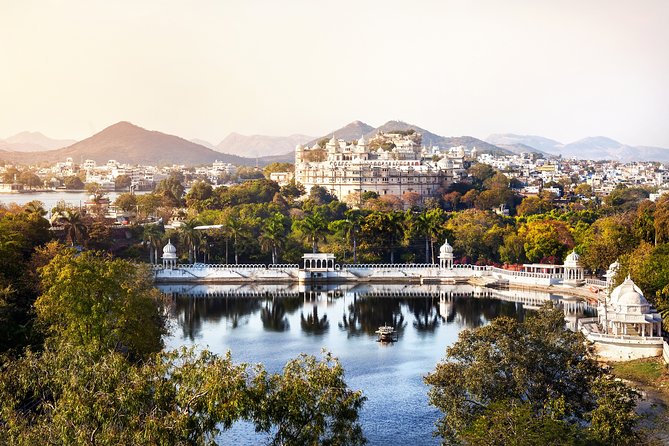
- Udaipur’s water-level moments: a Lake Pichola boat ride and gardens that are made for wandering.
- Service that people remember: drivers such as Bhanwar Singh, Modaram, KK (Kishor Kumar), and Ranjeet have been praised for calm driving and extra explanations.
First Steps: Airport Pickup, Jet Lag Recovery, and a Smooth Start in Delhi
Your trip begins at Indira Gandhi Intl Airport. You’ll be picked up with a signed board under your name, using your arrival details, then taken to your hotel so you can settle in. That little touch matters in India, where a first day can otherwise feel like chasing down directions while your brain is still in flight mode.
If you arrive early, you may get time to explore Delhi based on your preferences. Even 60–90 minutes of unplanned wandering can help you get your bearings—street colors, sounds, and traffic rhythms—before the guided days kick in. It’s a nice way to convert jet lag into orientation rather than frustration.
Deeper into Rajasthan, straight from Delhi




Qutub Minar to Holy Cities: How Delhi’s Sights Fit Together
Delhi can feel like several different cities at once: Mughal, imperial-era, spiritual, and modern. This plan leans hard into that mix, and it works. You start with Qutub Minar, a classic introduction to Delhi’s older layers. With admission included and about a couple of hours on the clock, it’s enough time to take in the scale and the details without turning it into a sprint.
Humayun’s Tomb and the Red Fort: Mughal Delhi’s “big statements”
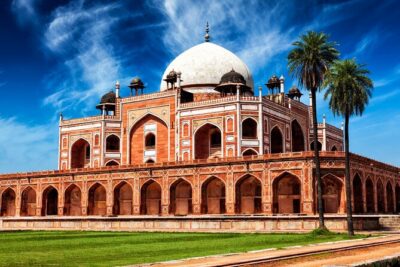
On the next day, the trip goes straight to Humayun’s Tomb. This isn’t just a pretty building. It was commissioned in 1569–70 by Humayun’s first wife and chief consort, Empress Bega Begum, and designed by Persian architects chosen by her: Mirak Mirza Ghiyas and his son Sayyid Muhammad. The point of starting here is to get your eyes trained on Mughal symmetry and garden-style planning—then the rest of Delhi reads more clearly.
After that comes Red Fort, the Mughal emperors’ main residence. It’s a strong follow-up because you’re shifting from the calm authority of a mausoleum to the fortified presence of a capital.
A practical thought: the Delhi days pack in multiple sites close together. Wear comfortable shoes and keep an eye on water. When the route is this full, your feet will do most of the work long before your brain catches up.
Akshardham, India Gate, and the “different faiths, same city” feeling
Then you hit Swaminarayan Akshardham, a Hindu temple and spiritual campus devoted to devotion, learning, and harmony. The experience is less about speed-running statues and more about stepping into a carefully designed space that’s meant to slow your head down.
Next, India Gate offers a different kind of history. It’s a war memorial, originally the All India War Memorial, honoring 70,000 soldiers of the British Indian Army who died between 1914–1921 in the First World War. Even if you don’t linger, it adds emotional weight to the day’s architecture.
The route continues with Gurudwara Bangla Sahib, one of Delhi’s most prominent Sikh gurdwaras. The highlight is the “Sarovar,” the holy water complex inside the site. If you’re the kind of person who likes understanding how sacred spaces work, this is a great stop because it’s not only a building—it’s a living practice environment.
Gandhi Memorial Hall and Jama Masjid: two more perspectives, same day rhythm
Gandhi Memorial Hall gives you a quieter, reflective break amid monuments. Then comes Jama Masjid, one of the largest mosques in India. It’s a dramatic capstone for the day because it’s both imposing and deeply central to city life.
This is one of the most valuable parts of the trip: you see how Delhi isn’t a single chapter in one textbook. It’s chapters with overlap, and religion and politics both show up in architecture.


Taj Mahal Timing: Sunrise/Sunset Is the Whole Game
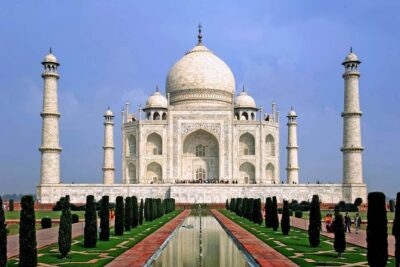
Agra’s crown jewel is, of course, the Taj Mahal. The plan is built around a smart choice: you can visit at sunrise, sunset, or both. That’s not a small detail. The Taj is famous, yes—but the real reason to schedule light is that the building’s mood changes with the day. The marble doesn’t just look different. The whole scene feels different.
You’ll have about three hours for the visit, which is enough for photos, slow looking, and stepping back when the crowds peak. If your goal is more than postcards—if you want to actually understand the scale—this time window gives you room.
One more practical note: sunrise plans often mean an earlier start than you’d expect on vacation. It’s worth it, but be honest with yourself about your morning stamina.
Agra’s Fort and the Bachcha Taj: A More Relaxed Side of Imperial Power
After the Taj, the itinerary shifts into “look closer” mode.
First is Agra Fort, once the main residence of the Mughal emperors until the capital moved to Delhi in 1638. Forts teach you power in a different way than palaces do. You’ll notice how walls, gates, and courtyards control movement—and that’s the story here.
Then you go to Tomb of Itimad-ud-Daulah, often described as a jewel box and nicknamed the Bachcha Taj. People love it because it’s smaller and more intimate than the Taj, yet it clearly connects to the same design vocabulary. If you want your day to feel a little less like speed sightseeing and a little more like thinking, this stop is your break.
Agra is where you go from “wow” to “oh, I see how it was built.” That’s the transition you want.
Jaipur Palaces: From City Palace Museums to Amber’s Lake Views

Jaipur is where the colors and details start to feel like part of your daily life. The route begins with the City Palace. Today it houses the Maharaja Sawai Man Singh II Museum while also continuing as home to the Jaipur royal family. That combination—museum + living tradition—often makes Jaipur feel more grounded than a site that’s only preserved behind glass.
Next is Amber Palace (Amer Fort). This is one of the most rewarding stops because you get both architecture and landscape. The fort overlooks Maota Lake, the main source of water for Amer Palace. On top of that, the fort is known for its artistic style elements, large ramparts, gates, and cobbled paths. It’s the kind of place where you can keep walking and still find new angles of the same scene.
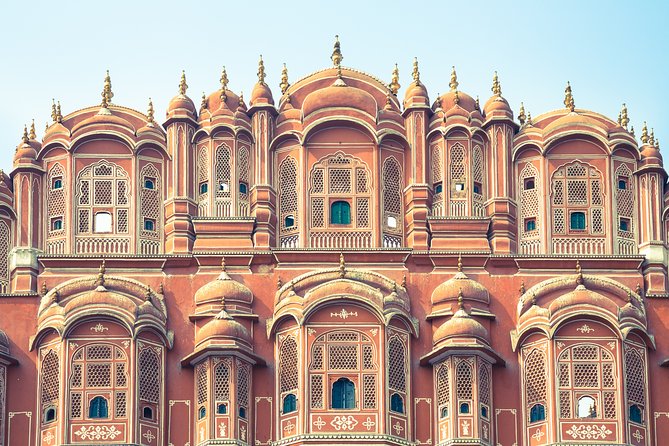
Then comes Hawa Mahal, the Palace of Wind. It’s made of red and pink sandstone, and it’s famous for its façade details—those little openings that give it its name. This is a great stop for people who like to linger and notice how design choices affect airflow, light, and interior use.
If you’re someone who gets tired of standing in lines, Jaipur helps because the most engaging experiences here are the ones where you walk, look up, and keep going.
Jantar Mantar, Jaigarh Fort, and Birla Mandir: Jaipur Beyond the Main Circuit
Day 6 in Jaipur is where the tour shows it can do more than the headline attractions.
You start at Jantar Mantar, a collection of nineteen architectural astronomical instruments built by Rajput king Sawai Jai Singh II, founder of Jaipur. It features the world’s largest stone sundial and is a UNESCO World Heritage site. Even if you’re not a science nerd, it’s hard not to respect the logic in stone. You’ll see how people tracked time and the sky before modern instruments.
Then you move to Jaigarh Fort, located on the Cheel ka Teela promontory in the Aravalli range, overlooking Amer Fort and Maota Lake. The payoff is the viewpoint. It gives you a wider sense of how these royal centers were positioned.
The next stops add texture: Albert Hall Museum, the oldest museum in Rajasthan and functions as the state museum; Birla Mandir, a Hindu temple made solely of white marble, built by the B.M. Birla Foundation in 1988, dedicated to Lakshmi and Vishnu (Narayan); and Govind Devji Temple for morning worship.
A quick reality check: you’ll be moving between active places of worship and big-ticket monuments. Dress modestly and keep the respectful tone. It’s not just etiquette; it makes the visit smoother.
You end the day with fort-and-tomb viewpoints:
- Nahargarh Fort, once part of a defense ring for Jaipur, overlooking the city from the Aravalli edge.
- Royal Gaitor Tumbas, a white marble palace-like complex in a valley setting.
This combination works well because it changes the pace of what you’re doing: science, museum, temple, and then wide landscapes and ceremonial tomb spaces.
Udaipur’s Lake Pichola Boat Ride and Sahelion Ki Bari Gardens
Udaipur is the trip’s mood shift. Instead of fort ramps and sandstone façades, you get water-level calm.
You start with a Lake Pichola boat ride, with time to admire the architecture of Pichola Village. Boats change your viewpoint fast. It’s one of the easiest ways to understand why Udaipur’s buildings look the way they do: the lake isn’t scenery—it’s part of the design system.
Then you visit Sahelion Ki Bari, also called Princess Garden. This is the type of place you enjoy when you’re walking slowly: fountains and kiosks, a lotus pool, and marble elephants. It’s built for strolling. Even better, it gives you a break from heavy monument days.
You also get Jag Mandir on Lake Pichola. It’s a palace built on an island, also called the Lake Garden Palace. That stop is a free highlight, and it pairs perfectly with the boat ride because you can see it from both land and water perspectives.
Udaipur City Palace and Jagdish Temple: Where the Royal Story Still Lives
On the next day you tackle City Palace, Udaipur, a palace complex built over nearly 400 years, with contributions from several rulers of the Mewar dynasty. This is where Udaipur’s royal narrative feels continuous rather than frozen in time.
You also visit Jagdish Temple, a large Hindu temple outside the palace complex. It’s been in continuous worship since 1651, which gives the whole experience extra weight. You’re not only seeing architecture; you’re seeing a place that remains active.
For many people, this is the most satisfying day of Udaipur because it balances spectacle (palace complex) with everyday continuity (temple worship).
Day 9’s Pasar Chandni Chowk: Snacks, Shopping, and Real-World Texture
After all the monuments, Day 9 brings you to Pasar Chandni Chowk, a historic bazaar known for clothing, housewares, hardware shops, plus restaurants and snack stalls. The visit lasts about two hours.
This is your best moment for low-effort fun: snack, browse, and practice how you want to move through a busy market environment. You won’t need a guide’s script to enjoy it; you just need a little curiosity and some patience for crowds.
If shopping isn’t your thing, you can still enjoy the atmosphere. Just remember: bazaars are where your senses get an opinion, so go slow.
Price and Logistics: Is $1,068 Good Value for 10 Days?
At $1,068 per person for about 10 days, this trip isn’t a budget bargain. But it’s also not “pay for nothing.”
Here’s where the value comes from:
- Included admissions on many stops: multiple major sites list admission ticket included across the route. That matters because entrance fees add up fast in India.
- Private tour setup for your group: the experience is described as private, meaning you’re not mixed into a random crowd with unclear timing.
- Pickup from the airport with name signage: that reduces first-day stress and helps you start on time.
- Time built into key highlights: Taj Mahal gets about three hours, and Delhi’s big-day route gives enough time per stop so you can actually see instead of just pass through.
- Real transportation and scheduling support: you’re not making separate arrangements between cities and then trying to line up each guide yourself.
Where the price can feel heavy is the same place other monument-focused trips get you: you pay for organization, not for solitude. If you want lots of free time, this schedule may feel tight.
Also note: the tour is non-refundable and cannot be changed for any reason if you cancel. There’s a minimum traveler requirement too; if that minimum isn’t met, you’ll be offered another date/experience or a full refund. If your dates are flexible, keep that in mind before you lock anything in.
Who This Tour Suits Best (and Who Might Prefer a Slower Pace)
This itinerary is a strong match if you want:
- Big-name sights in Delhi, Agra, Jaipur, and Udaipur without the planning headache.
- A mix of palaces, forts, temples, and memorials—not just one theme.
- A service style where your driver and local guides help keep the day organized and explanatory.
It may not be the best fit if you:
- Hate packed days with lots of stepping in and out of vehicles.
- Want long stretches of free time for shopping, side streets, or resting between sites.
- Are strict about changing dates if plans shift.
One more angle: the human support. Across experiences with this kind of service, drivers like Bhanwar Singh, Modaram, KK (Kishor Kumar), and Ranjeet have been singled out for being calm behind the wheel and helpful with context. That can make a big difference when you’re tired or just trying to understand what you’re seeing.
Should You Book Royal Rajasthan: Whispers From The Past?
I’d book this if your goal is a guided, high-coverage introduction to North India’s power centers and sacred spaces, with enough time at the biggest icons to actually notice details. The included admissions and airport pickup remove common travel friction.
I wouldn’t book it if you want a slow-travel, do-one-or-two-sites-a-day style vacation. This trip is about momentum. Bring your walking shoes, keep expectations realistic, and you’ll get a strong “then and now” feeling across Rajasthan and the Mughal heartland.
If your dates are fixed and you’re ready for monument-heavy days, this is a solid value play—not because it’s cheap, but because it saves you the planning pain while delivering a well-rounded route.
FAQ
What cities are included?
The trip includes visits in New Delhi, Agra, Jaipur, and Udaipur.
Does the tour include airport pickup?
Yes. You’re picked up from Indira Gandhi Intl Airport in New Delhi, with a signed board under your name, and then taken to your hotel. It also ends with a driver taking you to the airport based on your flight schedule.
Are admission tickets included?
Admission tickets are included for many major stops throughout the route. Some specific items are noted as free, such as India Gate, Jag Mandir, Pasar Chandni Chowk, and the final airport transfer.
Is this a private tour?
Yes. It’s described as private, with only your group participating.
Is there a mobile ticket?
Yes. A mobile ticket is listed as a feature.
Can the booking be changed or refunded if I cancel?
This experience is non-refundable and cannot be changed for any reason.
What happens if the minimum number of travelers isn’t met?
If it’s canceled because the minimum isn’t met, you’ll be offered a different date/experience or a full refund.
More Tour Reviews in New Delhi
- Old & New Delhi City Tour – Half or Full Day Options Available
★ 5.0 · 4,811 reviews - Half Day Private Delhi City Tour
★ 5.0 · 4,474 reviews - Same Day Taj Mahal, Agra Fort & Baby Taj Tour from Delhi by Car
★ 5.0 · 4,304 reviews - Taj Mahal Day Tour from Delhi by Superfast Train – TOP RATED TOUR
★ 5.0 · 4,166 reviews - Delhi: Old and New Delhi Private Full or Half-Day Tour
★ 4.9 · 3,776 reviews
Further into Rajasthan
- Alluring North India and Rajasthan Tour
★ 5.0 · 552 reviews - 13 Nights 14 Days Private Tour of Heritage Rajasthan from New Delhi
★ 5.0 · 149 reviews - 8-Day Golden Triangle & Rajasthan Private Tour from Delhi
★ 5.0 · 134 reviews - 12-Days – Splendors of Golden Triangle & Rajasthan
★ 5.0 · 72 reviews - 14 Days Golden Triangle with Wildlife Safari & Heritage Rajasthan
★ 5.0 · 37 reviews
Just added: more New Delhi reviews to browse
- 4 days Golden Triangle Tour★ 5.0 · 3 reviews
- Discover Old & New Delhi: Private Tour with Street Food★ 5.0 · 3 reviews
- Taj Mahal Tour From Delhi By Private Car★ 4.5 · 3 reviews
- Golden Triangle Tour 5 Days★ 5.0 · 3 reviews
- Taj Mahal: Express Entry Ticket For Sunset Tour with guide★ 5.0 · 3 reviews
- Agra Taj Mahal Sunrise & Sunset Tour from Delhi★ 5.0 · 3 reviews
Rajasthan Tours from Delhi, compared.
 ★ 5.0Alluring North India and Rajasthan TourFrom $2,400552 reviews
 ★ 5.013 Nights 14 Days Private Tour of Heritage Rajasthan from New DelhiFrom $226149 reviews
 ★ 5.08-Day Golden Triangle & Rajasthan Private Tour from DelhiFrom $492134 reviews
 ★ 5.012-Days – Splendors of Golden Triangle & RajasthanFrom $2,38072 reviews
 ★ 5.014 Days Golden Triangle with Wildlife Safari & Heritage RajasthanFrom $83537 reviews
 ★ 5.0Rajasthan:- Maharaja Places of Royal Rajasthan 07- Days TourFrom $85017 reviews
 ★ 4.55-Night Private Rajasthan Tour from Delhi Including Jaipur, Jodhpur and UdaipurFrom $35815 reviews
 ★ 5.012-day Private Tour: Maharaja RajasthanFrom $1,40510 reviews
Browse the lists this tour appears in