
Reviewed · DELHI COOKING CLASSES
Veg and Non veg : Private Cooking Class in Delhi home (7 meal)
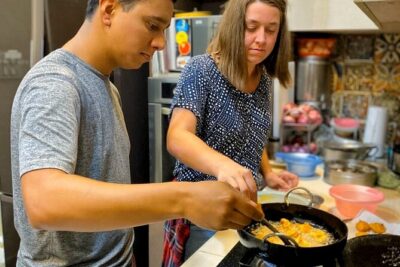
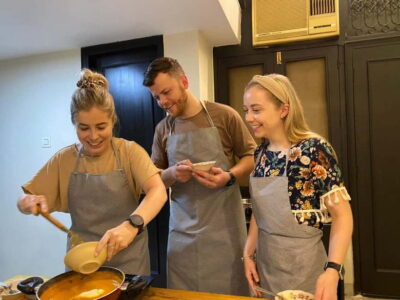
Cooking in a local Delhi home is one of the fastest ways to understand Indian flavors. In a clean, modern kitchen, Sonu and Preeti walk you through hands-on cooking while you learn how spices actually work.
I really love two things: first, the instruction is practical and step-by-step, so you’re not just watching—you’re making the food. Second, the meal you end with is genuinely satisfying, with a mix of curry, bread, dal, rice, and a sweet you can’t help going back for.
One consideration: this is not a hotel-style experience with door-to-door pickup. You’ll meet at Uttam Nagar (or near the metro), and getting there smartly matters—especially if you’re relying on taxis.
In This Review
- Key Things You Should Know Before You Go
- The Real Hook: Cooking in Delhi Like You’re a House Guest
- The 7-Meal Menu You’ll Cook (And Why It Works)
- Spice Lesson First: How Flavor Builds in Real Indian Cooking
- Cooking the Curry and Dal: The Backbone of the Meal
- Bread and Rice: Where Technique Shows Up Fast
- Starter, Mint Sauce, and the Sweet Finish
- Who Teaches You in This Delhi Home Cooking Class
- Lunch or Dinner: Pick the Timing That Fits Your Delhi Day
- Price and Value: What $47 Actually Buys You
- Where to Meet in Uttam Nagar (and Why Transport Matters)
- Who This Cooking Class Is Best For
- Should You Book This Delhi Home Cooking Session?
- FAQ
- Is this class suitable for veg and non-veg diets?
- What dishes are included in the class?
- Do I get tea or lassi?
- Can I choose between lunch and dinner?
- How long is the cooking class?
- Is hotel pickup and drop included?
- What is the cancellation policy?
Key Things You Should Know Before You Go
- Private class at a family home where you cook your own meal instead of just touring
- Veg or non-veg options, so you can match the menu to your preferences
- A spice-first approach, starting with how flavors build before powders hit hot oil
- A full 7-part meal setup (drink, pakora/snacks, curries, dal, rice, bread, dessert)
- Clear guidance in the kitchen, with recipes shared after the class in English
- Transport planning helps, since hotel pickup and drop are not included
The Real Hook: Cooking in Delhi Like You’re a House Guest
If you’ve only eaten Indian food out in restaurants, this class helps you connect the dots. You’ll learn why certain spices show up together, how they’re timed, and how the same ingredients shift depending on whether you want heat, tang, or comfort.
You’ll start in the home like a welcome guest. Then the cooking turns into a mix of teaching and conversation—spices, ingredients, and daily habits all come up as you go. That’s the part I value most: you don’t just leave with recipes. You leave with a better sense of how Indian meals are put together in actual kitchens.
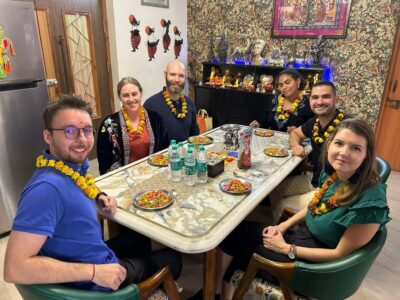
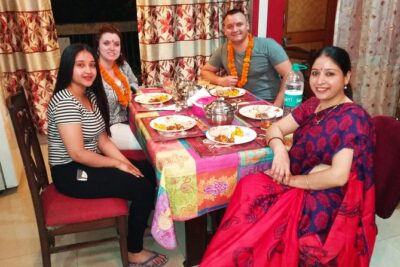
And yes, the food is the point. You end up eating what you helped make, with flavors that feel less like a restaurant version and more like a household version—warm, filling, and built for sharing.
More kitchens to get your hands into



The 7-Meal Menu You’ll Cook (And Why It Works)
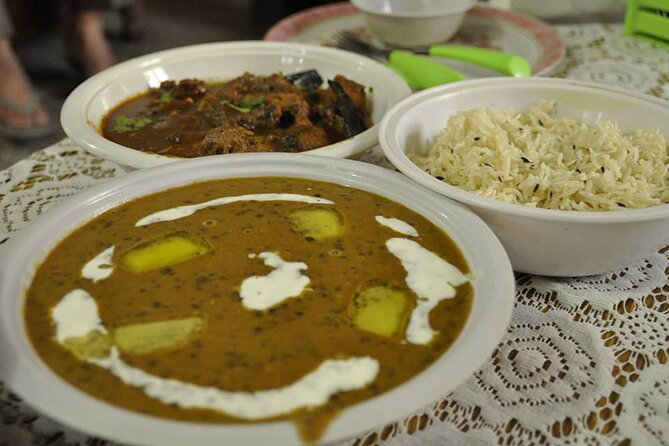
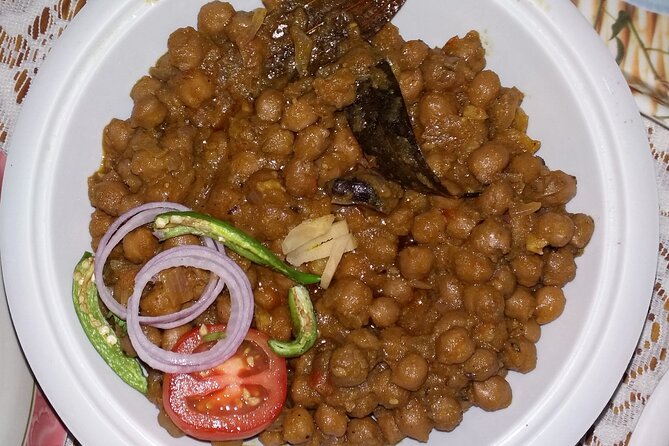
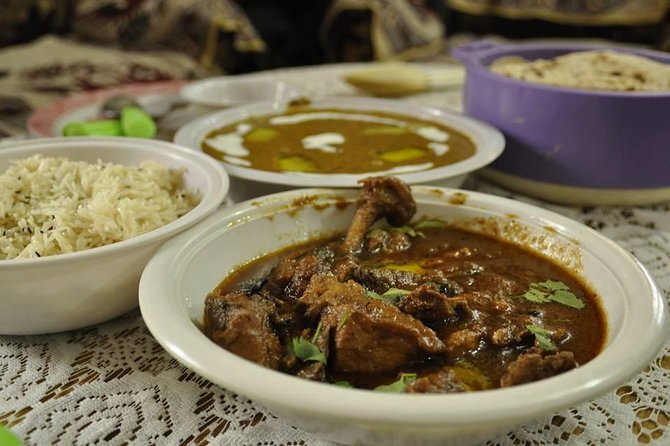
This class is built around a full meal, not just one dish. Across your session, you’ll handle a set of dishes that cover the main pillars of a Delhi table: a snack or starter, a curry, a lentil dish, rice, bread, and dessert—plus a drink.
Here’s what’s typically in the included menu:
- Masala tea or lassi (choose one) to start
- Chicken curry (or butter chicken) if you select non-veg
- Yellow dal (or dal tarka), a thick, flavorful lentil gravy
- A dry vegetable dish such as aloo gobhi, okra, or paneer masala (veg option)
- Rice (cumin rice or plain rice, choose one)
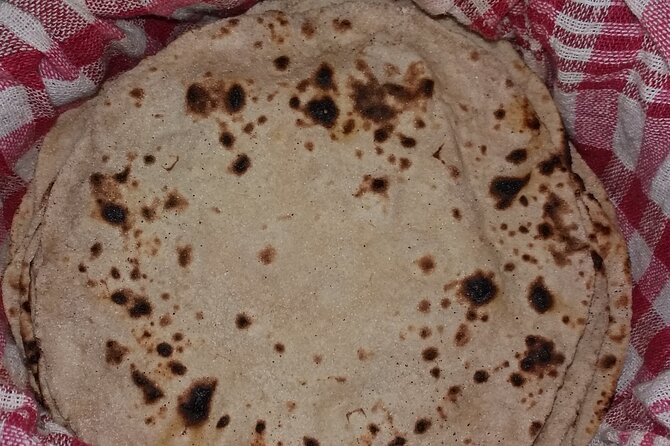
- Bread including roti (chapati) or parathas
- One sweet for the finish
You’ll also get a snack component described as vegetable pakora with mint sauce, which makes the meal feel complete right from the beginning. In practice, it’s the kind of starter that teaches you texture: crisp outside, soft inside, and how chutney balances spice.
Why this menu is a smart use of your time: each dish teaches a different technique. Curry teaches gravy building and timing. Dal teaches lentil thickness and seasoning. Bread teaches kneading/rolling. Rice teaches cumin and aroma control. And the sweet gives you the “full meal” satisfaction that keeps the experience from feeling like a cooking demo.
Spice Lesson First: How Flavor Builds in Real Indian Cooking
Before the stove starts doing all the work, you’ll get an explanation of spices. This is one of the most helpful parts for you if you want to cook later at home.
You’ll learn what spices are doing in the process, not just the list of ingredients. A common point your hosts emphasize is timing: seed spices are introduced early (often into hot oil), while powdered spices go in later so they bloom without turning harsh. That small difference can change the entire flavor.
You’ll also see that spices aren’t random. They’re chosen to support the dish’s goal:
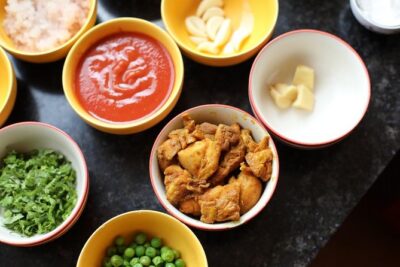
- Curries lean into onion-tomato gravies and ginger-garlic-green chili paste
- Dal relies on lentil texture and a seasoning rhythm that makes it rich without tasting heavy
- Pakora needs spice that holds up under frying, plus mint sauce that cools the heat
This is the kind of learning that pays off later. Instead of memorizing one recipe, you start understanding how to adjust.
Cooking the Curry and Dal: The Backbone of the Meal
For non-veg classes, you’ll cook chicken curry described as a gravy dish with chicken, paired with thick lentil elements in the overall meal. If you choose butter chicken, you’ll still be working through the same fundamentals: building a base, adding aromatics, then letting the gravy come together.
For veg-focused cooking, the dal becomes even more central. You’ll work on yellow dal (including dal tarka style), typically involving onions and tomatoes, plus ginger-garlic paste and green chili for heat. The goal is thickness and balance—enough body to cling to bread, not watery soup.
One thing I like about this setup is that curry and dal aren’t treated as separate worlds. They’re connected in how the meal is planned: curry brings deep flavor and richness, dal brings warmth and thickness, and both are meant to be scooped with roti.
Bread and Rice: Where Technique Shows Up Fast
Bread is where most people instantly feel the difference between reading about Indian cooking and doing it. You’ll make roti/chapati (or parathas, depending on what you pick). Expect to knead and roll, then cook with attention to timing and texture. Even if you’re not a confident home cook, the steps are broken down in a way that makes progress feel possible.
Rice is simpler, but it’s not careless. You’ll cook cumin rice (or plain rice, based on your choice). This matters because cumin adds aroma and warmth before you even start eating, and it helps tie the meal together with the gravy and lentils.
A practical tip: once you’ve cooked bread and rice in one go, you’ll understand why Indian meals often feel satisfying so quickly. It’s the combo of carb + gravy + lentils that creates that steady, filling rhythm.
More private days with a guide of your own


Starter, Mint Sauce, and the Sweet Finish
The meal starts with comfort and momentum. The vegetable pakora with mint sauce is a great example of how Indian food handles contrast. Pakora brings crunch and spice. Mint sauce brings cooling brightness.
Then you shift into the heavier dishes. By the time curry, dal, and rice land on the table, you’re not overwhelmed—you’ve already trained your palate to expect spice and balance.
And don’t skip the sweet. You’ll get one sweet included, which gives the meal a clean finish. It’s not just dessert for dessert’s sake; it helps the overall meal feel complete.
Who Teaches You in This Delhi Home Cooking Class
You’ll be hosted by Preeti and Sonu, and they’re the reason so many people rate this experience so highly. The teaching style is practical, with patient guidance while you work.
They also communicate well before you start. Several people mention that the hosts ask about diet preferences, and that flexibility shows up in what you cook. If you have restrictions—like gluten concerns or onion-free preferences—you should be prepared to ask early. The class is private, so you’re not stuck with a one-size-fits-all menu.
The kitchen setup also tends to be organized and clean, with cooking supported by bottled water (not something you want to overlook in a food-focused activity). Many guests highlight an air-conditioned, modern feel, which makes it easier to focus on the process instead of managing the environment.
One more value point: multiple guests say they email recipes after the class. That’s the best way for you to turn a fun 3-hour session into real home cooking.
Lunch or Dinner: Pick the Timing That Fits Your Delhi Day
The class lets you choose between lunch or dinner. That might sound minor, but it affects the whole feel of your day.
If you’re doing Delhi sightseeing, a lunch session can work nicely as a midday anchor. A dinner session can be better if you want something slower after a day of walking. Either way, you’ll finish with a full meal at the home, so you don’t have to scramble for dinner plans afterward.
Price and Value: What $47 Actually Buys You
At about $47 per person for a roughly 3-hour private cooking class, this can be excellent value if you compare it to the cost of a guided food tour plus multiple meals out.
Here’s the real value math:
- You’re paying for instruction in multiple dishes, not just one recipe
- You get a complete meal, including tea/lassi, curry, dal, rice, bread, and sweet
- It’s private, so your questions and pace matter
- You leave with recipes shared afterward (in English, based on guest experiences)
If you love food but also want skills, this price feels fair. If you’re looking only for a quick snack and pictures, you might find it a lot of cooking for a single activity. But if you want to learn techniques you can use again, it’s a solid deal.
Also, the class is booked about a month in advance on average, which suggests it’s popular. If your schedule is tight, plan early.
Where to Meet in Uttam Nagar (and Why Transport Matters)
You meet at Indian Food Cooking Classes, A1, 63, Hastsal Rd, near Sunil Dairy, Block A 1, Uttam Nagar, New Delhi, Delhi 110059.
The pickup point you’ll use is described as Uttam Nagar West Metro station outside Gate No. 4. Hotel pick up and drop are not included, so if you’re staying far from metro access, you’ll want to plan your ride ahead of time.
This is the one place I’d be practical rather than optimistic. Delhi can be busy, and neighborhoods can feel confusing in a first-time visit. If you want things to go smoothly, you’ll be happiest if you build in extra buffer time and use the metro-to-meeting-point plan when you can.
Who This Cooking Class Is Best For
This is a great match if you:
- Want to learn Indian cooking techniques, not just eat
- Prefer a smaller, calmer experience over a large group
- Like food variety in one sitting: curry + dal + bread + rice + snack + sweet
- Are traveling with someone who also wants to cook (private means you won’t get separated)
It may be less ideal if:
- You hate spice in general (you can adjust, but the menu is built around Indian spice)
- You want a high-level sightseeing day and minimal time at home
- You don’t want to handle your own transport logistics
Should You Book This Delhi Home Cooking Session?
I think you should book it if you want a hands-on taste of Delhi life. The biggest win is the combination of private teaching with a real meal at the end, plus an emphasis on how spices and timing work. When a class teaches curry, dal, bread, and rice together, you leave with a toolkit—not just a memory.
Before you go, do two smart things. First, tell your host your veg/non-veg choice and any dietary needs ahead of time. Second, arrange your transport so you arrive calm and on time—this experience runs on kitchen pace, not travel chaos.
If you want Indian food understanding that actually transfers to your home kitchen, this is a strong pick.
FAQ
Is this class suitable for veg and non-veg diets?
Yes. You can choose options for veg or non-veg diets, and the included menu reflects that choice (for example, chicken curry/butter chicken for non-veg or dishes like aloo gobhi/okra/paneer masala for veg).
What dishes are included in the class?
The included items include masala tea or lassi, chicken curry or butter chicken, a dry vegetable dish (aloo gobhi/okra/paneer masala), cumin rice or plain rice, yellow dal or dal tarka, roti or parathas, and one sweet. A starter like vegetable pakora with mint sauce is also described as part of the experience.
Do I get tea or lassi?
Yes. You’ll receive masala tea or lassi, and you can choose which one you want.
Can I choose between lunch and dinner?
Yes. You can choose a lunch or dinner class time.
How long is the cooking class?
The class lasts about 3 hours.
Is hotel pickup and drop included?
No. Hotel pick up and drop are not included.
What is the cancellation policy?
You can cancel for a full refund if you cancel up to 24 hours in advance. If you cancel within 24 hours of the start time, the amount paid is not refundable.
Your Group Alone, Private Cars
- Half Day Private Delhi City Tour
★ 5.0 · 4,474 reviews - Delhi: Old and New Delhi Private Full or Half-Day Tour
★ 4.9 · 3,776 reviews - From Delhi: Taj Mahal & Agra Private Day Trip with Transfers
★ 4.9 · 3,181 reviews - All Inclusive Private Taj Mahal Luxury Tour from Delhi by Car
★ 5.0 · 2,564 reviews - Delhi: Private Old & New Delhi Guided Half- or Full-Day Tour
★ 4.9 · 2,309 reviews
More Tour Reviews in New Delhi
- Old & New Delhi City Tour – Half or Full Day Options Available
★ 5.0 · 4,811 reviews - Half Day Private Delhi City Tour
★ 5.0 · 4,474 reviews - Same Day Taj Mahal, Agra Fort & Baby Taj Tour from Delhi by Car
★ 5.0 · 4,304 reviews - Taj Mahal Day Tour from Delhi by Superfast Train – TOP RATED TOUR
★ 5.0 · 4,166 reviews - Delhi: Old and New Delhi Private Full or Half-Day Tour
★ 4.9 · 3,776 reviews
Back in the Kitchen: Delhi Cooking
- Five Course Cooking Class & Meal
★ 5.0 · 250 reviews - AI Tour – Cook, Talk, Dine & more with locals at their Delhi Home
★ 5.0 · 238 reviews - Indian Cooking Class in an Authentic Local Home – Learn 6 Dishes
★ 5.0 · 195 reviews - Delhi: AI Cooking Class and Much More in a Local Family Home
★ 5.0 · 85 reviews - New Delhi: Indian Cooking Class in a Local Home
★ 5.0 · 65 reviews
Just added: more New Delhi reviews to browse
- 4 days Golden Triangle Tour★ 5.0 · 3 reviews
- Discover Old & New Delhi: Private Tour with Street Food★ 5.0 · 3 reviews
- Taj Mahal Tour From Delhi By Private Car★ 4.5 · 3 reviews
- Golden Triangle Tour 5 Days★ 5.0 · 3 reviews
- Taj Mahal: Express Entry Ticket For Sunset Tour with guide★ 5.0 · 3 reviews
- Agra Taj Mahal Sunrise & Sunset Tour from Delhi★ 5.0 · 3 reviews
Delhi Cooking Classes, compared.
 ★ 5.0Five Course Cooking Class & MealFrom $60250 reviews
 ★ 5.0AI Tour – Cook, Talk, Dine & more with locals at their Delhi HomeFrom $44238 reviews
 ★ 5.0Indian Cooking Class in an Authentic Local Home – Learn 6 DishesFrom $50195 reviews
 ★ 5.0AI Cooking Class and Much More in a Local Family HomeFrom $4085 reviews
 ★ 5.0Indian Cooking Class in a Local HomeFrom $4765 reviews
 ★ 5.0Spice Knight (Cooking Class -> Meal -> Local Market walk)From $8559 reviews
 ★ 5.0Vegetarian : Private Cooking Class in Delhi home ( Learn 7 meal)From $4758 reviews
 ★ 5.0Cooking Demo + Lunch/Dinner and interaction with an Indian family @ Chez AnjaliFrom $3548 reviews
Browse the lists this tour appears in