
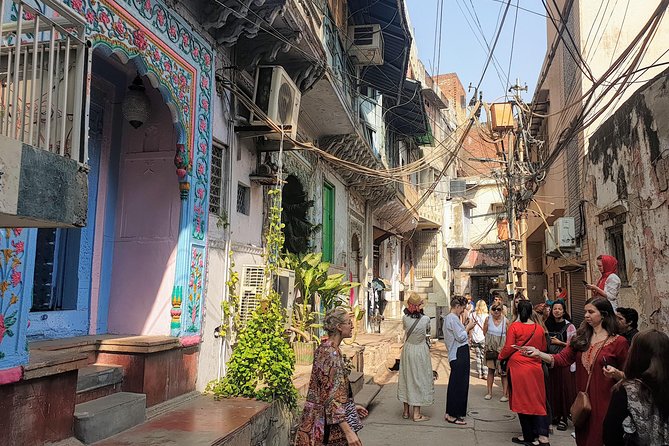
Reviewed · OLD DELHI HERITAGE WALKS
3-hour Old Delhi Heritage Walking tour with Rickshaw Ride
Old Delhi can feel like organized chaos, in the best way. This 3-hour heritage walk stitches together big landmarks like Jama Masjid with the small, everyday stuff: jewelry lanes, wedding markets, a Jain temple stop, and the spice lanes of Khari Baoli. It also uses a mix of transit (walk + rickshaw + cycle rickshaw + metro), so you don’t just “see” Old Delhi—you move through it.
Two things I really like: you get a guided route that helps you not get lost, and the stops are chosen to show how different religions and trades shape the neighborhood. The one thing to watch is that this is a short, packed outing—so if you’re hoping for extra time to browse or linger, you may feel rushed unless you manage your pace and ask your guide to keep it moving.
In This Review
- Key highlights worth knowing
- Old Delhi Heritage Walk: what it’s really about
- Price and what you actually get for $7.92
- Meeting point, timing, and staying un-stressed in a crowd
- Jama Masjid: courtyards, domes, and the ₹450 entrance note
- Dariba Kalan and Kinari Bazaar: the “trade street” lesson
- Dariba Kalan (jewellers’ lane)
- Kinari Bazaar (wedding and trousseau market)
- Naughara’s row of nine havelis and a Jain temple quiet moment
- Naughara: the painted cul-de-sac
- Jain Temple stop
- Paranthey Wali Gali (the legendary stuffed-bread lane)
- Gurudwara Sis Ganj Sahib: langar in action
- Khari Baoli spice market: cycle rickshaw and Ayurveda talk
- The rickshaw ride and street food: the fun part you’ll remember
- The one thing to watch: shopping pressure and pacing
- Who this tour fits best (and who should skip it)
- Should you book this Old Delhi Heritage Walking Tour?
- FAQ
- How long is the Old Delhi heritage walking tour with rickshaw ride?
- Does the tour include pickup and drop-off?
- What’s included in the price?
- Is Jama Masjid entrance fee included?
- What transportation do we use during the tour?
- What should I wear for places of worship?
- Do I remove shoes during the tour?
Key highlights worth knowing

- Jama Masjid courtyard views with Mughal-era stories, plus a big note: entrance fee isn’t included
- Dariba Kalan + Kinari Bazaar for a quick crash course in jewelry and North Indian wedding supplies
- Nine painted havelis (Naughara) where you can pause for photos and learn about Jain merchant ties
- Gurudwara Sis Ganj Sahib langar where volunteers cook and serve community meals
- Khari Baoli by cycle rickshaw for the smell-and-sound impact of Asia’s largest spice market
- A mix of transport that keeps the route doable in a tight 3 to 4 hour window
Old Delhi Heritage Walk: what it’s really about

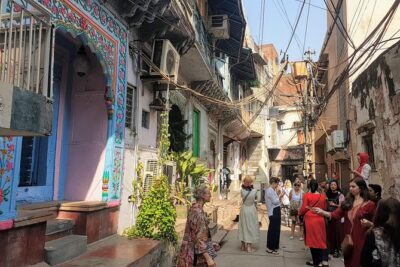
Old Delhi isn’t one place—it’s a stack of neighborhoods layered on top of each other. You’ll feel it fast. The streets narrow, the sound changes, and the “market” part of the city is right next to major religious sites. That’s why this walk format works so well for a first trip: you’re not trying to plan every turn while also dodging bikes, crowds, and surprise side streets.
The tour’s focus is practical. Instead of only photographing monuments, you also learn what people buy, cook, and worship nearby. You’ll step into major places of worship (with the rules that come with that), then switch to trading lanes where you can see the city’s economy in motion—silver ornaments, wedding trims, and spices sold by the mouthful.
And yes, it’s sensory. Old Delhi hits your nose, ears, and eyes. One review specifically suggested bringing a face mask because the spice area can be extremely strong. If that sort of smell makes you sneeze, you’ll be glad you planned for it.
More hours to spend in Old Delhi




Price and what you actually get for $7.92
At about $7.92 per person, this is priced like a “get your bearings fast” tour—short, group-friendly, and heavy on variety. The value comes from what’s bundled:
- English-speaking guide
- Metro/subway ticket
- Pickup and drop-off are offered (and there’s an upgrade option to include transfers from anywhere in Delhi, depending on the choice you make)
- Rickshaw ride is included
- Snacks are included in the tour description
- Mobile ticket
The main extra cost to plan for is Jama Masjid entrance, listed at ₹450 per person. That’s not small, but it’s also a one-time site fee inside a tour that strings together multiple major stops plus markets.
Where value can vary: one person had issues because they felt some items weren’t behaving like they were included. Since the tour info says metro and rickshaw ride are included, the smartest move is to confirm the day-of what’s included in your booking (especially if you choose a shared option). A 30-second check saves a 60-minute headache.
Meeting point, timing, and staying un-stressed in a crowd
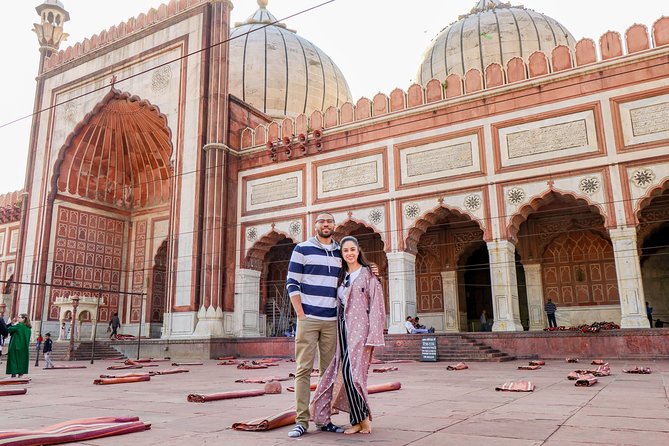
This tour starts and ends back at United Coffee House, Connaught Place (Inner Circle, E-15, Block E). That’s a useful anchor point because Connaught Place is easier to reach than the deepest part of Old Delhi.
Duration is listed as about 3 to 4 hours. In real life, that usually means you’ll be moving steadily through multiple stops with short, purposeful time at each one. Most people will love this pace if they’re fitting Old Delhi into a single afternoon.
A few practical details matter a lot here:
- You’ll want moderate physical fitness—this is walking plus crowds.
- Max group size is 50, so it can be lively even if the group isn’t huge.
- You must cover knees and shoulders at places of worship.
- You’ll need to remove shoes and slippers at worship sites, and your guide will help with secure storage.
If you wear pants that can’t cover your knees or sleeveless tops that won’t cover your shoulders, you may get stuck at the entrance. I’d plan for a light layer you can throw on and off.
Jama Masjid: courtyards, domes, and the ₹450 entrance note
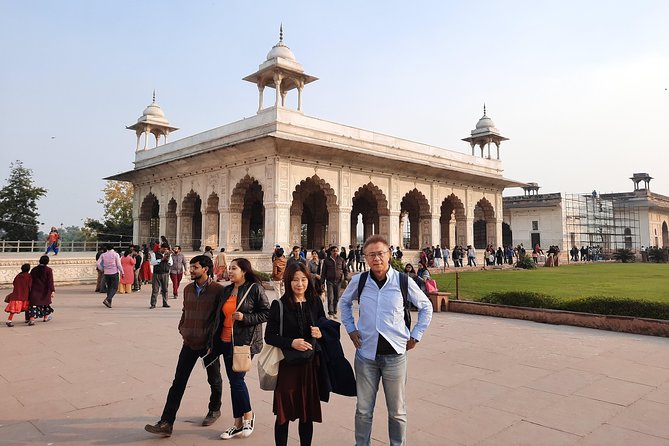
Jama Masjid is one of the big reasons people come to Old Delhi, and this stop is built around seeing it properly. You’ll spend about 45 minutes here, and the guide shares stories tied to its Mughal-era setting, including references to Shah Jahan and the Islamic heritage of Old Delhi.
What to expect:
- Grand courtyards and domes that you can actually take in (not just a quick glance from the gate).
- A guided explanation that helps the architecture feel less like random stonework and more like a design with a purpose.
The drawback is the cost and the rules. Entrance is not included, and it’s listed as ₹450 per person. Plan to pay on site if your booking doesn’t cover it.
Also, assume it’s busy. Dress correctly, be ready for shoe removal, and move with the flow. If you’re sensitive to dust, a mask can help.
Dariba Kalan and Kinari Bazaar: the “trade street” lesson

After Jama Masjid, the tour shifts from monumental space to everyday commerce—tight lanes and shop-front faces that tell you what Old Delhi people care about daily.
On foot through the old city, a few more walks
Dariba Kalan (jewellers’ lane)
You’ll walk through Dariba Kalan for about 10 minutes. This is the lane known for jewelry trade—silver and traditional ornament shops line the way. It’s short, but it’s a good palate cleanser after Jama Masjid. You’ll notice how the market layout supports small-scale buying, and the guide points out old facades and the trading legacy.
If you like photography but hate standing in one spot for too long, this brief stop is ideal.
Kinari Bazaar (wedding and trousseau market)
Then comes Kinari Bazaar (about 15 minutes). Think wedding supplies: laces, borders, sequins, and decorations stacked in shop displays. This is where the city’s big “life event” culture becomes visible. You’ll also pick up context for North Indian wedding traditions—why all these items matter beyond decoration.
One caution: markets can be pushy anywhere. The tour format includes a guide to keep you oriented, but you still should expect sales talk and quick decisions from shopkeepers.
Naughara’s row of nine havelis and a Jain temple quiet moment

Old Delhi isn’t only mosques and markets. It also has spaces that slow your pace down.
Naughara: the painted cul-de-sac
You’ll pause at Naughara (the row of nine houses) for about 20 minutes. The setting is described as a quieter cul-de-sac with painted havelis, and the guide explains Jain merchant history and architectural details. Even if you’re not a hardcore architecture person, it’s a fascinating change of pace—especially because the surrounding streets can feel nonstop.
This is also a good photo stop, assuming your group stays on schedule.
Jain Temple stop
Next is a stop at a Jain temple for about 15 minutes. You’ll step inside to see intricate carving and painted ceilings. The guide connects the visuals to Jain principles such as non-violence and simplicity.
A practical consideration: one person noted the Jain temple was closed during their visit. So if that happens on your day, your guide may shift time to other nearby points. Don’t panic if the temple door isn’t open—just go with the flow and keep your pace.
Paranthey Wali Gali (the legendary stuffed-bread lane)
You’ll also stroll past Paranthey Wali Gali, the famous street for sizzling stuffed breads. This isn’t framed as a full sit-down stop, but it’s a classic Old Delhi scene. Even if you’re not eating a full paratha, you’ll smell what everyone’s talking about.
Gurudwara Sis Ganj Sahib: langar in action
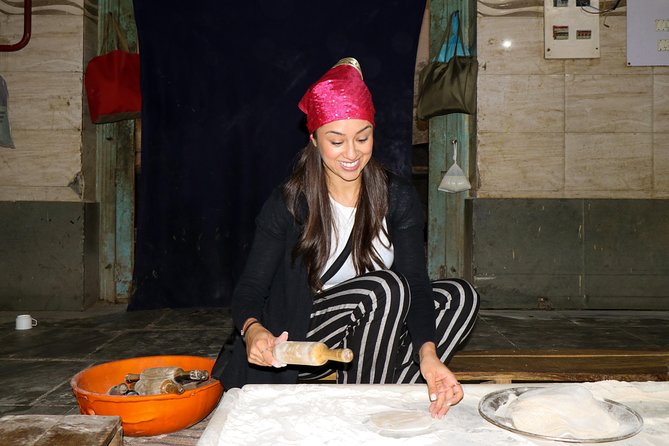
One of the most memorable parts of this route is Gurudwara Sis Ganj Sahib. You’ll spend about 30 minutes here, and the tour focuses on more than the main shrine. You’ll explore the langar, the community kitchen, and see volunteers cooking and serving.
Why this matters: the langar isn’t a side show. It’s part of how the Sikh community lives out service principles—seva in action. Seeing the kitchen workflow makes the tradition feel real, not just symbolic.
Practical tips:
- Dress for worship rules and expect shoe removal.
- Move quietly and respectfully inside.
- If you’re offered a chance to observe or participate at the right moment, take it as a learning experience rather than a spectacle.
If you’re planning your Delhi days around cultural understanding, this is the stop that tends to land hardest.
Khari Baoli spice market: cycle rickshaw and Ayurveda talk
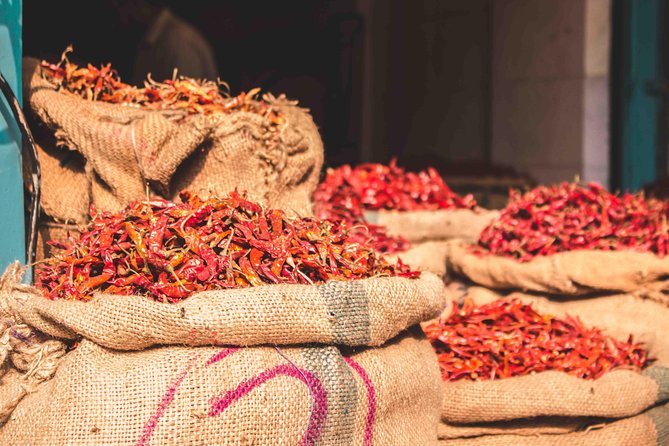
Then you get the famous Old Delhi scent cloud in full force: Khari Baoli, the spice market. You’ll ride in by cycle rickshaw for about 30 minutes and walk through spice lanes.
The tour doesn’t just point at products. It explains how spices are used in Indian cooking and how they connect to Ayurveda. You’ll also have chances to interact with local traders—short conversations, basic explanations, and the chance to see how market knowledge gets traded face-to-face.
Two practical notes:
- This area can be overwhelming if you’re sensitive to strong smells. Bring a face mask if that’s you.
- Expect dense crowds and fast foot traffic. Stay with your guide and don’t get pulled off your route by every counter you pass.
And if you’re wondering why this spice segment belongs on a “heritage” walk: in Old Delhi, spices are heritage. They connect cooking, medicine ideas, and everyday life in one place.
The rickshaw ride and street food: the fun part you’ll remember
The tour description includes a rickshaw ride plus snacks. In practice, this is where the tour stops feeling like a checklist and starts feeling like a real afternoon in Old Delhi.
The rickshaw ride matters because Old Delhi lanes are tight and chaotic on foot. You see the street layers faster—sounds, signage, people moving in all directions. One person specifically called the rickshaw ride through the chaotic streets a fun highlight, which matches the logic of using a vehicle for parts of this neighborhood.
Food matters too. Snacks included in the tour can be things like jalebi, samosa, and chai—those names came up in guide-led experiences from this route. Even if you’re not trying to turn the whole trip into a food mission, these bites help you understand how people keep going through long market hours.
The one thing to watch: shopping pressure and pacing
This tour is designed to be short and full. That can be great. It can also create friction if you feel your time is being used for selling rather than sight time.
Several things to do to protect your experience:
- Ask at the start how long you’ll have at each market stop. If the guide can’t give a clear answer, it’s a red flag.
- Politely but firmly say you’re not looking for shopping—then stick to it.
- If you hear the tour drifting toward extended store pitches, bring it up immediately rather than waiting until the end.
Pacing can also change based on crowds and timing around places of worship. Even so, if you’re trying to make a specific evening commitment, build in extra buffer. Old Delhi can be faster or slower than you think, depending on pedestrian density.
On the positive side, many guide experiences on this route were described as safe and well-paced, with shoe handling handled smoothly.
Who this tour fits best (and who should skip it)
This tour is a strong match if:
- You’re short on time and want multiple Old Delhi highlights in one afternoon.
- You’re visiting for the first time and you’d rather follow a guide than navigate maze-like lanes.
- You like mixing major sites with market culture: mosque + Jain space + Sikh shrine + spices + wedding lane.
It may be less ideal if:
- You want long, unhurried museum-style browsing.
- You hate shopping stops completely and need a route with zero retail exposure.
- You’re extremely sensitive to crowded spaces and strong spice smells.
It’s also worth noting that you’ll cover several places of worship, so plan your clothing accordingly.
As for guide style: names that showed up for this route include Nikhil, Neha, Deepak, Isha, Kanika, and Suneel. The pattern across these experiences is that guides often use the route to explain context and keep the group moving.
Should you book this Old Delhi Heritage Walking Tour?
If your goal is to get oriented in Old Delhi and taste its culture—religion, trade, and food—this tour is a solid bet for the money. The pricing works because you’re paying for a guided, multi-stop route plus transit help, not just for walking around on your own.
I’d book it if you’re okay with:
- A structured, time-limited route
- Dress rules for worship sites
- Dense crowds in markets and spice lanes
- The chance of a small entrance fee at Jama Masjid
Before you go, do two quick prep moves: bring a light layer for shoulders and knees, and consider a face mask if spice smells make you uncomfortable. And on the day, set expectations about pace and keep an eye out for store pitches that eat time.
Overall: this is the kind of tour that helps you leave Old Delhi with an organized mental map of what you saw—mosque grandeur, market trades, and everyday spiritual life all in a single afternoon.
FAQ
How long is the Old Delhi heritage walking tour with rickshaw ride?
It runs about 3 to 4 hours.
Does the tour include pickup and drop-off?
Yes, pickup and drop-off are offered, and there’s also an option to upgrade for hotel transfers from anywhere in Delhi.
What’s included in the price?
The tour includes an English/language speaking guide, a metro/subway ticket, pickup and drop-off, and it also includes a rickshaw ride and snacks as described in the tour overview.
Is Jama Masjid entrance fee included?
No. Jama Masjid has an additional entrance fee listed as ₹450 per person.
What transportation do we use during the tour?
You’ll walk through Old Delhi, use metro/subway as part of the route, take a rickshaw ride, and you’ll also ride a cycle rickshaw into Khari Baoli.
What should I wear for places of worship?
You’ll need to cover knees and shoulders at places of worship.
Do I remove shoes during the tour?
Yes. Shoes and slippers must be removed at places of worship, and your shoes/slippers will be stored safely for you.
More Rides Through the Lanes
- Old Delhi Food, Heritage&Cultural Walk with Rickshaw ride to Masterji Kee Haveli
★ 5.0 · 742 reviews - Delhi: Old Delhi Street Food Tour with Rickshaw Ride
★ 4.9 · 403 reviews - Delhi Food Walk: Rickshaw Ride, Street Eats & Market Tour
★ 5.0 · 401 reviews - Old Delhi: Private Tour of Chandni Chowk, Tuk Tuk & Food
★ 4.9 · 345 reviews - 3-Hour Old Delhi Heritage Walking tour with Rickshaw ride
★ 4.6 · 158 reviews
The Old City on Foot, Continued
- The Great Indian Food Tour: Old Delhi Food and Heritage Walk
★ 5.0 · 1,698 reviews - Old Delhi Food, Heritage&Cultural Walk with Rickshaw ride to Masterji Kee Haveli
★ 5.0 · 742 reviews - Old Delhi Heritage Walking Tour
★ 5.0 · 247 reviews - Old Delhi: Spices, Heritage and Bazaars Walking Tour
★ 5.0 · 173 reviews - 3-Hour Old Delhi Heritage Walking tour with Rickshaw ride
★ 4.6 · 158 reviews
More of Old Delhi
- The Great Indian Food Tour: Old Delhi Food and Heritage Walk
★ 5.0 · 1,698 reviews - Old Delhi Food, Heritage&Cultural Walk with Rickshaw ride to Masterji Kee Haveli
★ 5.0 · 742 reviews - Old Delhi Bike Tour
★ 5.0 · 616 reviews - Old Delhi Street Food Tour
★ 5.0 · 497 reviews - Breakfast Walk in Old Delhi
★ 5.0 · 449 reviews
Just added: more New Delhi reviews to browse
- 4 days Golden Triangle Tour★ 5.0 · 3 reviews
- Discover Old & New Delhi: Private Tour with Street Food★ 5.0 · 3 reviews
- Taj Mahal Tour From Delhi By Private Car★ 4.5 · 3 reviews
- Golden Triangle Tour 5 Days★ 5.0 · 3 reviews
- Taj Mahal: Express Entry Ticket For Sunset Tour with guide★ 5.0 · 3 reviews
- Agra Taj Mahal Sunrise & Sunset Tour from Delhi★ 5.0 · 3 reviews
Old Delhi Heritage Walks, compared.
 ★ 5.0The Great Indian Food Tour: Old Delhi Food and Heritage WalkFrom $431,698 reviews
 ★ 5.0Old Delhi Food, Heritage&Cultural Walk with Rickshaw ride to Masterji Kee HaveliFrom $52742 reviews
 ★ 5.0Old Delhi Heritage Walking TourFrom $13247 reviews
 ★ 5.0Old Delhi: Spices, Heritage and Bazaars Walking TourFrom $13173 reviews
 ★ 4.63-Hour Old Delhi Heritage Walking tour with Rickshaw rideFrom $10158 reviews
★ 5.0The Great Indian Food Tour: Old Delhi Food and Heritage WalkFrom $43106 reviews
★ 4.63-Hour Old Delhi Heritage Walking tour with Rickshaw rideFrom $10158 reviews
★ 5.0The Great Indian Food Tour: Old Delhi Food and Heritage WalkFrom $43106 reviews
 ★ 5.0Timeless Treasures: An Old Delhi Heritage Walking TourFrom $2269 reviews
 ★ 5.0Old Delhi Heritage Walk with Rickshaw RideFrom $2468 reviews
Browse the lists this tour appears in