
Rajasthan can feel huge. This 14-day drive-focused tour turns it into a clear path from Delhi through Jaipur, Bikaner, Jaisalmer, Jodhpur, Udaipur, Ajmer, and Pushkar with hotel nights already set. Two things I really like: the comfort of a private AC car with a safe, reliable driver, and the mix of iconic sites plus one smart experience like the Lake Pichola boat tour. One thing to consider is costs at the door: monument entrance and camera fees are not included, so you’ll want some extra cash for tickets.
You start with a meet-and-greet in Delhi, then you slowly lock into the rhythm of North India’s big sights and classic forts. The route is designed so you’re not living out of taxis between cities, which is a real quality-of-life win after long days. If you prefer a plan with built-in handoffs, this one fits nicely.
In This Review
- Key things to know before you go
- Delhi first: meet, settle, then hit the big monuments
- Jaipur: Choki Dhani night and a full day of forts and observatories
- Bikaner: Junagarh Fort’s details day
- Jaisalmer: golden-stone fort and the haveli trio
- Jodhpur: Mehrangarh and Jaswant Thada at the right scale
- Udaipur: the Lake Pichola boat tour is worth planning around
- Ajmer and Pushkar: spiritual stop, then slow down in a holy town
- Getting back to Delhi: end with an airport drop
- Price and value: what $1,499 covers (and what it doesn’t)
- The private car advantage: how this tour saves your energy
- Hotels and daily rhythm: what to expect from the stay
- Practical tips so the trip feels easy, not exhausting
- Should you book this Colors of Rajasthan tour?
- FAQ
- What cities are included in the 13 Night 14 Days private tour from Delhi?
- How long is the tour?
- What time does the tour start?
- Is this a private tour?
- What’s included in the price?
- What is not included?
- Do I need tickets, or are mobile tickets provided?
- Where does the tour end?
- What’s the cancellation policy?
- Is the tour suitable for most travelers?
Key things to know before you go
- Private AC car between cities: less waiting around, more control over timing inside cities.
- Delhi classics on Day 2: Jama Masjid, Red Fort, Humayun’s Tomb, Qutub Minar, Jantar Mantar, and India Gate areas all in one sweep.
- Jaipur beyond the postcards: Amber Fort and Palace plus City Palace, museum time, and a Jantar Mantar stop.
- Jaisalmer’s golden-stone forts and havelis: Jaisalmer Fort and three major haveli stops built into the day.
- Udaipur by water: a boat tour over Lake Pichola gives you a different angle of the city.
- Ajmer and Pushkar mix: Ajmer Sharif Dargah, then holy-town time in Pushkar before you head back to Jaipur.
Delhi first: meet, settle, then hit the big monuments
Day 1 is straightforward: you’re met at Delhi Railway Station or the airport and transferred to your hotel. After check-in, you get a quiet night and you can adjust to arrival fatigue. I like this start because it avoids the classic first-day trap of trying to see everything while your brain is still buffering.
Day 2 is a serious sightseeing day. You’ll cover the Mughal-era icons and Delhi’s major landmarks: Jama Masjid and the Red Fort, then Raj Ghat, Humayun’s Tomb, and Lotus Temple. After that, it moves into Qutub Minar and government-area photo stops like Rashtrapati Bhawan and Parliament House. The day also includes Jantar Mantar and India Gate.
Practical reality check: this is a “see a lot” day. If you’re the type who loves lingering, use the busier pace to your advantage by snapping photos quickly and saving your slower moments for places you care about most (often Humayun’s Tomb or Qutub Minar).
Deeper into Rajasthan, straight from Delhi



Jaipur: Choki Dhani night and a full day of forts and observatories
You drive to Jaipur on Day 3 and check into your hotel. In the evening, you visit Choki Dhani, where you can enjoy cultural activities. This is one of those experiences that helps you connect with Rajasthan’s character without needing to do extra research once you’re there.
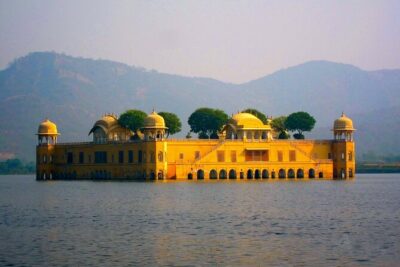
Day 4 is your big Jaipur day. You start with Amber Fort and Palace. The fort is the kind of place where you understand why people travel for Rajasthan specifically. After that you visit the Gaitore cenotaphs area (front view), then you get a photo stop at Jal Mahal. Next up: City Palace and Museum, followed by another Jantar Mantar stop (observatory).
What I like about this Jaipur setup is that it’s not only forts. You get architecture, museum time, and the observatory element. Even if you’re not a science person, Jantar Mantar gives you a fun angle on how Rajasthan’s rulers thought about the sky.
Possible drawback: you’ll be on your feet for several hours across Day 4. Wear comfortable shoes and plan for breaks. Also remember that monument entrance and camera fees are not included, so bring a plan for that budget line.
Bikaner: Junagarh Fort’s details day
On Day 5 you transfer to Bikaner and check in. In the afternoon, you visit Junagarh Fort, with stops that include Anup Mahal, Gaj Mandir, Sheesh Mahal, and the Prachina Museum. You also see Lalgarh Palace.
Bikaner is a great change of pace after Jaipur’s crowds and big-city energy. Junagarh feels focused. You’re not just ticking off a fort name; you’re moving through rooms and spaces with distinct identities, and the included sub-sites help you understand what you’re looking at.
If you’re the sort of traveler who enjoys details (carvings, textures, room layouts), this is a good day. If you want maximum speed with minimal stops, you’ll still be happy, but you’ll likely appreciate taking slower moments inside key areas.
Jaisalmer: golden-stone fort and the haveli trio
Day 6 is travel: Bikaner to Jaisalmer, with check-in and an overnight stay. Then Day 7 becomes the star.
You visit Jaisalmer Fort, built with unique golden lime stone, which is why it’s often described as the Golden Fort or Sonar Kella. After that, you go to the haveli highlights: Patwon-ki-haveli, Nathmal-ki-haveli, and Salim Singh-ki-haveli.
This is one of those Rajasthan combinations that makes sense. Forts give you power and defense; havelis show wealth and domestic architecture; together, you get a fuller picture of how life worked in the region.
Practical note: the haveli stops can mean walking through multiple connected spaces. If you have knee issues, take breaks when you can. For everyone else, just remember the best photos often happen when you pause and look for symmetry in doorways, balconies, and stair angles.
Jodhpur: Mehrangarh and Jaswant Thada at the right scale
On Day 8 you drive to Jodhpur and check in. Day 9 is a classic combo day: Mehrangarh Fort and Jaswant Thada.
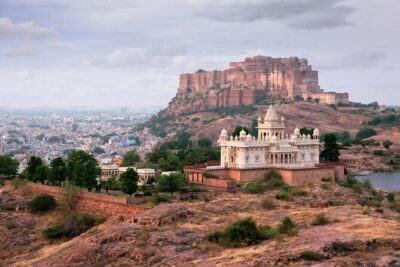
Mehrangarh is known as one of the best-preserved forts in Rajasthan. It can feel bigger than you expect once you’re inside and working your way through the grounds. After the fort, you see the marble cenotaph at Jaswant Thada, often called the Taj Mahal of Rajasthan.
This day works well if you like places that feel dramatic even when you’re just standing still. The fort gives you commanding views; the marble cenotaph gives you a calmer, more reflective break.
More private days with a guide of your own

Udaipur: the Lake Pichola boat tour is worth planning around
Day 10 is your transfer to Udaipur, the Lake City vibe that Rajasthan does so well. You check in, and in the evening you take a boat tour over Lake Pichola (the schedule notes it runs at the evening time frame).
That boat ride matters because it shifts your perspective. In Udaipur, so many sights are best from certain angles, and being on the water is a simple way to get those angles without spending your whole day climbing stairs.
Day 11 is your Udaipur city tour. You visit Fateh Sagar, the Maharana Pratap Memorial, and you also have photo stops at Nehru Garden and Saheliyon-ki-Bari (Queen’s resort for friends). There’s a drive pass by Sukhadia Circle, and you’ll also visit Bhartiya Lok Kala Mandir (local art focus is implied by the name and stop style).
A good way to handle a day like this: pick one “main” stop you care most about and treat the rest as supporting scenes. For many people, that main stop ends up being either the memorial area or Saheliyon-ki-Bari, depending on whether you prefer monuments or gardens.
Ajmer and Pushkar: spiritual stop, then slow down in a holy town
On Day 12 you drive to Ajmer / Pushkar. You visit Ajmer Sharif Dargah, then continue to Pushkar for hotel check-in. Pushkar is described as a holy town in Rajasthan.
This is the kind of day where pace is a little different. After forts and palaces, the value here is atmosphere and spiritual focus. You’ll likely want to spend time just wandering with a calmer mindset rather than turning every minute into a checklist.
Day 13 returns you to Jaipur. You check in, then you get evening leisure time to enjoy local markets.
This is a smart move, because you can use it to buy what you actually want (crafts, textiles, small souvenirs) instead of grabbing things too early. If you’re picky, you can also use this time to compare prices you’ve already seen.
Getting back to Delhi: end with an airport drop
Day 14 is the wind-down day. After breakfast you check out and get dropped at the Delhi airport. It keeps the trip clean and helps you avoid last-minute city confusion.
Price and value: what $1,499 covers (and what it doesn’t)
The listed price is $1,499 per person for 14 days (about 13 nights of accommodation) on a double-sharing basis. For a private, car-based circuit across multiple cities, that’s the key value point: you’re paying for coordination and transport, not just hotel beds.
Here’s what’s included in the cost:
- Sightseeing as per the schedule
- 13 nights accommodation (double sharing)
- Private AC car for transfers, excursions, and sightseeing
- Tolls, parking, fuel, and driver allowances
- Welcome drink on arrival
- Hotels and transport taxes, plus GST and government taxes
- Assistance on arrival
- Breakfast is included for 12 days
Here’s what’s not included:
- Monument entrance fees and camera fees
- Personal expenses (calls, laundry, drinks, meals beyond what’s included)
- Tipping and any extra charges not specified
My value take: if you would otherwise spend money on separate train bookings, taxis, and last-minute drivers, this package is often a smarter deal. The trade-off is that you should budget extra for entrances. Also, breakfast is only listed as 12 times, so plan for the remaining days accordingly.
The private car advantage: how this tour saves your energy
This tour is built around a private AC car and private participation. In practical terms, it means:
- You’re not waiting with strangers every time plans shift.
- You can keep a predictable rhythm between cities.
- You have an on-call driver for the route days.
One detail that matters: a past guest referenced a Swift Dzire cab choice. Vehicles can vary, but the point is you’re not stuck with slow or awkward transfers. The safe-driver focus also matters when you’re moving across different road conditions and traffic styles.
Hotels and daily rhythm: what to expect from the stay
You’ll have hotel nights for 13 days with double sharing. The tour keeps it simple: you arrive, check in, and you sleep in the same city for the night. That reduces stress because you’re not trying to change accommodations on the fly.
From the positive feedback you can infer a pattern: guests felt the hotels were good and the overall run was smooth. That matches the structure here, which includes transfers, taxes, and driver allowances handled for you.
One caution: this is a fast-moving multi-city route. Even with good hotels, you’ll still be tired some evenings. Pack layers, keep an easy-day outfit, and don’t schedule your best energy for the days that start with early departures.
Practical tips so the trip feels easy, not exhausting
- Budget for entrance and camera fees. Since they’re excluded, don’t let them surprise your total.
- Bring comfortable walking shoes. Fort days are real walking days.
- Keep a small snack and water routine. Meals aren’t fully covered, and you’ll appreciate having options when timing gets tight.
- Use the leisure evening (Jaipur Day 13) to shop smart. You’ll know what you actually like by then.
- If you get a driver contact such as Ajay, you may find communication quick and helpful. Past guests highlighted his 24-hour responsiveness and flexibility, including support with locations not strictly listed.
Should you book this Colors of Rajasthan tour?
If you want Rajasthan with less logistical stress, you should seriously consider it. This itinerary is ideal for first-timers who want the headline sights across several cities in one consistent loop, with private car comfort and hotel nights already arranged.
Skip it or rethink if you hate long driving days or you don’t like paying extra at entrances. This tour is practical and structured, but it’s still a 14-day circuit. You’ll get a lot of Rajasthan, not a slow, one-city retreat.
Best fit: couples, small groups, and anyone who prefers a planned route with room to breathe, plus a couple of big set-piece experiences like Choki Dhani and the Lake Pichola boat tour.
FAQ
What cities are included in the 13 Night 14 Days private tour from Delhi?
The route includes Delhi, Jaipur, Bikaner, Jaisalmer, Jodhpur, Udaipur, Ajmer, and Pushkar, with a return to Jaipur before the final drop back to Delhi.
How long is the tour?
It runs for 14 days (about 13 nights).
What time does the tour start?
Start time is 9:00 am.
Is this a private tour?
Yes. It’s a private tour/activity, and only your group participates.
What’s included in the price?
Sightseeing as per itinerary, 13 nights of accommodation on double sharing, and all transfers and sightseeing by private AC car. It also includes tolls, parking, fuel, driver allowances, welcome drink, taxes (including GST and government taxes), and assistance on arrival. Breakfast is included for 12 days.
What is not included?
Monument entrance and camera fees, personal expenses like calls and laundry, soft or hard drinks, meals beyond what’s included, tipping, and any extra charges or taxes not mentioned.
Do I need tickets, or are mobile tickets provided?
Mobile ticket is listed as a feature, and you’ll receive confirmation at booking time.
Where does the tour end?
It ends back at the meeting point, with a drop at Delhi airport on the final day.
What’s the cancellation policy?
Free cancellation is available. You can cancel up to 24 hours in advance for a full refund. Canceling less than 24 hours before the start time doesn’t receive a refund.
Is the tour suitable for most travelers?
The info states most travelers can participate, so it’s generally designed to be accessible for a wide range of visitors, assuming you’re comfortable with multi-city touring days.
More Tours in New Delhi
- Old & New Delhi City Tour – Half or Full Day Options Available
★ 5.0 · 4,811 reviews - Half Day Private Delhi City Tour
★ 5.0 · 4,474 reviews - Same Day Taj Mahal, Agra Fort & Baby Taj Tour from Delhi by Car
★ 5.0 · 4,304 reviews - Taj Mahal Day Tour from Delhi by Superfast Train – TOP RATED TOUR
★ 5.0 · 4,166 reviews - Delhi: Old and New Delhi Private Full or Half-Day Tour
★ 4.9 · 3,776 reviews
More Tour Reviews in New Delhi
- Old & New Delhi City Tour – Half or Full Day Options Available
★ 5.0 · 4,811 reviews - Half Day Private Delhi City Tour
★ 5.0 · 4,474 reviews - Same Day Taj Mahal, Agra Fort & Baby Taj Tour from Delhi by Car
★ 5.0 · 4,304 reviews - Taj Mahal Day Tour from Delhi by Superfast Train – TOP RATED TOUR
★ 5.0 · 4,166 reviews - Delhi: Old and New Delhi Private Full or Half-Day Tour
★ 4.9 · 3,776 reviews
Further into Rajasthan
- Alluring North India and Rajasthan Tour
★ 5.0 · 552 reviews - 13 Nights 14 Days Private Tour of Heritage Rajasthan from New Delhi
★ 5.0 · 149 reviews - 8-Day Golden Triangle & Rajasthan Private Tour from Delhi
★ 5.0 · 134 reviews - 12-Days – Splendors of Golden Triangle & Rajasthan
★ 5.0 · 72 reviews - 14 Days Golden Triangle with Wildlife Safari & Heritage Rajasthan
★ 5.0 · 37 reviews
Just added: more New Delhi reviews to browse
- 4 days Golden Triangle Tour★ 5.0 · 3 reviews
- Discover Old & New Delhi: Private Tour with Street Food★ 5.0 · 3 reviews
- Taj Mahal Tour From Delhi By Private Car★ 4.5 · 3 reviews
- Golden Triangle Tour 5 Days★ 5.0 · 3 reviews
- Taj Mahal: Express Entry Ticket For Sunset Tour with guide★ 5.0 · 3 reviews
- Agra Taj Mahal Sunrise & Sunset Tour from Delhi★ 5.0 · 3 reviews
Rajasthan Tours from Delhi, compared.
 ★ 5.0Alluring North India and Rajasthan TourFrom $2,400552 reviews
 ★ 5.013 Nights 14 Days Private Tour of Heritage Rajasthan from New DelhiFrom $226149 reviews
 ★ 5.08-Day Golden Triangle & Rajasthan Private Tour from DelhiFrom $492134 reviews
 ★ 5.012-Days – Splendors of Golden Triangle & RajasthanFrom $2,38072 reviews
 ★ 5.014 Days Golden Triangle with Wildlife Safari & Heritage RajasthanFrom $83537 reviews
 ★ 5.0Royal Rajasthan: Whispers From The Past Curated JourneyFrom $1,06834 reviews
 ★ 5.0Rajasthan:- Maharaja Places of Royal Rajasthan 07- Days TourFrom $85017 reviews
 ★ 4.55-Night Private Rajasthan Tour from Delhi Including Jaipur, Jodhpur and UdaipurFrom $35815 reviews
Browse the lists this tour appears in