
Reviewed · GOLDEN TRIANGLE TOURS
Golden Triangle tour with Historical Rajasthan
You get the highlights of India with a plan that stays practical. This Golden Triangle plus Historical Rajasthan tour packs Delhi, Agra, Jaipur and more into 11 days, with the Taj Mahal at dusk and guided time at major forts and temples; the main drawback is monument entrance fees are not included, so you’ll want to budget extra.
What I like most is how the day-by-day flow keeps you moving without feeling lost, thanks to a private AC vehicle and govt.-approved guides. The second big plus is that you’re not stuck only in the Golden Triangle—you also get Ajmer, Pushkar, Jodhpur, Udaipur, and Bundi, so the trip feels like Rajasthan, not just a postcard circuit.
In This Review
- Key points to know before you go
- Golden Triangle plus Historical Rajasthan: what the route really delivers
- Price and value: what $1,200 per person covers
- Starting in Delhi: Terminal 3, first sightseeing, and how to handle jet lag
- Old Delhi to Agra: Jama Masjid, Red Fort, and Taj Mahal at dusk
- Agra Fort, Fatehpur Sikri, and the ghost-city detour
- Jaipur’s Amber to Hawa Mahal day: forts, observatory, and shopping breaks
- Ajmer and Pushkar: Sufi shrine mornings and Brahma Temple’s holy water vibe
- Mehrangarh and Jaswant Thada, then Ranakpur Jain temples to Udaipur
- Udaipur Palace Museum, Sahelion Ki Bari, and Lake Pichola boat time
- Bundi’s Taragarh Fort palace: quieter Rajasthan on purpose
- Back to Jaipur, then Delhi Haat: finishing strong with shopping time
- Guide quality, driver patience, and why named people matter
- Should you book this Golden Triangle and Historical Rajasthan tour?
- FAQ
- What cities are included in this tour?
- How long is the tour, and where does it start and end?
- What kind of hotels do you stay in?
- Is the Taj Mahal and other monuments entrance fee included?
- What transportation do you use between cities?
- What is included for meals?
- FAQ
- Can I cancel and get a refund?
Key points to know before you go
- AC private vehicle throughout: fewer hassles between cities, and you can recover between long sightseeing blocks.
- Govt.-approved tour guides: you get clearer stories and smoother museum/monument timing.
- Taj Mahal at dusk: a softer light moment that makes the marble look different from midday.
- Udaipur boat cruise on Lake Pichola: a proper break that feels like Rajasthan rather than pure driving.
- Ranakpur Jain temples en route to Udaipur: a stand-alone stop with major visual impact.
- Bundi and its Taragarh Fort palace: a quieter stop that adds variety to the usual Rajasthan route.
Golden Triangle plus Historical Rajasthan: what the route really delivers
This is basically the classic Golden Triangle (Delhi–Agra–Jaipur), then it keeps going into the Rajasthan highlights that many short tours skip. You’ll start in Delhi, end back in Delhi after 10 nights / 11 days, and sleep in three-star hotels on a twin-sharing basis (with a few heritage-haveli-style options mentioned for some parts of the route).
The smart part of this package is balance. You’ll get the big “must-see” monuments in Delhi and Agra, but you also spend time where the culture feels more local: Ajmer’s Sufi shrine vibe, Pushkar’s sacred water rituals, Jodhpur’s fort-and-architecture mood, and Udaipur’s palace-and-lake evenings.
And yes, the itinerary is busy. Still, it’s busy in a structured way: you’re guided, transported, and grouped into sensible sightseeing blocks.
Delhi, Agra and Jaipur: more full circuits



Price and value: what $1,200 per person covers
At $1,200 per person, the price is mainly paying for organization: 3-star hotels, a private AC vehicle for the whole tour, govt.-approved guides at the destinations, and the logistics like tolls, parking, and fuel charges.
Here’s what that means for you:
- You’re not hunting for local transport or trying to coordinate guides city by city.
- You spend time on sightseeing, not on figuring out logistics.
- You get breakfast included for 10 mornings, which matters on an 11-day trip with lots of early starts.
What’s not included is also clear: monument entrance fees. That can be a meaningful extra cost because Taj Mahal, forts, and major sites typically charge separate tickets. So when you budget, assume the tour price covers the trip’s machine (hotel + guide + transport), and you’ll add the monument-ticket layer on top.
Also note: there’s mention of mobile ticket and group discounts. Even if you travel as part of a group concept, this product is described as private in practice: only your group participates.
Starting in Delhi: Terminal 3, first sightseeing, and how to handle jet lag
Your tour meets at IGI Airport Terminal-3, Delhi 110037. After arrival, you’re transferred to your pre-booked hotel and check in. The plan is then light-to-moderate on Day 1: you get a New Delhi orientation and major landmarks without locking you into all-day museum mode.
In the afternoon, you visit:
- Humayun’s Tomb
- Qutub Minar
- Then a drive along Rajpath, past India Gate, Parliament House, and the President’s Residence
This is a good setup if you’re arriving from overseas. It’s enough culture to get your bearings, but it’s not a full-on marathon. If you want to make the most of it, do two things: drink water, and keep your first evening easy so you’re ready for Old Delhi the next day.
Old Delhi to Agra: Jama Masjid, Red Fort, and Taj Mahal at dusk
Day 2 swings to Old Delhi, which is where India’s intensity turns up fast—in a good way. You’ll see:
- Raj Ghat (Mahatma Gandhi’s cremation site)
- Jama Masjid (the large, iconic mosque)
- Red Fort (Mughal-era power symbol)
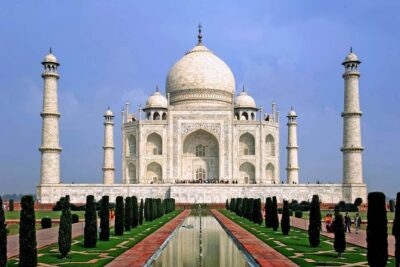
Then you drive to Agra and shift to the star attraction. The package highlights Taj Mahal at dusk, and that timing is a big deal. The Taj’s marble changes with light; dusk tends to feel calmer, too, which helps if you’re not loving crowds.
Afterward, you return to the hotel for the night in Agra. There’s also mention of city walks in Agra and Delhi as part of the experience, which is exactly what I look for in a packaged trip: a chance to move on foot and absorb the city rhythm rather than only sitting in a car.
One consideration: when you’re doing Old Delhi plus a drive to Agra in the same day, you’ll want comfortable shoes and a bit of patience for traffic.
Agra Fort, Fatehpur Sikri, and the ghost-city detour
Morning in Agra brings Agra Fort, built by Akbar, with later Mughal contributions. The visit includes palaces like:
- Akbari Mahal
- Khas Mahal
- Jahangiri Mahal
- Diwan-e-Aam
- Diwan-e-Khaas
What I like about doing Agra Fort before heading out is that it adds depth beyond the Taj. The Taj is the emotion. Agra Fort gives you context: Mughal rule, court spaces, and the power behind the marble romance.
Then you travel toward Jaipur, with a stop at Fatehpur Sikri. The tour calls it a fabled city of ghost—an abandoned capital made by Akbar, used for about 13 years, then left behind. Even if you’ve only read the basics, being there makes the story stick. You see how a city can be built big, then fade fast.
After you arrive in Jaipur, you check in and overnight.
Deeper into Rajasthan, straight from Delhi
Jaipur’s Amber to Hawa Mahal day: forts, observatory, and shopping breaks
Jaipur Day 4 starts with Amber, the old capital area. The itinerary includes an elephant ride up from the foothill toward the fortress gates. If you’re choosing this tour and animal ethics matter to you, it’s worth thinking about your own comfort with that activity before you commit—this is clearly part of the plan.
Then you explore Jaipur city highlights:
- Maharaja’s Museum
- Jai Singh’s Astronomical Observatory
- Hawa Mahal (the iconic palace facade)
The afternoon includes shopping time in Jaipur markets, which is a practical way to use the energy you’ve been saving from fort-hopping. If you’re trying to buy gifts, Jaipur markets often make the most sense after you’ve already seen the architecture and craft style of the city. You’ll have a better eye for what belongs where.
Ajmer and Pushkar: Sufi shrine mornings and Brahma Temple’s holy water vibe
On Day 5, you drive toward Pushkar with a stop in Ajmer. The highlight is Ajmer Sharif Dargah, the domed shrine of the Sufi saint Garib Nawaz. Ajmer has a different emotional tone than Jaipur’s forts. Even in a short stop, it gives you the spiritual side of Rajasthan culture.
Then you continue to Pushkar and check in for the night.
Day 6 is the deeper Pushkar day:
- Savitri Temple
- Brahma Temple (described as the only temple of Lord Brahma)
- Holy Sarovar, where pilgrims take dips based on Hindu mythology
These stops are more about atmosphere and ritual than about “one big photo spot.” If you like cultural context, this is one of the more meaningful parts of the itinerary because you’re seeing belief in action, not just architecture on a postcard.
After sightseeing, you drive to Jodhpur. Evening is lighter: you visit the clock tower area and get time for shopping. Then you sleep in Jodhpur.
Mehrangarh and Jaswant Thada, then Ranakpur Jain temples to Udaipur
Day 7 begins with classic Jodhpur landmarks:
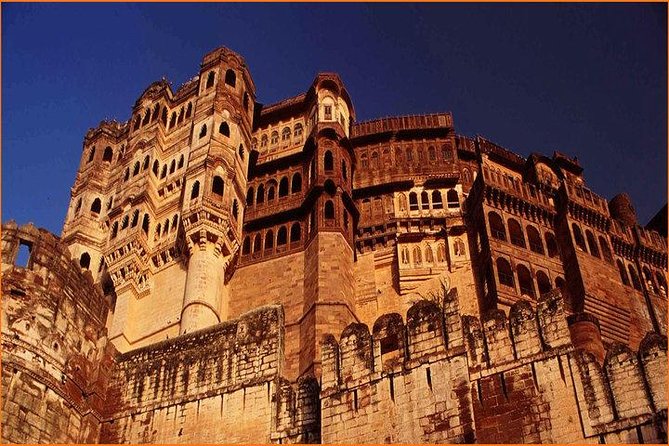
- Mehrangarh Fort
- Jaswant Thada
Mehrangarh gives you those dramatic fort views and the sense of scale that’s hard to capture from a distance. Jaswant Thada adds a calmer, more memorial feel.
Then it’s a longer drive day with a very purposeful stop: Ranakpur Jain temples, built in white marble. The itinerary notes:
- 29 halls
- 1,444 pillars
- 1,444 is the kind of number that tells you this place is more than just a single hall—it’s a whole layout
After Ranakpur, you continue to Udaipur, check in, and get evening at leisure. That leisure time is important. Udaipur is pretty, and you’ll enjoy it more if you’re not running on fumes.
Udaipur Palace Museum, Sahelion Ki Bari, and Lake Pichola boat time
Day 8 is Udaipur highlights, and it’s a mix I like: palace interiors, royal gardens, a temple, then water.
You’ll visit:
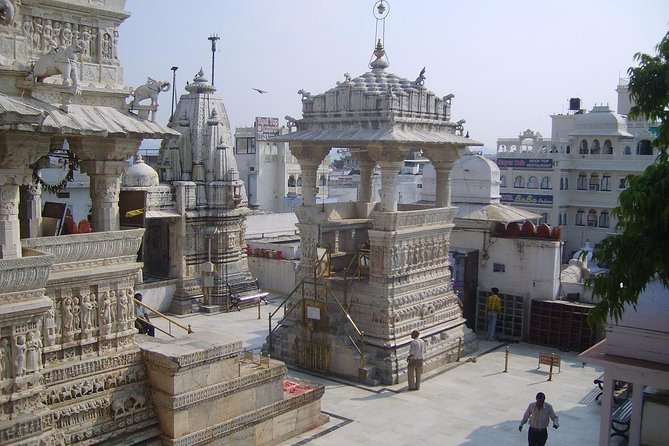
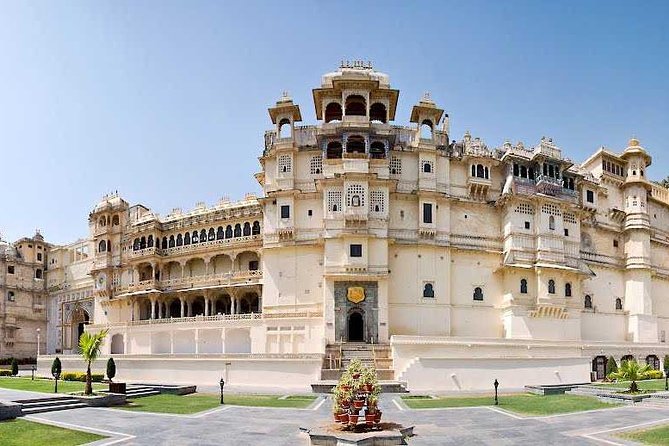
- Palace Museum (granite and marble with carved balconies and ornate windows)
- Sahelion Ki Bari (fountain garden originally used for royal ladies’ leisure)
- Jagdish Temple
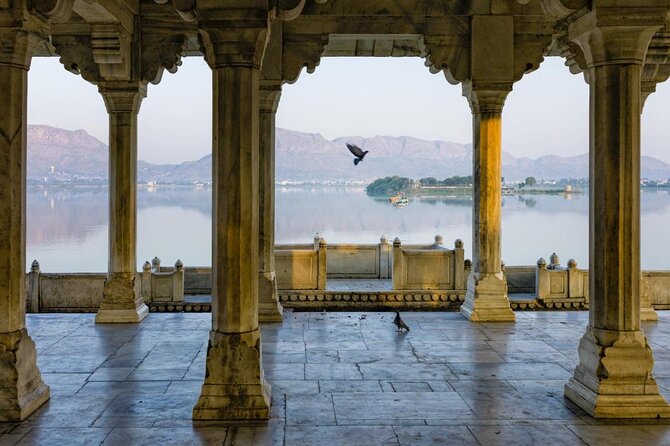
- Then the boat ride on Lake Pichola in the afternoon
The boat ride is one of those travel moments that changes the mood of the whole trip. It gives you a break from forts and long walks, and it also frames Udaipur’s skyline from a softer angle. If you’re the kind of person who likes a couple of slower moments in an otherwise packed itinerary, this is your payoff.
Evening is left open for you—good for dining choices and wandering a bit without a schedule.
Bundi’s Taragarh Fort palace: quieter Rajasthan on purpose
On Day 9, you drive to Bundi, check in, and explore Bundi Palace. This is described as built by Rao Raja Ratan Singh Hada between 1607 and 1631, built over a hillside so it looks like a hanging structure from above.
The tour also frames it as a kind of Rajasthan-by-way-of-surprise: a palace complex made of multiple palaces that later rulers added onto, but that still feels harmonious. You even get a cultural connection mentioned through Rudyard Kipling, who wrote that it’s like a palace men build for uneasy dreams—an odd but memorable description.
Evening is at leisure. This is where the itinerary becomes more than a checklist. Bundi is smaller, calmer, and it gives your trip a breather between the big-city monuments.
Back to Jaipur, then Delhi Haat: finishing strong with shopping time
Day 10 brings the drive back to Jaipur. You arrive, relax, and then have leisure time, including shopping. If you buy souvenirs during the middle of a trip, they sometimes end up taking up space when you still have multiple overnight bags ahead. Having a final shopping slot in Jaipur helps you manage that.
Day 11 is your last morning: checkout, then drive to Delhi. You get additional shopping time at Delhi Haat, described as a paradise for shopping lovers, and then you’re transferred to Delhi International Airport for your next flight.
This ending matters. It’s easy to lose energy at the finish line. A final shopping stop is a practical way to make the last day feel useful, not just like “waiting for your plane.”
Guide quality, driver patience, and why named people matter
A packaged trip lives or dies on people. And the feedback style around this operator is very consistent: you’ll see names attached to arrangements—planning messages, car drivers, and destination guides.
For example, I noticed multiple credits to individuals such as Mr. Atul for arranging the trip, and drivers like Mr. Teekam and Mr. Sanjeev for being steady and patient. There are also guide names like Mr. Anil, Mr. Paavan, and Mr. Kalsana tied to on-the-ground guiding. In other cases, organizing roles were credited to Bharat and Udit, with drivers including Yogesh, and help from Sunny.
You can’t assume the same crew will be on your exact dates, but the important signal is that the operator appears to communicate with named staff and follow through. That reduces the usual anxiety of arriving in a new country and not knowing what happens next.
Should you book this Golden Triangle and Historical Rajasthan tour?
If you’re a first-timer to India, or you want a structured itinerary that still includes real Rajasthan culture beyond the Golden Triangle, I think this tour is a strong option. You get a classic monument backbone (Delhi + Agra + Jaipur) plus meaningful add-ons (Ajmer, Pushkar, Jodhpur, Udaipur, Bundi), and you’re not stuck with unreliable transport because you have a private AC vehicle and guides at destinations.
I would hesitate if you hate long days of driving and transfers, or if you don’t want to think about entrance fees at each major site. Since monuments entrance fees are not included, you’ll want to budget that extra layer from the start.
If you like a trip that’s guided, organized, and still culturally varied, this is the kind of itinerary that makes the “first India” moment feel smooth.
FAQ
What cities are included in this tour?
You’ll cover Delhi, Agra, and Jaipur as the Golden Triangle, plus Rajasthan highlights including Udaipur, Ajmer, Pushkar, Bundi, and Jodhpur.
How long is the tour, and where does it start and end?
It runs for about 11 days (10 nights) and starts at IGI Airport Terminal-3 in Delhi. It ends back at the same meeting point in Delhi.
What kind of hotels do you stay in?
The package includes nights in three-star hotels on a twin-sharing basis. It also mentions that in some places heritage havelis may be used.
Is the Taj Mahal and other monuments entrance fee included?
No. Monument entrance fees are not included in the package price.
What transportation do you use between cities?
You get a private AC vehicle for the entire tour with an experienced chauffeur.
What is included for meals?
Breakfast is included for 10 mornings.
FAQ
Can I cancel and get a refund?
Yes. You can cancel up to 6 days in advance of the experience for a full refund. If you cancel 2–6 days before, you get a 50% refund. Less than 2 days before means no refund.
More Tour Reviews in New Delhi
- Old & New Delhi City Tour – Half or Full Day Options Available
★ 5.0 · 4,811 reviews - Half Day Private Delhi City Tour
★ 5.0 · 4,474 reviews - Same Day Taj Mahal, Agra Fort & Baby Taj Tour from Delhi by Car
★ 5.0 · 4,304 reviews - Taj Mahal Day Tour from Delhi by Superfast Train – TOP RATED TOUR
★ 5.0 · 4,166 reviews - Delhi: Old and New Delhi Private Full or Half-Day Tour
★ 4.9 · 3,776 reviews
Further into Rajasthan
- Alluring North India and Rajasthan Tour
★ 5.0 · 552 reviews - 13 Nights 14 Days Private Tour of Heritage Rajasthan from New Delhi
★ 5.0 · 149 reviews - 8-Day Golden Triangle & Rajasthan Private Tour from Delhi
★ 5.0 · 134 reviews - 12-Days – Splendors of Golden Triangle & Rajasthan
★ 5.0 · 72 reviews - 14 Days Golden Triangle with Wildlife Safari & Heritage Rajasthan
★ 5.0 · 37 reviews
The Full Golden Triangle, More Options
- 3-Days Private Golden Triangle Tour: Delhi, Agra & Jaipur by Car
★ 5.0 · 1,107 reviews - 3-Days Private Golden Triangle Tour: Delhi, Agra & Jaipur by Car
★ 5.0 · 1,098 reviews - 3-Day Delhi, Agra and Jaipur Private Tour – India Golden Triangle
★ 5.0 · 812 reviews - Four-Day Private Luxury Golden Triangle Tour to Agra and Jaipur From New Delhi
★ 5.0 · 807 reviews - 5 Nights 6 Days Private Golden Triangle Tour – Delhi Agra Jaipur
★ 5.0 · 574 reviews
Just added: more New Delhi reviews to browse
- 4 days Golden Triangle Tour★ 5.0 · 3 reviews
- Discover Old & New Delhi: Private Tour with Street Food★ 5.0 · 3 reviews
- Taj Mahal Tour From Delhi By Private Car★ 4.5 · 3 reviews
- Golden Triangle Tour 5 Days★ 5.0 · 3 reviews
- Taj Mahal: Express Entry Ticket For Sunset Tour with guide★ 5.0 · 3 reviews
- Agra Taj Mahal Sunrise & Sunset Tour from Delhi★ 5.0 · 3 reviews
Golden Triangle Tours, compared.
 ★ 5.03-Days Private Golden Triangle Tour: Delhi, Agra & Jaipur by CarFrom $1271,107 reviews
★ 5.03-Days Private Golden Triangle Tour: Delhi, Agra & Jaipur by CarFrom $1271,098 reviews
★ 5.03-Days Private Golden Triangle Tour: Delhi, Agra & Jaipur by CarFrom $1271,107 reviews
★ 5.03-Days Private Golden Triangle Tour: Delhi, Agra & Jaipur by CarFrom $1271,098 reviews
 ★ 5.03-Day Delhi, Agra and Jaipur Private Tour – India Golden TriangleFrom $110812 reviews
 ★ 5.0Four-Day Private Luxury Golden Triangle Tour to Agra and Jaipur From New DelhiFrom $160807 reviews
 ★ 5.05 Nights 6 Days Private Golden Triangle Tour – Delhi Agra JaipurFrom $240574 reviews
 ★ 5.04 Days Golden Triangle TourFrom $146499 reviews
 ★ 5.0Private Car and Drive for Golden Triangle (4N/5D)From $167451 reviews
 ★ 5.0Private Golden Triangle Tour Delhi Agra Jaipur ( Top Rated )From $148436 reviews
Browse the lists this tour appears in