
Reviewed · HISTORICAL TOURS
Delhi’s historical 7 hours experience tour
Two Delhis in seven hours, with clear history. You’ll feel the contrast fast: a tuk-tuk or rickshaw ride through the narrow lanes of Chandni Old Bazaar, then a clean run through Mughal landmarks like Jama Masjid and Humayun’s Tomb. I also like that the plan mixes “big monuments” with everyday city life, from spice-market smells to quiet memorial gardens. One drawback to plan around: several top sites have separate entry tickets listed as not included, so your exact cost can depend on which entrance options you choose.
You get hotel pickup by private air-conditioned vehicle, plus bottled water, so you spend less time wrestling Delhi logistics. And because it’s a private tour (just your group), you’re not stuck with a slow-moving crowd that hijacks the timeline.
Finally, remember this is a history-focused day in a traffic-heavy city. If you hate walking through crowds or want lots of time inside museums and prayer halls, you may feel a little rushed at the 30–45 minute stops.
In This Review
- Key highlights you’ll actually feel during the day
- Why this 7-hour Delhi route makes sense
- Hotel pickup and air-conditioned comfort (in the middle of Delhi chaos)
- Jama Masjid: Shah Jahan’s huge mosque, seen at the right scale
- Old Delhi rickshaw ride and Chandni spice air: the sensory payoff
- Red Fort area: seeing Shahjahan-Abad’s power from outside (and why that’s okay)
- Raj Ghat and Agrasen Ki Baoli: memorial gardens and old water logic
- Raj Ghat (free, about 30 minutes)
- Agrasen Ki Baoli (free, about 20 minutes)
- India Gate and Gurudwara Bangla Sahib: New Delhi’s order and a spiritual reset
- India Gate (about 30 minutes, free)
- Gurudwara Bangla Sahib (optional, about 30 minutes, free)
- Humayun’s Tomb: the Mughal landmark that rewards slow steps
- Lotus Temple (optional): marble lotus calm, but watch for Monday
- Qutub Minar: the Sultan-era tower that helps your brain time travel
- Price and inclusions: what $29 gets you (and what it might not)
- Who this tour suits best
- Should you book this Delhi 7-hour historical tour?
- FAQ
- How long is the Delhi historical tour?
- What does the tour cost?
- Does the tour include hotel pickup?
- Is the tour private or group-based?
- Which sights are included in the route?
- Are entrance fees included?
- Is lunch included?
- Is the Lotus Temple stop always available?
- Does the tour run in any weather?
- What’s the cancellation policy?
Key highlights you’ll actually feel during the day
- Tuk-tuk or rickshaw through Chandni Old Bazaar so you get the spice-market atmosphere without losing time to foot detours
- Jama Masjid: Shah Jahan’s 1650–1656 mosque, built with red sandstone and white marble
- Raj Ghat with its garden setting and the story of Gandhi’s last rituals
- Humayun’s Tomb in a landscaped complex with pathways and water channels
- Lotus Temple (optional) for a calm, marble-lotus reset, but closed on Mondays
- Qutub Minar: an 800-year-old brick and red-sandstone tower tied to Qutbuddin Aibak and the Sultan period
Why this 7-hour Delhi route makes sense
Delhi can feel like two different cities in the same day: Old Delhi where you navigate lanes, smells, and crowds, and New Delhi where the monuments sit in planned gardens and wide roads. This tour is built to let you “switch modes” without wasting hours backtracking.
At a price of $29 per person for roughly 7 hours, the value is in how much the schedule packs in. You’re not just seeing one neighborhood. You’re moving through a storyline that touches Mughal power, a memorial to modern India’s founding leader, and a pair of New Delhi icons (India Gate and Lotus Temple or its optional alternative stops).
The biggest reason this plan feels efficient: transport is handled with an air-conditioned vehicle, plus parking is included. That matters in Delhi, where weather and traffic can turn a simple hop into a time-sink.
More paths into old New Delhi




Hotel pickup and air-conditioned comfort (in the middle of Delhi chaos)
You get pickup offered, and you’re traveling in a private air-conditioned vehicle with bottled water. That sounds like basic comfort, but it’s a real upgrade in Delhi’s heat and dust, especially when your itinerary includes both shaded gardens and open-air monuments.
Practical tip: bring something light for sun and dust (even if you’ll be in a vehicle a lot). You’ll spend time walking at each stop, and the rickshaw/tuk-tuk segment moves through busy lanes.
Also, because it’s private, your guide can adjust pace—one-on-one time makes it easier to pause for photos, explain a detail, or move on quickly when you’re done.
Jama Masjid: Shah Jahan’s huge mosque, seen at the right scale
Jama Masjid is one of the big “anchor” sights for Old Delhi. It was built by Mughal Emperor Shah Jahan from 1650 to 1656, and it’s known for its striking mix of red sandstone and white marble. The listing also notes it’s the largest mosque of India.
What makes this stop worth your attention is the scale. You’re not just looking at a building—you’re seeing how Mughal architecture was meant to hold crowds and frame worship as a civic event.
Time reality check: expect about 30 minutes here, and admission isn’t included. So if you want extra time inside, you’ll need to treat this as a “see the main thing clearly” stop rather than a long deep study.
Old Delhi rickshaw ride and Chandni spice air: the sensory payoff
If you want one moment that actually feels like you’re in Old Delhi rather than just looking at it, it’s the Old Delhi rickshaw ride (45 minutes). The focus is the khari baoli spice market area and the surrounding lanes of the Chandni Old Bazaar zone.
This part works for two reasons:
1) You get movement through narrow streets without doing all the stop-and-go on foot.
2) You experience the market atmosphere fast—smells from spices and the daily rhythm of traders and shoppers.
The ride includes the admission ticket for this stop. That’s one less “now what do we pay?” moment later in the day.
Small consideration: this is a busy area. You’ll want to keep your phone secure and accept that you’ll be moving through crowds.
Red Fort area: seeing Shahjahan-Abad’s power from outside (and why that’s okay)
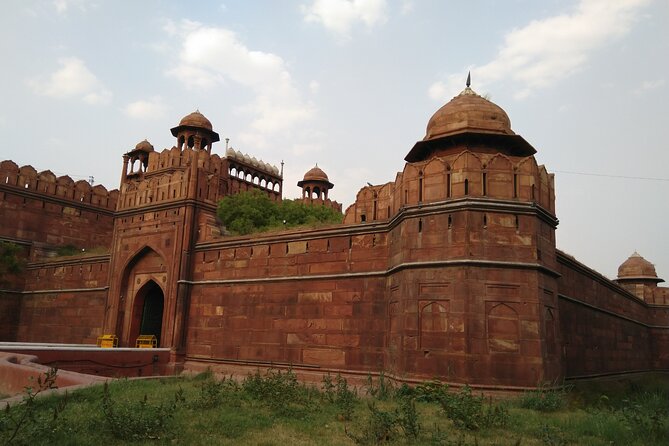
The itinerary includes the Red Fort area described as a massive citadel built by Shah Jahan in 1648 as part of his capital city of Shahjahan-Abad, on the eastern side of Old Delhi.
Even if you don’t go deep inside (the schedule doesn’t specify monument entry here), it’s still a valuable stop because it helps connect Jama Masjid with the bigger Mughal story. You get a clearer mental map: religious authority, then imperial power, then memorial and later eras.
Time tip: treat this as a “orient and photograph” moment. Use it to connect what you’ve already seen and what comes next.


Raj Ghat and Agrasen Ki Baoli: memorial gardens and old water logic
Then the tour shifts from empire and architecture into memory and everyday utility—an underrated pairing.
Raj Ghat (free, about 30 minutes)
Raj Ghat is Gandhi’s cremation ground, with the garden setting and the note that after his assassination, the last rituals were performed here. The free entry makes it easy to prioritize without worrying about extra tickets.
What I like about this stop is that it gives your day a moral center. After mosques and forts, you’re reminded that history isn’t only buildings—it’s also people and choices.
Agrasen Ki Baoli (free, about 20 minutes)
Next is Agrasen Ki Baoli, described as a reservoir for harvesting rainwater for local community use, with origins linked to the Lodhis or Tughlaqs. It’s short—around 20 minutes—so it works best as a quick “pause and notice” stop.
Why this matters: it’s a non-flashy piece of infrastructure. You’ll see how Delhi’s old systems weren’t just about ruling—they were also about storing water in a city that needs it.
India Gate and Gurudwara Bangla Sahib: New Delhi’s order and a spiritual reset
India Gate (about 30 minutes, free)
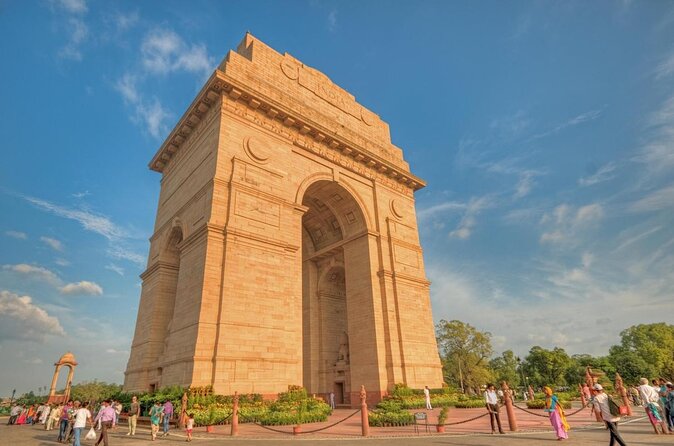
India Gate is a popular New Delhi landmark with a 42-meter-high gate in a garden setting, and it’s positioned looking over the President House to the west. It’s an easy “breather” between Old Delhi intensity and the next wave of major architecture.
This is where you get breathing room: less narrow-lane crowding, more open space for photos and a short walk.
Gurudwara Bangla Sahib (optional, about 30 minutes, free)
If you add it, Gurudwara Bangla Sahib is described as the biggest Gurudwara in Delhi for the Sikh religion among nine old Gurudwaras. It’s optional on this route, which is useful because your energy level may decide for you.
If you want a peaceful stop where the focus isn’t sightseeing speed, this can be the one.
Humayun’s Tomb: the Mughal landmark that rewards slow steps
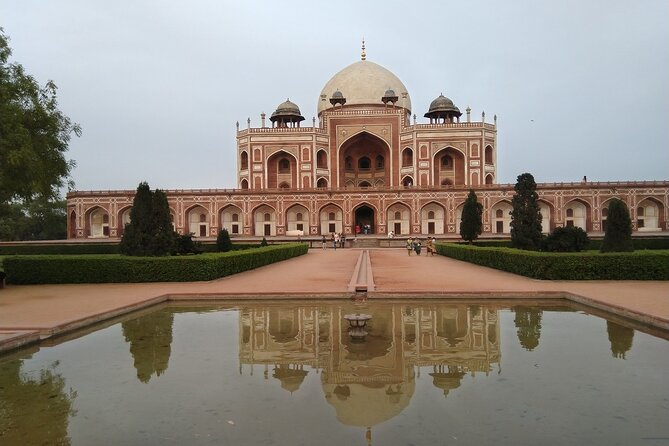
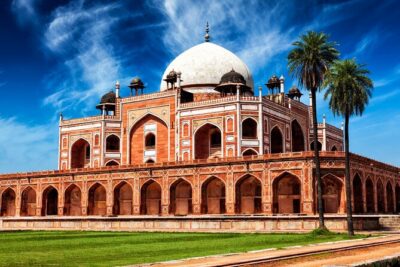
Humayun’s Tomb is listed as the last resting place of the Second Mughal Emperor of India. The stop is about 45 minutes and described as set in a lush green garden with pathways and water channels around the main tomb.
This stop is often the turning point on architecture-focused days because the garden layout gives you space to slow down. You’re not just scanning walls—you’re walking through a designed landscape that supports the monument.
Admission isn’t included here, so expect separate ticketing. But even with limited time, 45 minutes is enough to get the “big picture” and appreciate the symmetry and water features.
Practical tip: the pathways are part of the experience. Don’t rush straight to the main tomb and miss the surrounding design.
Lotus Temple (optional): marble lotus calm, but watch for Monday
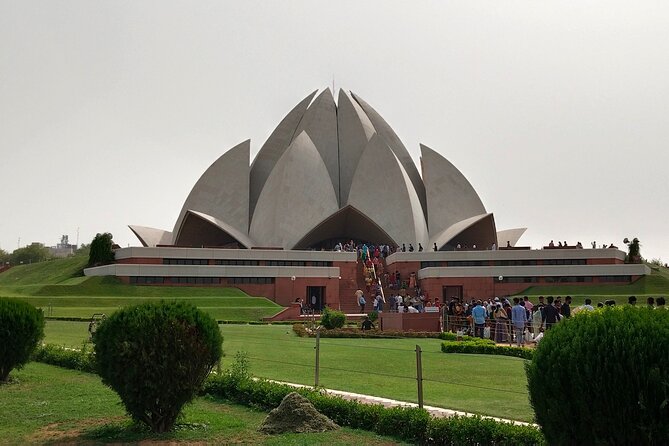
Lotus Temple is a Bahai house of worship built in the shape of a lotus, described as a marble lotus-shaped structure. It’s optional, around 30 minutes, free entry, and noted as closed on Monday.
This is your “reset” stop. After Mughal stone, forts, and tomb gardens, Lotus Temple gives you clean lines and open space in a gentler tone. It’s also near the Nehru Place computer market, which explains why it’s easy to reach without feeling like you’re adding extra travel.
Consideration: because it’s closed on Monday, check your day of travel. If it’s closed, you’ll still be on schedule, but you’ll want to make peace with the fact that this specific calm moment might not happen.
Qutub Minar: the Sultan-era tower that helps your brain time travel
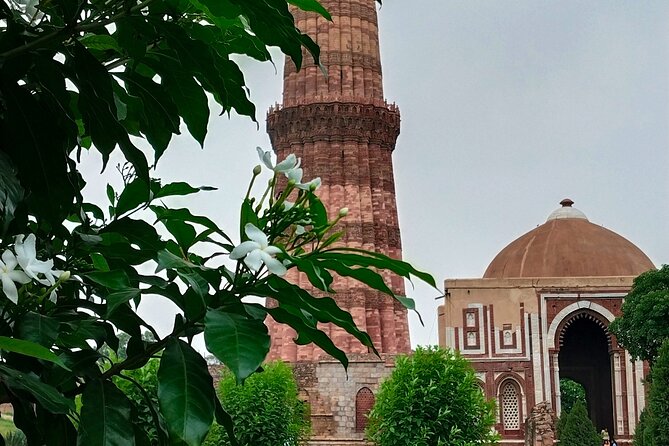
Qutub Minar is on the list for about 40 minutes. It’s described as an 800-years-old brick and red sandstone tower built to commemorate the dominion of the Sultan dynasty, associated with Qutbuddin Aibak in the 12th century.
This stop is valuable because it expands the story timeline beyond Mughal-era landmarks. Delhi isn’t only Mughal. It’s layers on layers, and Qutub Minar helps you place an earlier chapter on the map.
Admission isn’t included here either, so plan for separate entry tickets if you want to spend time up close.
Price and inclusions: what $29 gets you (and what it might not)
At $29 per person, the deal is mainly about organization and transport. You’re getting:
- Air-conditioned vehicle
- Bottled water
- Private transportation and parking fees
- Monument fees included if you choose the option with entrance
You’re not getting lunch, and several stops list admission tickets as not included (Jama Masjid, Humayun’s Tomb, Qutub Minar). The Old Delhi rickshaw ride stop is listed as admission included.
So here’s the practical way to think about it: you can treat the tour as a guided, time-managed “best-of” route where extra monument tickets may add to your final total depending on what you choose. If you’re the type who loves going inside every site and reading every plaque, you’ll likely pay more in separate entries. If you’re okay with the main sights at a thoughtful pace, the listed price can feel even better.
One more timing point: confirmation happens at booking time, and the tour runs for about 7 hours. The plan is also described as requiring good weather, so if skies are rough, you may be offered a different date or a full refund.
Who this tour suits best
This is a great fit if you want:
- A single-day structure that links Old Delhi and New Delhi
- Clear pacing across major sites without arranging multiple taxis
- A tuk-tuk/rickshaw element to keep Old Delhi from becoming one long walk
- A guide who can explain the Mughal story without turning it into a lecture
It may be less ideal if you:
- Hate crowds and want large, slow museum-style breaks
- Need lots of time inside each monument (many stops are 20–45 minutes)
- Are traveling on a Monday and specifically want Lotus Temple
Should you book this Delhi 7-hour historical tour?
Yes—book it if you want a practical “greatest hits with meaning” day and you prefer having the transport and site sequencing handled. The best part is how quickly the tour helps you understand Delhi’s timeline: Shah Jahan’s monumental power at Jama Masjid and Red Fort area, then a memory stop at Raj Ghat, then garden-architecture at Humayun’s Tomb, plus the Sultan-era landmark at Qutub Minar.
But don’t book it blindly if you’re chasing maximum time inside buildings. Budget extra for separate entry tickets at the stops that list admission as not included, and make peace with the fact that it’s a 7-hour plan with tight windows.
If you like your sightseeing with a guide named Shahnawaz (and other guides like Sameer show up as well), you’ll probably appreciate how your day is kept organized and flexible—useful when Delhi weather, crowds, or traffic refuse to behave.
FAQ
How long is the Delhi historical tour?
The tour is about 7 hours.
What does the tour cost?
It’s listed at $29.00 per person.
Does the tour include hotel pickup?
Pickup is offered, and private car transfers with hotel pickup are included.
Is the tour private or group-based?
It’s a private tour/activity, meaning only your group participates.
Which sights are included in the route?
The itinerary covers Jama Masjid, an Old Delhi rickshaw ride in the spice market area, the Red Fort area, Raj Ghat, Agrasen Ki Baoli, India Gate, Humayun’s Tomb, Qutub Minar, plus optional stops for Gurudwara Bangla Sahib and Lotus Temple.
Are entrance fees included?
Some stops list admission tickets as not included (for example, Jama Masjid, Humayun’s Tomb, and Qutub Minar). The Old Delhi rickshaw ride is listed as admission ticket included. Monument fees are included if you choose the option with entrance.
Is lunch included?
No. Lunch is not included.
Is the Lotus Temple stop always available?
Lotus Temple is marked as optional and closed on Monday.
Does the tour run in any weather?
The experience requires good weather. If it’s canceled due to poor weather, you’ll be offered a different date or a full refund.
What’s the cancellation policy?
Free cancellation is offered. You can cancel up to 24 hours in advance for a full refund; within 24 hours, the amount paid is not refunded.
Old New Delhi, Toured Properly
- The Great Indian Food Tour: Old Delhi Food and Heritage Walk
★ 5.0 · 1,698 reviews - Old Delhi Food, Heritage&Cultural Walk with Rickshaw ride to Masterji Kee Haveli
★ 5.0 · 742 reviews - Old Delhi Heritage Walking Tour
★ 5.0 · 247 reviews - 3-hour Old Delhi Heritage Walking tour with Rickshaw Ride
★ 5.0 · 240 reviews - Old Delhi: Spices, Heritage and Bazaars Walking Tour
★ 5.0 · 173 reviews
More Tours in New Delhi
- Old & New Delhi City Tour – Half or Full Day Options Available
★ 5.0 · 4,811 reviews - Half Day Private Delhi City Tour
★ 5.0 · 4,474 reviews - Same Day Taj Mahal, Agra Fort & Baby Taj Tour from Delhi by Car
★ 5.0 · 4,304 reviews - Taj Mahal Day Tour from Delhi by Superfast Train – TOP RATED TOUR
★ 5.0 · 4,166 reviews - Delhi: Old and New Delhi Private Full or Half-Day Tour
★ 4.9 · 3,776 reviews
More Tour Reviews in New Delhi
- Old & New Delhi City Tour – Half or Full Day Options Available
★ 5.0 · 4,811 reviews - Half Day Private Delhi City Tour
★ 5.0 · 4,474 reviews - Same Day Taj Mahal, Agra Fort & Baby Taj Tour from Delhi by Car
★ 5.0 · 4,304 reviews - Taj Mahal Day Tour from Delhi by Superfast Train – TOP RATED TOUR
★ 5.0 · 4,166 reviews - Delhi: Old and New Delhi Private Full or Half-Day Tour
★ 4.9 · 3,776 reviews
Just added: more New Delhi reviews to browse
- 4 days Golden Triangle Tour★ 5.0 · 3 reviews
- Discover Old & New Delhi: Private Tour with Street Food★ 5.0 · 3 reviews
- Taj Mahal Tour From Delhi By Private Car★ 4.5 · 3 reviews
- Golden Triangle Tour 5 Days★ 5.0 · 3 reviews
- Taj Mahal: Express Entry Ticket For Sunset Tour with guide★ 5.0 · 3 reviews
- Agra Taj Mahal Sunrise & Sunset Tour from Delhi★ 5.0 · 3 reviews
Historical Tours, compared.
 ★ 5.0The Great Indian Food Tour: Old Delhi Food and Heritage WalkFrom $431,698 reviews
 ★ 5.0Old Delhi Food, Heritage&Cultural Walk with Rickshaw ride to Masterji Kee HaveliFrom $52742 reviews
 ★ 5.0Old Delhi Heritage Walking TourFrom $13247 reviews
 ★ 5.03-hour Old Delhi Heritage Walking tour with Rickshaw RideFrom $7240 reviews
 ★ 5.0Old Delhi: Spices, Heritage and Bazaars Walking TourFrom $13173 reviews
★ 4.63-Hour Old Delhi Heritage Walking tour with Rickshaw rideFrom $10158 reviews
★ 5.0Old Delhi: Spices, Heritage and Bazaars Walking TourFrom $13173 reviews
★ 4.63-Hour Old Delhi Heritage Walking tour with Rickshaw rideFrom $10158 reviews
 ★ 5.013 Nights 14 Days Private Tour of Heritage Rajasthan from New DelhiFrom $226149 reviews
 ★ 5.0Gandhi Delhi Private History Adventure TourFrom $40127 reviews
Browse the lists this tour appears in