
Reviewed · HISTORICAL TOURS
World Heritage Monuments of Delhi – Premium Private Tour
Seven hours, six big Delhi icons. This premium private tour strings together UNESCO World Heritage sights and the feel of Old Delhi in one smooth, guided day. I especially like the air-conditioned pickup and transport plus the fact that major monument tickets are handled so you lose less time to queues.
You’ll get a real sense of how power and faith shaped the city, from the towering Qutb Minar to the Mughal courts at Red Fort. One drawback to consider: this is a packed schedule, so you need comfortable shoes and patience for crowd rhythms around the major religious sites.
In This Review
- Quick hits you will feel fast
- A one-day UNESCO sweep across Delhi’s power centers
- Qutub Minar: victory tower and Delhi’s older roots at Lal Kot
- Red Fort’s Mughal skyline: Shah Jahan’s capital shift in stone
- Humayun’s Tomb: the garden-tomb idea that shaped what came next
- Chandni Chowk and Khari Baoli: Old Delhi’s geometry and spice wholesale reality
- Jama Masjid and Gurudwara Sis Ganj Sahib: faith, power, and tolerance lessons
- Jama Masjid
- Gurudwara Sis Ganj Sahib
- Price and value: what $220 really covers in a long Delhi day
- Best for families, groups, and architecture fans who want order
- Should you book this Delhi monuments tour?
- FAQ
- How long is the World Heritage Monuments of Delhi premium private tour?
- Is pickup included?
- Which major sites does the tour include?
- Are monument tickets included?
- Is there a mobile ticket?
- Can I cancel for a refund?
Quick hits you will feel fast
- A UNESCO-focused route through Qutub Minar, Humayun’s Tomb, Red Fort, and Jama Masjid areas
- Old Delhi lanes on purpose, with a cycle rickshaw ride through narrow streets
- Bazaars and spices, including Chandni Chowk and Khari Baoli for everyday Delhi energy
- Comfort included, with an air-conditioned vehicle, bottled water (1 liter), and coffee or tea
- Private by default, meaning it’s only your group, not a mixed free-for-all
- Time for reflection, with short but meaningful stops like Gurudwara Sis Ganj Sahib
A one-day UNESCO sweep across Delhi’s power centers

If you only have one day in New Delhi, this kind of route makes sense. You’re not just ticking off famous buildings; you’re moving through places tied to rulers, empires, and religious life. The timing is built for a 7 to 8 hour day that starts at 8:00 am and keeps you constantly in motion, but with enough breathing room at each landmark to actually notice details.
What you’re really buying with a premium private tour is reduced friction. You have an all-in guide, an air-conditioned vehicle, bottled water, and the key monument admissions covered. That matters in Delhi, where getting from one side of town to another can eat hours if you’re doing it on your own.
This also works well for families and groups, because the day is structured. You won’t spend all morning guessing what to do next.
More private days with a guide of your own




Qutub Minar: victory tower and Delhi’s older roots at Lal Kot
Your day begins at Qutub Minar, a towering minaret and so-called victory tower inside the Qutb complex. It sits on the site of Delhi’s oldest fortified city footprint, Lal Kot, founded by the Tomar Rajputs. The main construction dates fall between 1199 and 1220, which is part of what makes this place feel different right away: you’re standing somewhere with layers.
You get about 1 hour 30 minutes here, and admission is free. That’s great value because many travelers end up paying extra just to get in and then rushing to the next stop. At Qutub Minar, you can slow down for the shapes and the sheer height.
Practical tip: the grounds can feel uneven and busy. Wear shoes with grip, especially if you’re visiting in warmer weather.
What to look for beyond the obvious:
- The way the minaret dominates the complex even from a distance
- The sense that the site changed over time, which is part of why you’ll hear legends and architectural shifts tied to true history questions
Red Fort’s Mughal skyline: Shah Jahan’s capital shift in stone
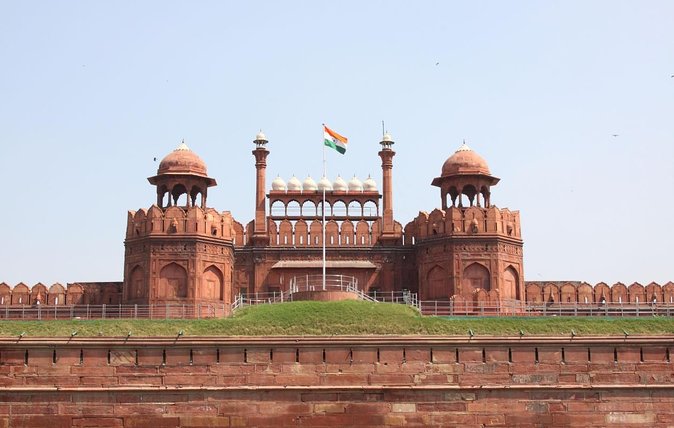
Next up is the Red Fort, or Lal Qila, in Old Delhi. This is the Mughal imperial residence, commissioned by Emperor Shah Jahan on 12 May 1638 when he shifted the capital from Agra to Delhi. The fort’s design is credited to architect Ustad Ahmad Lahori, who is also linked to the Taj Mahal.
You’ll have about 1 hour 30 minutes, and admission is included. That included ticket is one of the easiest value wins on the day, because Red Fort isn’t a quick roadside stop. It’s a big, layered place with courtyards and viewpoints that reward a slower pace.
What makes Red Fort special on a guided circuit:
- You get the story of Persianate palace design mixed with Indian traditions
- You learn how it functioned as the center of imperial life, not just a defensive structure
- You understand why it’s so tied to Shah Jahan’s reign and the capital moving to Delhi
A balanced consideration: because it’s one of the most famous sites in the city, it can feel busy. Plan on security lines and crowd flow, and don’t treat this like a photo shoot with zero waiting.
Humayun’s Tomb: the garden-tomb idea that shaped what came next
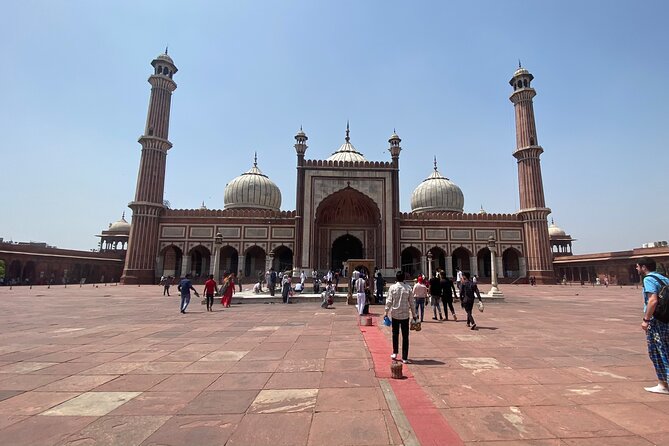
Humayun’s Tomb is next, and it’s a smart pivot after the fortress intensity of Red Fort. This is the tomb of Mughal Emperor Humayun, commissioned by his first wife and chief consort, Empress Bega Begum, under her patronage in 1558. Persian architects Mirak Mirza Ghiyas and his son Sayyid Muhammad were involved in the design.
You get about 1 hour 30 minutes, and admission is included. This is also the first garden-tomb on the Indian subcontinent, which is why it feels like more than a pretty monument. It’s a model. The tomb is also known for being an early large-scale use of red sandstone, and it was declared a UNESCO World Heritage Site in 1993.
A helpful context note: Humayun’s Tomb sits in Nizamuddin East, near the Dina-Panah Citadel, also known as Purana Qila. If you’re curious about how Delhi’s layouts influenced later architecture, this nearby historical context gives you extra meaning even if you only focus on the tomb complex itself.
Practical tip: take a moment to enjoy the garden plan rather than only chasing the top photo angle. The layout is part of the story.
Chandni Chowk and Khari Baoli: Old Delhi’s geometry and spice wholesale reality
After the major monuments, the tour shifts into daily life. First comes Pasar Chandni Chowk, then Khari Baoli, plus a cycle rickshaw ride through narrow lanes of Old Delhi.
Chandni Chowk is famous for its original design: a half-moon-shaped square where reflections used to shine in moonlit water. A shallow water channel ran from the Yamuna through the middle of the straight road known as Chandani Chowk bazaar, with roads and shops on either side. The bazaar plan had three bazaars, and the setup is credited to Princess Jahanara Begum in 1650.
You’ll spend about 2 hours at this stop, and admission is free. That time is important. If you rush through Chandni Chowk, you miss why it’s been a center of commerce for centuries.
Then you go to Khari Baoli for about 30 minutes. This street is known for wholesale grocery, including what’s described as Asia’s largest wholesale spice market. Even if you do not plan to buy much, it’s a strong sensory snapshot of what Delhi trades in and how goods move.
What about the cycle rickshaw ride? That’s one of the smartest inclusions in the whole day. Walking through the lanes is exhausting, and driving doesn’t work well in tight lanes. A cycle rickshaw gives you a view of Old Delhi’s texture without burning your legs by mid-afternoon.
A consideration: bazaars can overwhelm fast. Go with a simple plan: look first, then decide if you want to buy. Keep your phone secured, and don’t treat every stall like you must negotiate.
More paths into old New Delhi
Jama Masjid and Gurudwara Sis Ganj Sahib: faith, power, and tolerance lessons
Two short stops here pack a lot of meaning.
Jama Masjid
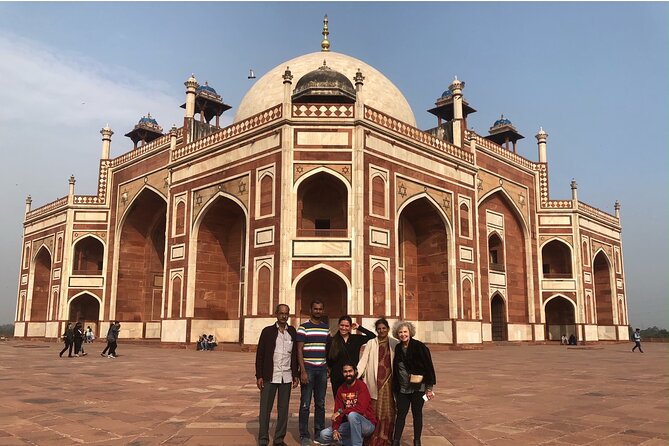
Jama Masjid, also known as Masjid-i Jehan-Numa or world-reflecting mosque, is one of India’s largest mosques. It was built by Shah Jahan between 1650 and 1656 and inaugurated by its first Imam, Syed Abdul Ghafoor Shah Bukhari. It served as the Mughal imperial mosque until the empire’s demise in 1857, and it continued to carry political significance during British rule. Most importantly, it remains in active use today.
You’ll spend about 45 minutes, and admission is included. Because this is a working religious site, your experience is about respect and presence as much as sightseeing. You’ll get a sense of Old Delhi’s identity because Jama Masjid is still part of how the city functions.
Practical tip: dress modestly and follow any guidance from staff at the site. Bring a calm attitude and you’ll feel the place in a better way.
Gurudwara Sis Ganj Sahib
Gurudwara Sis Ganj Sahib is in the heart of Chandni Chowk and marks the site where Guru Tegh Bahadur was beheaded in 1675 on orders of Mughal Emperor Aurangzeb. The shrine is built in Mughal architectural style with mesh-work windows and sandstone construction, rather than the usual white marble seen in other gurudwaras.
You’ll have about 30 minutes here, and admission is free. It’s a short stop, but it hits hard because it connects architecture to a very specific event. The site also has an important story of shifting use over time, described as being used as a mosque and a gurudwara alternating with the sensitive political climate, before finally being converted into a full-fledged gurudwara.
This stop is worth your attention if you want more than postcard history. Even a brief visit can help you understand how places of worship can carry layered meanings across centuries.
Price and value: what $220 really covers in a long Delhi day
At $220 per person, this isn’t a budget coach tour. It’s closer to paying for time management and reduced stress.
Here’s what you get that directly protects your day:
- Air-conditioned vehicle plus pickup offered
- Tour guide
- All fees and taxes
- Bottled water (1 liter each), plus coffee and/or tea
- Monument tickets, including key stops like Red Fort, Humayun’s Tomb, and Jama Masjid
- Cycle rickshaw ride through narrow Old Delhi lanes
- Mobile ticket
Also, it’s a private tour/activity, meaning only your group participates. That matters when you’re moving between major sites and religious areas. You’ll get a more controlled pace and fewer interruptions.
One more value note: some visits on the route are listed as free entries, such as Qutub Minar and the bazaar stops. The premium price is really for the guided sequencing, transport, comfort items, and the paid admissions where it counts.
What is not included is anything not mentioned in the itinerary and inclusions. So expect that personal shopping, extra meals, and anything beyond the provided stops will be on you.
Best for families, groups, and architecture fans who want order
This tour fits best if you:
- Want a structured one-day route through major Delhi landmarks
- Prefer a guide to explain what you’re looking at, especially at places like Red Fort and Humayun’s Tomb
- Are traveling as a family or in a group and want the day to feel manageable
It also makes sense if you want a taste of local markets without turning the whole day into a shopping marathon. The mix of monuments and everyday lanes keeps it from becoming museum-only.
Who might want a different pace: if you want deep museum-level time at one site, a packed 7 to 8 hour circuit can feel rushed. You’ll get highlights, not long, slow study.
Should you book this Delhi monuments tour?
I’d book it if you want the high-value Delhi sampler: UNESCO sights, imperial architecture, and Old Delhi street life, all in one guided day with comfort built in. The included transport, tickets for the big monuments, and the cycle rickshaw add up to real convenience.
I’d think twice if you dislike packed schedules or you prefer to linger for hours without moving on. For most first-time visitors, though, this is a strong way to get your bearings fast and leave with a clearer picture of how Delhi grew.
If you do book, show up ready for walking, plan for crowds near the most famous sites, and keep expectations simple: you’re here for a guided sweep and a meaningful cross-section of Delhi, not one perfect stop taken slowly.
FAQ
How long is the World Heritage Monuments of Delhi premium private tour?
The tour runs about 7 to 8 hours, starting at 8:00 am.
Is pickup included?
Yes. Pickup is offered, and the tour uses an air-conditioned vehicle.
Which major sites does the tour include?
The day covers Qutub Minar, Red Fort, Humayun’s Tomb, Pasar Chandni Chowk, Jama Masjid, Khari Baoli, and Gurudwara Sis Ganj Sahib.
Are monument tickets included?
Monument tickets are included for some stops, including Red Fort, Humayun’s Tomb, and Jama Masjid. Qutub Minar and several bazaar/shrine stops are listed as free admission.
Is there a mobile ticket?
Yes, the tour includes a mobile ticket.
Can I cancel for a refund?
Yes. You can cancel up to 24 hours in advance for a full refund. Canceling less than 24 hours before the start time is not refundable.
Your Group Alone, Private Cars
- Half Day Private Delhi City Tour
★ 5.0 · 4,474 reviews - Delhi: Old and New Delhi Private Full or Half-Day Tour
★ 4.9 · 3,776 reviews - From Delhi: Taj Mahal & Agra Private Day Trip with Transfers
★ 4.9 · 3,181 reviews - All Inclusive Private Taj Mahal Luxury Tour from Delhi by Car
★ 5.0 · 2,564 reviews - Delhi: Private Old & New Delhi Guided Half- or Full-Day Tour
★ 4.9 · 2,309 reviews
More Tours in New Delhi
- Old & New Delhi City Tour – Half or Full Day Options Available
★ 5.0 · 4,811 reviews - Half Day Private Delhi City Tour
★ 5.0 · 4,474 reviews - Same Day Taj Mahal, Agra Fort & Baby Taj Tour from Delhi by Car
★ 5.0 · 4,304 reviews - Taj Mahal Day Tour from Delhi by Superfast Train – TOP RATED TOUR
★ 5.0 · 4,166 reviews - Delhi: Old and New Delhi Private Full or Half-Day Tour
★ 4.9 · 3,776 reviews
More Tour Reviews in New Delhi
- Old & New Delhi City Tour – Half or Full Day Options Available
★ 5.0 · 4,811 reviews - Half Day Private Delhi City Tour
★ 5.0 · 4,474 reviews - Same Day Taj Mahal, Agra Fort & Baby Taj Tour from Delhi by Car
★ 5.0 · 4,304 reviews - Taj Mahal Day Tour from Delhi by Superfast Train – TOP RATED TOUR
★ 5.0 · 4,166 reviews - Delhi: Old and New Delhi Private Full or Half-Day Tour
★ 4.9 · 3,776 reviews
Just added: more New Delhi reviews to browse
- 4 days Golden Triangle Tour★ 5.0 · 3 reviews
- Discover Old & New Delhi: Private Tour with Street Food★ 5.0 · 3 reviews
- Taj Mahal Tour From Delhi By Private Car★ 4.5 · 3 reviews
- Golden Triangle Tour 5 Days★ 5.0 · 3 reviews
- Taj Mahal: Express Entry Ticket For Sunset Tour with guide★ 5.0 · 3 reviews
- Agra Taj Mahal Sunrise & Sunset Tour from Delhi★ 5.0 · 3 reviews
Historical Tours, compared.
 ★ 5.0The Great Indian Food Tour: Old Delhi Food and Heritage WalkFrom $431,698 reviews
 ★ 5.0Old Delhi Food, Heritage&Cultural Walk with Rickshaw ride to Masterji Kee HaveliFrom $52742 reviews
 ★ 5.0Old Delhi Heritage Walking TourFrom $13247 reviews
 ★ 5.03-hour Old Delhi Heritage Walking tour with Rickshaw RideFrom $7240 reviews
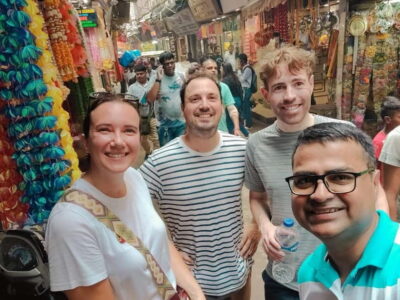 ★ 5.0Old Delhi: Spices, Heritage and Bazaars Walking TourFrom $13173 reviews
★ 4.63-Hour Old Delhi Heritage Walking tour with Rickshaw rideFrom $10158 reviews
 ★ 5.013 Nights 14 Days Private Tour of Heritage Rajasthan from New DelhiFrom $226149 reviews
 ★ 5.0Gandhi Delhi Private History Adventure TourFrom $40127 reviews
Browse the lists this tour appears in