
Reviewed · GOLDEN TRIANGLE TOURS
Golden Triangle with Wildlife and Royal Castle Stay
A trip that mixes power monuments with wild hope. This Golden Triangle route (Delhi, Agra, Jaipur) adds a real animal-focused day at Ranthambore and finishes with a night at Talabgaon Castle, a heritage stay that feels like stepping into old India. It’s the kind of mix that keeps your eyes busy without turning your whole trip into one long queue.
I really like the door-to-door, air-conditioned vehicle transfers with an experienced chauffeur. I also love that the tour includes both a jungle safari with a nature guide at Ranthambore and a village safari tied to the Talabgaon stay, so it’s not only about big-name monuments.
One thing to consider: monument entrance and camera fees are not included, and tiger luck is tiger luck. On top of that, this is a highlights-heavy schedule, so you’ll spend decent time in transit between cities.
In This Review
- Key things I’d bookmark before you go
- What this Golden Triangle tour really gets you
- Price and what the $415 covers (and what it doesn’t)
- Day 1 in Delhi: Mughal icons and Gandhi’s quiet spot
- Humayun’s Tomb
- Raj Ghat
- Red Fort
- Qutub Minar
- India Gate
- Day 2 in Agra: Taj Mahal, the forts, and the quieter river views
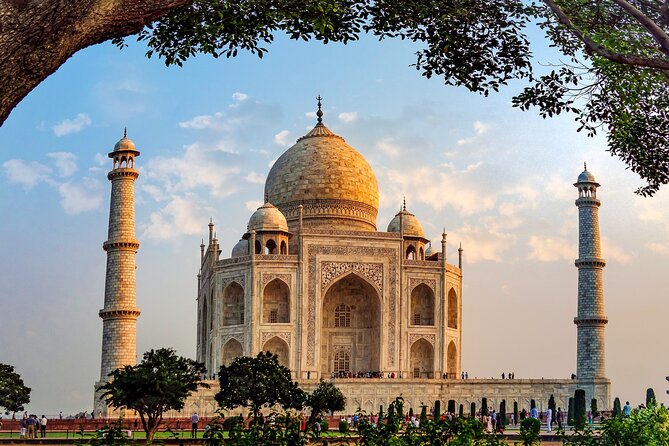
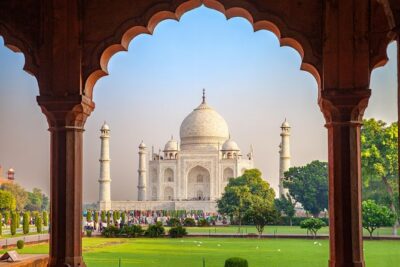
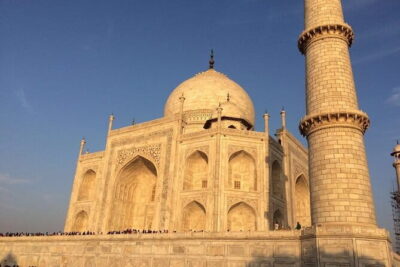
- The Taj Mahal
- Agra Fort
- Itmad-ud-Daula
- Mehtab Bagh
- Day 3: Ranthambore safari chances, then Talabgaon Castle and village life
- Ranthambore National Park jungle safari
- Transfer to Castle Talabgaon
- Village safari at Talabgaon
- Day 4 in Jaipur: temples and a museum day with lower pressure
- Birla Mandir
- Albert Hall Museum
- Day 5 in Jaipur: Amber Fort by jeep, plus City Palace, Hawa Mahal, Jantar Mantar
- Amber Palace (Amer Fort)
- City Palace
- Hawa Mahal
- Jantar Mantar
- Day 6 back to Delhi: easy ending, no last-minute scramble
- The drivers and guides factor more than you think
- Safari reality check: how to set expectations for Ranthambore
- Should you book this Golden Triangle with wildlife and royal castle stay?
- FAQ
- How long is the Golden Triangle with Wildlife and Royal Castle Stay tour?
- What is the price per person?
- What meals are included?
- Are monument entrance fees included?
- How do transfers work between cities?
- What wildlife and related activities are included?
- Where do you stay overnight?
- Is the tour private?
- What is the cancellation policy?
Key things I’d bookmark before you go
- Golden Triangle with a wildlife day: Delhi–Agra–Jaipur plus Ranthambore, not just temples and forts.
- Talabgaon Castle stop: one night in a 200-year-old heritage fort turned boutique stay.
- Safari in a shared gypsy: private tour for you, but the safari ride is shared.
- Built-in comfort: air-conditioned car transfers and 3-star hotels for the non-castle nights.
- Driver continuity matters: solo and small groups can still feel looked after by the driver, including examples like Prem, Kapil, Mayur, and Narendra Singh.
- You’ll pay extra on-site: entrances and camera fees aren’t in the package price.
What this Golden Triangle tour really gets you
This trip is built around two kinds of India: the shaped-and-stone India of the Golden Triangle and the living, breathing India of wildlife. The Golden Triangle itself is famous for a reason—Taj Mahal, Amber Fort, big Mughal-era landmarks in Delhi and Agra. But what makes this tour feel different is the pivot into Ranthambore and Talabgaon.
You’re also getting a very practical format. You won’t be trying to coordinate trains or figure out local buses between cities. Instead, you roll from stop to stop in an air-conditioned vehicle with a chauffeur who knows how to move through the day. That matters on a schedule like this, where each city has multiple major hits packed into one or two days.
And yes, it’s a private tour for your group. If you’re solo, that can be a big deal: one past traveler found that the trip ran even with just one person, which means you’re not stranded waiting for a crowd to show up. The safari itself uses a shared gypsy, but your overall experience is still set up around your group.
Delhi, Agra and Jaipur: more full circuits



Price and what the $415 covers (and what it doesn’t)
At $415 per person, the value is mostly in transportation, guides, and included meals—not in monument entrances.
Here’s what’s clearly included:
- 3-star accommodation for the nights other than the castle stay
- 1 night at Castle Talabgaon
- Breakfast (5) and dinner
- Door-to-door air-conditioned transfers with an experienced chauffeur
- Jeep ride at Amber Fort
- Ranthambore jungle safari (one round) with a nature guide
- Village safari at Talabgaon
- Taxes, permits, parking, tolls, and fuel charges
What isn’t included:
- Monument entrance and camera fees (you’ll pay at sites)
- Anything not listed under inclusions
So how do you judge the cost? If you’d otherwise hire private transport and pay for safaris on your own, the package structure can be a helpful shortcut. The main risk is simple: if entrance fees (and any camera fees) are a big chunk for you, you’ll need to budget for that on top.
Day 1 in Delhi: Mughal icons and Gandhi’s quiet spot
Day 1 is a classic Delhi sampler, with each stop planned for about 30 minutes. That’s quick, and it can feel “on the move,” but Delhi at the start of a trip is best when you’re getting your bearings fast.
Humayun’s Tomb
This is Mughal architecture before the Taj Mahal became the headline act. The tomb complex built by Humayun’s wife, Haji Begum, is often described as a predecessor to the Taj. Even in a short visit, you’ll get a feel for how Mughal design borrowed symmetry and scale and turned it into emotional stone.
Practical note: entrances and camera fees are not included, so plan a little cash or card readiness before you arrive.
Raj Ghat
Raj Ghat sits by the Yamuna and marks the cremation site of Mahatma Gandhi after his assassination in January 1948. It’s landscaped and reflective, and it works as a tonal break after big architectural stops.
Closer to the wild: more animal encounters
Red Fort
The Red Fort is surrounded by a huge boundary wall and built in red sandstone, with palaces and gardens inside. Even with limited time, the size alone hits you, and you get a sense of Delhi’s imperial gravity.
Qutub Minar
At 237 feet high, Qutub Minar is the skyline marker that makes you understand why Delhi has been a power center for centuries. It’s not only a photo stop—it’s a “this is how cities grow” kind of moment.
India Gate
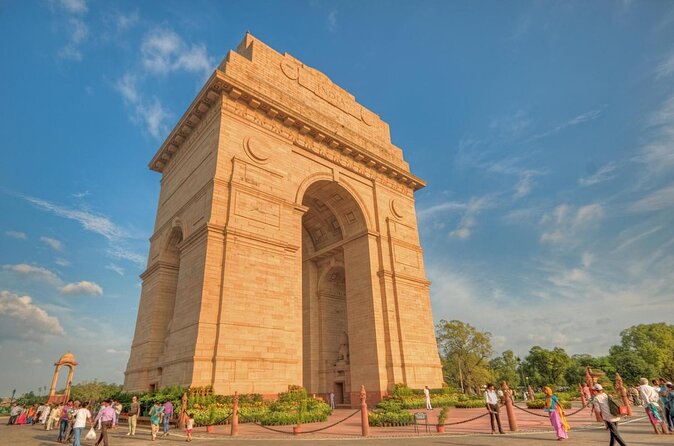
India Gate commemorates 70,000 Indian soldiers who died in World War I. It’s also just a great end-point for a first Delhi day because it pulls the whole route’s story into a modern, national frame.
Day 2 in Agra: Taj Mahal, the forts, and the quieter river views
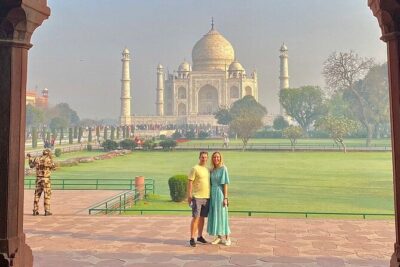
Agra is where the Golden Triangle really flexes. Your guide meets you at the Taj Mahal, and you’ll be shown around the monument with time to appreciate the key buildings.
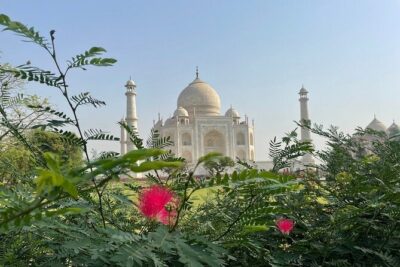
The Taj Mahal
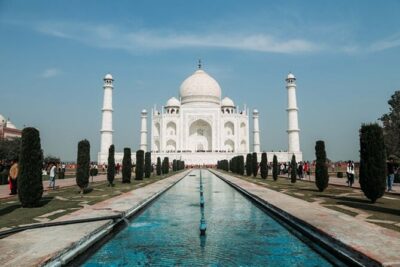
You’ll get about an hour here. That can feel short if you want to slow down for every corner, but it’s enough to understand what you’re looking at: the symmetry, the grand entry, and how the monument’s details reward even a fast visit.
Entrance and camera fees still apply because they are not included.
Agra Fort
Agra Fort was built by Emperor Akbar in 1565 and sits on the Yamuna River. It’s massive, built in red sandstone, and it gives context to the Taj Mahal era without copying the Taj Mahal’s visual style.
Itmad-ud-Daula
This mausoleum overlooks the Yamuna and has a strong place in both history and architecture. If you’re tired of only the biggest superstar attractions, this is a nice “gear shift” stop. You’ll get a different mood: more intimate, more detailed, and less about scale.
Mehtab Bagh
Mehtab Bagh is a set of 11 parks on the Yamuna’s east bank. It’s a useful stop for switching from the fort-and-tomb world to open river views. Even if you only have about 30 minutes, it helps you understand how water and gardens shaped imperial design.
Day 3: Ranthambore safari chances, then Talabgaon Castle and village life
This is the day where your trip stops being only about buildings and starts being about nature.
Ranthambore National Park jungle safari
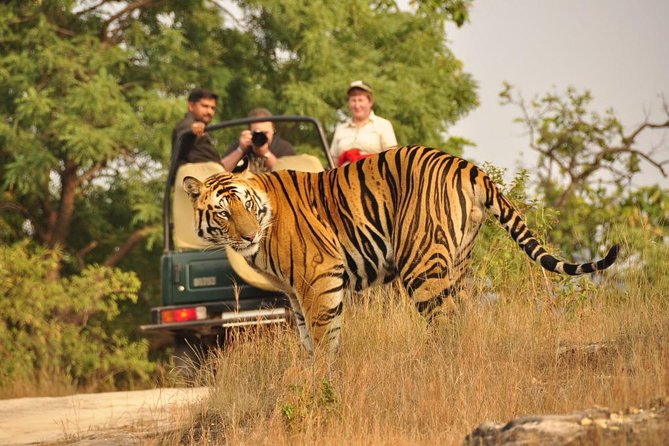
You’ll go on a morning safari by shared gypsy with a nature guide. The tour notes mention you may see hyenas, chittas, jungle cats, panthers, and—if you’re lucky—Indian tigers. That word lucky matters.
Here’s how I’d approach this mentally: even if you don’t see a tiger, a well-run safari is still a wildlife education day. You’ll notice animal tracks and behavior patterns that you’d never spot on your own.
You also return to the hotel for breakfast afterward, which is smart. It means you’re not wandering around hungry and overheated while everyone else is already thinking about the next move.
Transfer to Castle Talabgaon
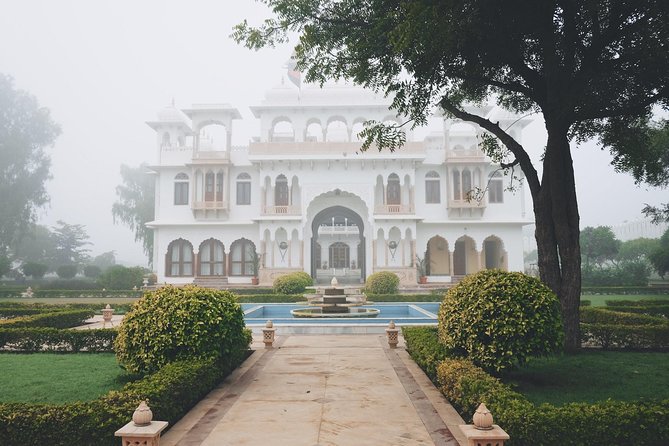
After breakfast you drive to Talabgaon, described as a 200-year-old Indian fort and family home now operating as a heritage boutique hotel. For many people, this is the emotional pivot point: you go from animal tracks in the morning to the quiet feel of a historic property in the afternoon.
Village safari at Talabgaon
A village safari is included. This is often a great match for travelers who want something more local than a formal museum visit. It can also slow your pace down after a safari morning and a long drive.
Day 4 in Jaipur: temples and a museum day with lower pressure
Day 4 is a breather compared with the full fortress-and-palace day that comes later. Birla Mandir and Albert Hall Museum are both about an hour each, with admission listed as free.
Birla Mandir
Birla Mandir in Jaipur is a Hindu temple located on elevated ground at the base of Moti Dungri. It’s not only about architecture. It’s also about the viewpoint energy you get from being up a bit—your brain resets after long driving days.
Albert Hall Museum
Albert Hall Museum is the oldest museum of Rajasthan. If you want something that works when you’re tired of climbing steps, museums can be your best friend. It also helps you connect the dots between Jaipur’s royal aesthetics and the objects that survive from that world.
If you’re traveling on a tight schedule, this day is a smart way to keep momentum without burning yourself out.
Day 5 in Jaipur: Amber Fort by jeep, plus City Palace, Hawa Mahal, Jantar Mantar
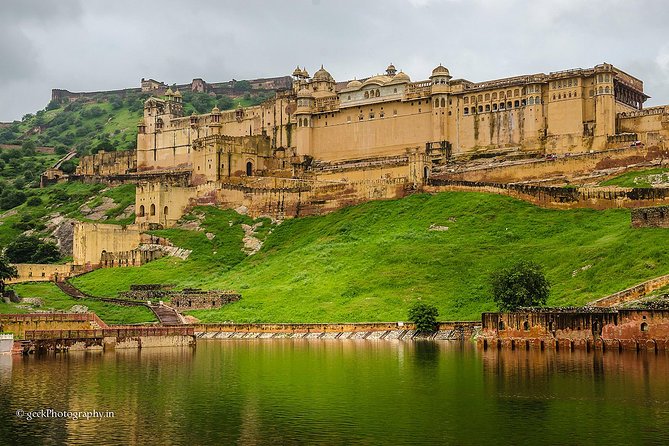
This is your big Jaipur day. Expect a lot of famous stops and a fair amount of walking and stair climbing, even though some parts include rides.
Amber Palace (Amer Fort)
You’ll take a jeep ride to and from the top of the hill where the fort sits. That’s a practical inclusion, especially if your legs need to save energy for walking inside the complex.
Amber is the kind of place where one well-timed pause matters. You’ll get a guide who explains the fort’s story, helping you see the details rather than only the postcard angles.
Entrance fees aren’t included, so factor that in.
City Palace
City Palace sits in the heart of Jaipur and is known for a blend of Rajasthani and Mughal architecture. The stop includes time to look at textiles, costumes, and armor in the collection.
If you’re the type who likes objects and craft work, this is a strong stop. If you’d rather only see exterior viewpoints, you might find it a bit more slow-paced than Amber.
Hawa Mahal
Hawa Mahal, Palace of Wind, was constructed for royal ladies to watch processions without being seen. Even when you have only about 30 minutes, it’s a good reminder that Jaipur’s design isn’t just about beauty—it’s about social life and space.
Jantar Mantar
Jantar Mantar is Jaipur’s stargazing observatory built by Maharaja Jai Singh. It’s listed as about an hour.
This is one of my favorite “aha” categories in India travel because it turns you from passive sightseeing into active noticing. You start thinking, okay, this was designed to measure and predict, not just look cool.
Day 6 back to Delhi: easy ending, no last-minute scramble
On the last day, you’re driven back to Delhi and dropped at either the airport or your Delhi hotel. That kind of handoff is what you want on trip day. It reduces the odds of getting stuck negotiating transport while you’re running on your last battery charge.
The drivers and guides factor more than you think
One consistent theme from past travelers is that the driver experience can make the trip feel smoother, especially on long road stretches. People have singled out drivers like Prem, Kapil, Mayur, and Narendra Singh for being friendly, helpful, and good at getting everyone where they needed to go.
Also, some travelers noted that local guides changed in each city but the driver acted as a go-to coordinator. That’s a big deal in a route like this, where the schedule expects fast movement and you don’t want to be constantly asking, where do we go next, and who handles this ticket?
If your priority is not just seeing sights but understanding them, this setup is a plus. If you’re more of a do-it-on-your-own traveler, you might find the pace a little guided and structured.
Safari reality check: how to set expectations for Ranthambore
Let’s talk honestly about wildlife trips. A tiger sighting isn’t guaranteed. The tour gives you a chance and it sends you out with a nature guide, which is the best way to maximize odds.
What I’d do before you go: wear something comfortable for early mornings, expect the safari to be more about animals-than-attractions, and keep your camera ready but don’t treat every stop like a photo contest. Animals often show up when you’re calm and paying attention to movement patterns.
Even without a tiger, your morning may include other predators and small cats mentioned in the safari description. That kind of variety is exactly why Ranthambore works as the wildlife anchor of a monument-heavy route.
Should you book this Golden Triangle with wildlife and royal castle stay?
I’d book it if you want a first-time India-friendly route that hits major icons in Delhi, Agra, and Jaipur, then swaps into a true wildlife day at Ranthambore, capped with a heritage castle night at Talabgaon. The included transport, breakfasts, dinner, and safari add up to real convenience, especially if you’re traveling solo or you dislike the logistics side of planning.
I’d think twice if:
- You want a guaranteed tiger sighting.
- You prefer slow travel and lots of unstructured time in each city.
- You don’t want to deal with additional monument entrance and camera fees.
A smart move before you decide: budget separately for entrance fees and camera fees so the final cost doesn’t surprise you. Then enjoy what this tour does best: pairing big-name architecture with one day where the itinerary isn’t controlled by stone.
FAQ
How long is the Golden Triangle with Wildlife and Royal Castle Stay tour?
It runs for about 6 days.
What is the price per person?
The listed price is $415.00 per person.
What meals are included?
You get breakfast for 5 days and 1 dinner.
Are monument entrance fees included?
No. Monument entrance and camera fees are not included.
How do transfers work between cities?
You’ll travel in an air-conditioned vehicle with an experienced chauffeur, with door-to-door style transfers.
What wildlife and related activities are included?
You get one jungle safari at Ranthambore using a shared gypsy with a nature guide, and a village safari at Castle Talabgaon. You also have a jeep ride at Amber Fort.
Where do you stay overnight?
You use 3-star hotels for the other nights, plus 1 night accommodation at Castle Talabgaon.
Is the tour private?
Yes. It’s described as private, meaning only your group will participate, though the Ranthambore safari itself is done in a shared gypsy.
What is the cancellation policy?
Free cancellation is available. You can cancel up to 24 hours in advance for a full refund.
More Wildlife Encounters
- 14 Days Golden Triangle with Wildlife Safari & Heritage Rajasthan
★ 5.0 · 37 reviews - Same Day Tajmahal at Sunrise and SOS wildlife sanctuary tour
★ 5.0 · 28 reviews - Wildlife of Central India
★ 5.0 · 24 reviews - 8-Day Private Golden Triangle Tour with a Ranthambore Wildlife Safari From Delhi
★ 4.5 · 23 reviews - From Delhi :Taj Mahal And Agra Tour with Elephant wildlife sos
★ 5.0 · 22 reviews
More Tour Reviews in New Delhi
- Old & New Delhi City Tour – Half or Full Day Options Available
★ 5.0 · 4,811 reviews - Half Day Private Delhi City Tour
★ 5.0 · 4,474 reviews - Same Day Taj Mahal, Agra Fort & Baby Taj Tour from Delhi by Car
★ 5.0 · 4,304 reviews - Taj Mahal Day Tour from Delhi by Superfast Train – TOP RATED TOUR
★ 5.0 · 4,166 reviews - Delhi: Old and New Delhi Private Full or Half-Day Tour
★ 4.9 · 3,776 reviews
The Full Golden Triangle, More Options
- 3-Days Private Golden Triangle Tour: Delhi, Agra & Jaipur by Car
★ 5.0 · 1,107 reviews - 3-Days Private Golden Triangle Tour: Delhi, Agra & Jaipur by Car
★ 5.0 · 1,098 reviews - 3-Day Delhi, Agra and Jaipur Private Tour – India Golden Triangle
★ 5.0 · 812 reviews - Four-Day Private Luxury Golden Triangle Tour to Agra and Jaipur From New Delhi
★ 5.0 · 807 reviews - 5 Nights 6 Days Private Golden Triangle Tour – Delhi Agra Jaipur
★ 5.0 · 574 reviews
Just added: more New Delhi reviews to browse
- 4 days Golden Triangle Tour★ 5.0 · 3 reviews
- Discover Old & New Delhi: Private Tour with Street Food★ 5.0 · 3 reviews
- Taj Mahal Tour From Delhi By Private Car★ 4.5 · 3 reviews
- Golden Triangle Tour 5 Days★ 5.0 · 3 reviews
- Taj Mahal: Express Entry Ticket For Sunset Tour with guide★ 5.0 · 3 reviews
- Agra Taj Mahal Sunrise & Sunset Tour from Delhi★ 5.0 · 3 reviews
Golden Triangle Tours, compared.
 ★ 5.03-Days Private Golden Triangle Tour: Delhi, Agra & Jaipur by CarFrom $1271,107 reviews
★ 5.03-Days Private Golden Triangle Tour: Delhi, Agra & Jaipur by CarFrom $1271,098 reviews
★ 5.03-Days Private Golden Triangle Tour: Delhi, Agra & Jaipur by CarFrom $1271,107 reviews
★ 5.03-Days Private Golden Triangle Tour: Delhi, Agra & Jaipur by CarFrom $1271,098 reviews
 ★ 5.03-Day Delhi, Agra and Jaipur Private Tour – India Golden TriangleFrom $110812 reviews
 ★ 5.0Four-Day Private Luxury Golden Triangle Tour to Agra and Jaipur From New DelhiFrom $160807 reviews
 ★ 5.05 Nights 6 Days Private Golden Triangle Tour – Delhi Agra JaipurFrom $240574 reviews
 ★ 5.04 Days Golden Triangle TourFrom $146499 reviews
 ★ 5.0Private Car and Drive for Golden Triangle (4N/5D)From $167451 reviews
 ★ 5.0Private Golden Triangle Tour Delhi Agra Jaipur ( Top Rated )From $148436 reviews
Browse the lists this tour appears in