
Reviewed · DELHI SLUM TOURS
New Delhi Sanjay Colony slum Tour (Private Tour)
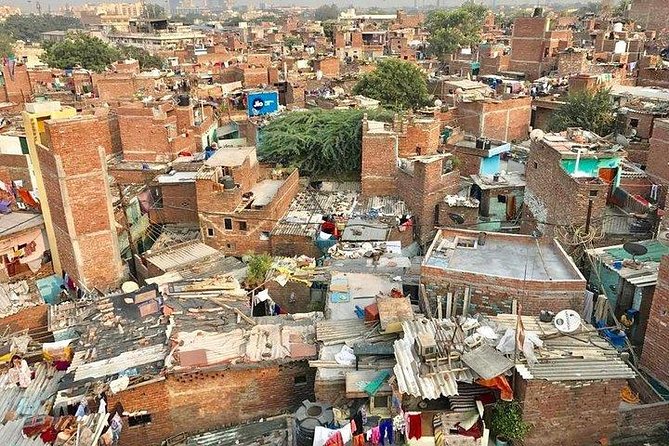
Sanjay Colony is a place with a pulse. This New Delhi slum tour by Delhi by Locals focuses on how people work and live, from the clothing industry to home routines, plus a visit that shows how faith fits into everyday life. You also get a clear look at the everyday challenges—especially water, electricity, and hygiene—all wrapped into one well-paced 1 hour 30 minutes visit.
What I like most is that the experience feels guided and human, not voyeuristic: you visit key community spaces like a primary school and the Learning by Locals hub, then you talk with locals and hear real context. I also appreciate that they share tea and a bottled water as part of the walk, and they keep the group small (up to 6 on a private booking). A possible drawback: photography is not allowed, and the topics are practical and sometimes tough, so it’s not a sightseeing-only “photo tour.”
In This Review
- Quick Hits: What Makes This Tour Worth Your Time
- Price and Logistics for a 90-Minute Sanjay Colony Walk
- Start With the Right Mindset: Respect Comes First
- SDMC Primary School: Where Education Shows Up in Daily Life
- Learning by Locals: The Hub Behind the Work
- Faith and a Temple Stop: Why Religion Is a Daily Anchor
- Homes, Water, Electricity, Hygiene: The Real Day-to-Day Math
- How Work Fits In: Clothing Industry and Local Business
- The Tea Moment: Conversation Without the Camera Noise
- Guides Like Pradeep, Sukh, and Badal Make the Difference
- Value Check: Does $35 Deliver Real Learning?
- Who This Tour Is Best For (And Who May Want Another Option)
- Should You Book the New Delhi Sanjay Colony Slum Tour?
- FAQ
- How long is the New Delhi Sanjay Colony slum Tour?
- Is this tour private?
- What’s the maximum group size?
- Do you allow photography?
- What’s included in the tour price?
- Where do you meet for the tour?
- Is the tour near public transportation?
- Are there free admission tickets for the stops?
- How far in advance should I book?
- What’s the cancellation policy?
Quick Hits: What Makes This Tour Worth Your Time
- Small private groups (max 6): easier questions, less crowd pressure.
- No photography: helps keep the visit respectful and comfortable for residents.
- Education + faith stops: you see how school and temple life shape routines.
- Water, electricity, hygiene, and daily problem-solving: you learn what life requires, not just what it looks like.
- Tea plus water included: a simple break that also supports the flow of conversation.
- 50% profit back to Learning by Locals: your payment supports the local non profit.
Price and Logistics for a 90-Minute Sanjay Colony Walk
The price is $35 per person for about 1 hour 30 minutes, which is short enough to fit into a busy Delhi day. You’re not paying for a long bus ride or multiple distant landmarks; you’re paying for a focused, guided window into community life with a local guide and a plan that stays compact.
This is also a private tour, meaning your group is the only one with the guide during your time block, and the tour caps at 6 people per booking. That small-group setup matters here: it makes it easier to ask questions and move respectfully through tight areas without feeling like you’re pushing through someone else’s home space.
Logistics are pretty straightforward because the meeting point is near public transit. You start at Harkesh Nagar Okhla Metro, Gate no. 2, with the exact address given at Harkesh Nagar, Okhla, New Delhi, Delhi 110020. You’ll also receive a mobile ticket, so you’re not hunting for paper confirmations at the last second.
More community walks through working Delhi



Start With the Right Mindset: Respect Comes First
This tour is very clear about one thing: respectful behavior is part of the deal. They do not allow photography, and that shapes the whole experience in a good way. You’ll have to pay attention with your eyes and your questions, not with a camera hunt.
You should also be prepared for a more direct style of learning. This isn’t about decorative souvenirs or “look how different” moments. It’s about understanding systems and daily constraints—how people keep going, not just what hardships exist.
If you’re the kind of traveler who gets uncomfortable talking about water access or hygiene realities, go anyway—but go gently. Ask questions in a calm tone, and treat the people you meet as neighbors sharing their world, not as a “topic.”
SDMC Primary School: Where Education Shows Up in Daily Life
One of your early stops is s.d.m.c primary school. The focus here is simple: education is not an abstract theme in Delhi; it’s a daily structure that families rely on. You’ll get a guided walkthrough-style experience, and the tour uses the school context to help explain how the education system works in and around Sanjay Colony.
Even though you won’t be turning this into a classroom visit, you’ll understand what education means locally—where it fits, what it costs families in effort, and why it matters across generations. A school stop also helps you keep the tour grounded. Instead of only seeing challenges, you see the places where improvement is already happening.
One consideration: the school segment is short (the stop is timed), so you should come in ready with questions you can actually ask within a limited window. If you want a full school-visit experience with lots of time for Q&A, this tour is more about broad understanding than a long sit-down conversation.
Learning by Locals: The Hub Behind the Work
After the first area overview, you move into Learning by Locals, which is the community’s non profit connected to this tour. This isn’t just a pass-by stop. It’s positioned as the place where you can understand what support looks like on the ground and how community learning is organized.
In this portion, you’ll experience daily life in the area and learn about the education system in the slum setting. You’ll also visit a public school from the outside. That outside view can be surprisingly informative because you can compare what you see with what families talk about during the tour—how facilities, attendance, and access shape everyday outcomes.
This is also where interaction becomes a key part of the experience. The tour includes time to talk with locals and learn the day-to-day challenges linked to water, electricity, and hygiene. It’s not a lecture. You’re being shown how people navigate problems as routine matters.
Faith and a Temple Stop: Why Religion Is a Daily Anchor
Faith is not treated as a side note here. The tour includes a temple visit specifically to help you understand the role faith plays in people’s lives. You’ll also see how belief functions alongside school and home life—how people find stability, community, and meaning through everyday religious practice.
This matters for your understanding because it changes your lens. If you only focus on “poverty indicators,” the story becomes one-note. The temple stop adds a different layer: people aren’t just surviving systems; they’re living with values, traditions, and routines that hold their days together.
One more practical point: since no photography is allowed, you’ll experience this as presence rather than content. If you’re used to documenting everything, you may need a minute to adjust. That’s normal.
More private days with a guide of your own


Homes, Water, Electricity, Hygiene: The Real Day-to-Day Math
The tour repeatedly returns to the practical challenges of living in the colony. The big themes are water access, electricity, and hygiene, and the guide helps connect these to how families manage day-to-day life.
You’ll learn about the day-to-day realities that shape schedules. When water access is limited or complicated, it affects cooking, cleaning, and time. When electricity is inconsistent, it affects food storage, lighting, and daily comfort. When hygiene solutions are constrained, health becomes a constant calculation rather than an occasional concern.
The best part of this framing is that it’s not presented as tragedy porn. It’s presented as information you can actually carry with you after the tour. You’ll leave understanding how everyday needs become systems that people have to solve, sometimes with community support and sometimes with tough improvisation.
How Work Fits In: Clothing Industry and Local Business
The tour overview includes seeing how people work in the clothing industry, along with how daily life plays out in homes. This combination is powerful because it connects labor to environment: work isn’t happening in a separate world. It’s happening inside the same realities of time, transport, household needs, and local infrastructure.
You’ll also get a clearer sense of how work supports community life and how local businesses function under pressure. Even if you don’t work in textiles yourself, the way production ties into family routines is easy to grasp.
A quick caution: this is not a “factory tour” with behind-the-scenes machinery explanations. It’s more about seeing the human side of the work and understanding what it means in context.
The Tea Moment: Conversation Without the Camera Noise
The tour includes local tea and a water bottle. On paper, that sounds basic. In practice, it works because it creates a pause for conversation.
Tea is also part of why this tour feels different from many “community tourism” experiences. It gives you a calmer pace to ask questions, absorb what you’re learning, and let the guide translate the neighborhood’s rhythms in a way that makes sense for your brain.
Also, since photography isn’t allowed, the tea break becomes one of the few “comfort anchors.” You’re not scrambling for shots; you’re listening and reflecting. That can make the experience feel more respectful and more memorable.
Guides Like Pradeep, Sukh, and Badal Make the Difference
The names that show up again and again around this experience tell you something: the guides aren’t just reading from a script. Pradeep (connected with the organization) comes through as a founder-level presence in people’s stories, and other guides like Sukh and Badal are specifically noted for being passionate, knowledgeable, and friendly.
That matters because this kind of tour needs context. Without good guiding, a community visit can turn into awkward staring. With strong guiding, you get meaning: why faith is present, why schools matter, why water and hygiene are such central issues, and how local work sustains families.
Value Check: Does $35 Deliver Real Learning?
For $35 per person for 1 hour 30 minutes, the value is strongest in four places:
- Local guidance that focuses on systems and daily realities rather than only surface sights.
- Included basics (tea and bottled water) that support comfort and conversation.
- No extra admission costs are indicated for the stops (the school-related entries are shown as free).
- Real impact support: 50% of profits go back to the non profit Learning by Locals.
This last point is what turns a “visit” into a “support.” Even if you don’t fully know how non profit funding translates into outcomes, you at least know the money is tied to community learning rather than only covering operations.
Who This Tour Is Best For (And Who May Want Another Option)
This tour is a good fit if you want something more meaningful than monuments. It’s ideal for travelers who like conversations, want to understand how local systems work, and are open to a bit of discomfort in exchange for real clarity.
It’s also a strong choice for people who care about how tourism money is used. The built-in return to Learning by Locals gives your visit a clear purpose.
If you need a fully upbeat, photo-heavy outing, this probably isn’t your best match. The no photography rule plus the practical topics around hygiene and water can feel intense if you’re not in the headspace for it.
Should You Book the New Delhi Sanjay Colony Slum Tour?
I’d book it if you want a short, guided, private experience that teaches you how people actually live—through school, faith, daily problem-solving, and local work. The group size keeps it personal, the guide-driven explanations help you make sense of what you’re seeing, and the included tea makes it feel human instead of mechanical.
I’d think twice if your travel style depends on taking lots of photos or you’re sensitive to discussions around water, electricity, and hygiene. Also, since it’s only about 90 minutes, it won’t satisfy you if you’re hoping for a long, deep home-stay style immersion.
If you’re choosing one “off-the-beaten-path” experience in Delhi that mixes education, community life, and practical understanding, this is one of the more direct and respectful options.
FAQ
How long is the New Delhi Sanjay Colony slum Tour?
It runs for about 1 hour 30 minutes.
Is this tour private?
Yes. It’s a private tour, and only your group participates.
What’s the maximum group size?
The tour allows a maximum of 6 people per booking.
Do you allow photography?
No. Photography is not allowed on this tour.
What’s included in the tour price?
You get a local guide, local tea, and a water bottle.
Where do you meet for the tour?
The meeting point is at Harkesh Nagar Okhla Metro Gate no. 2G7VG+62H, Harkesh Nagar, Okhla, New Delhi, Delhi 110020, India.
Is the tour near public transportation?
Yes. It’s noted as being near public transportation.
Are there free admission tickets for the stops?
The tour notes admission ticket free for the school-related stops.
How far in advance should I book?
On average, it’s booked about 51 days in advance.
What’s the cancellation policy?
You can cancel for a full refund up to 24 hours in advance. If you cancel less than 24 hours before the start time, the amount you paid is not refunded.
More Tours in New Delhi
- Old & New Delhi City Tour – Half or Full Day Options Available
★ 5.0 · 4,811 reviews - Half Day Private Delhi City Tour
★ 5.0 · 4,474 reviews - Same Day Taj Mahal, Agra Fort & Baby Taj Tour from Delhi by Car
★ 5.0 · 4,304 reviews - Taj Mahal Day Tour from Delhi by Superfast Train – TOP RATED TOUR
★ 5.0 · 4,166 reviews - Delhi: Old and New Delhi Private Full or Half-Day Tour
★ 4.9 · 3,776 reviews
More Tour Reviews in New Delhi
- Old & New Delhi City Tour – Half or Full Day Options Available
★ 5.0 · 4,811 reviews - Half Day Private Delhi City Tour
★ 5.0 · 4,474 reviews - Same Day Taj Mahal, Agra Fort & Baby Taj Tour from Delhi by Car
★ 5.0 · 4,304 reviews - Taj Mahal Day Tour from Delhi by Superfast Train – TOP RATED TOUR
★ 5.0 · 4,166 reviews - Delhi: Old and New Delhi Private Full or Half-Day Tour
★ 4.9 · 3,776 reviews
More Community Walks in Delhi
- Sanjay Colony Slum Tour
★ 5.0 · 498 reviews - New Delhi Slum Walking Tour
★ 5.0 · 360 reviews - Delhi: Ethical Sanjay Colony Slum Tour
★ 4.9 · 242 reviews - Sanjay Colony Slum Tour with Local Guide
★ 5.0 · 160 reviews - Delhi: Old Delhi Slum Tour by Metro or Car
★ 4.9 · 55 reviews
Just added: more New Delhi reviews to browse
- 4 days Golden Triangle Tour★ 5.0 · 3 reviews
- Discover Old & New Delhi: Private Tour with Street Food★ 5.0 · 3 reviews
- Taj Mahal Tour From Delhi By Private Car★ 4.5 · 3 reviews
- Golden Triangle Tour 5 Days★ 5.0 · 3 reviews
- Taj Mahal: Express Entry Ticket For Sunset Tour with guide★ 5.0 · 3 reviews
- Agra Taj Mahal Sunrise & Sunset Tour from Delhi★ 5.0 · 3 reviews
Delhi Slum Tours, compared.
 ★ 5.0Sanjay Colony Slum TourFrom $21498 reviews
 ★ 5.0New Delhi Slum Walking TourFrom $28360 reviews
 ★ 4.9Ethical Sanjay Colony Slum TourFrom $18242 reviews
Sanjay Colony Slum Tour with Local GuideFrom $13160 reviews
★ 4.9Ethical Sanjay Colony Slum TourFrom $18242 reviews
Sanjay Colony Slum Tour with Local GuideFrom $13160 reviews
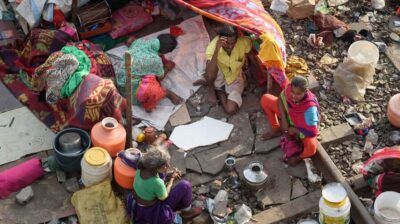 ★ 4.9Old Delhi Slum Tour by Metro or CarFrom $1955 reviews
 ★ 5.0Sanjay Colony Slum Tour with LocalsFrom $1246 reviews
 ★ 5.0Small- Group Delhi Slum Walking TourFrom $2326 reviews
 ★ 5.0Moral Slum Tour in Delhi with hotel pickup & dropFrom $6917 reviews
Browse the lists this tour appears in