

Reviewed · DELHI SLUM TOURS
Sanjay Colony Slum Tour
A walk here changes how you see Delhi. This small-group Sanjay Colony tour goes beyond shocking images to explain daily life, local work, and community priorities with a no photography rule that keeps the visit respectful.
What I love most is the small-group feel, capped at just six on most departures, so your guide can actually answer questions as you walk. I also love that your ticket supports education and social impact projects tied to the neighborhood, not a vague charity promise.
One possible drawback: you’ll be walking through tight residential streets and you’ll have to follow the modest dress guidance (shoulders and knees covered) plus the no photography rule. If you hate uncomfortable realities, this may hit harder than the classic Delhi sightseeing circuit.
In This Review
- Key things that make this Sanjay Colony tour different
- Sanjay Colony Slum Tour: a South Delhi neighborhood most people miss
- Price of $21.20 and how your money turns into local support
- Where you meet (Harkesh Nagar Okhla) and where you’ll end
- Timing and pacing: what 1 hour 45 minutes feels like
- Inside the Sanjay Colony market stop: All Surplus Store and the street economy
- Homes, temples, and small enterprises: reading daily life without intruding
- School stops and what education looks like here
- Industry, work routines, and the people behind them
- A neighborhood story across religions and community spaces
- Respect rules you must follow: dress code and no photography
- Guides you might meet: the difference a local connection makes
- Safety, comfort, and how to prepare mentally
- Who this Sanjay Colony walk is best for
- Should you book the Sanjay Colony Slum Tour?
- FAQ
- How long is the Sanjay Colony Slum Tour?
- What do I get with the tour price?
- Is there a group size limit?
- Can I take photos inside Sanjay Colony?
- Where do I meet the guide, and where does the tour end?
- Is free cancellation available?
Key things that make this Sanjay Colony tour different
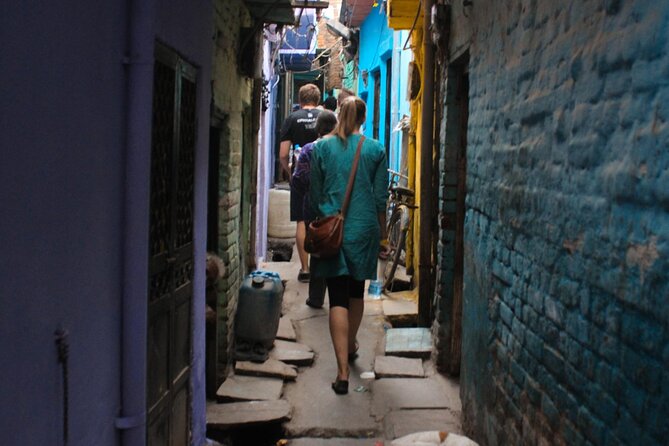
- Locals lead the story so you get first-hand context, not a scripted overview
- Small groups (usually six) make it easier to ask questions and move at a human pace
- Proceeds support local education and social projects tied to the community you visit
- You see everyday places like homes, small businesses, temples, and a local school
- Respect rules matter: conservative dress and no photography inside Sanjay Colony
- Short but structured walk (about 1 hour 45 minutes) that helps you actually make sense of the area
Sanjay Colony Slum Tour: a South Delhi neighborhood most people miss
If your Delhi plan is all forts and temples, this is the detour that teaches you how the city works at street level. Sanjay Colony sits in South Delhi and is mainly residential, but it feels busy because of the local industries and small commerce that keep daily life moving.
The tour is designed for clarity and respect. You’re not dropped in with a map and “good luck.” You walk with an English-speaking guide who’s connected to the area and can explain what you’re seeing—why certain businesses are there, what institutions matter, and what challenges residents deal with day to day.
More community walks through working Delhi



Price of $21.20 and how your money turns into local support

At about $21.20 per person, this isn’t priced like a luxury experience. It’s also not priced like a free-for-all “see poverty” event. You’re paying for something specific: a guided, structured walking tour with a local guide plus water/cold drink, all while a meaningful share of the proceeds goes back to education and social impact projects in the community.
That matters, because the tour isn’t just about awareness. The operator’s mission is tied to practical support—especially around schooling. When a guide points out a school stop on the route (and explains what it does), you can connect your payment to something tangible: learning for children within the colony.
Where you meet (Harkesh Nagar Okhla) and where you’ll end
Logistics are refreshingly simple. You start at Harkesh Nagar Okhla, Okhla Phase II (near the Okhla Industrial Estate area). The tour ends back at the Harkesh Nagar Okhla Metro station, which is a smart way to avoid getting stuck far from transit after a long walk.
Because the start and finish are built around a metro stop, you can keep your day flexible. You can do this as a morning activity or an afternoon one without feeling like you’ve added a huge travel headache.
Timing and pacing: what 1 hour 45 minutes feels like

The tour lasts about 1 hour 45 minutes. That’s long enough to get beyond a quick photo stop and short enough to stay comfortable.
Pacing is also part of the value. Guides keep the walk focused—showing you key parts of everyday life and then explaining them clearly. If you ask questions, you typically get time for them rather than being rushed through like a checklist.
Also note the group size limit: the overall group is capped (maximum of 25), and the experience is described as small-group walking, with options that keep it very intimate (including an optional private tour upgrade). That scale helps you feel like you’re walking with people, not watching a performance.
Inside the Sanjay Colony market stop: All Surplus Store and the street economy
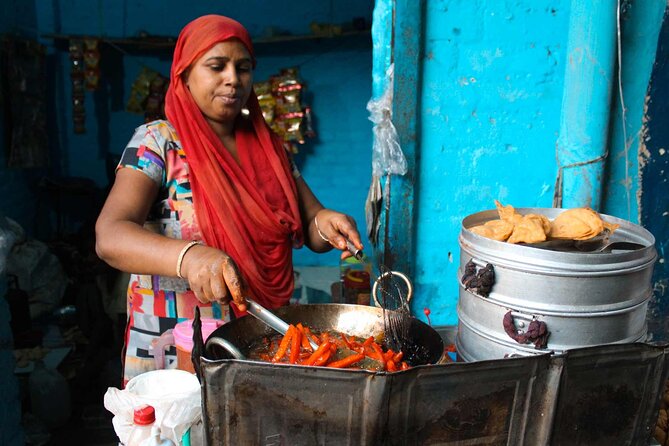
One formal stop on the walk is the Sanjay Colony market at All Surplus Store. This isn’t a “museum market.” It’s where you see what locals do to earn money, trade goods, and keep basic services working.
Markets like this are noisy and practical. You’ll likely notice how the neighborhood runs on micro-businesses—small enterprises that don’t look impressive from the outside, but they’re the engine of the community. Your guide’s job is to help you read those details instead of feeling like you’re wandering without context.
If you want a simple takeaway: watch how people move, what’s sold, and how the street layout supports daily business. With a local guide, it stops feeling confusing and starts feeling coherent.

Homes, temples, and small enterprises: reading daily life without intruding
A big part of why this tour works is that it’s built around ordinary places you might otherwise miss: family homes, small businesses, temples, and the local school. That combination gives you the full picture—work, faith, education, and home life.
The guide leads you through residential streets in a way that aims to reduce intrusiveness. You’re there to learn, not to stare. The no-photography rule inside Sanjay Colony is part of that. It tells you the tour is not about collecting images; it’s about listening and understanding.
One thing I think you’ll appreciate: guides often explain the community’s sense of ownership and how residents organize their lives even when government support is limited. That shifts the story from “just hardship” to “people doing what they can with what they have.”
School stops and what education looks like here
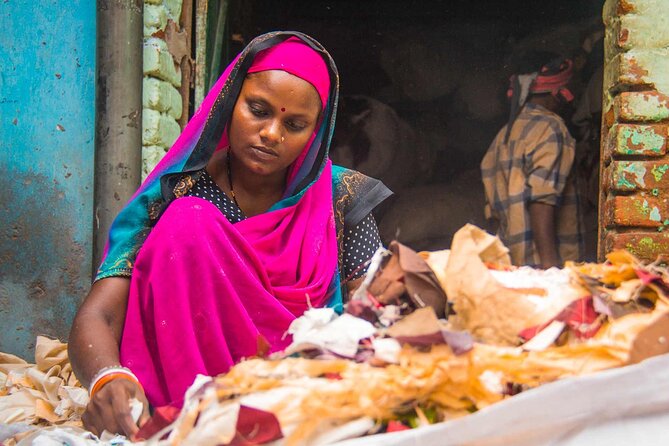
A local school is included in the experience focus. In many tours, that’s where the emotional weight lands—because school makes the future feel real.
Guides may explain how educational support works and why it’s prioritized. Several guides on the route have highlighted that the tour operator’s work connects to schooling and other youth-focused support. In practice, you’re not just told that education matters; you’re shown how it’s part of daily life inside the colony.
On some days, you might find a specific school-related moment doesn’t happen as expected (things can be closed or not accessible on a given visit). The best move is to go in flexible-minded and trust the guide to adjust the walk while keeping the core story intact.
Industry, work routines, and the people behind them

Sanjay Colony isn’t only residential. It’s active because many residents work in nearby industries and small-scale production. In the walking route, you may see areas tied to work routines—especially small workshops linked to livelihoods.
Some guides have taken groups to see factory or workroom areas connected to hourly shifts and women’s work. Others have talked about how medical help functions in the community, including doctors who may give time freely. These details matter because they explain how residents solve problems outside official systems.
Pay attention to what your guide points out: not just the job itself, but how work is scheduled, how families balance tasks, and how the neighborhood builds support networks.
A neighborhood story across religions and community spaces
Sanjay Colony is described as having multiple religions living side by side, with celebrations and daily routines shaped by that mix. So if you expect a single cultural viewpoint, you may learn fast that the neighborhood is more complex than a simple label.
You’ll also see community spaces that help residents function together—temples and everyday meeting points that act like social infrastructure. These aren’t set dressing; they’re part of how people stay connected and handle stress.
It’s one of those tours where you can feel your mindset shifting: from “I’m watching poverty” to “I’m seeing a functioning community with real priorities.”
Respect rules you must follow: dress code and no photography
This tour has clear behavior expectations because it’s inside a residential community.
- Dress conservatively: shoulders and knees covered
- No photography is permitted while in Sanjay Colony
These rules aren’t optional “suggestions.” They’re part of how the visit stays responsible. If you show up in shorts or a short-sleeved top that exposes shoulders, plan to adjust before you start. You don’t want the walk to begin with awkwardness or last-minute fixes.
And since there’s no photography, bring your attention, not your camera. You’ll remember the explanations more than any single image.
Guides you might meet: the difference a local connection makes
One reason the experience earns strong ratings is the guide quality. Several named guides show up in the guided experience, including Ajay, Dolly/Doli, Naresh, Sam, Cavita, Hema, Stanley, Chitti/Chitty, and Kavita.
Even if you don’t meet the exact same person, the pattern is the same: guides bring first-hand or closely connected knowledge. They answer questions clearly, set expectations for the walk, and explain what you’re seeing without making you feel like a burden.
If you’re the type who likes details—how daily routines work, why certain businesses exist, how support systems function—ask early. Good guides will turn your curiosity into a better route, not a derailment.
Safety, comfort, and how to prepare mentally
Many people describe this as safe and low-pressure. That doesn’t mean it’s a theme park stroll. It’s still a walk through a real community with real living conditions.
You’ll likely see poverty. You might also see strong community support, friendly conversation, and signs of practical improvement. The tour tends to hold both truths at once: the challenges are real, and so are the efforts residents make.
To prepare:
- Wear comfortable shoes for walking on local streets
- Bring water and use the provided water/cold drink
- Expect a “fact-based” learning experience, not a sightseeing show
- Keep your expectations respectful and practical
If you feel uneasy about seeing hardship up close, it helps to remember the tour structure is meant to prevent intrusiveness. Your job is to observe thoughtfully and follow the guide’s lead.
Who this Sanjay Colony walk is best for
This is a strong match if you want:
- a deeper sense of Delhi beyond landmarks
- a guided way to understand daily life in South Delhi’s communities
- an experience tied to education and social impact
It’s also a good fit for families who ask lots of questions; one guide in the experience has even answered an eight-year-old’s questions with patience and clarity.
If you’re short on time, it’s not a half-day commitment. If you’re looking for dramatic skyline views, this isn’t that tour. This is human-scale learning, and you’ll get more from it if you come with curiosity and emotional readiness.
Should you book the Sanjay Colony Slum Tour?
Yes—if you’re okay trading standard sightseeing for a grounded look at how people live, work, learn, worship, and support each other in Sanjay Colony. The price-to-time ratio is strong: you get a guided walk, water/cold drink, and meaningful local support built into the experience.
Also, the small-group nature and the clear respect rules (especially no photography) make it easier to visit responsibly. That’s not a minor detail here; it’s central to why the tour feels thoughtful rather than exploitative.
Skip it only if you strongly dislike seeing poverty up close or you’re not willing to follow conservative dress expectations. Otherwise, this is a Delhi “must do” type of experience for anyone who wants the city’s real story.
FAQ
How long is the Sanjay Colony Slum Tour?
It runs for about 1 hour 45 minutes (approx.).
What do I get with the tour price?
The tour includes a local English-speaking guide and water/cold drink. Admission tickets are free for the included visit.
Is there a group size limit?
Yes. The experience has a maximum of 25 travelers, and it’s described as a small-group walking tour limited to six people, with an optional private tour upgrade.
Can I take photos inside Sanjay Colony?
No. Out of respect for residents, photography is not permitted while in Sanjay Colony.
Where do I meet the guide, and where does the tour end?
You meet at Harkesh Nagar Okhla, Okhla Phase II area (near Okhla Industrial Estate). The tour ends at Harkesh Nagar Okhla Metro station.
Is free cancellation available?
Yes. You can cancel up to 24 hours in advance for a full refund. If you cancel less than 24 hours before the start time, the amount paid is not refunded.
More Tours in New Delhi
- Old & New Delhi City Tour – Half or Full Day Options Available
★ 5.0 · 4,811 reviews - Half Day Private Delhi City Tour
★ 5.0 · 4,474 reviews - Same Day Taj Mahal, Agra Fort & Baby Taj Tour from Delhi by Car
★ 5.0 · 4,304 reviews - Taj Mahal Day Tour from Delhi by Superfast Train – TOP RATED TOUR
★ 5.0 · 4,166 reviews - Delhi: Old and New Delhi Private Full or Half-Day Tour
★ 4.9 · 3,776 reviews
More Tour Reviews in New Delhi
- Old & New Delhi City Tour – Half or Full Day Options Available
★ 5.0 · 4,811 reviews - Half Day Private Delhi City Tour
★ 5.0 · 4,474 reviews - Same Day Taj Mahal, Agra Fort & Baby Taj Tour from Delhi by Car
★ 5.0 · 4,304 reviews - Taj Mahal Day Tour from Delhi by Superfast Train – TOP RATED TOUR
★ 5.0 · 4,166 reviews - Delhi: Old and New Delhi Private Full or Half-Day Tour
★ 4.9 · 3,776 reviews
More Community Walks in Delhi
- New Delhi Slum Walking Tour
★ 5.0 · 360 reviews - Delhi: Ethical Sanjay Colony Slum Tour
★ 4.9 · 242 reviews - Sanjay Colony Slum Tour with Local Guide
★ 5.0 · 160 reviews - Delhi: Old Delhi Slum Tour by Metro or Car
★ 4.9 · 55 reviews - New Delhi: Sanjay Colony Slum Tour with Locals
★ 5.0 · 46 reviews
Just added: more New Delhi reviews to browse
- 4 days Golden Triangle Tour★ 5.0 · 3 reviews
- Discover Old & New Delhi: Private Tour with Street Food★ 5.0 · 3 reviews
- Taj Mahal Tour From Delhi By Private Car★ 4.5 · 3 reviews
- Golden Triangle Tour 5 Days★ 5.0 · 3 reviews
- Taj Mahal: Express Entry Ticket For Sunset Tour with guide★ 5.0 · 3 reviews
- Agra Taj Mahal Sunrise & Sunset Tour from Delhi★ 5.0 · 3 reviews
Delhi Slum Tours, compared.
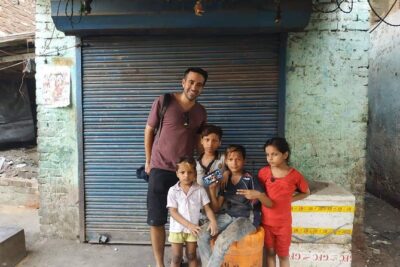 ★ 5.0New Delhi Slum Walking TourFrom $28360 reviews
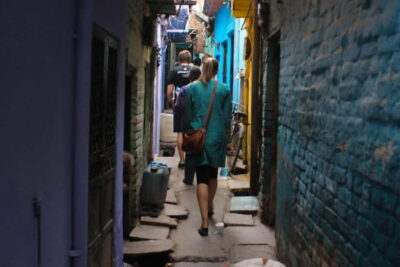 ★ 4.9Ethical Sanjay Colony Slum TourFrom $18242 reviews
Sanjay Colony Slum Tour with Local GuideFrom $13160 reviews
★ 4.9Ethical Sanjay Colony Slum TourFrom $18242 reviews
Sanjay Colony Slum Tour with Local GuideFrom $13160 reviews
 ★ 4.9Old Delhi Slum Tour by Metro or CarFrom $1955 reviews
 ★ 5.0Sanjay Colony Slum Tour with LocalsFrom $1246 reviews
 ★ 5.0Small- Group Delhi Slum Walking TourFrom $2326 reviews
 ★ 5.0New Delhi Sanjay Colony slum Tour (Private Tour)From $3520 reviews
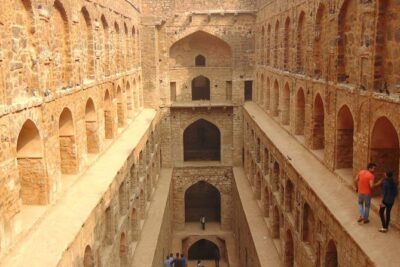 ★ 5.0Moral Slum Tour in Delhi with hotel pickup & dropFrom $6917 reviews
Browse the lists this tour appears in