
Reviewed · DELHI SLUM TOURS
New Delhi Slum Walking Tour
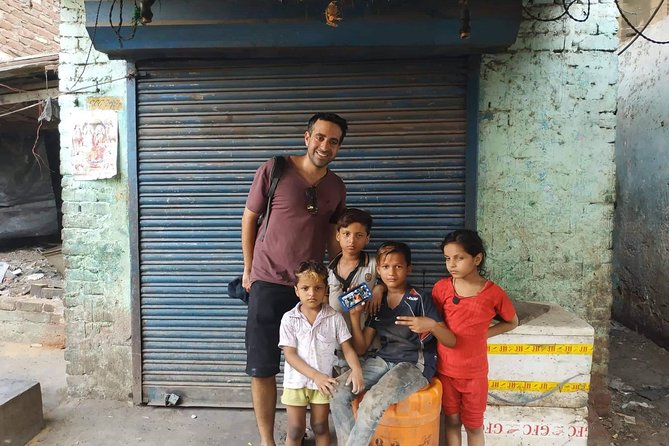
Slum lanes change how you see Delhi. This half-day, small-group walk in the Zakhira area is fascinating because you move at local pace, meet the community through an English-speaking guide named Santan, and you do it with respect rather than “look-at-me” tourism. I like that the group stays intimate (so you can actually ask questions and listen), and I also like the human touches—complimentary chai/coffee and a visit designed to be inclusive, never intrusive. One drawback: it’s socially and emotionally heavy, and you have to be ready for close-up reality.
You’ll also appreciate the practical rhythm. You start at a clear meeting point in Moti Nagar, travel using public transportation, then explore on foot for about two hours—enough time to understand the day-to-day without exhausting you.
In This Review
- Key highlights you’ll feel fast
- Zakhira in two hours: what kind of visit this really is
- Meeting Santan in Moti Nagar: getting set up right
- Public transport + walking: why this route feels more real
- The Zakhira stop: day-to-day life, shops, and community energy
- Chai, coffee, and those small respectful moments that stick
- Safety and comfort: what to expect and how to behave
- Price and value: what $28.50 buys you
- Who this tour is best for (and who might rethink it)
- Timing, what to wear, and how to prepare mentally
- After the walk: what to do next
- Should you book this New Delhi slum walking tour?
- FAQ
- How long is the New Delhi Slum Walking Tour?
- What does the tour cost?
- Where is the meeting point, and does the tour return there?
- Is there an English-speaking guide?
- How many people are on the tour?
- What area do you visit?
- Is coffee or tea included?
- Can I cancel for a full refund?
Key highlights you’ll feel fast

- Small-group pace with a hard cap (often up to 8, with some departures limited to 4)
- Guide Santan’s local rapport, built through long time in the neighborhood
- Zakhira as the main area, including streets with shops and community life
- Tea/coffee included, plus moments like chai stops and conversations
- Photo sensitivity: you’ll be asked to keep respect-first rules, especially once inside
Zakhira in two hours: what kind of visit this really is

A slum walking tour can sound like shock tourism. This one aims for something more grounded: a walk into everyday life, framed with context. Expect a lot of “how people live” energy—streets, routines, small businesses, and community projects—more than drama.
The tour is short, about two hours, which matters. In a place like Zakhira, long tours can turn into sensory overload. Here, the goal is to keep you oriented and present. You’ll get enough time to notice patterns—how people move, where they shop, how neighbors share space—without rushing you through a checklist.
The vibe is also described as inclusive and respectful. That shows in the way your guide interacts and how you’re expected to behave. In practice, that often means you’re not treated as a spectacle, and you’re not left to wander alone or “free-roam.”
More community walks through working Delhi



Meeting Santan in Moti Nagar: getting set up right
Your day begins back at the same meeting point in New Moti Nagar (3/21, Block A, New Moti Nagar, Moti Nagar, New Delhi, Delhi 110015). The tour is built for people who want to blend in, so the start matters: you’re not dropped in randomly. You meet, you get oriented, then you head out using public transportation.
Many visitors highlight the same theme: they feel comfortable because the guide makes introductions carefully. With Santan specifically, the recurring impression is that he has a warm rapport with people in the community. That is not a small thing. In a setting that’s often misunderstood from the outside, a guide who knows how to approach people with care can transform the whole tone of your visit.
There’s also a subtle but important expectation: you follow your guide’s lead. One clear example from people’s experiences—once you enter the area, you may be asked not to take photos. You’ll also see why: it keeps the focus on connection and reduces the risk of turning private life into a souvenir.
Public transport + walking: why this route feels more real
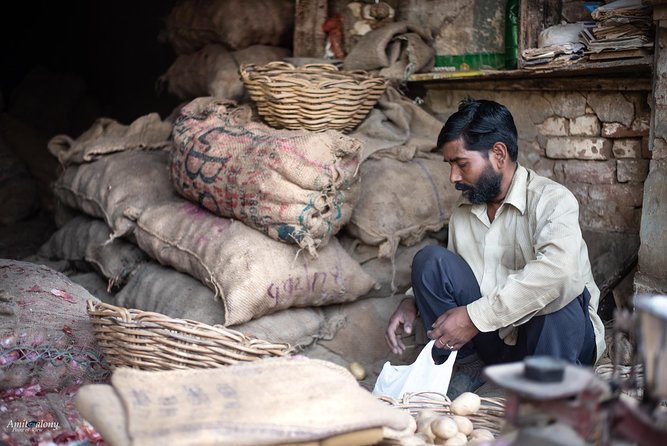
This tour doesn’t position you in a vehicle watching from behind glass. It uses public transportation to reach the neighborhood, then shifts to walking through the lanes.
That combo is practical and revealing:
- You get oriented to how people actually get around.
- You experience the tempo of the area on foot, not from a distance.
- You see how the city connects “official Delhi” with informal districts.
Even if you’re used to chaotic travel days, walking at local pace takes attention. You’ll want to stay close to the group, keep your eyes open, and don’t rush the conversations. The goal is not speed; it’s understanding how life works minute to minute.
The Zakhira stop: day-to-day life, shops, and community energy
Zakhira is the tour’s core focus. The point isn’t to treat the area like a single photo moment. It’s to understand the socioeconomic context by watching ordinary life unfold—how people run small businesses, how public spaces function, and how community spirit shapes daily routines.
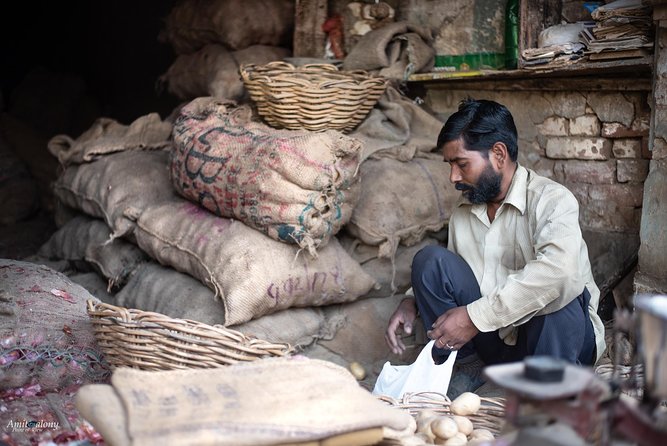
One thing you’ll likely notice fast: there’s plenty of commerce and everyday activity. Visitors have described seeing shopping streets, stalls, and food areas where community members work and interact. That matters because it pushes back against a single-story view of poverty. Poverty exists, yes—but so does work, creativity, and neighborhood life.
You might also encounter small workshop-style scenes. Some experiences mention stops like a bakery where men work on bread production, and even a chance to watch bread-making in action. Others describe creative corners such as a puppet-related setting with artists and painting. You may not see all of these in every route, but they show the wider point: the community isn’t only surviving—it’s producing, teaching, and creating.
Chai, coffee, and those small respectful moments that stick

Complimentary coffee or tea is included. In a place where the schedule can be busy and shade is welcome, a tea stop isn’t just a perk—it becomes a social reset. It’s often where conversations feel easiest, and it helps you slow down.
People also report sweet small moments that signal how the guide manages boundaries. For example, chai is commonly shared in a relaxed, normal way, and guides may also facilitate respectful cultural interactions like henna in some cases. Some visitors also brought small sweets or treats for children, and their experiences describe how the guide helped them share in a way that didn’t feel intrusive.
Here’s the practical advice I’d give you: if you want to bring anything, keep it simple and ask your guide what’s appropriate. Don’t show up with gifts and assume it’s automatically welcome. The respectful tone is part of the value of the tour, and your guide is the one who can steer you.
New Delhi at a walking pace, a few more routes


Safety and comfort: what to expect and how to behave
Safety is a common concern with this topic, and the best takeaway here is not “it’s fine” but “you’re guided well.” Many people describe feeling safe and cared for during the walk, and that trust often comes from how the guide communicates with community members and keeps the group together.
Two behavior rules you should treat as non-negotiable:
- Stay with the group. Don’t drift for selfies or quick side trips.
- Follow photo and interaction guidelines once you enter the area.
You’ll likely be reminded to keep the visit respectful. The reason is simple: you’re entering private lives. A guide who has long familiarity with the area tends to understand how to reduce discomfort for everyone.
Also, if you’re sensitive to heavy topics, be honest with yourself ahead of time. This tour can feel humbling. It can also feel meaningful—especially when you focus on listening and context rather than trying to “solve” what you see.
Price and value: what $28.50 buys you
At $28.50 per person for around two hours, you’re paying for more than walking. You’re paying for:
- a local English-speaking guide with deep rapport (Santan is the name most often associated with the tour)
- a guided route using public transportation and on-foot navigation
- access to social context and community interaction in a respectful way
- complimentary tea or coffee
- a small group experience, which you can actually feel in the pace of conversations
Is it “cheap”? No. But in Delhi, a guided experience with a tight group, local transport, and community-based access is usually not a bargain. Where the value comes in is the structure: you’re not wandering into a sensitive place by yourself, and you’re not stuck with a large crowd.
If you’re trying to compare, this is closer to paying for a conversation with a real translator of context than paying for a classic museum ticket.
Who this tour is best for (and who might rethink it)
This works best if you:
- want to see another side of Delhi beyond monuments
- like asking questions and listening more than photographing
- can handle discomfort with empathy and patience
- want a small group so you can process what you see
It may not be ideal if you need a “light” itinerary with guaranteed upbeat moments. The emotional tone can be intense, and you’ll likely think about what you’re seeing long after the walk ends.
Also, if you’re the type who wants lots of staged sights, you might find the structure too human and too real. One comment people made was that they expected more stops or more varied sights. If you want a classic sightseeing flow, you may find this less “busy.” If you want understanding, you’ll likely feel differently.
Timing, what to wear, and how to prepare mentally
You’re walking through a dense neighborhood area, and time is tight. Even though you’ll be out for about two hours, you should plan for heat and sun depending on the day. Some experiences describe the route as having shade in many stretches, but you shouldn’t count on comfort.
Wear breathable clothes, comfortable walking shoes, and plan to drink water. Keep your phone ready, but be ready to put it away. If you want to take photos outside the area, ask your guide what’s permitted and where.
Most importantly: go in with a “learn first” mindset. If you come hunting for shock, the visit can feel like a trap. If you come wanting context, you’ll likely leave with a new way of thinking about dignity, work, and community support.
After the walk: what to do next
The tour ends back at the meeting point in Moti Nagar. Some guides also help people with practical next steps—one example described support for accessing an ATM afterward—so if you’re unsure what to do next, ask. Your guide is a local connector, and even if they can’t solve every problem, they can usually point you in the right direction.
Should you book this New Delhi slum walking tour?
Book it if you want a respectful, small-group way to understand Zakhira through daily life—not just statistics. The strongest reason to choose it is the combination of small group size and a guide with real rapport, especially Santan. The added value of tea/coffee and the focus on inclusive, never intrusive interaction makes it more than a “look and leave” experience.
Skip it if you can’t handle emotional intensity or you strongly prefer a classic sightseeing format. Also, if you expect a long list of major attractions, you’ll want to recalibrate your expectations: this is a short walk built for context and human connection, not a theme-park route.
If you do book, go with respect, follow photo rules, and let the pace be slower than your normal travel day.
FAQ
How long is the New Delhi Slum Walking Tour?
It runs for about 2 hours.
What does the tour cost?
The price is $28.50 per person.
Where is the meeting point, and does the tour return there?
The tour starts at 3/21, Block A, New Moti Nagar, Moti Nagar, New Delhi, Delhi 110015, India, and ends back at the meeting point.
Is there an English-speaking guide?
Yes. The tour includes an English-speaking local guide.
How many people are on the tour?
The tour is capped at only 8 travelers in the overview, and additional info states a maximum of 4 travelers for this activity. In either case, it’s a small group.
What area do you visit?
The tour includes a visit to Zakhira, described as one of the largest slum areas in Delhi.
Is coffee or tea included?
Yes. Complimentary coffee or tea is included.
Can I cancel for a full refund?
Yes, you can cancel for a full refund up to 24 hours before the experience starts. If you cancel less than 24 hours before, you won’t receive a refund.
More Tours in New Delhi
- Old & New Delhi City Tour – Half or Full Day Options Available
★ 5.0 · 4,811 reviews - Half Day Private Delhi City Tour
★ 5.0 · 4,474 reviews - Same Day Taj Mahal, Agra Fort & Baby Taj Tour from Delhi by Car
★ 5.0 · 4,304 reviews - Taj Mahal Day Tour from Delhi by Superfast Train – TOP RATED TOUR
★ 5.0 · 4,166 reviews - Delhi: Old and New Delhi Private Full or Half-Day Tour
★ 4.9 · 3,776 reviews
More Tour Reviews in New Delhi
- Old & New Delhi City Tour – Half or Full Day Options Available
★ 5.0 · 4,811 reviews - Half Day Private Delhi City Tour
★ 5.0 · 4,474 reviews - Same Day Taj Mahal, Agra Fort & Baby Taj Tour from Delhi by Car
★ 5.0 · 4,304 reviews - Taj Mahal Day Tour from Delhi by Superfast Train – TOP RATED TOUR
★ 5.0 · 4,166 reviews - Delhi: Old and New Delhi Private Full or Half-Day Tour
★ 4.9 · 3,776 reviews
More Community Walks in Delhi
- Sanjay Colony Slum Tour
★ 5.0 · 498 reviews - Delhi: Ethical Sanjay Colony Slum Tour
★ 4.9 · 242 reviews - Sanjay Colony Slum Tour with Local Guide
★ 5.0 · 160 reviews - Delhi: Old Delhi Slum Tour by Metro or Car
★ 4.9 · 55 reviews - New Delhi: Sanjay Colony Slum Tour with Locals
★ 5.0 · 46 reviews
Just added: more New Delhi reviews to browse
- 4 days Golden Triangle Tour★ 5.0 · 3 reviews
- Discover Old & New Delhi: Private Tour with Street Food★ 5.0 · 3 reviews
- Taj Mahal Tour From Delhi By Private Car★ 4.5 · 3 reviews
- Golden Triangle Tour 5 Days★ 5.0 · 3 reviews
- Taj Mahal: Express Entry Ticket For Sunset Tour with guide★ 5.0 · 3 reviews
- Agra Taj Mahal Sunrise & Sunset Tour from Delhi★ 5.0 · 3 reviews
Delhi Slum Tours, compared.
 ★ 5.0Sanjay Colony Slum TourFrom $21498 reviews
 ★ 4.9Ethical Sanjay Colony Slum TourFrom $18242 reviews
Sanjay Colony Slum Tour with Local GuideFrom $13160 reviews
★ 4.9Ethical Sanjay Colony Slum TourFrom $18242 reviews
Sanjay Colony Slum Tour with Local GuideFrom $13160 reviews
 ★ 4.9Old Delhi Slum Tour by Metro or CarFrom $1955 reviews
 ★ 5.0Sanjay Colony Slum Tour with LocalsFrom $1246 reviews
 ★ 5.0Small- Group Delhi Slum Walking TourFrom $2326 reviews
 ★ 5.0New Delhi Sanjay Colony slum Tour (Private Tour)From $3520 reviews
 ★ 5.0Moral Slum Tour in Delhi with hotel pickup & dropFrom $6917 reviews
Browse the lists this tour appears in