
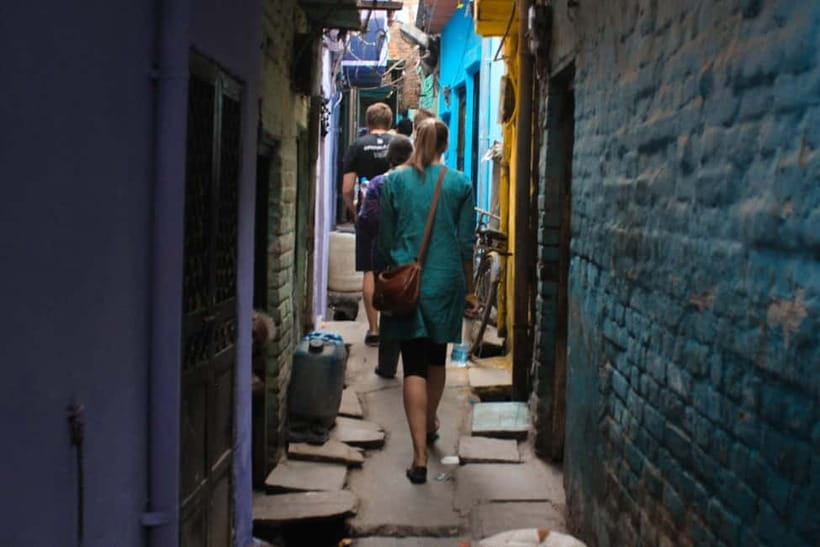
Reviewed · DELHI SLUM TOURS
Delhi: Ethical Sanjay Colony Slum Tour
Slums are not what you think. This ethical Sanjay Colony walk near the Bahá’í Lotus Temple and ISKCON Hare Krishna Temple shows how everyday work, faith, and community life actually fit together in a place that houses tens of thousands of people.
Two things I really like: the tour is built for respect (not gawking), with a safety briefing and a strict no-photography rule. I also love the access to small workplaces, especially the garment recycling and sewing work you’ll see during the stops at S.K Beri & Brothers and nearby fabric-related businesses.
One possible drawback to plan for: you’ll be on foot in real neighborhood conditions—some lanes can be dirty, and the tour isn’t set up for wheelchair users. Also, if you were hoping to take lots of photos, this one is firm about leaving cameras behind.
In This Review
- Key highlights you’ll feel right away
- Sanjay Colony, 25 acres south of Delhi: the context that changes how you see it
- From Harkesh Nagar or Rajiv Chowk: getting oriented without stress
- S.K Beri & Brothers to VIJAY PRATAP: seeing the textile recycling economy up close
- Jama Masjid Sanjay Colony and a small temple stop: faith as everyday life
- A viewpoint pause and a long conversation walk: what you learn while you’re moving
- Reality Tours & Travel on-site: how the NGO link changes the value
- The no-camera rule: how it protects residents and makes your tour better
- Price and time: what $18 really buys on this Delhi walk
- Who should book, and who should skip this Sanjay Colony tour
- Should you book the Ethical Sanjay Colony Slum Tour?
- FAQ
- How long is the Sanjay Colony slum walking tour?
- How much does the tour cost?
- What’s included in the tour price?
- Is photography allowed during the tour?
- Where do I meet the guide, and is hotel pickup included?
- Is the tour suitable for wheelchair users or very elderly guests?
Key highlights you’ll feel right away

- Respect-first visiting with a short safety briefing and non-intrusive pace through homes and businesses
- Garment recycling in action, including sorting fabric scraps and seeing how items move from scrap to product
- Community over charity theater, with conversations about working and residential life that correct stereotypes
- Faith sites on the route, including Jama Masjid Sanjay Colony and a small temple stop
- Local guide perspective, with guides such as Komal, Kiran, Naresh, Kavita, Ajay, and Dolly referenced for strong, calm explanations
- Your ticket supports local education, linked to the NGO work connected to Reality Gives
Sanjay Colony, 25 acres south of Delhi: the context that changes how you see it
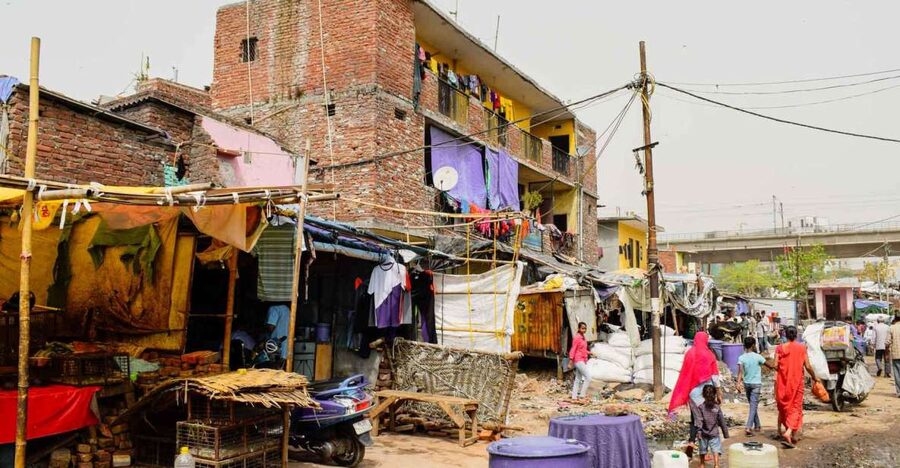
Sanjay Colony is a compact settlement—about 25 acres—in south Delhi near the Bahá’í Lotus Temple and the ISKCON temple area. It was originally built on forest land and sits close to major industrial activity, and it’s home to roughly 50,000 people. That mix matters, because it helps you understand why the economy here is so practical and so connected to nearby factories.
On this tour, you’re not led to think of the area as one big problem. You’re shown how people organize daily life: work spaces next to homes, small businesses next to community needs, and social networks that help residents handle tough conditions. Guides keep the tone educational—focused on conversation—so you can replace assumptions with what you’re actually seeing on the ground.
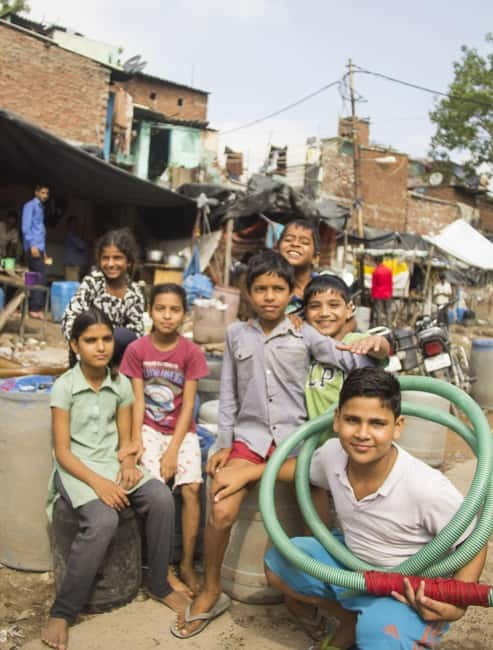
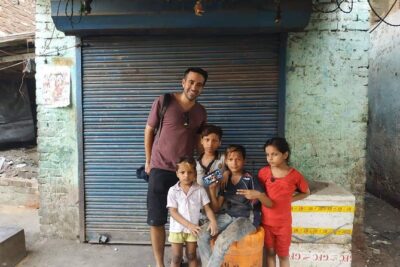
And yes, there’s plenty of warmth. Even with the challenges, the community energy comes through in how people interact—especially with children, who are simply part of the neighborhood rhythm rather than a spectacle.
More community walks through working Delhi



From Harkesh Nagar or Rajiv Chowk: getting oriented without stress
The tour uses multiple start points, so you can pick what’s easiest for your day. Options include Harkesh Nagar, Harkesh Nagar Okhla, and Rajiv Chowk Metro Station. Since it’s a short walk-based experience (2 to 3 hours), being on time matters more than you’d think—your guide leads the group through the neighborhood route in a planned order.
You’ll also get a brief orientation right at the start—think a quick safety briefing—before the walking begins. The tour is guided, and it’s offered as either a shared group or private/small group, which is useful if you want a more intimate pace.
If you’re using Rajiv Chowk as your start, plan to meet your guide quickly. One practical point: the general area around big metro hubs can attract street selling and local foot traffic, so it’s smart to keep your attention on finding your guide promptly rather than wandering around trying to get your bearings.
Water or a cold drink is included, which helps because you’re walking in neighborhood conditions, not museum hallways.
S.K Beri & Brothers to VIJAY PRATAP: seeing the textile recycling economy up close
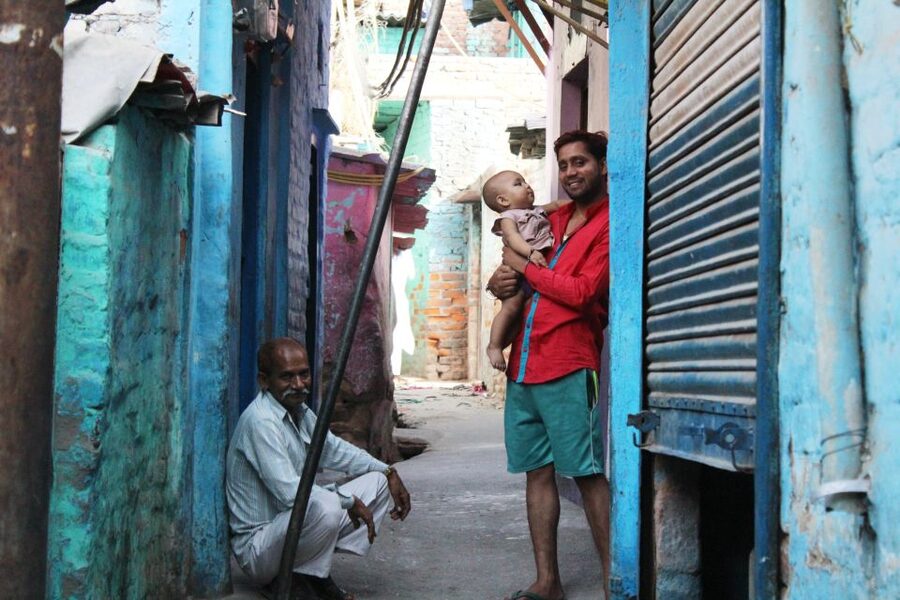
This is the part most people remember, because it’s real work. During the walk you’ll visit small-scale business stops, including S.K Beri & Brothers Private Limited (about 15 minutes) and VIJAY PRATAP (about 10 minutes). These are windows into the local micro-industry system—especially the textile recycling and manufacture side.
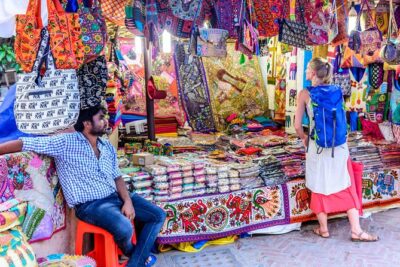
Here’s what you should pay attention to: the flow of material and labor. You’ll see how fabric scraps are handled and how clothing and related items can be repaired, remade, or manufactured using reused materials. In descriptions from the experience, people talk about sorting heaps of fabric and seeing men sewing in smaller shops—small steps that add up to an entire local economy.
It helps to know that Sanjay Colony isn’t only about textiles. The area is also connected to other trades, including automotive parts and electronics. When your guide ties it together—how these jobs fit into the surrounding industrial world—it stops being just fascinating and starts being informative.
Why this matters for you: Delhi isn’t just monuments. This neighborhood shows a different kind of city engine: one built on informal systems, recycling, and careful skill-sharing. You’ll leave with a clearer sense of what “work” looks like when it’s tied directly to survival—and still managed with pride and community structure.
Jama Masjid Sanjay Colony and a small temple stop: faith as everyday life
A big stereotype about slums is that they’re only hardship and urgency. This tour contradicts that by including faith spaces in the route—most notably Jama Masjid Sanjay Colony (about 5 minutes) and a small temple stop as well.
You’ll be guided through these spaces with a tone that encourages respect and quiet attention. And the practical takeaway is this: religious and cultural difference may exist, but the community’s daily life still includes acceptance and familiarity.
Some guides emphasize what these sites mean beyond ceremony—how community members share space, how residents mark time, and how faith supports social glue when resources are limited. You don’t need to be religious to appreciate the role that these places play in stability.
Also, because the route is modest-dress friendly and privacy-minded, the faith visits tend to feel like a normal neighborhood stop—not like a staged photo opportunity.
A viewpoint pause and a long conversation walk: what you learn while you’re moving
Between business stops and the final office visit, there’s time for a broader sense of place. You’ll have a viewpoint stop (around 20 minutes), then another stretch on foot (about 10 minutes) where you keep moving through lanes and small public areas.
This is where the tour shifts from show-and-tell into guided interpretation. Your guide is likely to talk about working and residential life—how the settlement functions day to day, how people organize around family and jobs, and why community support is such a central strength. In descriptions of the experience, guides are credited with encouraging questions, staying patient, and correcting misconceptions with calm explanations.
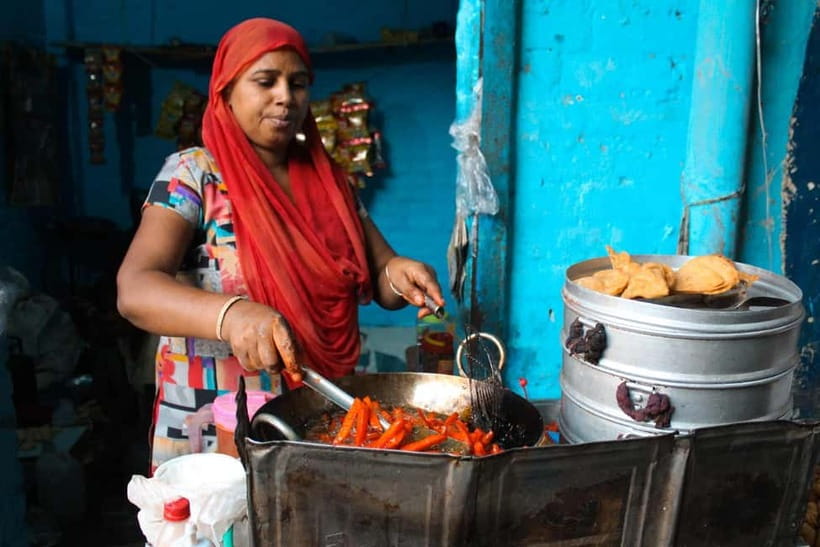
You’ll also notice the neighborhood’s social rhythm. Children often wave and interact, not as a performance but as part of normal street life. That can be emotionally intense if you expected a colder, more distant setting. The key is to remember the tour is designed to be non-intrusive—your job is to watch respectfully and ask questions, not to turn people into props.
And yes, the tour feels safe with the guide leading throughout. Multiple descriptions highlight that the pace stays controlled and that people in the area are friendly.

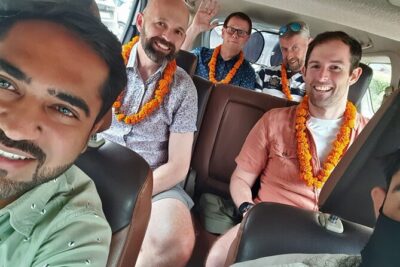
Reality Tours & Travel on-site: how the NGO link changes the value
A final part of the walk brings you to Reality Tours & Travel – Delhi (about 20 minutes). This is where the conversation typically turns practical: how the program supports local efforts.
The tour is connected to the NGO work described as supporting local NGOs and bringing programs from Mumbai into Sanjay Colony through Reality Gives. You’ll learn that part of the mission is education support—linked to youth and community projects rather than short-term charity.
In the experience descriptions, one recurring claim is that a large portion of profits goes back into the community for education and other efforts (some accounts say around 80%). I’d treat that as a stated figure from the operator’s messaging, but either way, the key idea you should take seriously is that this is built as an ethical model: your money isn’t just paying for narration. It’s tied to ongoing local support.
For you, that changes the math on price and meaning. A guided visit costs something, but here you’re also funding a long-term social mission—while still being respectful about privacy and access.
The no-camera rule: how it protects residents and makes your tour better
This experience has a strict no-photography policy. No camera. No pretending you’ll just take one quick shot. The point is simple: privacy matters in a densely lived neighborhood, and visitors shouldn’t turn other people’s lives into a content project.
I like this rule more than I expected, because it forces a different kind of attention. When you’re not framing shots, you listen. You notice textures, sounds, interactions, and the small details your brain would normally skip.
It also means you should prepare for what you’ll remember: the explanations from your guide, the things you observe inside small workshops, and the overall layout of the colony—rather than a folder full of photos.
On top of that, you’ll need to follow the other on-the-ground rules: no pets, no baby strollers, and no luggage or large bags. Modesty rules also apply—closed-toe shoes and modest clothing are expected, including no low-cut sleeveless tops or short shorts.
Price and time: what $18 really buys on this Delhi walk

At $18 per person for 2 to 3 hours, this isn’t priced like a luxury experience. It’s priced like something that gives access, guidance, and support—without turning the visit into a photo-driven spectacle.
For your money, you get:
- a local English-speaking guide (and tours can be in English or Hindi through the program)
- a guided walking route with safety orientation
- water or a cold drink
- stops that include workplaces and community spaces
The value is strongest if you’re the type of traveler who cares about how people live and how local economies work. If you only want scenic stops and monuments, this might feel too real, too conversational, and too policy-driven (like the no-camera rule).
Who should book, and who should skip this Sanjay Colony tour
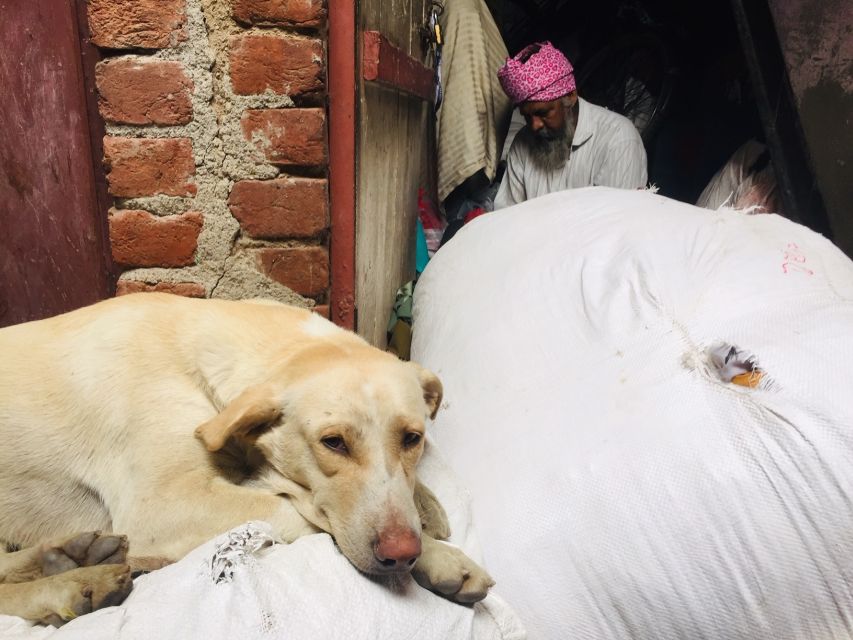
Book this if you want a Delhi experience that’s about real life: daily work, recycling industries, community resilience, and how residents build social support in tight conditions. It’s also a good fit if you like guided conversation and asking questions, not just walking past doors and moving on.
Guides often bring local perspective and a steady tone—names you may see in connection with this experience include Komal, Kiran, Naresh, Kavita, Naresh, Ajay, Khushi, Tarun, and Dolly. That matters because the difference between an ethical tour and a harmful one is often the guide’s approach.
Skip it if:
- you need wheelchair access (this tour is not suitable for wheelchair users)
- you’re traveling with a stroller or bulky luggage (those are not allowed)
- you need to take photos as the main form of memory-making
- you want only comfort-first pacing with minimal exposure to poverty-level realities (this is honest, by design)
Also note: it’s not suitable for people over 95 years.
Should you book the Ethical Sanjay Colony Slum Tour?
Yes, if you can show up with respect, follow the rules, and want to understand Delhi as more than its famous sights. This tour is strongest when you treat it like a conversation with place and people, not like a quick checklist.
It’s also a smart add-on if you want to balance your Delhi day with something different. The program suggests pairing a food tour with either the Sanjay Colony experience or a Delhi Art Tour, but remember: food is not included on this specific walk.
If you’re the kind of traveler who values ethical access and you’re okay leaving your camera behind, this is one of the more meaningful ways to spend a few hours in Delhi.
FAQ
How long is the Sanjay Colony slum walking tour?
It lasts about 2 to 3 hours.
How much does the tour cost?
The price listed is $18 per person.
What’s included in the tour price?
You’ll have a local English-speaking guide and a guided walking tour (shared or private/small group). Water or a cold drink is included.
Is photography allowed during the tour?
No. This activity has a strict no-photography policy to respect local residents’ privacy.
Where do I meet the guide, and is hotel pickup included?
Meeting points can vary depending on the option booked, with start options including Harkesh Nagar, Harkesh Nagar Okhla, and Rajiv Chowk Metro Station. Hotel pickup and drop-off are not included.
Is the tour suitable for wheelchair users or very elderly guests?
No. It is not suitable for wheelchair users, and it is not suitable for people over 95 years.
More Tours in New Delhi
- Old & New Delhi City Tour – Half or Full Day Options Available
★ 5.0 · 4,811 reviews - Half Day Private Delhi City Tour
★ 5.0 · 4,474 reviews - Same Day Taj Mahal, Agra Fort & Baby Taj Tour from Delhi by Car
★ 5.0 · 4,304 reviews - Taj Mahal Day Tour from Delhi by Superfast Train – TOP RATED TOUR
★ 5.0 · 4,166 reviews - Delhi: Old and New Delhi Private Full or Half-Day Tour
★ 4.9 · 3,776 reviews
More Tour Reviews in New Delhi
- Old & New Delhi City Tour – Half or Full Day Options Available
★ 5.0 · 4,811 reviews - Half Day Private Delhi City Tour
★ 5.0 · 4,474 reviews - Same Day Taj Mahal, Agra Fort & Baby Taj Tour from Delhi by Car
★ 5.0 · 4,304 reviews - Taj Mahal Day Tour from Delhi by Superfast Train – TOP RATED TOUR
★ 5.0 · 4,166 reviews - Delhi: Old and New Delhi Private Full or Half-Day Tour
★ 4.9 · 3,776 reviews
More Community Walks in Delhi
- Sanjay Colony Slum Tour
★ 5.0 · 498 reviews - New Delhi Slum Walking Tour
★ 5.0 · 360 reviews - Sanjay Colony Slum Tour with Local Guide
★ 5.0 · 160 reviews - Delhi: Old Delhi Slum Tour by Metro or Car
★ 4.9 · 55 reviews - New Delhi: Sanjay Colony Slum Tour with Locals
★ 5.0 · 46 reviews
Just added: more New Delhi reviews to browse
- 4 days Golden Triangle Tour★ 5.0 · 3 reviews
- Discover Old & New Delhi: Private Tour with Street Food★ 5.0 · 3 reviews
- Taj Mahal Tour From Delhi By Private Car★ 4.5 · 3 reviews
- Golden Triangle Tour 5 Days★ 5.0 · 3 reviews
- Taj Mahal: Express Entry Ticket For Sunset Tour with guide★ 5.0 · 3 reviews
- Agra Taj Mahal Sunrise & Sunset Tour from Delhi★ 5.0 · 3 reviews
Delhi Slum Tours, compared.
 ★ 5.0Sanjay Colony Slum TourFrom $21498 reviews
 ★ 5.0New Delhi Slum Walking TourFrom $28360 reviews
Sanjay Colony Slum Tour with Local GuideFrom $13160 reviews
★ 5.0New Delhi Slum Walking TourFrom $28360 reviews
Sanjay Colony Slum Tour with Local GuideFrom $13160 reviews
 ★ 4.9Old Delhi Slum Tour by Metro or CarFrom $1955 reviews
 ★ 5.0Sanjay Colony Slum Tour with LocalsFrom $1246 reviews
 ★ 5.0Small- Group Delhi Slum Walking TourFrom $2326 reviews
 ★ 5.0New Delhi Sanjay Colony slum Tour (Private Tour)From $3520 reviews
 ★ 5.0Moral Slum Tour in Delhi with hotel pickup & dropFrom $6917 reviews
Browse the lists this tour appears in