

Reviewed · DELHI SLUM TOURS
Small- Group Delhi Slum Walking Tour
Railway tracks and real routines. This small-group walk through Sangam Colony helps you understand Delhi from the street level. You’ll cover Pandav Nagar and Sangam Colony, pause at an educational and vocational center, and have a chance to share a tea or cold drink with a local family.
I love the small-group size (up to 9). It keeps the pace human, so you can ask questions without feeling rushed. I also love the clear impact element: 80% of proceeds benefit a local non-profit organization and community-facing projects.
One thing to consider: this experience depends on good weather. If conditions are poor, it may be canceled and you’ll need to choose another date or get a full refund.
In This Review
- Key things you’ll notice on this Sangam Colony tour
- Why a Sangam Colony walk feels different than a typical Delhi outing
- Meeting your guide and what to expect from a small-group format
- Pandav Nagar: railway-track views, fruit markets, temples, and industry
- Sangam Colony: what you learn in the 30-minute walk
- The educational and vocational training center at Pandav Nagar
- Tea with a local family: conversation beats sightseeing
- Fruit markets, temples, and local homes: why these small stops matter
- Price and value: what $23.47 really buys you here
- Practical details that help your day go smoothly
- Who this tour suits best (and who might want a different plan)
- Should you book this small-group slum walking tour?
- FAQ
- How long is the Small-Group Delhi Slum Walking Tour?
- How big is the group?
- Where does the tour start and end?
- What is included in the tour price?
- Is hotel pick-up included?
- Do I need a printed ticket?
- Do I pay extra admission fees at the stops?
- What if the weather is poor or the tour can’t run?
Key things you’ll notice on this Sangam Colony tour

- Up to 9 people means you’re walking with a small, manageable group
- Community-led guiding with a local guide from the area
- Railway-track neighborhoods across both sides of the tracks, with trains passing by
- Pandav Nagar focus on day-to-day life: fruit markets, temples, and local industries
- An educational and vocational training center visit to see long-term efforts
- A tea or cold drink break that turns watching into conversation
Why a Sangam Colony walk feels different than a typical Delhi outing
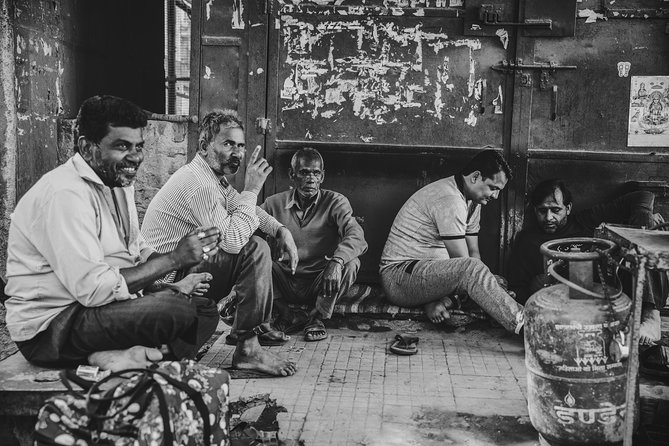
Most tours in Delhi try to compress the city into big monuments. This one does the opposite. Instead of chasing famous buildings, you’re looking at how people live when the housing is informal, the economy is mixed, and the community builds its own support systems.
What makes it especially interesting is the way it ties together three things you can’t easily separate: daily life, survival stories, and practical projects. You’re not only shown places; you’re guided through the socioeconomic context behind them, with time to talk—plus an optional pause for tea with a local family.
It’s also a tour that’s designed to feel safe and welcoming. The small-group format, the local guide, and the fact that you’re moving through neighborhoods like Pandav Nagar and Sangam Colony under guidance all matter. I’d call that a big part of the value: you’re not left to figure things out alone.
More community walks through working Delhi



Meeting your guide and what to expect from a small-group format
This is a 2–3 hour walking experience, with a maximum of 9 travelers. That matters more than it sounds. In a smaller group, the guide can slow down when you ask something real, and you can stop to observe without falling behind.
You’ll walk with a guide from the area, which changes the whole tone. You’re less likely to get generic explanations. You’re more likely to get grounded answers tied to everyday details—what people do, where they go, and what challenges shape the neighborhood.
One practical note: the tour includes cold drinks or tea (black tea, milk tea, or a cold drink). That’s not just hospitality. In a warm climate, a planned break keeps people comfortable and able to keep engaging with the story.
If you’re the type who worries about logistics, you’ll be glad the tour ends back at the meeting point and doesn’t include hotel pick-up. You can arrive near public transportation and keep your day simple.
Pandav Nagar: railway-track views, fruit markets, temples, and industry
Stop 1 is Pandav Nagar, with about 1 hour here. This is where you start to get your bearings fast, because the neighborhood is presented in layers: there are temples, fruit markets, and different local industries that help explain what keeps daily life going.
A standout detail is the location near the railway track. Part of the area runs on both sides of the tracks, and you can watch Indian railways pass by. That’s not just an atmospheric touch. It’s a real geographic detail that affects movement, noise, work patterns, and how close daily life sits to infrastructure.
You may find this stop emotionally lighter than you expected, not because hardship isn’t part of the story, but because the neighborhood isn’t only defined by need. Seeing fruit markets and local businesses helps you understand the economy beyond the headline.
What can be challenging here is that you’ll likely walk through active areas where normal city motion continues around you—shops, foot traffic, and regular neighborhood rhythms. The tour works best if you’re ready to move at walking pace and be flexible with where your focus lands: sometimes on people, sometimes on the places that support them.
Sangam Colony: what you learn in the 30-minute walk
Stop 2 is Sangam Colony, about 30 minutes. This is a smaller slice of space but a bigger slice of meaning, because it’s described as a small settlement built on both sides of the railway track.
In this segment, the tour’s goal shifts toward understanding the lived reality of informal housing. You’re learning about survival and community adaptation, and you’re getting a chance to see daily life up close—without turning it into a spectacle.
This is also a place where your mindset helps. If you go in treating it like a photo assignment, you’ll feel awkward fast. If you go in ready to listen, ask respectful questions, and accept that some answers may be personal, the walk becomes a real education in how neighborhoods function.
The time is short, so you won’t get everything in one go. Think of it as a strong introduction to the bigger picture, not a complete case study.
The educational and vocational training center at Pandav Nagar
Stop 3 returns to Pandav Nagar for about 25 minutes at the educational center. This part is crucial because it shows what people build when they’re not only reacting to problems, but also planning for the future.
The tour focuses on the educational and vocational training work carried out there. That’s a different kind of story than a purely emotional one. It’s more practical: skills, learning pathways, and opportunities aimed at improving long-term outcomes.
I like this stop because it gives you something concrete to carry home. You’re not just leaving with impressions of hardship or resilience. You’re leaving with an example of an intervention—one that aims to change what happens next.
Drawback to consider: because the center visit is time-limited, you’ll get an overview rather than a full program walkthrough. If you’re someone who loves details like class schedules or specific course offerings, you may want to ask your guide what you can learn during the visit and what’s worth looking up later.
New Delhi at a walking pace, a few more routes


Tea with a local family: conversation beats sightseeing
An optional tea break with a local family is one of the tour highlights. This is where the experience goes from observation to exchange.
The format is simple: you share a complimentary tea or cold drink and hear stories of survival. It’s also where you’ll likely understand the human side of the neighborhood in a more personal way—how people describe their lives, what they want outsiders to understand, and what dignity means in day-to-day terms.
This part can be the most memorable for the right reason: it slows everything down. In a city as fast as Delhi, stopping for tea with a family turns the tour into something closer to a conversation than a checklist.
If you’re uncomfortable with open-ended conversations, you can still participate. A smile, a few honest questions, and a respectful attitude go a long way.
Fruit markets, temples, and local homes: why these small stops matter
The inclusions list is revealing. You’re not only seeing slum areas; you’re also visiting things like the fruit market, temples, and local homes. These aren’t random extras. They’re the components that make community life work.
- Fruit markets help explain local commerce—how people feed themselves and earn money.
- Temples show spiritual life and community routines that often run parallel to economic uncertainty.
- Local homes (visited as part of the route) help you understand how space, privacy, and family life play out in tighter conditions.
If you’re worried about how to behave in people’s spaces, keep it straightforward: be polite, follow your guide’s lead, and don’t treat private moments like entertainment. The whole point of the tour is respect, not extraction.
Price and value: what $23.47 really buys you here
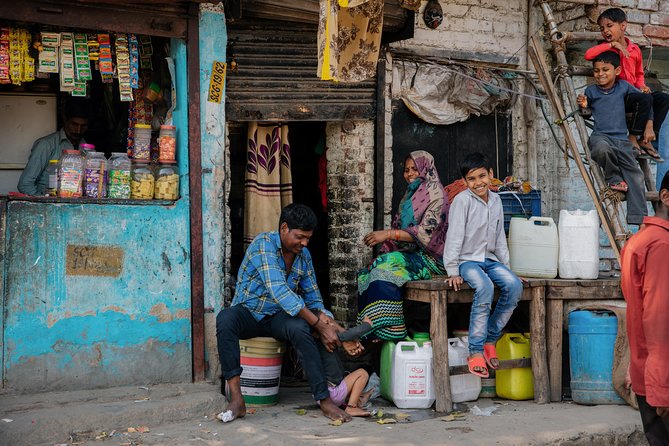
At $23.47 per person, this tour is priced like a budget-friendly city experience. But it functions more like a community-supported visit.
Here’s the value angle that matters: 80% of proceeds benefit a local non-profit organization. That means your money isn’t only paying for guide time and route management. It’s also funding local projects.
When I assess value, I look for three things:
1) You’re getting a guided route through places that would be hard to understand on your own.
2) You’re not only observing; you’re engaging in structured interaction (tea/cold drink, conversations).
3) There’s a stated impact model (80% proceeds support a local non-profit).
This tour checks all three. And the small group size helps ensure the experience doesn’t feel crowded or rushed.
One more point: there are no additional admission fees at the listed stops. The experience is built so you’re not surprised by ticket add-ons mid-walk.
Practical details that help your day go smoothly
This tour uses a mobile ticket, and it runs for about 2–3 hours. You’ll meet at Main Patel Rd, Block B, Baljit Nagar, Shadipur, New Delhi, Delhi 110008, India, and the activity ends back at the meeting point.
Hotel pick-up isn’t included, so plan to reach the meeting area on your own. The good news is it’s noted as being near public transportation.
Weather matters. The experience requires good weather, so I’d plan this earlier in the day or earlier in your trip window if you have flexibility. If weather cancels it, you’ll be offered a different date or a full refund.
What to wear: think comfortable walking shoes and breathable clothing. You’ll be outside for a couple hours, and part of the route centers on the railway-side setting, which can be uneven.
What to bring: water (even though you may get tea or a cold drink), a light layer if evenings cool off, and a mindset focused on listening.
If you’re a first-time slum-tour visitor, you may find it helpful to set one personal intention: ask one question about daily work and one question about what local projects are trying to change. That keeps your attention on both reality and progress.
Who this tour suits best (and who might want a different plan)
This is a great fit if you:
- Want a more human-scale experience than standard sightseeing
- Appreciate learning about how neighborhoods function, not just how they look
- Like guided conversation and community interaction (tea/cold drink time is a highlight)
- Care about where your spending goes, especially with 80% proceeds supporting local work
It may not be the best fit if you:
- Want only a monument-heavy itinerary with minimal emotional weight
- Dislike walking outdoors for 2–3 hours
- Prefer experiences that avoid any conversation with personal stories
Guides can make a big difference in tone. In the feedback tied to this tour style, guides such as Sunny and Abhishek have been praised for acting as strong hosts and helping guests feel safe and welcome.
Should you book this small-group slum walking tour?
I’d book it if you want Delhi beyond the postcard. The combination of a community-led walk, a quick but meaningful look at railway-track neighborhoods, and a visit to an educational and vocational training center makes this more than a one-note experience.
The best reason to choose it is also the clearest: your visit supports local non-profit work through 80% of proceeds and includes time for real exchange, like a tea or cold drink conversation with a local family.
If you’re sensitive to weather or prefer strict schedule certainty, keep your day flexible. But if you can work with that, this is one of the more worthwhile half-day options in New Delhi for understanding how people live and build opportunity side by side.
FAQ
How long is the Small-Group Delhi Slum Walking Tour?
It lasts about 2 to 3 hours.
How big is the group?
The tour has a maximum of 9 travelers.
Where does the tour start and end?
It starts at Main Patel Rd, Block B, Baljit Nagar, Shadipur, New Delhi 110008, India, and ends back at the same meeting point.
What is included in the tour price?
The guide-led walking tour includes visits to the center, slum areas, fruit market, temple, and local homes, plus cold drinks or tea (black tea, milk tea, or a cold drink).
Is hotel pick-up included?
No, hotel pick-up or drop-off is not included.
Do I need a printed ticket?
No. This experience uses a mobile ticket.
Do I pay extra admission fees at the stops?
Admission tickets are free for the listed stops, and the visit is included in the tour.
What if the weather is poor or the tour can’t run?
The experience requires good weather. If it’s canceled due to poor weather, you’ll be offered a different date or a full refund. It can also be canceled if a minimum number of travelers isn’t met, and then you’ll be offered a different date/experience or a full refund.
If you want, tell me your travel dates and what else you plan to do in Delhi that day, and I’ll suggest the best time window to fit this walk.
More Tours in New Delhi
- Old & New Delhi City Tour – Half or Full Day Options Available
★ 5.0 · 4,811 reviews - Half Day Private Delhi City Tour
★ 5.0 · 4,474 reviews - Same Day Taj Mahal, Agra Fort & Baby Taj Tour from Delhi by Car
★ 5.0 · 4,304 reviews - Taj Mahal Day Tour from Delhi by Superfast Train – TOP RATED TOUR
★ 5.0 · 4,166 reviews - Delhi: Old and New Delhi Private Full or Half-Day Tour
★ 4.9 · 3,776 reviews
More Tour Reviews in New Delhi
- Old & New Delhi City Tour – Half or Full Day Options Available
★ 5.0 · 4,811 reviews - Half Day Private Delhi City Tour
★ 5.0 · 4,474 reviews - Same Day Taj Mahal, Agra Fort & Baby Taj Tour from Delhi by Car
★ 5.0 · 4,304 reviews - Taj Mahal Day Tour from Delhi by Superfast Train – TOP RATED TOUR
★ 5.0 · 4,166 reviews - Delhi: Old and New Delhi Private Full or Half-Day Tour
★ 4.9 · 3,776 reviews
More Community Walks in Delhi
- Sanjay Colony Slum Tour
★ 5.0 · 498 reviews - New Delhi Slum Walking Tour
★ 5.0 · 360 reviews - Delhi: Ethical Sanjay Colony Slum Tour
★ 4.9 · 242 reviews - Sanjay Colony Slum Tour with Local Guide
★ 5.0 · 160 reviews - Delhi: Old Delhi Slum Tour by Metro or Car
★ 4.9 · 55 reviews
Just added: more New Delhi reviews to browse
- 4 days Golden Triangle Tour★ 5.0 · 3 reviews
- Discover Old & New Delhi: Private Tour with Street Food★ 5.0 · 3 reviews
- Taj Mahal Tour From Delhi By Private Car★ 4.5 · 3 reviews
- Golden Triangle Tour 5 Days★ 5.0 · 3 reviews
- Taj Mahal: Express Entry Ticket For Sunset Tour with guide★ 5.0 · 3 reviews
- Agra Taj Mahal Sunrise & Sunset Tour from Delhi★ 5.0 · 3 reviews
Delhi Slum Tours, compared.
 ★ 5.0Sanjay Colony Slum TourFrom $21498 reviews
 ★ 5.0New Delhi Slum Walking TourFrom $28360 reviews
 ★ 4.9Ethical Sanjay Colony Slum TourFrom $18242 reviews
Sanjay Colony Slum Tour with Local GuideFrom $13160 reviews
★ 4.9Ethical Sanjay Colony Slum TourFrom $18242 reviews
Sanjay Colony Slum Tour with Local GuideFrom $13160 reviews
 ★ 4.9Old Delhi Slum Tour by Metro or CarFrom $1955 reviews
 ★ 5.0Sanjay Colony Slum Tour with LocalsFrom $1246 reviews
 ★ 5.0New Delhi Sanjay Colony slum Tour (Private Tour)From $3520 reviews
 ★ 5.0Moral Slum Tour in Delhi with hotel pickup & dropFrom $6917 reviews
Browse the lists this tour appears in