
Reviewed · WALKING TOURS
3-Hour Mehrauli Archaeological Park Ruins Walking Tour Delhi
Mehrauli has a way of making old Delhi feel real. This short, well-paced tour mixes ruins and legend—with a guide named Jai Singh who turns stone into stories. I especially like how the stops connect one historical layer to the next, and how the group stays small enough for real questions. The one catch is that the experience starts early (around 8 to 9 a.m.), so you’ll want to be ready for a morning walk.
The route also gives you a rare look at places that people associate with darkness and spooky tales. Even if you don’t lean into the ghost stories, you’ll still leave with clear context for what you’re seeing—and why Mehrauli’s landscape feels different from other Delhi heritage sites.
One consideration: the tour price includes the guide, but it doesn’t include meals or transport, so plan your commute and food timing around a 2 to 3 hour outing.
In This Review
- Key highlights at a glance
- Mehrauli in 2–3 hours: a smart way to see Delhi’s layers
- Stop 1: Jamali Kamali Tomb and Mosque without the usual rush
- Stop 2: Tomb of Balban and the Metcalf Canopy folly on a mound
- Stop 3: Rajon Ki Baoli, water engineering, and the scary stories
- The guide is the real engine: Jai Singh’s stories and debate
- Birds in the ruins: a small detail that changes the day
- Price and value: $28.47 for a guided 2–3 hour heritage route
- Where this tour fits best in your Delhi day
- Should you book this 2–3 hour Mehrauli ruins tour?
- FAQ
- How long is the Mehrauli Archaeological Park ruins walking tour?
- What is the meeting point?
- Where does the tour end?
- What stops are included?
- Is the admission ticket included for the sites?
- What’s included in the price?
- Are meals included?
- Is transport included?
- How big is the group?
- Is the tour near public transportation?
- What is the cancellation policy?
Key highlights at a glance
- Jamali Kamali Tomb and Mosque: a focused first stop that sets the geography and historical layers of Mehrauli.
- Tomb of Balban: you get a clear landmark anchor for understanding the area’s older power centers.
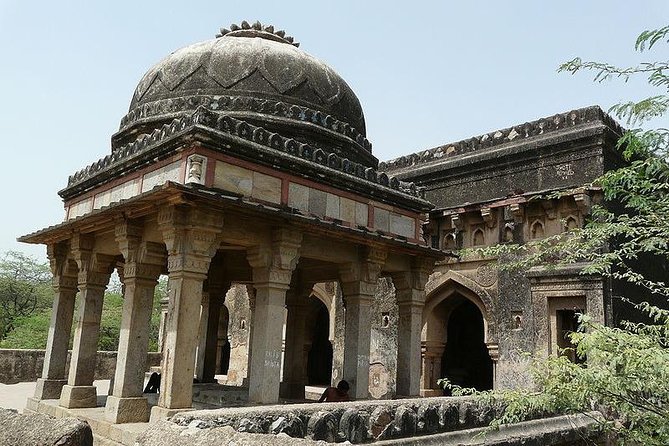
- Metcalf Canopy by Charles Metcalfe: a quirky 1850s folly perched on a mound, meant to look old and be seen for its view.
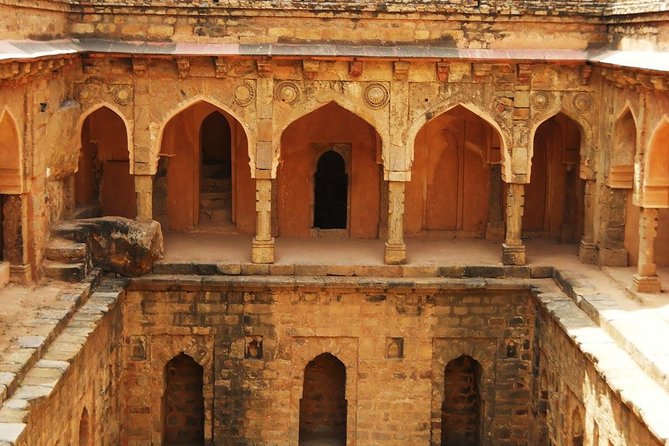
- Rajon Ki Baoli: named after masons linked to the structure, with a vertical shaft and hollow passageways.
- Bird-spotting along the greenery: the tour’s nature notes add variety beyond monuments.
- Jai Singh’s storytelling: detailed narration and even friendly debate over narratives as you walk.
Mehrauli in 2–3 hours: a smart way to see Delhi’s layers
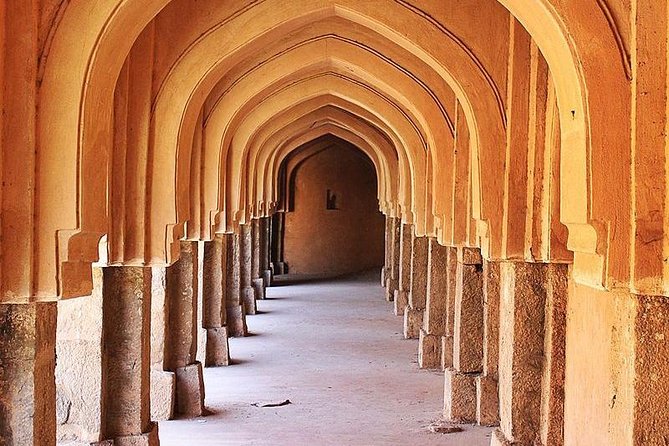
Mehrauli is one of those places where the present and past overlap. One minute you’re looking at a ruin and the next you’re hearing how that spot fits into Delhi’s larger story—sometimes through formal architecture, sometimes through what people remember and repeat. This tour is built for that feeling. It’s short enough to keep it moving, but structured enough that you don’t just collect photos—you build a mental map.
I like that the day starts at Qutub Minar (Aam Bagh, Ladha Sarai Village, Mehrauli). It’s a recognizable meeting point, and it also helps you set the tone: you’re already near one of Delhi’s signature heritage icons. The tour stays a group format with a maximum of 15 people, which matters. With smaller groups you’re more likely to get answers to questions as you go, instead of listening passively the whole time.
The walking pace is designed for about 2 to 3 hours, so it works as a first-or-second activity in your day. Still, remember the tour is time-friendly for a reason: you’re covering three major “anchor” sites, each with enough story to justify a stop.
New Delhi at a walking pace, a few more routes




Stop 1: Jamali Kamali Tomb and Mosque without the usual rush
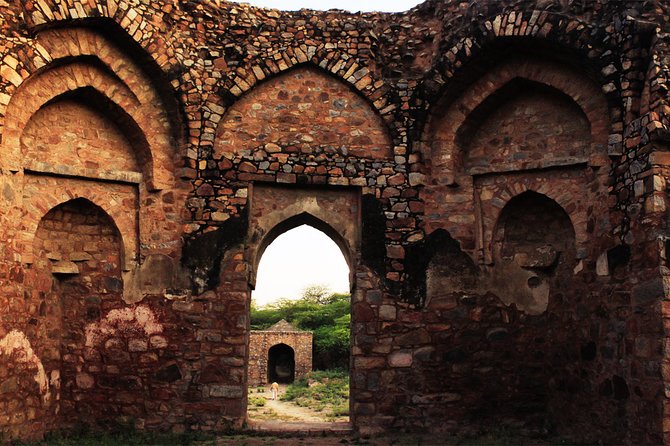
The first stop is Jamali Kamali Tomb and Mosque, usually starting in the morning window of 8:00–9:00 a.m. The tour begins with a guide giving you brief history and geography of the Mehrauli area before you start moving between ruins. That preface is not fluff. It helps you understand why the ruins feel scattered, instead of thinking of them as random leftovers.
What I like here is the pairing: a tomb and a mosque in one complex gives you an easy entry into how different functions can live side by side in heritage spaces. Even without getting lost in architectural jargon, you’ll walk away with a better sense of how Mehrauli’s history layers overlap.
The practical detail that makes this stop worth it: the admission ticket is listed as free, so your money goes straight toward the guide and the experience rather than gate fees.
A possible drawback is that this first segment can feel like your “warm-up.” If you arrive slightly late or still waking up, you might miss the context-setting talk that makes the rest of the tour click. If you’re prone to snooze when it’s early, give yourself a buffer.
Stop 2: Tomb of Balban and the Metcalf Canopy folly on a mound
Next is the Tomb of Balban, an important stop for understanding the older map of power and burial traditions in the region. The standout twist here is the Metcalf Canopy—a structure built in the 1850s by Charles Metcalfe. It’s described as a folly: basically, a deliberately “made old” building meant to create a picturesque effect.
Here’s why this matters for your viewing: a folly can be easy to dismiss if you only expect medieval authenticity. But when your guide explains it, you start seeing the landscape differently. You notice how later generations shaped how heritage gets framed—literally placing a viewpoint on a mound so you can see the scene as a composition, not just as ruins.
The Metcalf Canopy is perched on the peak of a mound. That location detail helps you understand why the setting feels dramatic even when you’re just looking at stone and open air. It also gives you a brief “pause moment” on the tour—an opportunity to look at the area around you, not only at the structures themselves.
Admission is listed as free again, so you’re not juggling costs mid-tour. The time at the stop is kept short (around 20 minutes), which is a good match for a group walking route: enough to anchor the story, not enough to turn the day into a lecture.
Stop 3: Rajon Ki Baoli, water engineering, and the scary stories
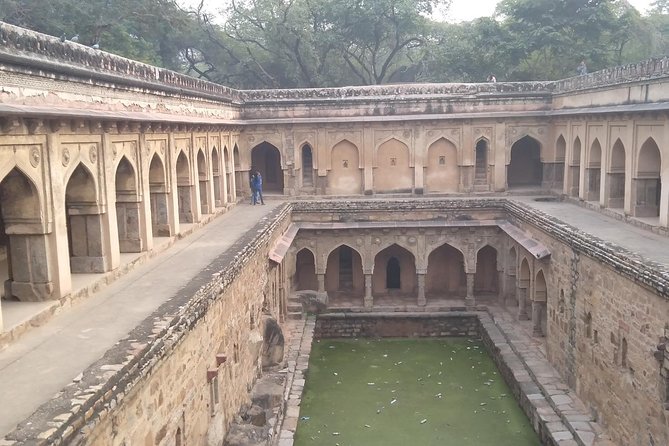
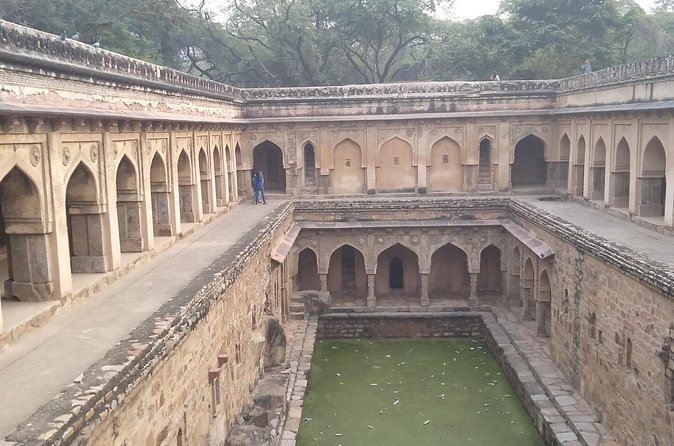
The final stop is Rajon Ki Baoli, often described with an extra layer of legend. The name is said to come from masons who lived in chambers, and the structure is known for its vertical shaft for drawing water plus hollow passageways. Even if you’re not a water-architecture specialist, that mix of vertical + underground-like features makes it feel like a functional place, not just a scenic ruin.
What makes this stop memorable is that it sits at the intersection of engineering and story. The tour frames it as one of the places linked with haunting tales—people associate it with nighttime fear, and you may hear why it gets that reputation. The key point for you: you don’t have to believe every legend to appreciate the atmosphere. The stories give you emotional context, and the structure gives you visual context.
If you like tours that balance facts with human memory, this stop hits the sweet spot. It’s not just about what was built; it’s also about how the built environment shaped what people feared or respected over time.
Another plus: Rajon Ki Baoli is also listed with free admission, so again, the value stays focused on guide time and experience rather than fees.
One consideration: if you’re expecting a long, slow exploration of every corner, this is not that kind of stop. It’s paced within the 2 to 3 hour route. Bring curiosity, but accept the format is “see the main thing, get the story, move on.”
The guide is the real engine: Jai Singh’s stories and debate
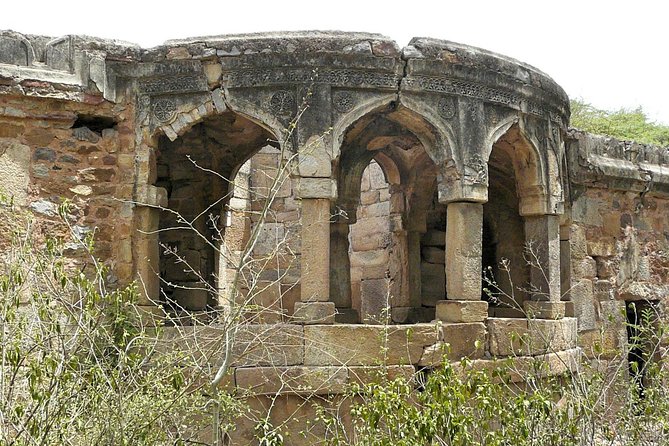
This tour stands or falls on the guide, and you can see that in the reviews mentioning Jai Singh. People praised his historical details, but the more interesting part is how he talks. He doesn’t just recite facts. He shares stories about people connected to the past—and he’s willing to discuss narratives and even engage in debate.
That might sound heavy on paper, but it changes the feel on the ground. Instead of a one-way talk, you’re in a real conversation. And in one review, the guide’s personal perspective on life in India came up too. That adds texture. You end up with context that doesn’t stay trapped inside stonework.
For you, this is valuable because Mehrauli can be confusing without narration. Without a guide, ruins can look like disconnected objects. With a guide like Jai Singh, you’re more likely to leave with a clear mental timeline—at least in broad strokes.
Also, the tour format suggests a personal guide begins with orientation and then leads you through each stop. A group of up to 15 people still benefits from that approach, because the guide can tailor explanations to what you’re looking at.
Worth putting side by side with this New Delhi pick:

Birds in the ruins: a small detail that changes the day
One line in the tour overview calls out birds hiding among greenery and forests. That might not sound like a big promise, but it’s the kind of detail that makes a short outdoor walk more fun. Ruin tours can become “stare at stone, take photos, move on.” Bird spotting adds a second sensory layer: sound, quick motion, and small bursts of nature energy between monument stops.
If you’re someone who notices birds when you’re outdoors—great. If you’re not, you can still use it as a mental reset. Pause for a minute, listen, look up. Even a brief break helps you remember that Mehrauli is not only about buildings. It’s about space.
Price and value: $28.47 for a guided 2–3 hour heritage route
At $28.47 per person, this tour sits in the “buy the guide, not the collectibles” category. You’re paying for a local expert guide, guided time, and a format that keeps the day moving. The tour also lists free admission tickets for each stop, which helps justify the price: you’re not paying extra on arrival for the same sites.
The tour isn’t selling you transportation or meals. That can be good or bad depending on your plans. If you already have your Delhi logistics sorted—metro, a short taxi hop, or a planned morning—then this price feels straightforward. If you’re relying on the provider to solve your transport problem, you may need to budget extra time and cost elsewhere.
The “mobile ticket” detail is also practical. You don’t want to burn your morning hunting paperwork.
And the average booking lead time being around 12 days tells me this is a popular enough option that you shouldn’t wait until the last minute if your schedule is tight.
Where this tour fits best in your Delhi day
This is a strong choice when:
- You want a heritage walk that’s short enough to fit around other sights.
- You like guided context more than self-guided wandering.
- You’re curious about how later additions (like the Metcalfe folly idea) influence how you experience older spaces.
- You enjoy guides who answer questions and discuss competing narratives.
It may be less ideal if:
- You want a long, slow, unstructured explore of each monument.
- You’re hungry right at tour start and don’t want to plan a meal afterward.
- You need transport included and don’t want to coordinate it yourself.
The format also makes it easier for many people to join; the listing says most people can participate and groups stay small. Still, as with any heritage walk, wear comfortable footwear and keep a little water in your day plan.
Should you book this 2–3 hour Mehrauli ruins tour?
If you like your Delhi tours grounded in real place context, I’d book it. The combination of Jamali Kamali, Tomb of Balban, and Rajon Ki Baoli covers three different “ways to read” Mehrauli: sacred complex, power-burial landmark, and water-structure with legend attached. Add a guide like Jai Singh, who brings both detail and conversation, and the value makes sense for the short time on the ground.
I would only hesitate if your morning start is a deal-breaker or if you dislike guided pacing. If you’re the type who wants to linger for an hour at one site, this route may feel brisk.
Otherwise, for $28.47 you’re buying a focused heritage orientation, plus a memorable finale at Rajon Ki Baoli where stories and structure meet.
FAQ
How long is the Mehrauli Archaeological Park ruins walking tour?
It runs about 2 to 3 hours.
What is the meeting point?
The meeting point is at Qutub Minar (Aam Bagh, Ladha Sarai Village, Mehrauli, New Delhi, Delhi 110030, India).
Where does the tour end?
The tour ends back at the meeting point.
What stops are included?
The tour includes Jamali Kamali Tomb and Mosque, Tomb of Balban, and Rajon Ki Baoli.
Is the admission ticket included for the sites?
Yes. Admission tickets are listed as free for the stops mentioned.
What’s included in the price?
The price includes a local expert guide.
Are meals included?
No, meals are not included.
Is transport included?
No, transport is not included.
How big is the group?
The tour has a maximum of 15 travelers.
Is the tour near public transportation?
Yes, it is listed as near public transportation.
What is the cancellation policy?
You can cancel up to 24 hours in advance for a full refund.
New Delhi on Foot: More Walks
- The Great Indian Food Tour: Old Delhi Food and Heritage Walk
★ 5.0 · 1,698 reviews - Old Delhi Food, Heritage&Cultural Walk with Rickshaw ride to Masterji Kee Haveli
★ 5.0 · 742 reviews - Breakfast Walk in Old Delhi
★ 5.0 · 449 reviews - Delhi Food Walk: Rickshaw Ride, Street Eats & Market Tour
★ 5.0 · 401 reviews - New Delhi Slum Walking Tour
★ 5.0 · 360 reviews
More Tours in New Delhi
- Old & New Delhi City Tour – Half or Full Day Options Available
★ 5.0 · 4,811 reviews - Half Day Private Delhi City Tour
★ 5.0 · 4,474 reviews - Same Day Taj Mahal, Agra Fort & Baby Taj Tour from Delhi by Car
★ 5.0 · 4,304 reviews - Taj Mahal Day Tour from Delhi by Superfast Train – TOP RATED TOUR
★ 5.0 · 4,166 reviews - Delhi: Old and New Delhi Private Full or Half-Day Tour
★ 4.9 · 3,776 reviews
More Tour Reviews in New Delhi
- Old & New Delhi City Tour – Half or Full Day Options Available
★ 5.0 · 4,811 reviews - Half Day Private Delhi City Tour
★ 5.0 · 4,474 reviews - Same Day Taj Mahal, Agra Fort & Baby Taj Tour from Delhi by Car
★ 5.0 · 4,304 reviews - Taj Mahal Day Tour from Delhi by Superfast Train – TOP RATED TOUR
★ 5.0 · 4,166 reviews - Delhi: Old and New Delhi Private Full or Half-Day Tour
★ 4.9 · 3,776 reviews
Just added: more New Delhi reviews to browse
- 4 days Golden Triangle Tour★ 5.0 · 3 reviews
- Discover Old & New Delhi: Private Tour with Street Food★ 5.0 · 3 reviews
- Taj Mahal Tour From Delhi By Private Car★ 4.5 · 3 reviews
- Golden Triangle Tour 5 Days★ 5.0 · 3 reviews
- Taj Mahal: Express Entry Ticket For Sunset Tour with guide★ 5.0 · 3 reviews
- Agra Taj Mahal Sunrise & Sunset Tour from Delhi★ 5.0 · 3 reviews
Walking Tours, compared.
 ★ 5.0The Great Indian Food Tour: Old Delhi Food and Heritage WalkFrom $431,698 reviews
 ★ 5.0Old Delhi Food, Heritage&Cultural Walk with Rickshaw ride to Masterji Kee HaveliFrom $52742 reviews
 ★ 5.0Breakfast Walk in Old DelhiFrom $80449 reviews
 ★ 5.0Delhi Food Walk: Rickshaw Ride, Street Eats & Market TourFrom $40401 reviews
 ★ 5.0New Delhi Slum Walking TourFrom $28360 reviews
 ★ 5.0Old Delhi Heritage Walking TourFrom $13247 reviews
 ★ 5.03-hour Old Delhi Heritage Walking tour with Rickshaw RideFrom $7240 reviews
 ★ 5.0Old Delhi: Spices, Heritage and Bazaars Walking TourFrom $13173 reviews
Browse the lists this tour appears in