

Reviewed · DELHI SLUM TOURS
Delhi Slum Walking Tour
Two hours can change how you see Delhi. On this Delhi slum walking tour, you’ll get a close look at work and daily routine, especially at a chapati factory and the chicken market where many families earn their income.
I also like the way the route is built for real-world observation: you’ll pass small-scale industries and residences, and you’ll notice trains cutting through the area about every ten minutes. One possible drawback: one verified booking reported the tour was canceled after arriving at the meeting point, so I’d double-check your confirmation before you go.
In This Review
- Key highlights worth your time
- Meeting at Moti Nagar Metro and Getting Oriented Fast
- New Delhi Slum Life: Small Industries and Everyday Homes
- The Chicken Market Walk: Where Work Becomes the Story
- Chapati Factory: Seeing Over 8,000 Flatbreads Made Daily
- Chai Time: How the Tour Ends With Conversation
- Price and Value: What $13 Actually Buys You
- Who Should Book This Delhi Slum Walking Tour
- Should You Book It?
- FAQ
- Where does the Delhi Slum Walking Tour start?
- How long is the tour?
- How much does it cost?
- What language is the guide?
- How big is the group?
- What’s included in the price?
- Is food or drinks included?
- What places do you visit during the walk?
- How many chapatis are made during the day?
- Are there any nearby sights you’ll notice while walking?
- What are the cancellation terms?
Key highlights worth your time

- Moti Nagar meeting point, 2-hour route: A focused walk that starts and ends at Moti Nagar metro station.
- Chapati production on a big scale: You’ll see daily output of more than 8,000 chapatis.
- Chicken market income firsthand: You walk through a major local source of work and sales.
- Small industries and homes together: You see how daily life and small businesses fit next to each other.
- Chai + conversation at the end: You’ll have tea and time to share impressions with your guide and group.
Meeting at Moti Nagar Metro and Getting Oriented Fast
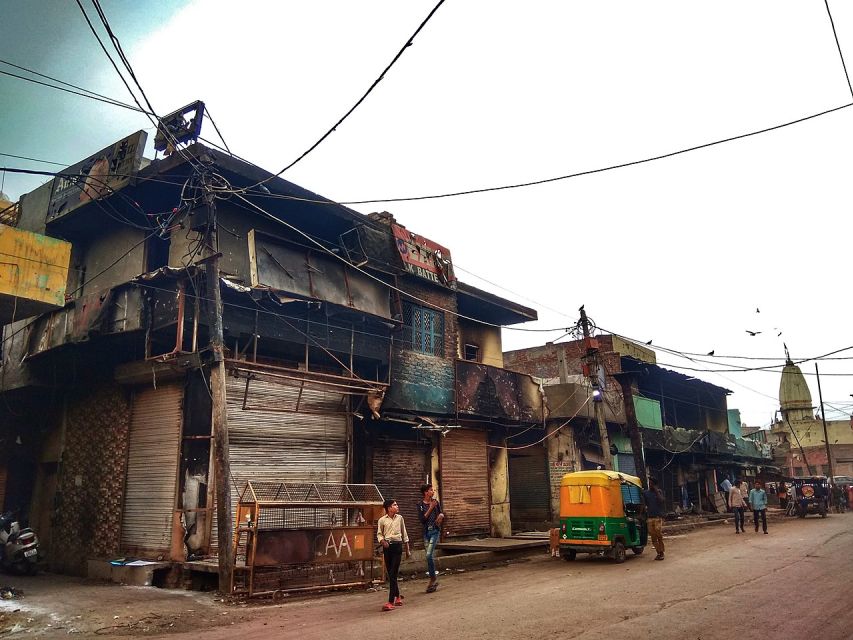
This tour is simple and easy to anchor: you start at Moti Nagar metro station in New Delhi, and you end back there after 2 hours. That matters because it keeps the day from turning into a half-project. There’s also local transportation included, which helps you get to where the walk makes sense without you having to figure out local connections on your own.
The whole experience is designed around a live guide who speaks English, and it runs as a small group limited to 10 participants. For a walking tour through tight local streets and work areas, that group size is more than a nice-to-have. It tends to make it easier to hear explanations and ask questions without creating a traffic jam.
One small operational note: the tour includes skip-the-ticket-line, which usually means less waiting once you’re there. Still, because one verified booking reported a cancellation at the meeting point, it’s smart to check you have the right time and message before you head out.
More community walks through working Delhi



New Delhi Slum Life: Small Industries and Everyday Homes
The core of the tour is learning how daily life works when people are running small businesses alongside family spaces. You’ll visit small-scale industries and small residences, which gives you a more complete picture than only seeing a market or a single workplace.
What you’re really looking for here is not a checklist of sights. It’s how tasks repeat, how goods move through hands, and how the built environment supports work. In places like this, the “everyday” parts are often the most informative: where people gather, how routine production happens, and how neighborhoods handle constant activity.
You’ll also get that sensory rhythm that makes the tour feel real. The route includes the sight of trains passing every ten minutes, which turns the area into something you can almost feel moving. It’s a useful reminder that urban life here is tied into the wider city, not sealed off.
The Chicken Market Walk: Where Work Becomes the Story

Then comes one of the most direct parts of the day: you walk through the chicken market, described as a major source of income for residents. This stop can be powerful because it connects the neighborhood’s economy to a single, clear thread: supply, customers, and the daily flow of business.
You’re not just seeing animals or stalls. You’re watching how people participate in a livelihood that’s both local and essential. Even if you don’t know anything about the food supply chain, the guide can help you understand what’s happening and why this market matters to household income.
A practical consideration: market areas can be active, tight, and visually busy. Wear comfortable shoes, and keep your pace steady with the group. If you’re someone who gets overwhelmed by crowds, you might want to mentally prepare for a dense, working space rather than a quiet sightseeing street.
That said, this stop is also one reason the tour earns respect when it’s done well. It’s not abstract poverty viewing. It’s work, routine, and how people keep life going.
Chapati Factory: Seeing Over 8,000 Flatbreads Made Daily

If the chicken market is about income flow, the chapati factory is about production scale. You’ll visit a place where more than 8,000 chapatis are made a day. That number is the hook: it tells you this is not a tiny hobby operation. It’s a real production line feeding daily demand.
What I find valuable here is that the stop turns a common food into something concrete. Chapati is familiar to many people as a meal, but seeing the day-to-day work behind it helps you understand how food systems function in local neighborhoods. You get a direct view of how routine manufacturing supports daily life across a wider city.
This is also the kind of stop where a good guide makes the difference. With an English-speaking local guide, you should expect explanations tied to everyday reality—what’s being made, how work gets coordinated, and what it means when thousands of meals depend on smooth daily output.
There’s a small sensitivity factor to consider: factories and markets are workplaces. Treat the space like you’re visiting a working team, not a photo set. Stay close to your guide, follow their directions, and keep your attention on learning rather than only photographing.
Chai Time: How the Tour Ends With Conversation

The tour finishes with chai tea, included in the price, and it also includes time to share impressions. This is more than a beverage stop. It’s a moment to slow down after you’ve seen a packed sequence of workplaces and everyday spaces.
In one highly rated experience, the chai moment was part of what made the tour feel respectful and educational—an informal check-in where the group can ask questions and reflect. That’s useful for you because it helps turn observation into understanding. You’ll leave with more than “I saw things.” You’ll have a guided framework for what you noticed and what it likely means locally.
Because food and drinks other than chai are not included, plan to keep chai as the only included drink. If you’re a tea person, you’ll probably appreciate ending there. If you’re sensitive to strong smells or heat, chai stops can still be manageable—just take your time and don’t rush the tasting moment.
New Delhi at a walking pace, a few more routes

Price and Value: What $13 Actually Buys You
At about $13 per person for 2 hours, this tour is positioned as an affordable way to get guided context for neighborhood life. The value comes from several practical inclusions: an English-speaking local guide, chai included, and local transportation included. Those are the “hidden costs” people often forget when comparing prices for walking tours.
It’s also a small group limited to 10. That matters because it supports interaction and makes it easier to ask questions while you’re moving through small spaces. In a working neighborhood, that can be the difference between a passive stroll and an educational experience.
What’s not included is also clear: food and drinks beyond chai. So budget for any extra snacks or water you might want before or after.
One more reality check: the overall rating is 3.1 from 3 reviews. The lower score is linked to a verified report of cancellation at the meeting point. That doesn’t mean the tour is unreliable, but it does mean you should travel with flexibility and verify details close to departure.
Who Should Book This Delhi Slum Walking Tour
This tour fits best if you want a short, structured walk with guided explanations and specific stops tied to work: small industries, the chicken market, and the chapati factory. If you prefer experiences that focus on how communities function day to day, you’ll likely find it more meaningful than a generic “see the area” tour.
It also suits people who like conversations at the end. The chai stop isn’t just a perk—it’s a chance to make sense of what you’ve seen with your guide and group.
If you’re the type who needs quiet, long, slow sightseeing, this might feel intense. Markets and production spaces are active by nature. Also, if you rely on zero-risk plans with no backup option, consider that one verified booking reported cancellation.
Should You Book It?

I think you should book this Delhi Slum Walking Tour if you want an affordable, time-efficient look at how neighborhood work supports daily life—especially if you’re curious about food production and local commerce. The visit to a chapati factory making 8,000+ chapatis daily and the walk through a chicken market are the two stand-out reasons to go.
But I wouldn’t book it as the only plan in your Delhi schedule. With at least one verified report of cancellation at the meeting point, I’d keep your day flexible and confirm your details shortly before you leave. If you do that, you’ll put yourself in the best position to get the respectful, educational experience this tour aims to provide.
FAQ
Where does the Delhi Slum Walking Tour start?
The tour starts at Moti Nagar metro station.
How long is the tour?
The duration is 2 hours.
How much does it cost?
It costs $13 per person.
What language is the guide?
The tour includes an English-speaking local guide.
How big is the group?
The group is small, limited to 10 participants.
What’s included in the price?
Included: an English local guide, chai during the tour, and local transportation.
Is food or drinks included?
No. Food and drinks are not included (chai is included).
What places do you visit during the walk?
You visit small-scale industries and small residences, walk through the chicken market, and then visit a chapati factory.
How many chapatis are made during the day?
The chapati factory makes more than 8,000 chapatis delivered each day.
Are there any nearby sights you’ll notice while walking?
You’ll see trains passing every ten minutes as you explore.
What are the cancellation terms?
You get free cancellation up to 24 hours in advance for a full refund, and you can reserve now and pay later.
More Tours in New Delhi
- Old & New Delhi City Tour – Half or Full Day Options Available
★ 5.0 · 4,811 reviews - Half Day Private Delhi City Tour
★ 5.0 · 4,474 reviews - Same Day Taj Mahal, Agra Fort & Baby Taj Tour from Delhi by Car
★ 5.0 · 4,304 reviews - Taj Mahal Day Tour from Delhi by Superfast Train – TOP RATED TOUR
★ 5.0 · 4,166 reviews - Delhi: Old and New Delhi Private Full or Half-Day Tour
★ 4.9 · 3,776 reviews
More Tour Reviews in New Delhi
- Old & New Delhi City Tour – Half or Full Day Options Available
★ 5.0 · 4,811 reviews - Half Day Private Delhi City Tour
★ 5.0 · 4,474 reviews - Same Day Taj Mahal, Agra Fort & Baby Taj Tour from Delhi by Car
★ 5.0 · 4,304 reviews - Taj Mahal Day Tour from Delhi by Superfast Train – TOP RATED TOUR
★ 5.0 · 4,166 reviews - Delhi: Old and New Delhi Private Full or Half-Day Tour
★ 4.9 · 3,776 reviews
More Community Walks in Delhi
- Sanjay Colony Slum Tour
★ 5.0 · 498 reviews - New Delhi Slum Walking Tour
★ 5.0 · 360 reviews - Delhi: Ethical Sanjay Colony Slum Tour
★ 4.9 · 242 reviews - Sanjay Colony Slum Tour with Local Guide
★ 5.0 · 160 reviews - Delhi: Old Delhi Slum Tour by Metro or Car
★ 4.9 · 55 reviews
Just added: more New Delhi reviews to browse
- 4 days Golden Triangle Tour★ 5.0 · 3 reviews
- Discover Old & New Delhi: Private Tour with Street Food★ 5.0 · 3 reviews
- Taj Mahal Tour From Delhi By Private Car★ 4.5 · 3 reviews
- Golden Triangle Tour 5 Days★ 5.0 · 3 reviews
- Taj Mahal: Express Entry Ticket For Sunset Tour with guide★ 5.0 · 3 reviews
- Agra Taj Mahal Sunrise & Sunset Tour from Delhi★ 5.0 · 3 reviews
Delhi Slum Tours, compared.
 ★ 5.0Sanjay Colony Slum TourFrom $21498 reviews
 ★ 5.0New Delhi Slum Walking TourFrom $28360 reviews
 ★ 4.9Ethical Sanjay Colony Slum TourFrom $18242 reviews
Sanjay Colony Slum Tour with Local GuideFrom $13160 reviews
 ★ 4.9Old Delhi Slum Tour by Metro or CarFrom $1955 reviews
 ★ 5.0Sanjay Colony Slum Tour with LocalsFrom $1246 reviews
 ★ 5.0Small- Group Delhi Slum Walking TourFrom $2326 reviews
 ★ 5.0New Delhi Sanjay Colony slum Tour (Private Tour)From $3520 reviews
Browse the lists this tour appears in