

Reviewed · DELHI SLUM TOURS
Old & New Delhi Private Tour with Slum Visit
Delhi compresses centuries into one day. You get a smart mix of UNESCO landmarks and classic Old Delhi stops, packed into a route designed for limited time. I like that it’s private with an English guide, so you’re not guessing your way through crowded areas or missing context at the monuments.
One thing to consider: this is a walking-and-seeing day with street markets, and food and drink aren’t included, so plan for snacks on your own (especially around Paranthe Wali Gali and Chandni Chowk). Also note the practical rules like bringing an ID and dressing modestly (short skirts aren’t allowed), and that it’s not suitable for pregnant women.
In This Review
- Key things I’d mark on your mental map
- Starting at Jama Masjid Gate: where Old Delhi starts making sense
- Chandni Chowk with a guide: markets, rickshaws, and the right kind of walking
- Gurudwara Sis Ganj Sahib and langar: service you can actually see
- Jain temple stop: Shri Digambar Jain Lal Mandir and respectful prayer space
- Paranthe Wali Gali: a short food street stop with big payoff
- Khari Baoli spice market: Asia’s largest wholesale spice world
- Red Fort from the outside: a quick hit when time is tight
- Raj Ghat: a brief moment of reflection
- Qutb Minar: 73 meters of carved history at UNESCO scale
- Lotus Temple: calm breaks between the big monuments
- India Gate and Rashtrapati Bhavan: national landmarks with garden views
- Humayun’s Tomb: Mughal garden architecture with serious influence
- Sanjay Colony slum visit: a responsible, guided look at daily life
- Your guides make or break it: Sunil, Ali, and the photo-spot edge
- Logistics and timing: how the private AC car helps you actually enjoy the day
- Price and value: $12 per person is about guidance, access, and route planning
- Practical tips before you go: ID, modest dress, and comfy shoes
- Should you book this tour? My honest take
- FAQ
- Where do I meet for the tour?
- Is there a tour guide, and is it offered in English?
- Do I get an air-conditioned car and a driver?
- Is the rickshaw ride included?
- Do I have to buy my own food during the tour?
- Can I go up to view the city from the minaret?
- What ID should I bring?
- Is the tour suitable for pregnant women?
Key things I’d mark on your mental map
- Private AC car with driver: less stress between Old and New Delhi.
- Skip-the-line entry: helps you spend more time looking and less time waiting.
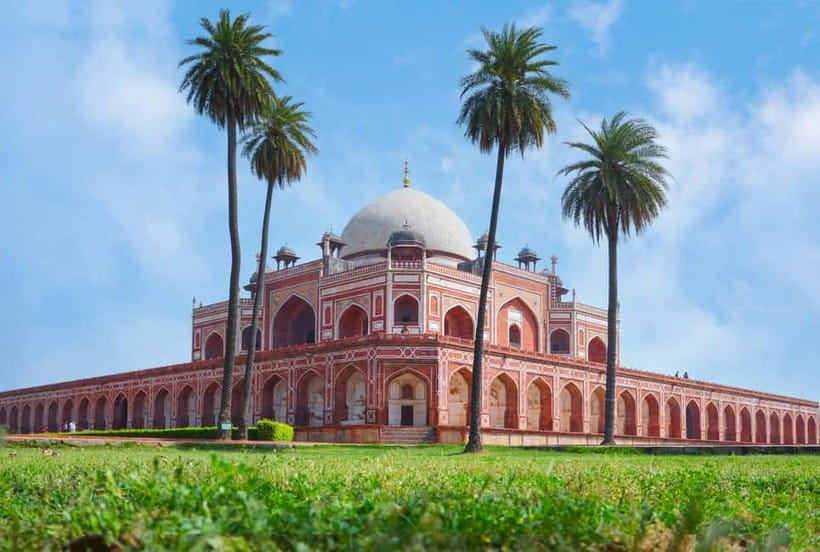
- Qutb Minar + Humayun’s Tomb (UNESCO): the Mughal-and-Sultanate architecture at full scale.
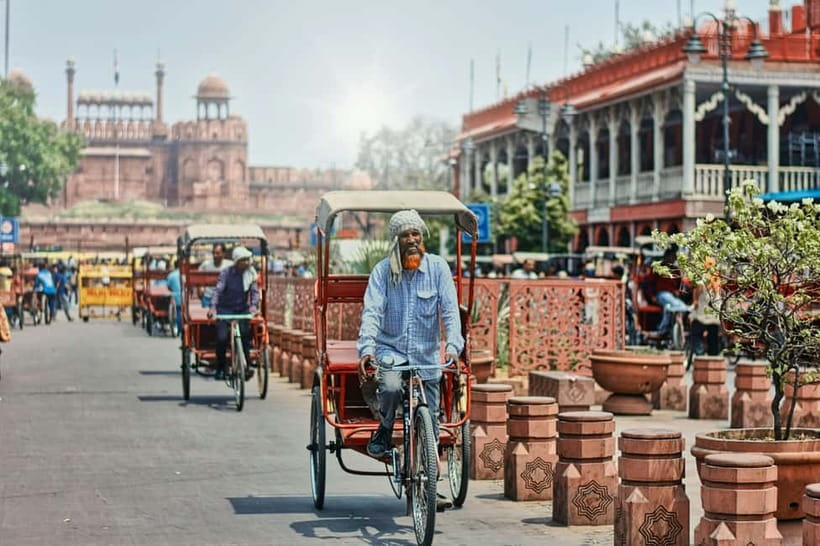
- Old Delhi rickshaw ride: a fast way to understand the layout of Chandni Chowk.
- Jama Masjid minaret views: the Old Delhi skyline shot you can’t easily recreate.
- Sanjay Colony slum visit: an escorted look at daily life and community initiatives as part of responsible tourism.
Starting at Jama Masjid Gate: where Old Delhi starts making sense
You meet at Jama Masjid Gate Number 2, which is a great choice because it drops you right into the story instead of starting miles away. From there, you’ll get a guided visit that helps you make sense of what you’re seeing, not just where it is.
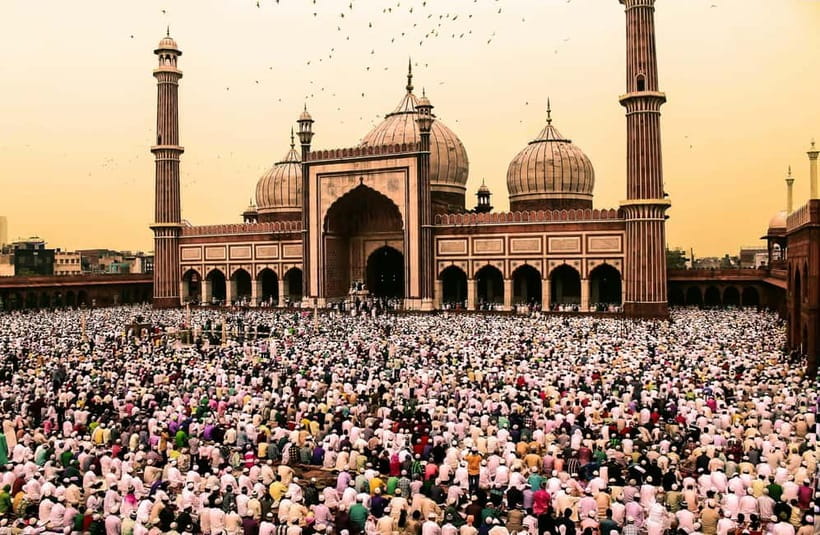
Jama Masjid is famous for being India’s largest and among the finest mosques, and the tour is set up to let you experience it beyond a quick photo. You also go up the minaret for a sweeping look over Old Delhi, which is one of the quickest ways to understand the scale of the streets you’ll be navigating later.
If your trip includes only one “wow” moment in Old Delhi, I’d bet it’s the combination of mosque architecture plus that high viewpoint. It’s also a good way to reset your eyes before the market chaos of Chandni Chowk.
The old and the new, covered a few more ways




Chandni Chowk with a guide: markets, rickshaws, and the right kind of walking
Chandni Chowk is the kind of place where you can wander for hours and still miss the best angles. The tour handles that with photo stops and a guided walk, plus an included rickshaw ride in Old Delhi.
The payoff is practical: your guide helps you move through the crowded lanes without turning it into a stressful scavenger hunt. You’ll also get the fun of seeing the market’s energy up close, while learning what’s worth noticing—signs, shop types, and what locals actually come for.
This is also where the religious stops add depth. You’re not just passing storefronts; you’re stepping into active places of worship that sit right inside the city’s everyday rhythm.
Gurudwara Sis Ganj Sahib and langar: service you can actually see
One of the tour’s more meaningful stops is Gurudwara Sis Ganj Sahib, where you’ll see Sikh traditions of service and equality. You’ll also witness the langar (the community kitchen) during the visit.
This isn’t just a “look at the building” moment. Watching how the place functions gives you a clearer understanding of how communities organize care in public spaces. It’s the kind of stop that slows you down in a good way, especially after fast-moving market streets.
If you’re someone who likes to understand how people live—and not only what monuments look like—this is a highlight that adds real texture to the day.
Jain temple stop: Shri Digambar Jain Lal Mandir and respectful prayer space
The tour includes Shri Digambar Jain Lal Mandir, described as the oldest and most prominent Jain temple in Delhi and an important place of prayer. You’ll do a guided visit with a photo stop, which helps if you don’t know what to look for in Jain temple spaces.
Practical tip: even if you’re there mainly to see architecture and learn, treat it like an active worship site. The guide will keep you on the right side of respectful behavior without making it feel like a lecture.
This stop works well because it adds another layer beyond the Muslim and Sikh landmarks already on the route. Delhi isn’t one story—it’s a stack of them.
Paranthe Wali Gali: a short food street stop with big payoff
Paranthe Wali Gali is the kind of street name that does exactly what it says: stuffed flatbreads with distinct flavors. The tour includes it as a dedicated stop, so you’re not just hearing about it—you get time to experience the street atmosphere around the food.
Since food and drink aren’t included, you’ll have to decide what to buy yourself. That said, this is one of the best places on the itinerary to do it, because it’s an intentional stop rather than a random “maybe we’ll pass something.”
If you’re sensitive to heat or crowds, consider bringing some water from your included bottle and pacing your time here. Your legs and your nose will both work overtime.
More community walks through working Delhi
Khari Baoli spice market: Asia’s largest wholesale spice world
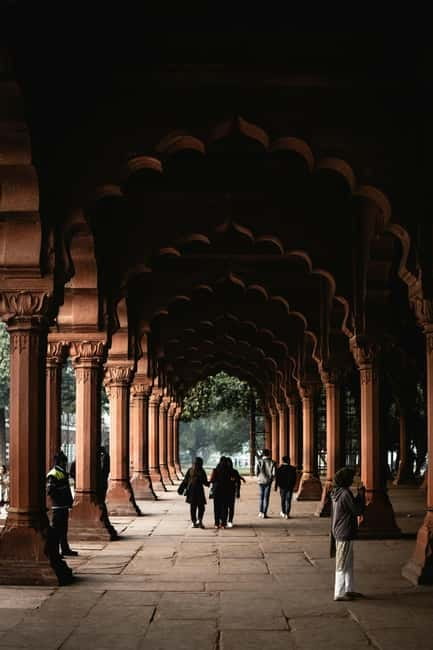
Next up is Khari Baoli, described as Asia’s largest wholesale spice market. This is one of the most sensory parts of the day: colors, scents, dried fruits, and herbs all in one place.
Even if you’re not buying anything, the guided visit helps you understand how spice markets function—why the stalls look the way they do and what people come to source in bulk. It also makes it easier to enjoy the chaos without feeling overwhelmed.
If you’re photographing, go gently: spices dust easily, and lots of movement happens in narrow aisles. The guide can help you find workable spots for pictures without blocking foot traffic.
Red Fort from the outside: a quick hit when time is tight
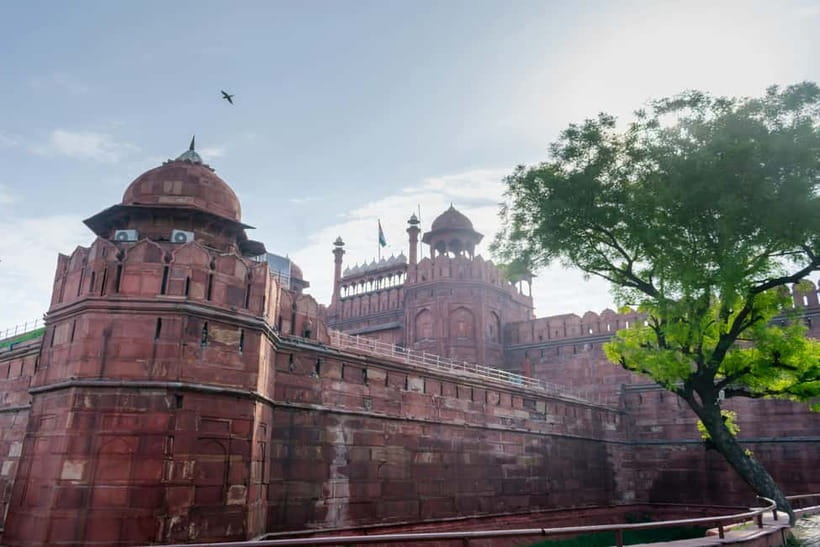
The tour gives Red Fort as a photo stop and pass-by rather than a full deep visit. That means you’ll appreciate its Mughal architecture and historical significance from outside, which is useful if you’re short on time.
If Red Fort is a “must see” for you, do know that a complete visit takes longer than this tour gives. But as a taste in between other major stops, it still does its job.
Think of it like a movie trailer for a bigger story: you get the scale and presence, and it may motivate you to come back later for more.
Raj Ghat: a brief moment of reflection
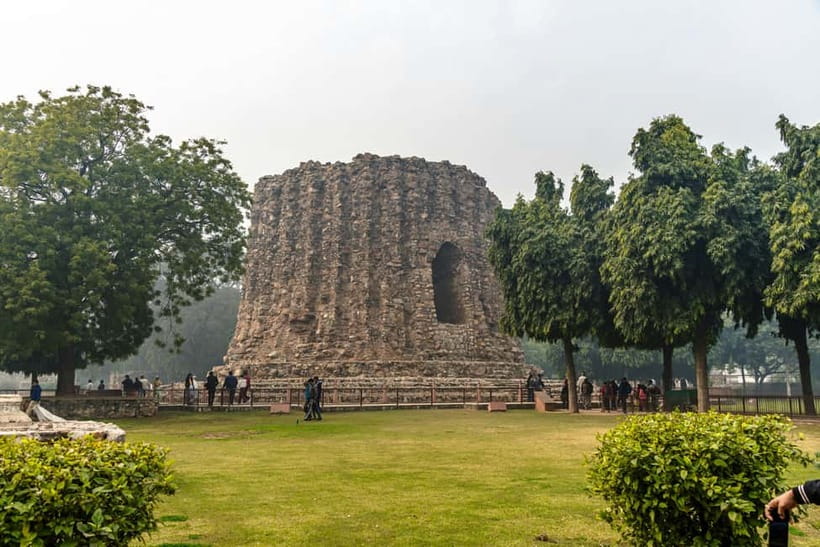
You’ll stop at Raj Ghat for a photo stop and a guided visit. The tour doesn’t frame it as a long architectural exploration, so expect it to function as a pause point—somewhere to slow down after markets and monuments.
If you like travel moments that aren’t only about buildings, this kind of memorial stop can land well, especially in the middle of a day that otherwise focuses on major landmarks.
Qutb Minar: 73 meters of carved history at UNESCO scale

When the tour turns toward New Delhi monuments, Qutb Minar is the anchor. You’ll visit the UNESCO World Heritage site and see the 73-meter-tall minaret built in the early 13th century.
The description in the itinerary focuses on what makes this site so memorable: ornate carvings and architectural splendor. That’s exactly what you want at a place like this—someone to guide your eye so you don’t miss the details.
You’ll do a photo stop and guided visit here, and the skip-the-line approach helps you keep momentum. It’s one of those stops where you can take the standard shots, but the better value is learning how the design communicates power and artistry.
Lotus Temple: calm breaks between the big monuments
Next is the Lotus Temple, known for its flower-shaped architecture and as a Bahá’í House of Worship. The tour highlights it as a peaceful haven for meditation and contemplation.
This stop is a clever counterbalance. After Old Delhi streets and after towering structures like Qutb Minar, Lotus Temple gives you space to reset your senses. Even if you’re not spending a long time sitting quietly, just being inside the atmosphere helps.
If you’ve got limited time in Delhi, this is a useful inclusion because it’s visually distinct and emotionally different from everything around it.
India Gate and Rashtrapati Bhavan: national landmarks with garden views
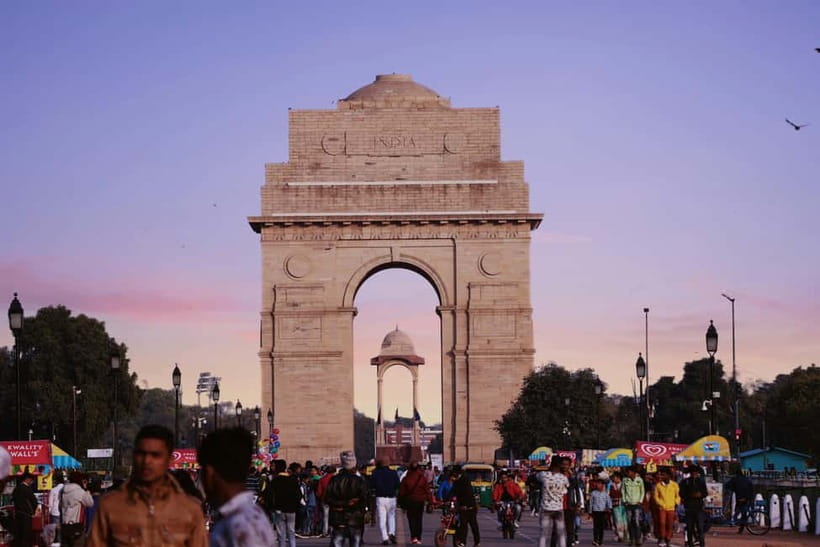
You’ll stop at India Gate for a photo stop and guided visit. The tour describes it as a memorial to Indian men who lost their lives during World War I, with lovely gardens around the monument. A walking tour around the area makes it more than a roadside photo.
Then you drive through Rashtrapati Bhavan, the residence of the President of India. The tour frames it as majesty with perfectly manicured Mughal Gardens. Even as a pass-by, it offers a sense of how the city plans space at a grand scale.
If you like seeing how government and ceremonial architecture shapes a city’s layout, you’ll appreciate these stops. If your focus is strictly ancient sites, they can feel more “official” than “historic,” but they still help complete the picture of modern Delhi.
Humayun’s Tomb: Mughal garden architecture with serious influence
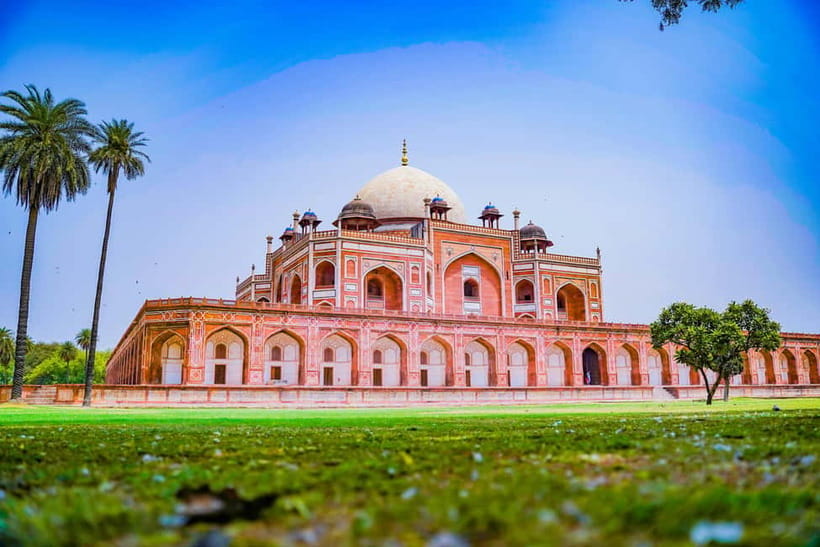
Humayun’s Tomb is another UNESCO World Heritage stop and one of the most visually rewarding places on the route. You’ll visit a 16th-century garden tomb and learn that it’s a forebear of the Taj Mahal, with impressive Mughal architecture.
This is a stop where your guide’s explanations matter. The garden-tomb concept can look pretty from the outside, but learning how it influenced later architecture helps it click.
If you tend to skip over “another tomb,” this is the one that usually changes minds. The setting and design make it feel like a planned landscape, not only a memorial structure.
Sanjay Colony slum visit: a responsible, guided look at daily life
One of the most important parts of this tour is the escorted walking visit through Sanjay Colony, described as a small but vibrant slum society. The emphasis is on learning about daily life, local enterprise, and community schemes, while promoting responsible tourism.
A few practical things you should keep in mind. This is not a zoo-style stop, so you’ll want to be calm, respectful, and follow your guide’s direction. If you go in expecting only hardship, you might miss the point; the tour is framed around community systems and how people make work and life happen.
Also, since this is a walking segment, wear comfortable shoes and be ready for the realities of uneven ground and tight spaces. If you prefer low-contact experiences, this part may not be your favorite—but it does add real-world perspective that the monuments can’t supply.
Your guides make or break it: Sunil, Ali, and the photo-spot edge
The reviews point to a clear advantage: the guide helps you get around and understand what you’re seeing. One booking praises Sunil for being very informative and for helping with navigation across the day. Another highlights Ali for deep site knowledge and for knowing the best photo spots.
That practical “how to see it well” matters more than you’d think. In Delhi, a quick glance can miss the details that make these places memorable. Having someone steer you toward smart angles and key explanations saves time—and it makes your photos come out better too.
Logistics and timing: how the private AC car helps you actually enjoy the day
A private group with air-conditioned transport changes the rhythm of Delhi. You’re not stuck in unpredictable transit times between neighborhoods, and you can recover between walking sections.
Duration is listed as 4 to 8 hours depending on your starting time option. That range is important: a shorter version still hits the main sights, while longer departures give you a bit more breathing room at market and monument stops.
The tour also includes water bottle, parking fees and taxes, and guided timing through key points. Since food and drink aren’t included, you’ll want to plan small purchases yourself when you want them.
Skip-the-line entry through a separate entrance can be a big deal at busy UNESCO sites and religious landmarks. It’s one of those behind-the-scenes comforts that turns a long day into a manageable one.
Price and value: $12 per person is about guidance, access, and route planning
At $12 per person, this tour can feel like strong value—especially because it includes private AC transport, an English guide, rickshaw ride, and skip-the-line access plus water. The cost isn’t just for transportation; it’s for the effort of stitching together Old Delhi and New Delhi into one coherent route.
Now, the tradeoff is time. This isn’t a slow museum crawl. It’s a well-planned highlight route where you get guided introductions and key sights, and you’ll likely leave wanting more if a specific monument really grabs you.
Still, for a first Delhi day—especially if you’re trying to see both Old Delhi culture and New Delhi monuments without wasting half your vacation on logistics—this price point can be a win.
Practical tips before you go: ID, modest dress, and comfy shoes
Bring a passport or ID card (a copy is accepted). You’ll also want to plan for modest dress because short skirts aren’t allowed.
For comfort, wear shoes that can handle walking in markets and around monuments. You’ll also want to stay mindful in places of worship. Your guide will set the tone, but it helps to have your own habits ready: head covered if needed, quiet voice, and patience around photo-taking.
Finally, since food isn’t included, consider budgeting for snacks or a meal stop of your choosing. Paranthe Wali Gali and Chandni Chowk are logical places to use your free time for that.
Should you book this tour? My honest take
Book it if you want a tight, guided route that covers major Old Delhi sights (including Chandni Chowk, Jain and Sikh stops, spice market time, and Jama Masjid views) plus big New Delhi monuments like Qutb Minar and Humayun’s Tomb. You’ll also like it if you value responsible context, since the escorted Sanjay Colony visit is part of the experience and not treated as an afterthought.
Skip it if you’re not comfortable with walking in crowded lanes, if you prefer a food-focused tour with meals included, or if you’re traveling with someone who can’t do the walking (it’s listed as not suitable for pregnant women).
If you’re on your first trip to Delhi and you want to get oriented fast—with a guide who can explain sites and help with practical movement—this is one of the more efficient ways to do it.
FAQ
Where do I meet for the tour?
You meet at Jama Masjid Gate Number 2.
Is there a tour guide, and is it offered in English?
Yes. The tour includes a live English tour guide.
Do I get an air-conditioned car and a driver?
Yes. The tour includes air-conditioned transportation and a driver.
Is the rickshaw ride included?
Yes. There is a rickshaw ride in Old Delhi included.
Do I have to buy my own food during the tour?
Yes. Food and drink are not included.
Can I go up to view the city from the minaret?
Yes. The tour includes going up to a minaret for a sweeping view of Old Delhi.
What ID should I bring?
Bring a passport or ID card. A copy is accepted.
Is the tour suitable for pregnant women?
No. It is listed as not suitable for pregnant women.
More Tour Reviews in New Delhi
- Old & New Delhi City Tour – Half or Full Day Options Available
★ 5.0 · 4,811 reviews - Half Day Private Delhi City Tour
★ 5.0 · 4,474 reviews - Same Day Taj Mahal, Agra Fort & Baby Taj Tour from Delhi by Car
★ 5.0 · 4,304 reviews - Taj Mahal Day Tour from Delhi by Superfast Train – TOP RATED TOUR
★ 5.0 · 4,166 reviews - Delhi: Old and New Delhi Private Full or Half-Day Tour
★ 4.9 · 3,776 reviews
More Community Walks in Delhi
- Sanjay Colony Slum Tour
★ 5.0 · 498 reviews - New Delhi Slum Walking Tour
★ 5.0 · 360 reviews - Delhi: Ethical Sanjay Colony Slum Tour
★ 4.9 · 242 reviews - Sanjay Colony Slum Tour with Local Guide
★ 5.0 · 160 reviews - Delhi: Old Delhi Slum Tour by Metro or Car
★ 4.9 · 55 reviews
Old and New Delhi, Keep Exploring
- Old & New Delhi City Tour – Half or Full Day Options Available
★ 5.0 · 4,811 reviews - Delhi: Old and New Delhi Private Full or Half-Day Tour
★ 4.9 · 3,776 reviews - Delhi: Private Old & New Delhi Guided Half- or Full-Day Tour
★ 4.9 · 2,309 reviews - Old & New Delhi Private Tour – Half or Full Day (Rated Excellent)
★ 5.0 · 2,226 reviews - Old & New Delhi Full or Half Day Sightseeing Tour
★ 5.0 · 1,900 reviews
Just added: more New Delhi reviews to browse
- 4 days Golden Triangle Tour★ 5.0 · 3 reviews
- Discover Old & New Delhi: Private Tour with Street Food★ 5.0 · 3 reviews
- Taj Mahal Tour From Delhi By Private Car★ 4.5 · 3 reviews
- Golden Triangle Tour 5 Days★ 5.0 · 3 reviews
- Taj Mahal: Express Entry Ticket For Sunset Tour with guide★ 5.0 · 3 reviews
- Agra Taj Mahal Sunrise & Sunset Tour from Delhi★ 5.0 · 3 reviews
Delhi Slum Tours, compared.
 ★ 5.0Sanjay Colony Slum TourFrom $21498 reviews
 ★ 5.0New Delhi Slum Walking TourFrom $28360 reviews
 ★ 4.9Ethical Sanjay Colony Slum TourFrom $18242 reviews
Sanjay Colony Slum Tour with Local GuideFrom $13160 reviews
 ★ 4.9Old Delhi Slum Tour by Metro or CarFrom $1955 reviews
 ★ 5.0Sanjay Colony Slum Tour with LocalsFrom $1246 reviews
 ★ 5.0Small- Group Delhi Slum Walking TourFrom $2326 reviews
 ★ 5.0New Delhi Sanjay Colony slum Tour (Private Tour)From $3520 reviews
Browse the lists this tour appears in